 logo

The rules have changed yet again. With AI replacing search, algorithms reducing reach, and content explosion, achieving digital marketing domination requires new strategies. It’s hard to believe it’s been 11 years since I first posted one of my most cited posts, 16 Differences Between Traditional Media and Social Networking, and over six years since I last updated this post. A lot has changed since then.
This guide to digital marketing emphasizes the importance of integrating social media, websites, email marketing, e-commerce, public relations, and other tactics for a successful online strategy if you want to achieve digital marketing domination. It addresses the challenges posed by AI reducing organic reach and changing social media algorithms, as well as the overwhelming amount of low-quality AI-generated content, highlighting the need for updated strategies to achieve digital marketing success.
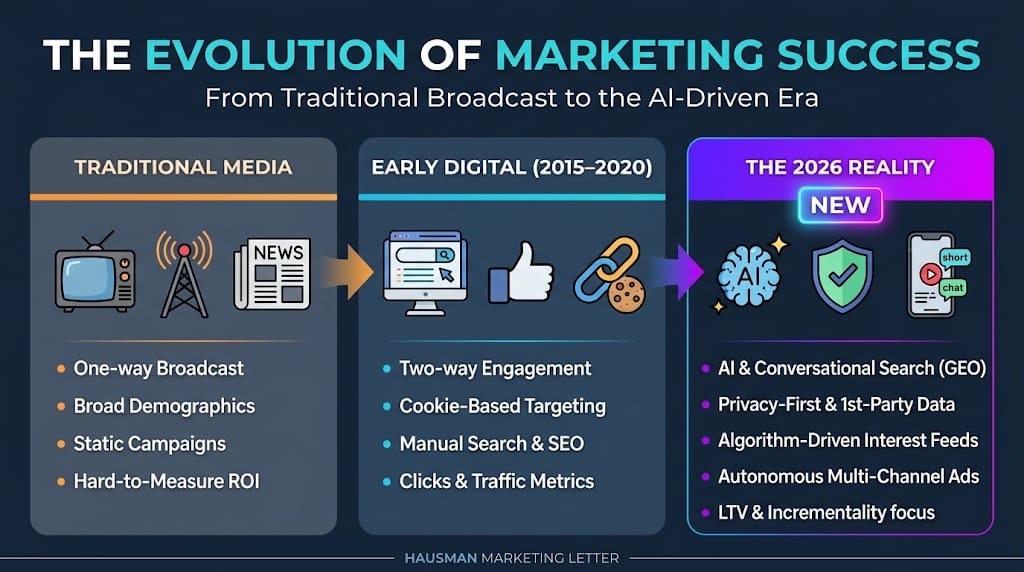
Differences between digital marketing and traditional media
Digital marketing isn’t simply another channel for sharing advertising. It’s not like you craft ads the same way companies have for generations, then share the ads across different channels, such as radio, TV, and print. And, while you may change the execution of your ad across media in the days when traditional media dominated, you fundamentally kept the message the same and used similar main elements in your ads regardless of channel.
Digital isn’t a channel. It’s a totally different way of looking at the world and engaging with your audience. So, while digital marketing shares some aspects of traditional media, such as target marketing, integration across platforms, and driving sales with influential messaging, that’s pretty much where the similarities end.
In my original post, I created a table that identified differences between traditional media and social networking. I won’t waste space by reproducing that table here, but be sure to check it out in the earlier post.
The basics of digital marketing domination
What is digital marketing?
Rather than continually adding or changing this table, I think the transition to digital marketing involves a bigger paradigm shift, so we need to approach it in a different way. Even the definitions of digital marketing have evolved over time, so I’ve updated these here. As you can see below, digital marketing offers a low-cost marketing strategy that helps small businesses compete with big brands.

Unfortunately, most digital gurus miss the point and it’s a critical one.
Here’s a definition from Marketo, for instance:
At a high level, digital marketing refers to advertising delivered through digital channels such as search engines, websites, social media, email, and mobile apps. Using these online media channels, digital marketing is the method by which companies endorse goods, services, and brands. Consumers heavily rely on digital means to research products. For example, Think with Google marketing insights found that 48% of consumers start their inquiries on search engines, while 33% look to brand websites and 26% search within mobile applications.
And here’s HubSpot’s definition, which is very similar:
Digital marketing encompasses all marketing efforts that use an electronic device or the internet. Businesses leverage digital channels such as search engines, social media, email, and other websites to connect with current and prospective customers.
Unfortunately, both of these miss the point. Digital isn’t a channel for spewing advertising; it needs to be an integral element of your marketing strategy focused on providing value to consumers, building personal relationships at scale, as a means to improve your market performance.
For instance, the American Marketing Association (AMA) defines digital marketing as:
In a nutshell, digital marketing refers to any marketing methods conducted through electronic devices. This includes online marketing efforts conducted on the internet. In the process of conducting digital marketing, a business might leverage websites, search engines, blogs, social media, video, email and similar channels to reach customers.
This definition fits with the AMA definition for marketing, where the focus is on providing valuable exchanges between customers and the organization.
Why should you focus on digital marketing domination?
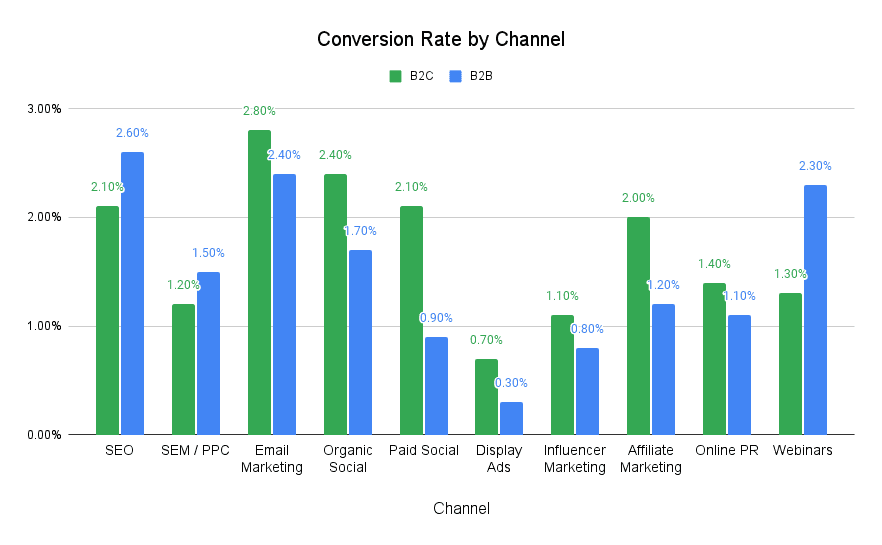
Leveling the playing field
Digital marketing offers a means toward a level playing field where smaller brands may, through exceptional efforts to build relationships with a target audience, compete against much larger brands. Consider, for instance, the cost of a single Super Bowl ad is over $8 million, a number growing bigger every year. What small brand could hope to afford a single ad, let alone several, as many big brands do during the game? As you can see in the image above, various marketing channels offer exceptional opportunities for small brands.
Sure, a small brand can buy less expensive TV advertising, with the more limited reach of these ad platforms. But a few hundred dollars spent on digital ads offers the advantage of a laser focus on your target market, yielding a lower cost per thousand and making these ads both affordable and high-converting.
Lower costs
Remember, marketing regardless of the platform is much more than advertising. In fact, marketing involves these three elements in addition to advertising:
- Product
- Place (distribution)
- Price
Digital platforms support all 4 critical elements of marketing, often at reduced cost, enabling digital marketing dominance.
For instance, consider customer service, which is critical for long-term success. Part of digital marketing domination is setting up effective customer service online using tools like chatbots, customer service hours on social platforms, and responding to customer queries/ complaints quickly and thoroughly. Never try to hide negative feedback.
In a global marketplace, your customers are awake when your customer service staff is sleeping, yet the inability to get support when you need it causes serious frustration. Digital marketing offers solutions that provide instant customer support 24/7. Providing online chat through chatbots that never sleep is only one such solution. A better solution is building a group of consumer advocates or online brand ambassadors who take on the task of providing support.
And that’s only one task among the hundreds of marketing efforts necessary to support your marketing.
Digital also provides insights into unmet consumer needs that are invaluable in guiding new product development. By scanning posts across social platforms and monitoring the newsfeeds of your competition, you gain valuable insights on how to improve your brand and create new products to serve your target market, without the high cost and inaccuracies inherent in market research.
Testing, monitoring, optimization
 Only direct marketing comes close to providing the necessary data for optimizing your market performance. All other forms of advertising offer innuendo and guestimates of how the message performed in generating sales using imprecise metrics such as awareness and recall.
Digital marketing domination requires a plethora of metrics designed not only for monitoring sales but also for understanding the customer journey and identifying roadblocks in that journey. Read more about thriving with data-driven decision-making using metrics.
Personalization
Digital marketing techniques allow personalization that improves market performance by up to 20-30%. Using algorithms based on prior behavior, remarketing, and cookies (although 3rd-party cookies are being deprecated), users get personalized recommendations and exposure to products they are already considering. By matching offers and messaging to information about individual customers, subscribers, and connections, you vastly improve conversion with digital marketing domination.
Your ultimate guide to digital marketing domination in 2026
As we move through our guide to digital marketing domination, you’ll find that it’s impossible to cover each topic in sufficient depth to help you plan your marketing strategies for the remainder of this year and the next. Instead, I provide links to seminal articles on most of the topics covered. If you truly want to achieve digital marketing domination, you should not only read this post, but follow through to many of the links contained.
1. Create value with your messages
First of all, digital media and traditional media differ in that digital marketing isn’t advertising, while traditional media is primarily advertising. Fundamentally, digital media is a tool for building relationships with and between customers, designed to create awareness and develop attitudes about the brand that drive brand purchase, while traditional media is basically one-way communication that doesn’t bring the customer into the equation. In traditional media, we talk at consumers and the only value created is through paid commercial programming enjoyed by viewers/ readers/ listeners/.
Rather than use traditional advertising form of disruptive marketing where the users’ enjoyment is interrupted by commercial messaging, digital marketing uses native advertising (or it should). Native advertising involves ads that fit organically into a user’s online efforts by answering questions, offering suggestions, providing explainer videos, and other efforts that create value to the user.
2. Peer recommendations build trust
Word of mouth is always a big motivator of purchase behavior. Before digital, the voices of word of mouth were quiet, but digital marketing gave a megaphone to those voices. Celebrities and micro-celebrities have a strong impact on the brands consumers choose, but our friends and acquaintances on social networks also have a big impact on our consumer decisions. As you can see below, product reviews from real people have the greatest impact on purchase decisions. In fact, their impact goes beyond recommendations. Even sharing photographs on social networks offers implicit endorsements for the brands displayed in them.
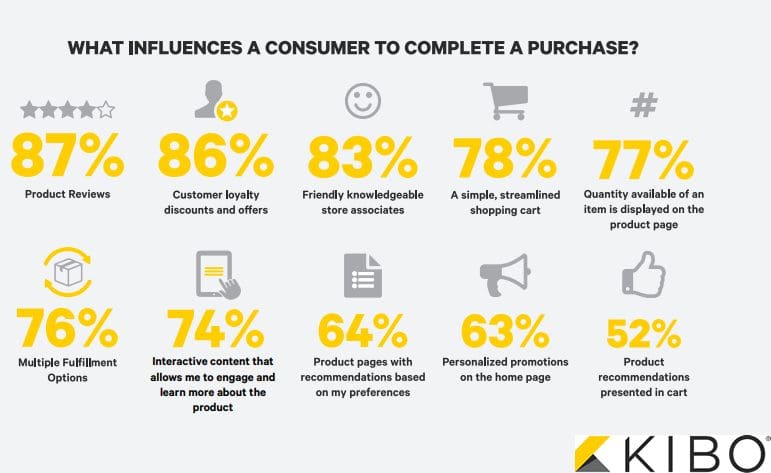
An important consideration about peer recommendations is that they amplify the firm’s marketing efforts without costing the brand any money (at least not the vast amounts required for traditional advertising) and these recommendations are more motivational because users view these opinions as objective.
Gaining more recommendations relies heavily on building quality products (including providing customer service that exceeds expectations) and delivering true customer value. Satisfied customers not only recommend your products online and in real life, but also become repeat buyers, a benefit discussed later in this post.
3. GEO takes the spotlight
Actually, as you’ll find as we go through this guide to digital marketing domination, much of what’s critical for success revolves around content, and SEO is no exception. To excel at SEO, your penultimate task is creating valuable content on a consistent basis. Sure, specific strategies improve your ranking on SERPs (search engine results pages), but getting your content marketing right hits most of the factors in the Google algorithm. Besides, the algorithm changes frequently, with each change reinforcing the need for high-quality content.
SEO ensures that when users want you, you’re at the top of their search results. And, with more search happening across voice, think about constructing your keywords to reflect the way your target market speaks.
With the explosion of AI, SEO hasn’t changed, but it isn’t sufficient to bring organic traffic to your site. You now need GEO (generative engine optimization) to achieve digital marketing domination. GEO focuses on creating content that addresses user intent and organizing it in a way that makes it easy for LLMs (large language models), like ChatGPT, to consume. With so-called zero-click searches, GEO increases your chances of gaining user attention because the LLM answers the user’s question rather than simply delivering a ranked list of websites.
 GEO also forces you to focus on E-E-A-T (expertise, experience, authority, and trust), which you demonstrate by creating content that’s information-rich, demonstrates thought leadership, shows your expertise and experience, and builds trust through social proof.
4. Digital marketing domination through advertising
As you can see in the image below, most brands have transitioned to digital, with all traditional advertising channels increasingly comprising less of the marketing budget. You’ll continue to see this trend as firms attempt digital marketing domination after seeing the results. Plus, technological changes and consumer preferences dictate you must stay ahead to optimize your revenue.
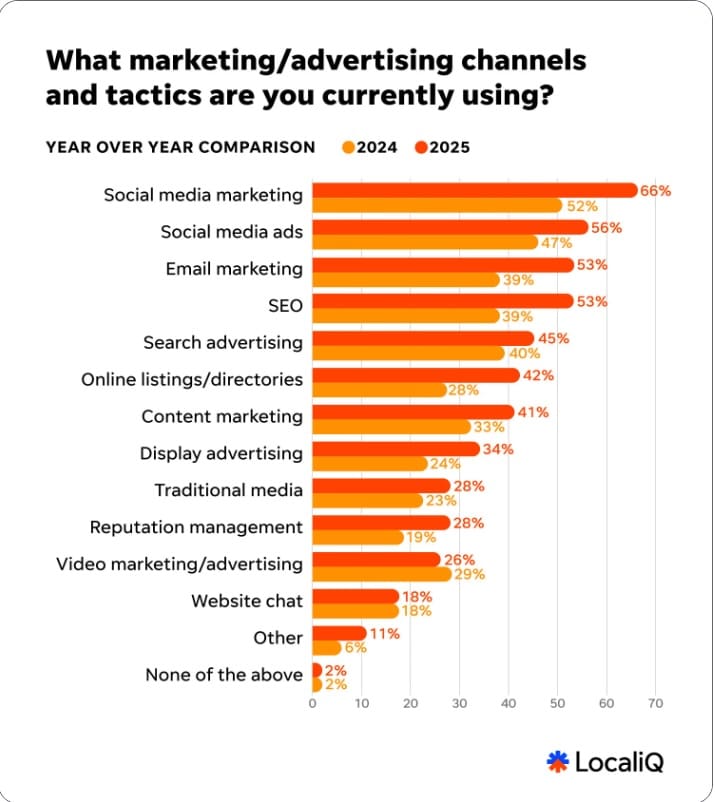
For instance, you’ll start to see a transition from social media as a marketing channel due to changes to the algorithm on most platforms that result in paltry numbers for organic reach, from a low of 1.25% on Facebook to 20% on LinkedIn.
To continue your strategy toward digital marketing domination, you need to consider adding digital advertising to your mix of tactics, given the dearth of organic traffic strategies that work for a small business on social media. The good news is that digital advertising, whether on search or social platforms, is very affordable and effective, especially since you only pay when a user takes action, such as clicking on a link. In fact, I recently completed an ad campaign on Meta (Facebook and Instagram), where each click only cost the company $.05. Below, you can see the average cost per conversion on major social media sites.
- Google Search Ads: ~$56.11 average (higher user intent makes leads more expensive)
- Google Display Network: ~$90.80 average (broader, more passive reach)
- Facebook Ads: ~$18.68 average (varies by targeting and retargeting setup)
- Instagram Ads: ~$25.00 average
- LinkedIn Ads: ~$75.00 average
5. Digital marketing domination by understanding customers
Customer journeys and related areas of customer experience represent the process involved in customers finding, engaging with, buying, and using your brand.
Check out this typical journey map highlighting the possible factors interfering with a positive customer journey:

In contrast, a positive customer journey is one where the customers progress seamlessly from initial problem recognition through search, and on to purchase. Post-purchase, customers may continue their journey by interacting with the brand for instructions, support, or to offer reviews. Each step must be carefully considered from the customer’s perspective, and all pathways must be implemented effectively to ensure customers don’t fall through the cracks.
Because users share ubiquitously on social platforms and you can surmise user intent by tracking queries, digital marketing provides the metrics necessary to better understand your prospective customer and tailor your content to each one. Armed with this knowledge, you can enact strategies that personalize your message to where an individual user is along the customer journey. As discussed earlier, this personalization offers significant rewards.
A better understanding also allows you to send personalized messages via email to subscribers and customers. With its high ROI potential (on the order of $3 to $5 for every dollar spent), email marketing is one of the best strategies for digital marketing domination.
Using internal data, you’re also in a position to optimize returns through strategies aimed at improving customer lifetime value and increasing average order size. These lead to digital marketing domination by increasing revenue, generating sustainable growth, and building a strong brand.
Conclusion
Obviously, this isn’t everything involved in digital marketing domination, so maybe this isn’t the ultimate guide to digital marketing. It is, however, a sound start on your journey to using digital marketing effectively and highlights critical differences between digital marketing and traditional media.
Need marketing help to support business growth?
We welcome the opportunity to show you how we can make your marketing SIZZLE with our data-driven, results-oriented marketing strategies. Sign up for our FREE newsletter, get our FREE guide to creating an awesome website, or contact us for more information on hiring us.
Hausman and Associates, the publisher of MKT Maven, is a full-service marketing agency operating at the intersection of marketing and digital media. Check out our affordable coaching programs to help your business thrive into the future.
Discover more from MKT Maven
Subscribe to get the latest posts sent to your email.


