 logo

Did you know that 97% of the visitors to your website leave without ever making a purchase? While lots of reasons explain this common behavior, what really matters is how to convert more of them. That’s where retargeting ads can give your website the conversion boost it needs to explode ROI. Today, we feature a how-to manual to help you make the most of your retargeting ads. First, we’ll explain what they are and why they work.

Retargeting ads
Below, you’ll find a how-to tutorial to help you create killer retargeting ads that truly deliver for your brand.
Face it. Driving traffic to your website is expensive, time-consuming, and takes experience. Losing visitors before you can convert them is like pouring water into a leaky bucket, where only 2-3% of those visitors convert, as you can see below in this graphic of the typical customer journey:
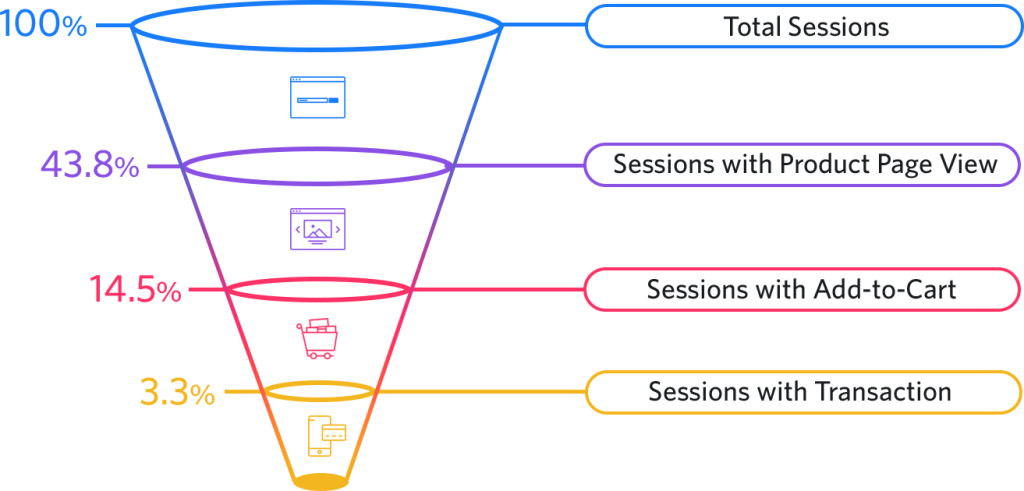
Retargeting ads work by patching some of the holes in that leaky bucket. These ads selectively reach visitors who have already shown interest in your products by visiting your website. These ads help:
- Remind visitors to return to buy something
- Offer additional incentives to purchase, such as discounts or special offers
- Reinforce your unique selling proposition
- Offer social proof or other incentives to take prior visitors across the finish line
How retargeting ads work
The mechanics behind retargeting are relatively straightforward yet highly effective:
- Visitor tracking – At any time when a user visits your site, a tiny little code called a tracking pixel embeds itself in the user’s browser. This pixel helps the company track what activity took place, such as viewing particular pages, checking items to buy, or moving stuff to the cart for actual purchase.
- Displaying ads – If such visitors do not convert, then pixel data helps in showing them targeted advertisements on other websites that remind them of the previous actions.
- Lead nurturing – Uses the same tracking pixel to selectively show your ads to visitors as they peruse social media or use search engines.
Types of retargeting ads
Display retargeting
They serve as banners or images within websites on the Google Display Network (GDN) or other ad networks to help remind users of products browsed on your site. For instance, if someone browsed through a catalog of running shoes, they are likely to see ads showcasing those same products while reading a blog or browsing through another site.
Search retargeting (RLSA)
Remarketing lists for search ads (RLSA) employ cookies or email lists to remarket to users who visited your website at some point in the past X period of time. For example, suppose someone searches for “ergonomic office chairs” on Google and visits your shop. If they fail to make a purchase, they might get your targeted ad with relevant choices when searching for similar products, thus ensuring high visibility during their active search time.
Email retargeting
Email retargeting uses customer email lists to re-engage users. Let’s take the example of marketing campaigns that offer promotions or abandoned cart emails that prompt customers to finish their purchases. To entice customers to return and check out something they are interested in, an e-commerce business can selectively show ads to consumers on their list or to those who left something in a shopping cart on their site. This can include sending an email offering a price reduction of 15% (for example) on items that are still in the cart.
Social media retargeting
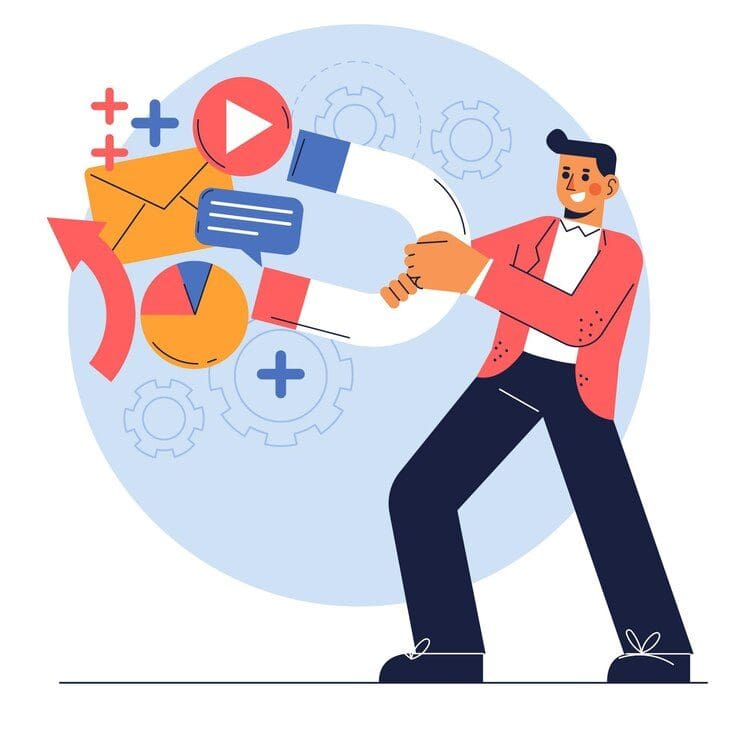
Retargeting may be most effective when done on social media platforms, as consumers spend increasing amounts of time on them. Businesses can display retargeted advertisements based on user involvement or behavior on channels like Twitter, Instagram, Facebook, and LinkedIn. These advertisements frequently have lively graphics and interactive components. For example, an online fashion retailer could use Instagram ads to display clothing items that a user had favorited but not purchased.
Dynamic retargeting
Dynamic ads give the shopping experience a personal feel by showing a user what they looked at or what they placed in their shopping cart. A user interested in a specific smartphone might see ads for that exact product later, with an offer such as “10% off – limited time!”. This targeted method increases conversions, up to doubling conversion rates.
Video retargeting
Video retargeting uses platforms such as YouTube or TikTok to display video ads in front of users who previously interacted with your site or products. For example, a travel agency would retarget visitors with rich video content featuring destinations the visitor viewed on the site.
Mobile app retargeting
Retargeting ads for business apps encourage re-engagement through the mobile app. Take the case of an e-commerce app, reminding in-app product views via push notifications or in-app advertisements.
Brands are more capable of retaining consumers and turning leads into paying customers when they combine all of these retargeting possibilities with personalized content and alluring offers.
A step-by-step guide to successful retargeting campaigns
1. Segment by intent

Above, you see three types of intent expressed by users. This differentiates them from those who simply visit your website. For instance, visitors might visit your website after an erroneous click, to collect information for a school project, by a competitor, or simply out of idle curiosity. None of these motivations will translate into conversion. Don’t waste your money advertising to these folks, as it won’t work.
Google Analytics is your key to identifying intent and constructing appropriate offers through your ads. As you can see in the table below, page depth and exit page offer keen insights as to the types of offers you might make and which visitors are worthy of spending money in an effort to convert them. By placing the tracking pixel on certain pages, you can laser-focus your ads or match creative to stage in the customer journey for each visitor.
[add from gemini once in page builder
2. Match creative to objections

Every good salesperson knows that selling begins when the prospect raises objections. By matching your retargeting ads to handle the specific objections that might arise in the prospect’s mind.
For instance, if the reason for cart abandonment is price-related, try adding a discount to your retargeting ad or highlighting financing options offered. An objection based on risk-aversion can be overcome by offering money-back guarantees or free returns. If they don’t trust your brand, offering social proof might do the trick.
3. Avoid overexposure
Don’t you find it annoying to see the same ad or ads from the same company every few posts in your social media feed or every time you enter a search term in the omnibox? Well, you need to avoid becoming “that brand” that generates negative emotions or wastes money with ad burnout.
There are two ways you can reduce the chances of overexposure. You can either: a) set a frequency cap, such as two impressions per user per day, or b) use “burn pixels,” also called exclusion lists. This ensures that once a prior visitor converts, they’re immediately removed from the audience targeted by your retargeting ads. For instance, a burn pixel would eliminate the multiple emails I get from Amazon after abandoning, then later returning, to finish the purchase of items left in my shopping cart.
Not only do these tactics avoid wasting your budget, but they also reduce user frustration.
4. Time-decay retargeting windows
As the prior visit gets further and further into the past, the chances of ultimate conversion slip away. Structure your retargeting ads using a time decay sequence such as:
Days 1-3 are peak conversion times because the product, its attributes, and price are fresh in the mind of the visitor. Remind them of the times they viewed and highlight the advantages of making a purchase.
Days 4-7, you might find thoughts of your products becoming more distant. Now’s the time to reinforce your benefits and provide social proof to make visitors feel more comfortable about making a purchase decision. It also might stimulate them toward action rather than waiting.
Days 8-14 require a little more direct incentive to stimulate a purchase. Add a discount or free shipping to your retargeting ads. Be sure to set an expiration date to encourage prompt action before the motivation fades away.
Days 15+ represent only a slight chance of motivating a visitor to return to make a purchase unless you sell B2B products with a long selling cycle or high-end consumer products that reflect shopping or specialty products that require significant comparison shopping, financing, or reflection (or maybe all three).
5. Landing pages must match retargeting ads
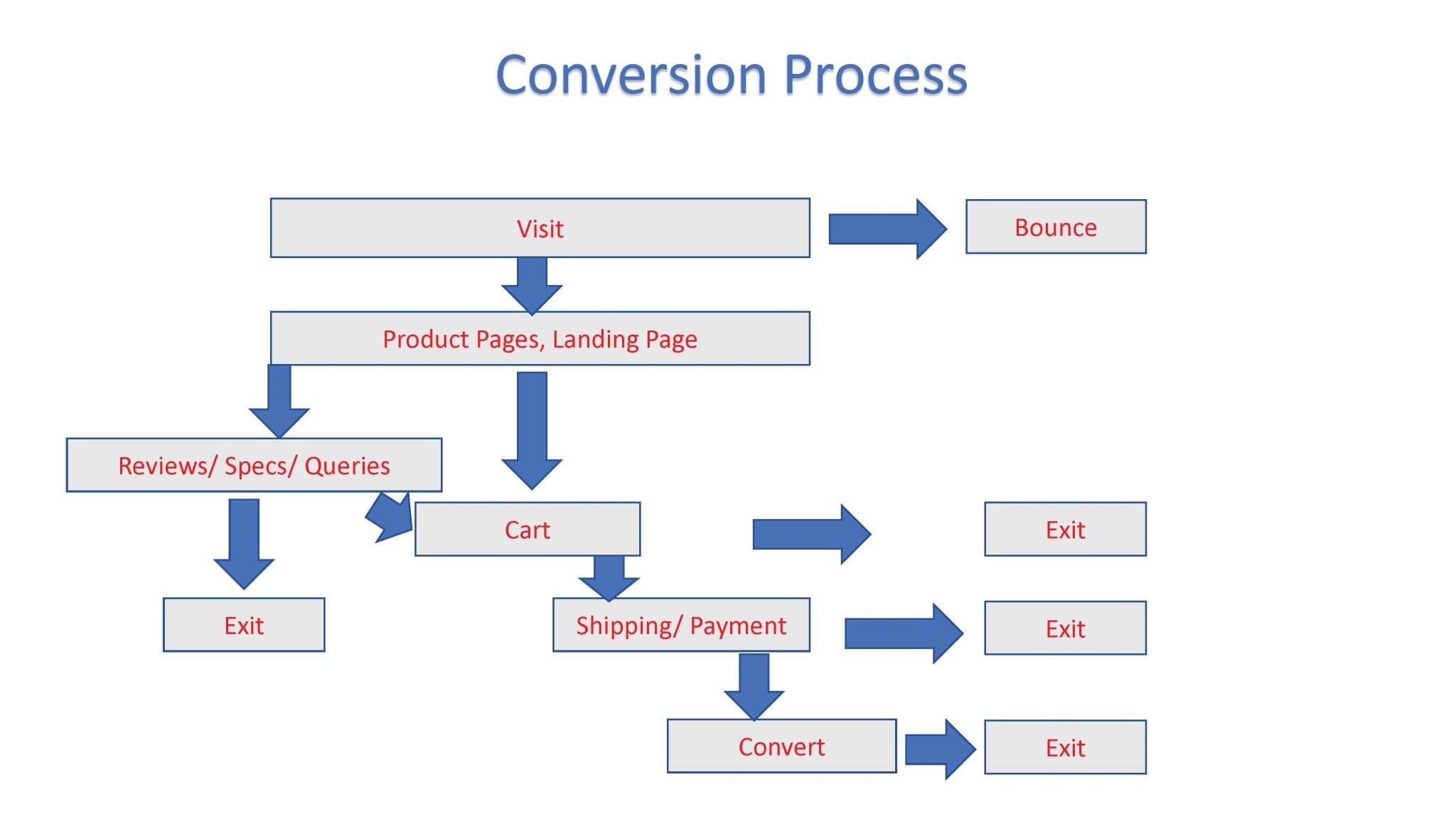
Never send a click from your ad to anything other than the landing page promised or promoted by your ad. Similarly, you must streamline your conversion page to allow for the fewest clicks possible once a visitor decides to purchase a product. As you can see in the image above, each click required gives the prospect a chance to exit your website without completing the purchase. This is standard advice for any type of digital ad you run, so this shouldn’t come as a surprise.
For instance, if the visitor viewed a page about trendy boots, the click should take users back to that page. If you offer a discount, pre-apply the coupon code.
Explore the advanced retargeting tactics
- Sequential retargeting – Guide the user through a sales funnel with sequential ads. After a user visits your site, show an ad with product benefits. If he doesn’t convert, follow up with a discount ad that encourages purchase.
- Exclusion lists – Avoid retargeting users who have already converted. By excluding them from your campaigns, you can focus your budget on acquiring new leads and prevent unnecessary ad spending.
- Geo-targeting – Deliver location-specific retargeting ads. For example, to increase the significance and engagement rate of ads for a limited-time deal in New York, only display them to users in that region.
- Lookalike audience retargeting – Create comparable audiences with Facebook’s remarketing data. This allows you to effectively reach a wider audience by focusing on new users with characteristics similar to those of your current clients.
- Dynamic product retargeting – Show ads with the exact same products users looked at or put in their cart. If a person is looking at a specific smartwatch, retarget him with that product and offer a discount on it.
- Video retargeting – Retarget viewers of your videos who did not act upon them. Display follow-up advertisements with more powerful calls to action, including “shop now” or “learn more.”
- Cross-sell retargeting – Following through with a successful purchase, retarget customers with ads for complementary products. So, if someone buys a camera, show them ads for lenses, tripods, or carrying cases.
- Behavioral retargeting – Based on the actions taken by a user, like spending much time on a specific page or clicking a call-to-action. Retarget the people who came across the “how-to guide” by displaying advertisements for relevant products or services.
- Occasion-based retargeting – Connect the user on certain occasions. Use this example by retargeting users on Valentine’s Day discounts by offering relevant products with Valentine’s Day-related discount schemes that they visited.
- Personalized retargeting – Use data to personalize ads with user names or preferences. For example, “Hi Alex, your favorite sneakers are back in stock!”
- Mobile-specific retargeting – Target the type of device used: present the experience with mobile-friendly ads only on smartphone browsers so it remains smooth.
- Content retargeting – Promote blog posts, ebooks, or guides that are in line with the user’s interests based on their past browsing history, gradually building them up to conversion.
- Subscription retargeting – Target users who almost subscribed to your newsletter or service but didn’t complete the process with incentives like free trials or exclusive content.
- AI-powered retargeting – AI tools can analyze the behavior of a user and optimize ad delivery based on the same. Ai will predict which users are more likely to convert and ensure that they see more ads.
- A/B testing in retargeting – Experiment with different ad formats, designs, or messages to determine what works best for your audience and refine strategy based on that.
With these advanced strategies together, businesses can make a complete retargeting campaign across touch points, which enhances trust as well as efficiently converts prospects.
Conclusion
Retargeting ads are a great tool for making vast improvements in your conversion rate and ROI. By understanding where and why visitors left without making a purchase and generating retargeting ads based on this how-to manual, you’ll quickly find you not only improve your conversion rate, but do so without breaking the bank.
Need marketing help to support business growth?
We welcome the opportunity to show you how we can make your marketing SIZZLE with our data-driven, results-oriented marketing strategies. Sign up for our FREE newsletter, get our FREE guide to creating an awesome website, or contact us for more information on hiring us.
Hausman and Associates, the publisher of MKT Maven, is a full-service marketing agency operating at the intersection of marketing and digital media. Check out our affordable coaching programs to help your business thrive into the future.
Discover more from MKT Maven
Subscribe to get the latest posts sent to your email.


