 logo

With precipitous declines in organic reach on search and social media (see image), you need a new strategy to bring traffic to your website. Becoming a Meta Ads hero is a great way to bring in traffic. Done right, your Meta ads (Instagram and Facebook) bring the RIGHT visitors to your website, helping you reach your revenue goals. Stop wasting your budget by exploding your ROAS (return on ad spend). Read on to learn how to make the most of your ad budget.

Why running Meta ads makes sense
 There are lots of reasons why it makes sense to become a Meta Ads hero. Meta Ads gives you access to both Facebook and Instagram, as well as Messenger, through a single portal, which makes it easy to set up ads (as you’ll see below). Here are a few to help you determine if Meta Ads are right for you:
- Unmatched audience potential – with 3.9 billion active users every month, Meta Ads offer the ability to reach your audience, whatever their characteristics are. You choose which audience and where to show your ads, whether that’s Reels, Marketplace, Feeds, Stories, or Messenger.
- Meta offers advanced AI to help you generate your ads using behavioral signals from users to find those with real intent. Meta’s algorithm helps you find high-value customers to help you optimize AOV (average order value) and CLV (customer lifetime value), not just any user.
- With a variety of ad types (from carousels to videos, to retargeting), you can create ads that fit wherever users are in the conversion funnel.
- Data integration with the Pixels and Conversion APIs provides you with powerful tools for tracking user behavior.
- Create an audience based on an almost unlimited number of behavioral and interest categories. You can also choose to target Lookalike audiences that resemble current customers. This helps you laser-focus on the RIGHT users to reduce ad waste and optimize ROAS.
- Meta Ads are designed to fit any business’s budget. Spend as little as a few dollars a day to test your ad before increasing your spend. Even a small budget can deliver powerful results, with CPC (cost per click) as low as $.05 (based on my actual results).
Setting up your Meta Ads account
You can’t hope to become a Meta Ads hero if you don’t set up your ads account properly. Hence, we’ll start with this important step before getting into how to run ads on Facebook and Instagram.
Note that Meta changes the interface used, so ensure you’re getting the most up-to-date information before setting up and running ads. This information is current as of this date.
1. Setting up an account
Meta Business Suite is where you start on your journey to become a Meta Ads hero. You can access this from your brand’s page or go directly to this site in your browser. Next, link your Facebook page and Instagram Business Account (you can only run ads from these properties).
The Meta Pixel is a small piece of code that helps track users on your website. This allows you to do remarketing by sending ads only to users who have already visited your page. A conversion API performs a similar task, helping you avoid privacy issues and ad blockers.
2. Campaign objectives
It can be a little daunting when you first access the Meta Business Suite once you click CREATE, due to the vast number of options designed for maximum flexibility and optimized ROAS. A Meta Ads hero spends the time to learn how to use these options to reach their goals, rather than relying on AI to generate what it thinks you need.
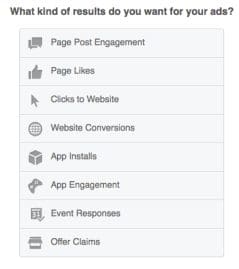 Your first choice, and one that deserves serious consideration, is your campaign objective, as this determines much of how your ad performs. Here’s a guide to help you choose:
| Objective | Best for |
| Sales | E-commerce, driving purchases in-store |
| Leads | Subscriptions, forms |
| Traffic | Site visits |
| Engagement | Likes, shares |
3. Define your audience
Here’s the key to becoming a Meta Ads hero — choosing the right audience. This is why you can deliver real results without a high advertising budget. The more focused your audience is, the better your ROAS. To help you, Meta keeps track of the estimated audience size as you scroll through the targeting options (see screenshot below).
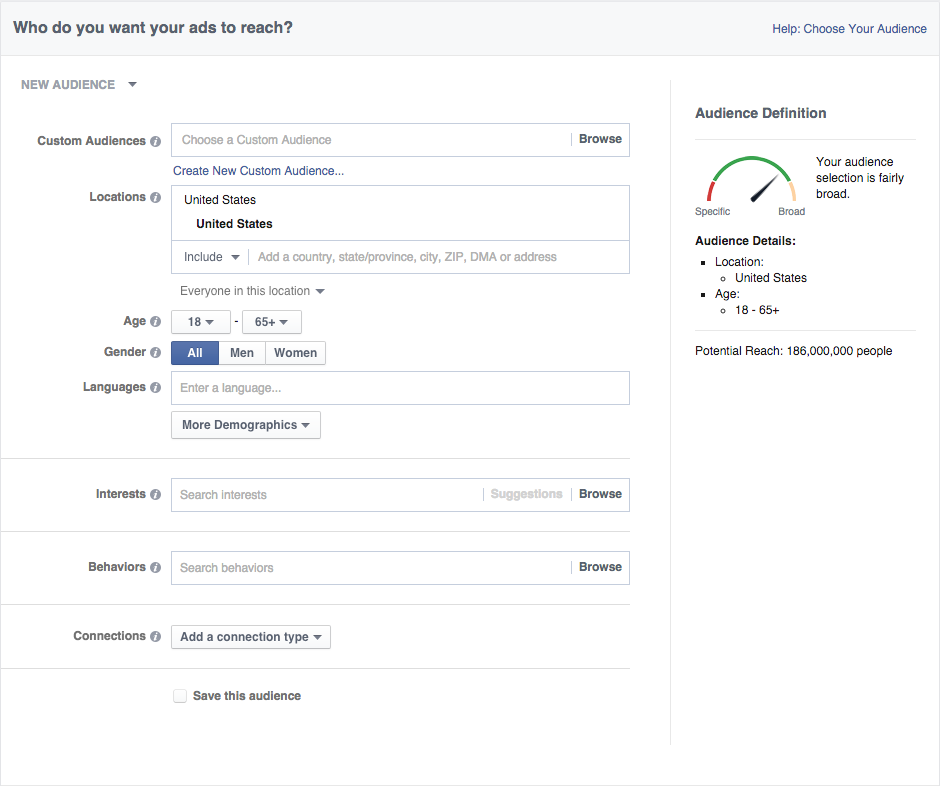
- A broad audience may simply involve demographic variables such as age, gender, or location. You’ll reach a lot of users, but you may find you don’t get many who actually help you reach your goal.
- Interest and behavioral targeting are a much better approach, as you can choose users who display interests or actions that indicate intent because they have buying characteristics, like need.
- Custom audiences are based on uploading lists of customers, website visitors, or video viewers. These are great because they’re a warm audience, with awareness and interest in your brand.
- Lookalike audiences are users who share characteristics with a group you already found valuable. For instance, if someone looks like a customer or follower, they’re more likely to make a purchase or help you achieve another goal.
4. Set your budget
A Meta Ads hero doesn’t have to spend a lot of money to reach their goals. They simply know how to maximize their budget. As we already discussed some ways to do this, let’s confine our discussion to placement and budgeting.
A good rule of thumb when it comes to placement is to use Advantage+ placement, which delivers ads across a broad range of Meta platforms. As your ads run, the platform learns what’s working to make recommendations and adjustments to optimize for your goal.
You need a sufficient budget to give the platform time to learn. Since most small businesses need to control their ad spend, I always recommend setting a campaign budget, rather than a daily limit. Recently, Meta committed to only charging up to your budget, with any additional cost absorbed by the platform, which is very different from Google Ads, where you can easily find yourself exceeding your budget.
5. Build your ad
This is where a true Meta Ads hero shines. You can choose to show a video, image, or carousel, but ensure your image resonates with your target market, stands out, and stimulates engagement.
Your primary test will appear above the visual. Here, you want to highlight your value proposition.
A headline appears next to your CTA (call to action) and should entice users to click.
The CTA is a critical element. Read my post on killer landing pages to learn more about crafting a CTA that delivers.
5 Strategies to become a Meta Ads hero
A Meta Ads hero knows how to not only create an ad but also get it to deliver without spending a lot of money. ROAS is the name of the game because no small business can afford to waste its ad budget.
1. Strategies for creative
Give some serious thought to your creative. Test it with existing customers before you set up your ads. Here are some considerations:
- Hook users within 2 seconds with an eye-catching image and snappy headline.
- Use UGC (user-generated content) or images of real people using your product.
- Mobile is king on social media, so design for a vertical screen (9:16). Since viewers often have their audio turned off, don’t rely on it.
2. Match your ad to your landing page
Just as with search ads, a Meta Ads hero knows to match the content of their ad to the landing page. This reduces costs, but also avoids confusion. Users expect to see your offer and product information when they click, not a generic page. If you’re targeting a warm audience, keep in mind that they’re in a different stage of the conversion process than a cold audience.

3. Test
No Meta Ads hero has omniscient powers. They know that testing is critical for success. Hence, they test key elements of their ads before rolling them out. Three elements to test are:
- The hook
- Visuals
- CTA
Use metrics like CPA (cost per acquisition) or ROAS to determine the winner.
4. Scale gradually
Increase your budget slowly, continually testing key metrics as you increase your budget by 15-20% every couple of days.
5. Monitor key metrics
We’ve discussed metrics in general. Now, it’s time to get into the nitty-gritty, as every Meta Ads hero knows that analytics separates the successful from the failures. Here are the key metrics along with benchmarks to help you determine whether your campaign is successful or not:
| Metric | What It Tells You | Benchmark / Goal |
| ROAS (Return on Ad Spend) | Revenue generated per dollar spent | Above your breakeven threshold |
| CPA (Cost per Acquisition) | Cost to acquire one paying customer | Aligned with target profit margin |
| CTR (Click-Through Rate) | How engaging the ad creative is | Target > 1.5% on link clicks |
| Conversion Rate | How effectively the landing page converts traffic | Target 2–4%+ (varies by industry) |
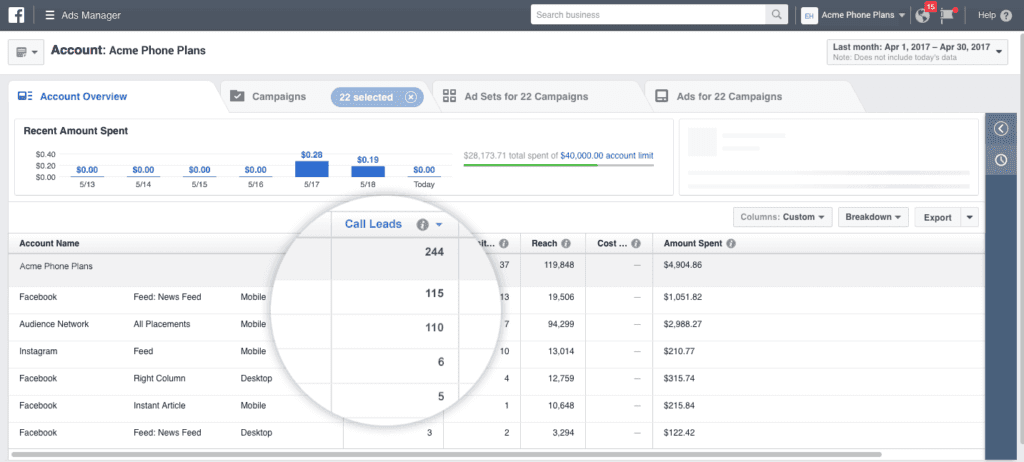
But you won’t find all these metrics in your Meta campaign report. You’ll find CTR, as well as other metrics (see below), natively. Getting the number of purchases is a little harder. You have to track clicks from the ads to view your conversions, which is possible through Google Analytics.
Conclusion
Becoming a Meta Ads hero takes some time. You need to learn how to make the most of the platform, then practice creating and running ads, as well as monitoring the results to judge how well you’re doing. However, unlike many of the strategies we discuss on these pages, advertising delivers nearly immediate results. And, with declining organic reach across alternative digital marketing tactics, it’s a great way to continue building your brand.
Need marketing help to support business growth?
We welcome the opportunity to show you how we can make your marketing SIZZLE with our data-driven, results-oriented marketing strategies. Sign up for our FREE newsletter, get our FREE guide to creating an awesome website, or contact us for more information on hiring us.
Hausman and Associates, the publisher of MKT Maven, is a full-service marketing agency operating at the intersection of marketing and digital media. Check out our affordable coaching programs to help your business thrive into the future.
Discover more from MKT Maven
Subscribe to get the latest posts sent to your email.


