 logo

Maybe you think the terms marketing and digital marketing are interchangeable. Well, you couldn’t be more wrong. I hope this post can convince you that you need both marketing and digital marketing to succeed in your industry regardless of which sector you compete in, who makes up your target market, and where you distribute your goods and services. Even as a small business with limited resources, you should spread your budget to cover both aspects of marketing. So, let’s jump into today’s discussion.

What is marketing?
Definition
According to the American Marketing Association, marketing is:
the activity, set of institutions, and processes for creating, communicating, delivering, and exchanging offerings that have value for customers, clients, partners, and society at large.
A group of marketing practitioners and academics recently revised this definition to consider the modern role of marketing within the organization. You’ll find other definitions online, most focusing on aspects of advertising and/ or sales, but this definition encompasses the proper role of marketing in providing value to stakeholders. Value drives everything in marketing, from building stable relationships with suppliers and vendors to those with customers that encourage them to make repeat purchases and share their positive reviews to encourage other consumers to make a purchase. Hence, because of the centrality of value in business success, we’ll go with this definition.
An outgrowth of this definition is the concept of the marketing mix, often referred to as the 4 P’s — product, price, place (distribution), and promotion. Again, experts disagree as to the composition of the marketing mix, with some preferring the 7 P’s or other constructions, such as the one below.

Channels
Marketers use a variety of channels to distribute information about products in hopes of convincing consumers to buy their brand. While you might still think of marketing as old-fashioned, focusing on traditional media, marketing is a broad tent that considers all viable channels for disseminating brand information to customers, prospective consumers, vendors, suppliers, investors, and other stakeholders, including:
- Traditional media, such as TV, radio, and print
- Digital media, such as social media and blogs
- Direct media, such as email, SMS (short messaging service) and snail mail
- Outdoor, including billboards, bus wraps, and subway platform signs
- Peer-to-peer, such as guerilla marketing, influencer marketing, and brand ambassadors
- Corporate sponsorships, including naming rights to stadiums and supporting charity events
- Trade shows and networking events
What is digital marketing?
Again, let’s turn to the American Marketing Association for our definition of digital marketing.
Digital marketing refers to any marketing methods conducted through electronic devices which utilize some form of a computer, including online marketing efforts conducted on the internet. In the process of conducting digital marketing, a business might leverage websites, search engines, blogs, social media, video, email and similar channels to reach customers.
By carefully considering these two definitions (from a single source), we see that digital marketing is really a subset of marketing communication (rather than marketing). Thus, an accurate comparison should be made between digital marketing and traditional media rather than with marketing itself. 
Tactics involved in digital marketing
While traditional media involves highly trained employees for tasks like creating a video (e.g., videographers, actors, scriptwriters, editors, and directors), print ads (e.g., graphic designers, photographers, and models), and radio commercials (scriptwriters and voice actors), digital marketing more heavily relies on a marketer’s skills to perform all these functions. That’s because digital marketing moves at the speed of an electron. With traditional media, you have days or months to produce an ad, but in a digital world, you may have seconds or minutes (hours if you’re lucky). That doesn’t allow time to parse out the work to those with specialized skills in one aspect of advertising. Today’s marketers working in digital marketing need a host of new skills that allow them to complete the following tasks common in a digital marketing strategy.
- social media marketing, including creating posts and targeted advertising campaigns
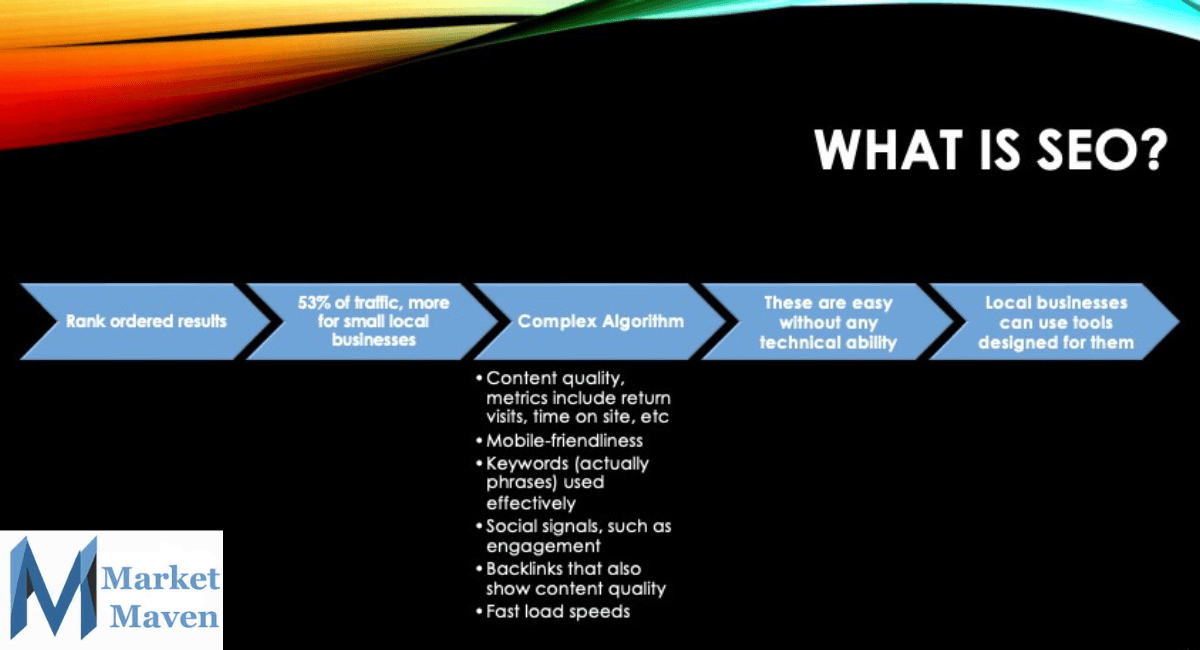
- SEO (search engine optimization), which involves finding appropriate keywords (phrases), building backlinks, creating optimized, valuable content on a consistent basis, and more

What is SEO, and how does it impact your business performance? - Search engine marketing, which involves search advertising to capture users when they search for related products
- Content marketing, including creating a content marketing calendar and using marketing automation tools to ensure consistent content is shared across all platforms, including your blog
- Email marketing, including building subscriber lists and sending personalized email messages
- SMS, including sending personalized text messages
- Remarketing campaigns to reach users already interested in your brand
- Influencer marketing, which involves finding and supporting influencers, whether they’re paid or unpaid
- Affiliate marketing, which involves renumerating websites and other platforms for hosting your advertising or posting reviews
- Mobile advertising
Marketing and digital marketing
I hope you now have an idea of how marketing and digital marketing are different and how they are similar. Next, let’s talk about the advantages of each type of marketing.
Advantages of digital communication
Digital marketing is more than simply sharing the types of communication standard in traditional media across the internet. If you want to determine the significant differences between digital marketing and traditional media, I’ve written a post that outlines the differences, which you can access here. I’ll briefly discuss those differences below.
- Provides data, which is sorely lacking from traditional marketing practices. In some ways, the amount of data available through digital platforms is overwhelming, especially for data analytics novices or small businesses that can’t afford specialized employees to derive insights from the mountains of available data.
- Traditional media involves one-way communication. The brand talks and consumers listen, or not. Digital marketing is a two-way conversation between the brand and consumers. It also involves peer-to-peer communication, which is like word-of-mouth on steroids in terms of its impact on consumer buying decisions. Two-way communication allows a brand to build stronger relationships with stakeholders that generate profits. Ignore this at your own peril.
- Up to 81% of consumers start a product search online, so you can’t afford to ignore this statistic.
- Traditional media is losing eyeballs at a rapid pace. Younger consumers almost never read a newspaper, watch broadcast or cable TV, or listen to commercial radio.
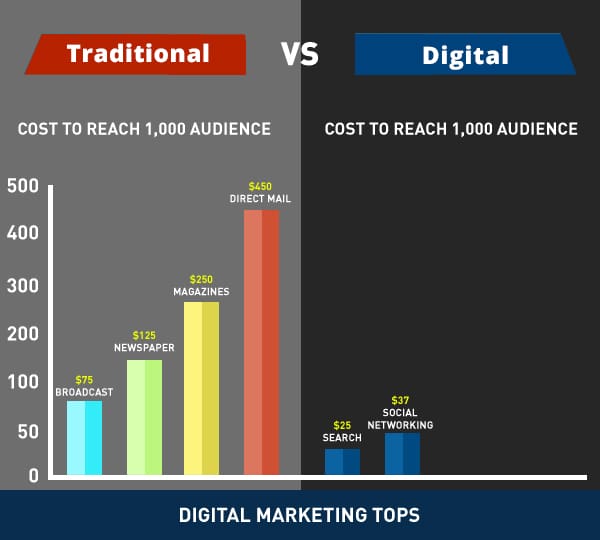
- It’s much cheaper than traditional media, especially when you look at the ROI (return on investment). In part, this is due to low advertising rates and, in part, to the higher conversion rates possible by using digital tools. However, the lack of credible statistics for traditional media makes this advantage a little suspect.
Advantages of marketing
Marketing is not without its advantages. Below are some benefits offered by marketing.
- Since marketing is more than communication, you need marketing to address other aspects necessary for your success, such as innovation and distribution.
- If a brand doesn’t constantly innovate (products, processes, etc.), it risks falling behind competitors that do.
- Distribution costs are a significant portion of the selling price for most products. Hence, failing to control these costs can quickly make your price uncompetitive.
- As we found out during the pandemic, customers want their products available whenever they choose to buy them. Fast shipping is a crucial determinant of purchase decisions (59% report this as a major factor) for most consumers.
- Marketing focuses on core concepts such as segmentation and positioning in determining your target market and how to create messaging that resonates with them. This underpins personalization and improves the performance of your communication efforts.
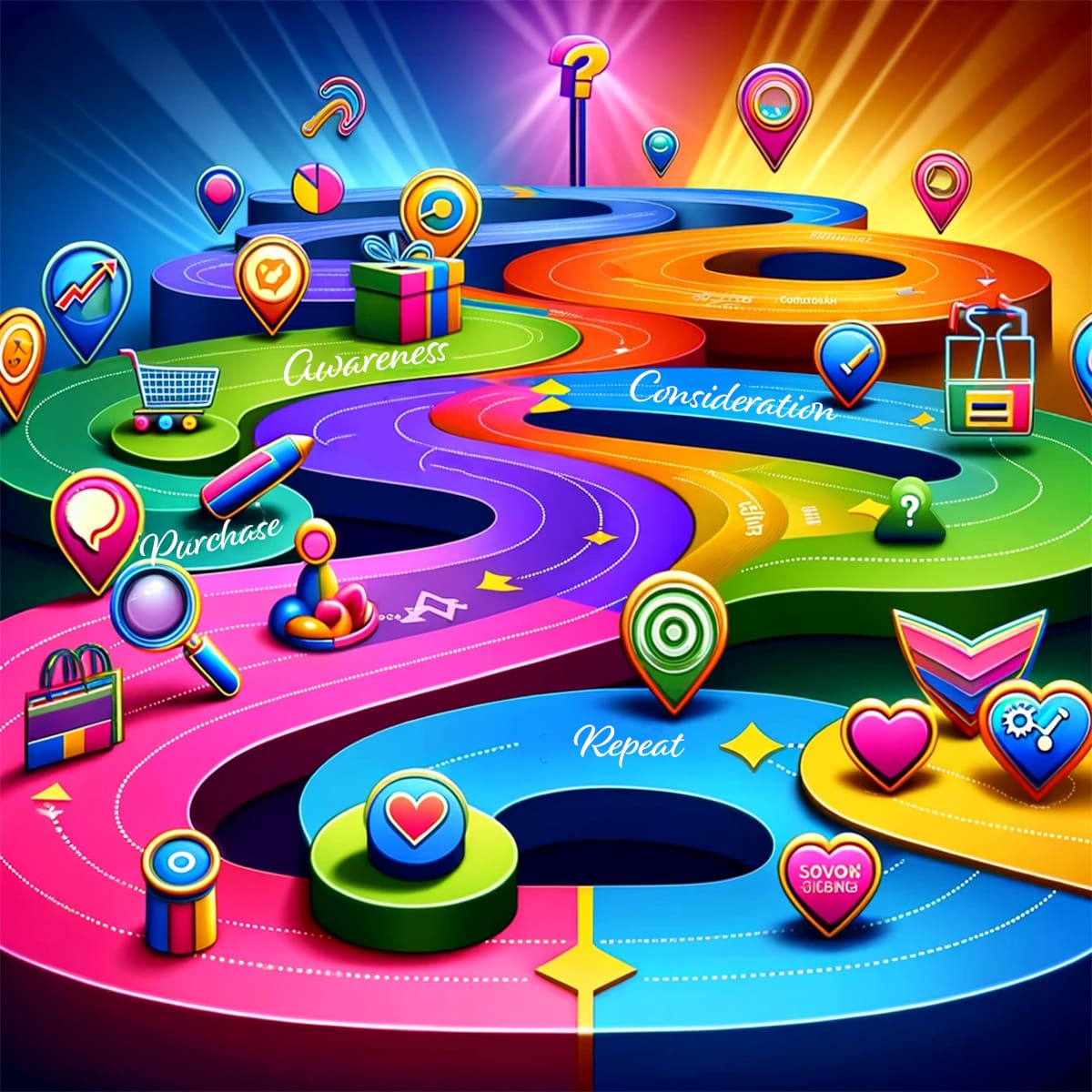
- Marketers recognize the process consumers go through before making a purchase decision (see below). That means creating content that addresses each stage along this process to gently guide consumers toward buying your brand. Notice the cyclical nature of this process, which better reflects the customer journey rather than the traditional linear process.
- Branding is an integral part of marketing, regardless of where you share your communication. If you hope to optimize your market performance, you must create a consistent brand that resonates with consumers.
- While price isn’t the most significant determinant of purchase intentions, it has a big impact. Consumers want products that provide value (and now we return to our initial contention that value is a significant factor whether you refer to marketing or digital marketing). A product with a higher price that represents a more substantial value will find buyers. However, consumers use different metrics to assign value to a product. One consumer might see a Rolex represents a great value because they assign value to ancillary aspects of the product, such as status, durability, and visual appeal. In contrast, another consumer finds a higher value in a smartwatch with a lower price that appeals to the tech nerd in them with its integration into their smartphone.
Why you need marketing and digital marketing
I hope I’ve convinced you that you need both marketing and digital marketing to optimize your market performance. Even if your target market doesn’t use digital technologies (and that’s not a good bet unless your target market is over 80), you need digital marketing because those who influence your target market are on digital platforms.
The trick is combining your marketing with your digital marketing strategies. Unfortunately, it’s hard to find employees adequately trained in both tactics, as universities failed to incorporate digital marketing into their marketing curriculum adequately or failed to find faculty capable of teaching both seamlessly. Instead of teaching graphic design principles, video editing, social media algorithms, data analytics, and PPC (pay-per-click) advertising, curricula force marketing students to study debits and credits and monetary policy. Rather than learn the basics of web design and SEO, students focus on analyzing stock reports. They learn traditional statistics rather than Python and data analysis. Hence, most companies still silo workers by the tactics they use or hire different agencies to handle PR, advertising, and digital marketing, which makes it nearly impossible to integrate strategies across platforms (trust me, I’ve been involved in some unproductive power plays across agencies that cause them to work independently too often).
Conclusion
Hopefully, you now understand both the differences between marketing and digital marketing as well as appreciate what each has to contribute to the success of your firm. Good luck and let me know how it turns out for you.
Need marketing help to support business growth?
We welcome the opportunity to show you how we can make your marketing SIZZLE with our data-driven, results-oriented marketing strategies. Sign up for our FREE newsletter, get our FREE guide to creating an awesome website, or contact us for more information on hiring us.
Hausman and Associates, the publisher of MKT Maven, is a full-service marketing agency operating at the intersection of marketing and digital media. Check out our full range of services.
Discover more from MKT Maven
Subscribe to get the latest posts sent to your email.


