 logo

In a modern business, you must utilize a variety of marketing channels to reach and engage with your target market. Each channel, from email to social media and digital to print, plays a crucial role in an integrated marketing strategy. Enhancing the performance of each of these channels, as well as increasing coordination among them, is essential for achieving a competitive edge and driving more effective results in today’s hypercompetitive landscape. Here’s how you can elevate all the marketing channels you are currently using to improve performance.
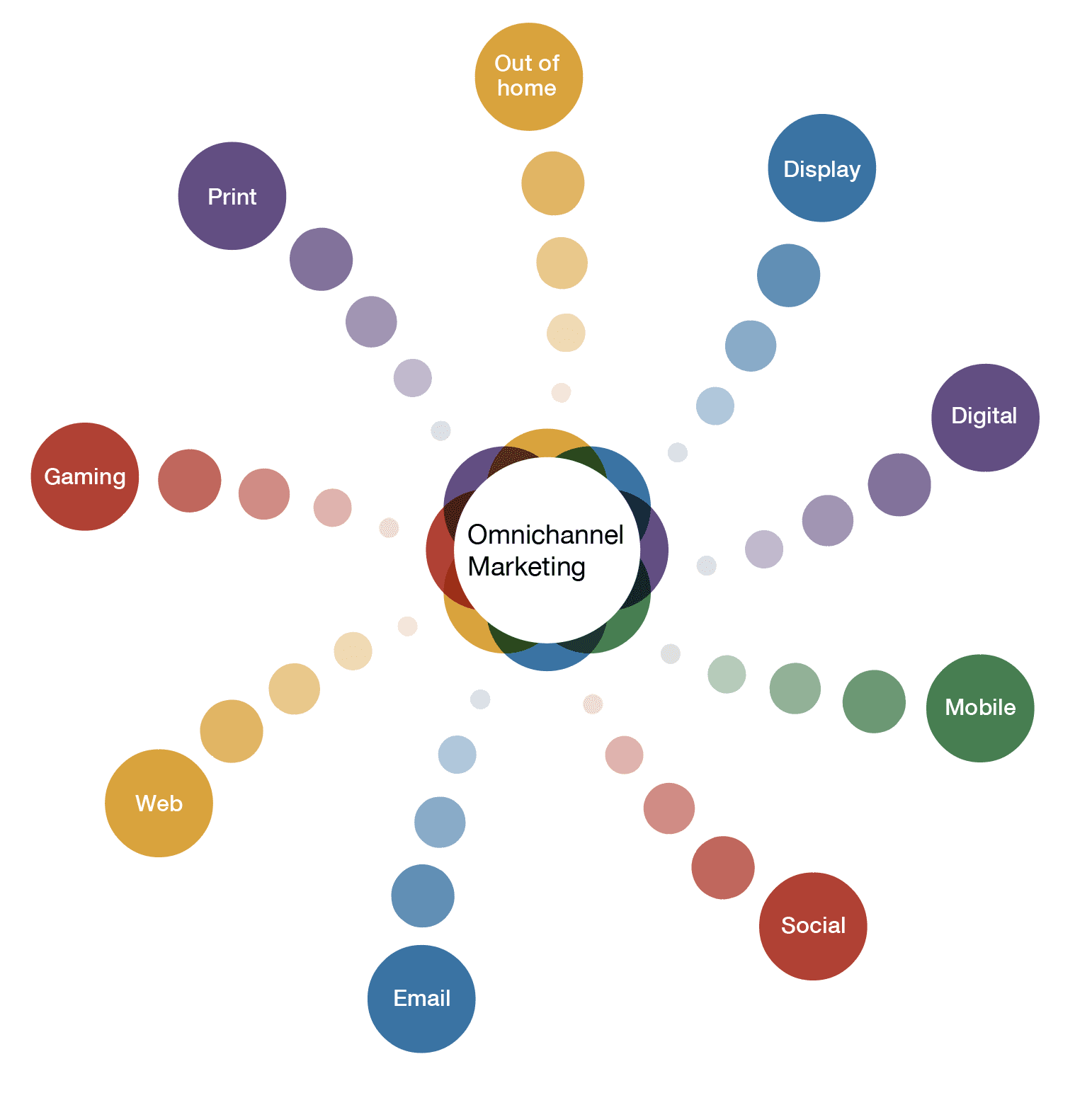
How to improve the performance of all your marketing channels
As you can see in the graphic above, you have lots of options when it comes to determining which marketing channels to invest your limited resources in. Obviously, you can’t put “all your eggs in one basket” and choose a single channel to fulfill all your marketing needs (and a few were left out of this graphic, including advertising channels such as PPC (pay-per-click), broadcast, and cable TV, outdoor, and in-store displays). Instead, you must choose a few marketing channels that fit your target market and your budget, as well as your skill set. That takes dedication to collecting and analyzing data rather than making snap judgments based on superficial elements such as age in your demographic.
Once you have wisely chosen a few marketing channels that will maximize your chances of reaching the majority of your target market, we can discuss how to optimize their performance. So, let’s jump right into that topic.
Understanding each channel’s unique role
The first step in optimizing your marketing efforts is to understand the specific role and strength of each channel within your strategy. For instance, while social media is excellent for building brand awareness and engagement, email marketing is more effective for driving conversions (as you can see in the graphic below). That might make it tempting to spend all your resources on email marketing, SEO (search engine optimization), social, and webinars. But that’s the wrong decision.
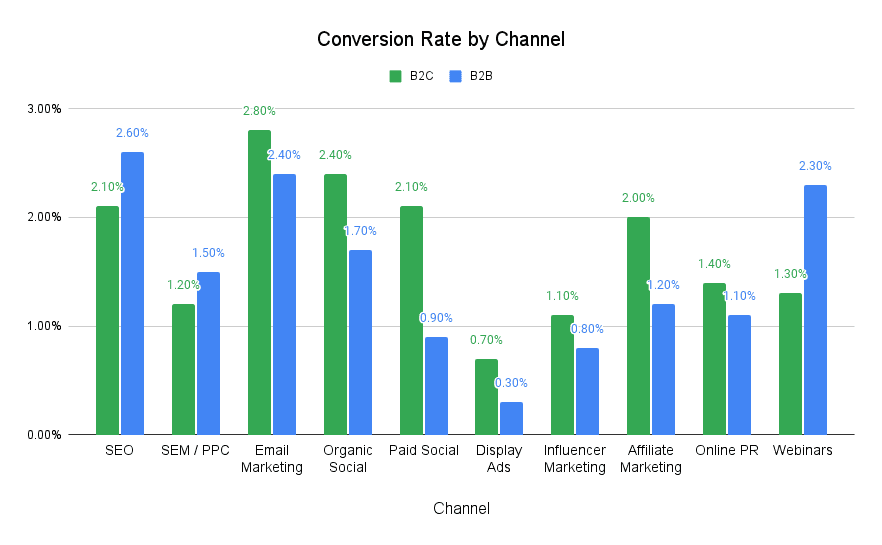
It’s the wrong decision for two reasons. First, prospective buyers must go through the decision-making process before purchasing. That means awareness (as the first step in that process) is essential as a precursor to a purchase decision. Second, email marketing is a two-pronged strategy that first requires you to build a subscriber list. Other marketing channels are necessary to create the list before your email marketing campaign. Buying lists is now illegal in most jurisdictions, as is sharing or renting email lists.
Another consideration is a little more nuanced. Prospective buyers and existing customers respond better to marketing materials prepared for different platforms. For instance, one consumer may respond better to a video appeal on TikTok, while another might prefer to read a detailed analysis of your product’s performance in a blog post. You also find that consumers must see your marketing materials multiple times (we call this frequency) before reaching a purchase decision. While the number of exposures it takes before a consumer buys varies from different experts, but six to eight touches (or reach) is commonly cited. By spreading out those touches across marketing channels, you can avoid ad burnout and the reduced performance that accompanies it.
Recognizing these distinctions allows you to tailor your approach to each channel according to its strengths and the preferences of the audience it reaches.
Leveraging AI for SEO
SEO is critically important in today’s digital world, where more than half of all purchases involve at least one digital step. In one study, that number was 81%. This statistic indicates the power of your website as a marketing tool, and the best way to increase the amount of traffic visiting your site is to improve your rank so that when users search for products you sell, they find your links near the top.
SEO tactics involve making a series of changes to your website. Some of these are more technical, but many involve the content you create. These types of changes are relatively easy to implement without making a massive investment in new skills, although it takes time to see any improvement in your rank.
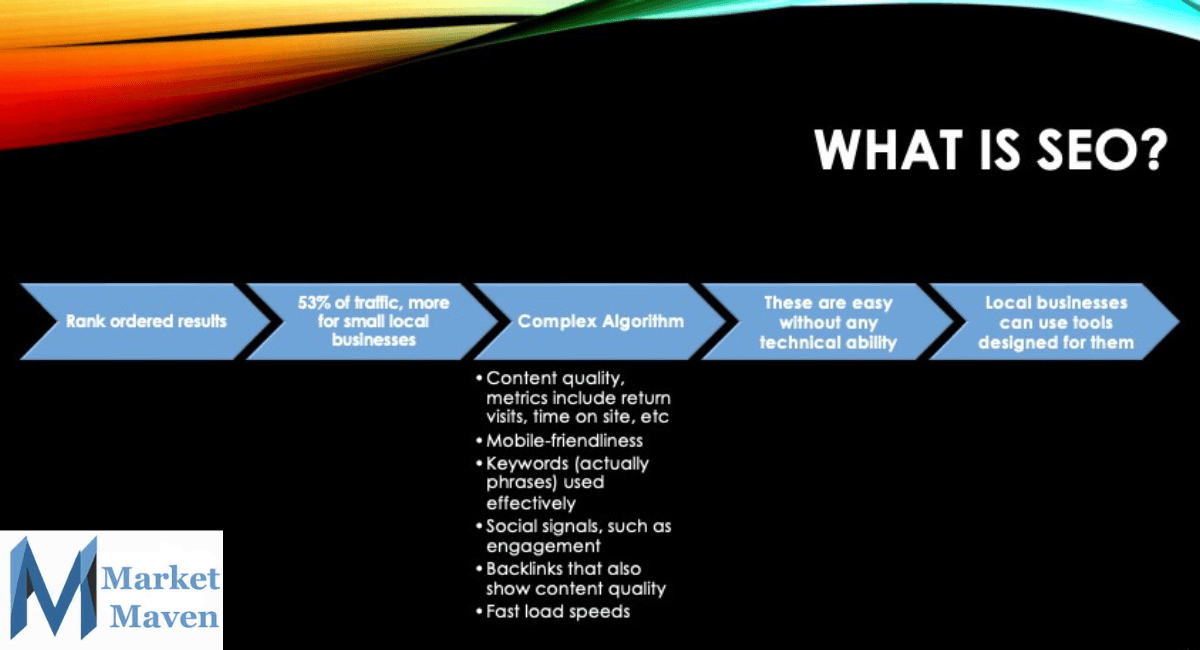
Key factors that impact your rank are:
- keywords, which determine when your links show up based on a user’s query
- backlinks from other websites
- quality of your content and consistency in publishing it
- the user experience, which includes easy site navigation, skimmable content, and visual appeal
- social media engagement, which is a measure of quality
An AI keyword research tool can significantly enhance your market performance by identifying the most effective keywords for your content and advertising campaigns. These tools use advanced algorithms to analyze search trends and user behavior, helping you uncover not only high-volume keywords but also niche phrases that your competitors might overlook. By incorporating these keywords into your content organically, you can improve SEO across your digital platforms, attract more targeted traffic, and achieve better engagement rates. AI tools can also predict keyword performance, enabling you to adapt your strategy proactively to market changes and consumer interests.
Consolidating data for a unified strategy
Data is the backbone of any successful marketing strategy. By consolidating data from all channels, you gain a comprehensive view of your customer’s journey and interactions with your brand. This holistic view enables you to create more personalized and targeted marketing efforts that resonate across all platforms. Tools like CRM systems and analytics platforms can help you track and manage data effectively, ensuring that you’re making decisions based on accurate and up-to-date information.
For instance, most customer journeys involve multiple steps. By analyzing your data, you can determine the most frequently used combinations of marketing channels employed by different segments of your target market. This information allows you to build the right content in the right channel for each segment to help consumers in that segment move easily to the next stage of their journey.
Multichannel attribution modeling allows you to apportion the value of a sale between the various marketing channels that make up a customer journey. Armed with this knowledge, you can more effectively budget resources so that each channel gets the resources it deserves based on its contribution to your performance.

Data are also valuable in determining what’s working and what isn’t.
- Do some posts garner more engagement than others?
- Drive more traffic to your website than others?
- Do some days or times of day to send email messages work better than others?
- Answering these and other questions about each marketing channel’s performance helps you make informed decisions that improve performance.
Enhancing content quality across channels
Content drives engagement in every marketing channel, whether it’s an article for your blog, a post on social media, or an email newsletter. Improving the quality of your content is pivotal. This involves not only ensuring that your content is engaging and informative but also that it is optimized for each platform. What works on Instagram, a visually-driven platform, might not work on LinkedIn, where professional and data-driven content performs better. Tailoring your content to fit the platform while maintaining a consistent brand voice is vital.
Optimizing for mobile users
With smartphones’ increasing prevalence, optimizing for mobile users is no longer optional; it’s essential. This means ensuring that all your digital content, from websites to emails, is responsive and provides a seamless experience on mobile devices. Mobile optimization affects not only user experience but also SEO, as search engines like Google prioritize mobile-friendly websites in their rankings.
Another channel to consider is SMS (short message services), which are mobile messaging platforms like Messenger, WhatsApp, and WeChat. Today, more email platforms also support SMS, which has high open rates, immediacy, and low cost.
Engaging with your audience
Engagement goes beyond just sharing content and includes actively listening and responding to your audience. Use social media platforms, email responses, and even comments on your blog to engage in meaningful conversations with your audience. This not only builds relationships but also helps you gather valuable feedback that can be used to refine your marketing strategies further.
This engagement should include efforts to encourage users to post content, as this acts to spread your message to new users as well as acts as a tacit endorsement of your brand that inspires others to buy your products. Generating UGC (user-generated content) is a strategy unto itself that requires your active participation and solicitation. For instance, you might host a contest that requires users to post images of them using your products or hire influencers to create content about your brand.
Conclusion
Improving every marketing channel involves a blend of strategic planning, personalized content, data analysis, and ongoing adaptation. By focusing on these areas, you can ensure that your marketing efforts are cohesive, targeted, and, ultimately, more successful in reaching and engaging your audience.
Need marketing help to support business growth?
We welcome the opportunity to show you how we can make your marketing SIZZLE with our data-driven, results-oriented marketing strategies. Sign up for our FREE newsletter, get our FREE guide to creating an awesome website, or contact us for more information on hiring us.
Hausman and Associates, the publisher of MKT Maven, is a full-service marketing agency operating at the intersection of marketing and digital media. Check out our full range of services.
Discover more from MKT Maven
Subscribe to get the latest posts sent to your email.


