 logo

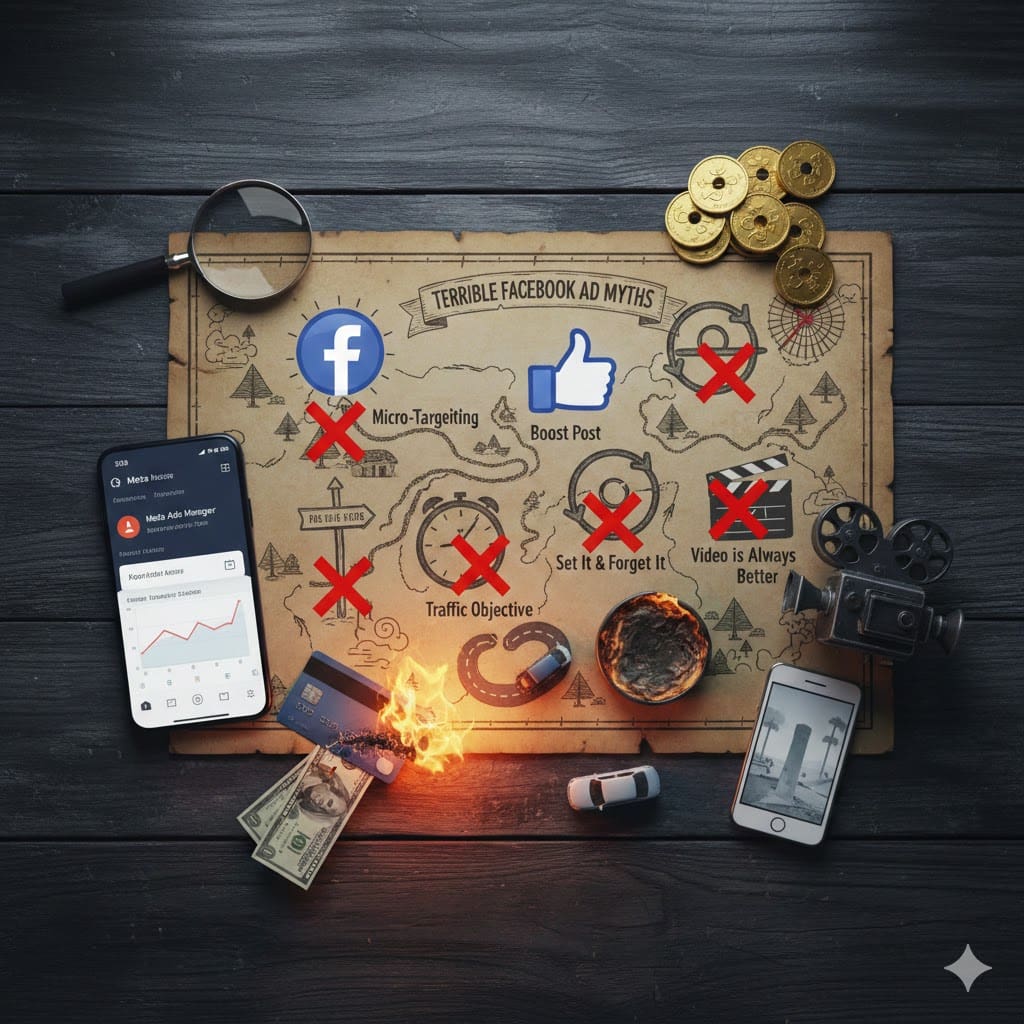
Do you feel like you’re pumping money into Facebook advertising, but not seeing the kind of returns you expected? Maybe you’re falling for one of these five terrible myths about Facebook Ads that waste your money, time, and effort. Let’s explore these myths and how you can actually construct Facebook ads that deliver real ROI.
Myths about Facebook Ads
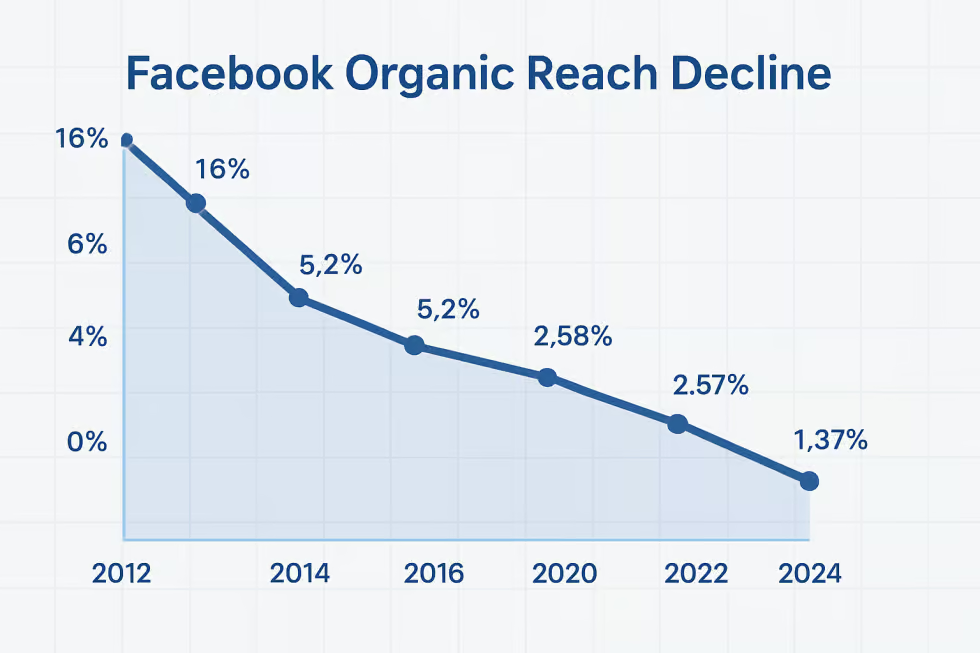
Facebook advertising is no longer an option for companies seeking to drive growth through social media. Of course, we could say the exact same thing about nearly every social media platform out there. If your entire marketing strategy revolves around social media, you now face a massive problem. In fact, the increased reliance on advertising has grown since the platform went public and Meta (the parent company) was forced to deliver results to stockholders. Organic reach on Facebook is now a meager 1.37% (down from 16%), as you can see below. While not technically a myth about Facebook ads, the reality that you need them means you’re more susceptible to falling for one of the myths.
If you’ve used Facebook Ads (actually, both Facebook ads and those showing on Instagram are published through the Meta business portal), you’ve likely seen massive changes in the way you set up and monitor these ads that might seem confusing. Meta moved some decision elements or renamed them and added AI to everything (although it’s not always the best idea to let AI run your advertising campaigns). With the added confusion from these changes, as well as being flooded with suggestions from their AI assistant, you may be even more likely to fall for one of these five myths about Facebook ads. Let’s fix that.
1. The micro-targeting myth
Myth: If I select very highly targeted segments based on interests, demographics, and geographics, I’ll experience higher returns.
Reality: While a major advantage of social media advertising lies in your ability to laser-focus your ads on specific segments of users as a means to reduce costs and achieve higher returns, you can easily overdo it by adding selection criteria that have little relationship to your target market. This results in a higher CPM (cost per 1000 impressions) and reduces the AI assistant’s ability to learn, which limits the tool’s ability to help you achieve higher returns.
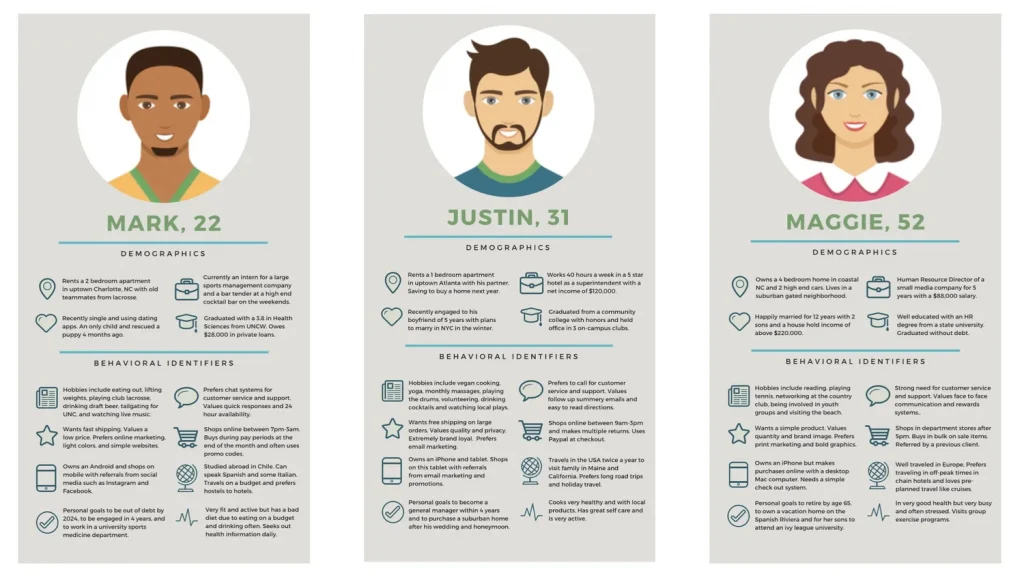
Solution: The solution is to build personas (like the ones depicted below) that represent segments of your target market based on real data and insights, not guesses. While it’s tempting to add a bunch of conditions on the users included as the target of your ad, avoid this myth about Facebook ads, that the smaller the market, the better your results.
By the same token, don’t advertise to segments that don’t substantially match your target market by focusing on that little graph showing how many users will likely be included as a target. Not only is it nearly impossible to sell to someone who doesn’t fit your target market, which wastes money, but users need to see your ad more than once (commonly 8-10 times) before taking action, even if they are part of your market
2. The boost post shortcut myth
Myth: Boosting a post published on your page results in similar returns as running an ad campaign
Reality: The thought of boosting a published post is a tantalizing shortcut, especially for small businesses that are always pressed for time and may lack the expertise to manage a Facebook ad campaign effectively, especially as the portal continues to change in ways that require extensive learning.
What really happens when you hit the “boost post” button? Facebook optimizes for engagement, such as likes, shares, and comments, which are important for increasing organic reach and SEO, but don’t do much for prompting clicks to your landing pages that result in sales.
Solution: Bite the bullet by creating an ad campaign through the Ads Manager. While you must take some time to learn how to optimize these campaigns in the face of a confusing interface, you’re much more likely to generate leads and conversions from this type of ad. Don’t fall for this one of the myths about Facebook ads through laziness, lack of time, or the daunting task of learning the interface.
3. You can set it and forget it
Myth: This is one of the prevailing myths about Facebook ads that is true for almost every advertising campaign you might run, especially those on digital platforms where you have access to the data you can use to quickly tweak your ads to improve performance.
Reality: You can never set up digital advertising, then let it run on autopilot for months. Instead, use data and testing to determine how to optimize your ad performance.
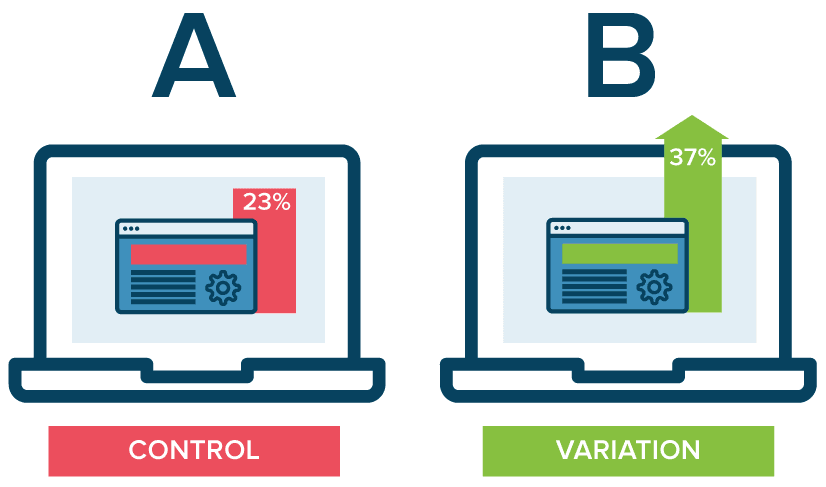
Even once you have a high-performing ad, you can’t run it forever. Ever hear of ad fatigue? It’s a reality and happens faster than ever before. Even your best-performing ads wear out over time as users scroll past your ads once they’ve seen them a few times. They develop ad blindness that reduces your returns dramatically.
Solution: Refresh major elements of your ad, like headlines and visuals, every two to three weeks. And always pay close attention to your metrics. A big change or a trend that continues signifies you need to make a big change in your ad creative.
4. The overarching goal of traffic
Myth: One of the biggest myths about Facebook ads is that vanity metrics like impressions or even website visits translate into conversions.
Reality: While these metrics might make you feel good (and even convince an unsophisticated boss that you’re doing a good job), they’re meaningless when it comes to keeping the lights on and growing your brand.
Solution: In Facebook advertising, you get what you pay for. One of the first decisions you make when setting up your ad campaign is the goal of your campaign, which influences the way Facebook treats it. If your goal is website visits, Facebook prioritizes showing your ad to users who like to click on links. That doesn’t mean these users actually buy something once they click (Facebook has little clue about what happens when a user leaves their site). Hence, you waste that money.
You are also subject to accidental clicks from users, which is a problem with all online ads, especially for mobile users who have smaller screens.
You should always, regardless of where you place your ads, follow those clicks through your website to determine the characteristics common in clicks resulting in goal conversion. You can determine the demographic and geographic characteristics of visitors who convert versus those who don’t to modify your targeting criteria. You can compare campaigns based on conversion rate to find similarities among those that outperform others.
5. A video will always outperform other types of advertising
Myth: Another of the common myths about Facebook ads is that you must include high-quality video to see good results.
Reality: The key to high performance in Facebook ads (and organic posts) doesn’t revolve around commercial-quality video. Authenticity matters much more than creating cinema-quality perfection.
A static image or user-generated content might easily outperform a more professional video. These polished ads are often ignored because they look too much like the commercials we’re used to ignoring when we see them on TV. We’ve collectively learned that these ads are self-centered, lacking credible claims about the products they advertise.
Authentic videos, with all their warts, carry more weight for users because they look more like a post from a friend, thus earning more trust.
Of course, you can carry this too far by producing sloppy videos to share in your Facebook ads. They make you appear unprofessional, which can cause users to question the quality of your products or suggest a lack of concern for your market, leading them to believe you don’t really think they’re worth your time and effort. There has to be a happy medium between authenticity and polish.
Here are some guidelines if you decide to craft videos for your Facebook ads:
- A smartphone with a clean lens works just fine as long as you can stabilize it.
- Lighting, especially natural lighting, will improve the quality of your video. You don’t need a bunch of expensive lights and baffles, but you should not have shadows or washouts in your video.
- Good quality sound is imperative since you want your users to hear your message. Most smartphones have a microphone that’s fine for this. Speak in a natural voice with the mic a couple of hand-breadths away from your mouth. Don’t over-rehearse, as your dialogue should sound natural. Control your sound volume during recording or during post-production so it isn’t too loud or soft.
- Don’t get carried away with filters, emojis, and other cutsie elements of your video.
- Include video captions to help those who are differently abled.
Some bonus on Facebook advertising
You don’t only have to look out for these myths about Facebook ads. You should consider other opportunities to improve the performance of your ads. For instance, using Facebook ads as a remarketing tool. By building a Facebook Pixel, you can select users who visited your website as the target for ads designed specifically for this market.
You can also use a Conversion API to connect your website to Facebook. This enables conversion tracking that’s more robust than what’s available from the Facebook Pixel. It also offers a solution for new privacy standards implemented by Apple devices and the projected removal of third-party cookies.

Conclusion
I hope you learned something from reading the five myths about Facebook ads in this post.
Have you learned how to avoid crafting campaigns based on them?
Do you think you can craft more productive and higher-performing ads now that you know the solutions for each of these myths?
Please comment below to let me know how to improve my content and ask any questions you might have about marketing your small business so I can answer them with future posts.
Need marketing help to support business growth?
We welcome the opportunity to show you how we can make your marketing SIZZLE with our data-driven, results-oriented marketing strategies. Sign up for our FREE newsletter, get our FREE guide to creating an awesome website, or contact us for more information on hiring us.
Hausman and Associates, the publisher of MKT Maven, is a full-service marketing agency operating at the intersection of marketing and digital media. Check out our affordable coaching programs to help your business thrive into the future.
Discover more from MKT Maven
Subscribe to get the latest posts sent to your email.


