 logo

Is social media in the AI era still a viable option? You didn’t start your business to become a full-time video editor, caption writer, and algorithm whisperer. Yet between AI-generated noise saturating every feed and platforms constantly moving the goalposts, keeping up can feel like a losing game. Before you abandon your accounts—or burn out trying to game the system—let’s break down the hidden advantages and very real traps of today’s social landscape.
Social media in the AI era
Social media was a boon for small businesses because it let them compete with much larger businesses by developing engaged followers. With a little hard work, a company with a little internet savvy and a good reputation could attract followers to promote its products, share its message with their network, and provide a tacit endorsement of its products. With a small marketing budget, the company could do effective advertising that brought in more buyers than comparable spending on traditional media platforms. Moreover, pinpointing your target market with these ads meant you didn’t waste a dime advertising to folks outside your geographical area or ones who would never buy from you.
Today, all that has changed. The AI era brought an age where social platforms run on interest graphs fed by AI-driven discovery and algorithms designed to maximize profit for the platform owners without regard to the profits of businesses using them. Can your small business navigate the shift? Today, we’ll discuss the pros and cons of social media for your business.
The pros of using social media in the AI era
I’ve always advocated against businesses relying solely on social media for marketing, since you don’t control the platforms. The changes wrought by AI and the algorithms reinforce my argument. That said, your business also needs a professional-looking website that matches your brand (if you need help, I’ve written an ebook to help you DIY a website), as well as alternative marketing channels, many of which you also own. We’ll discuss some of these alternatives later in this post.
Still, I believe social media is a valuable tool for almost any small business, with certain adjustments to your strategy.
Follower counts don’t matter
Follower counts no longer assure success on social media platforms. Below, you can see 2026 figures for follower reach on major platforms to reinforce this statement:
- Instagram: Reaches 3% to 6% of followers on average.
- LinkedIn Company Pages: Reach 1.5% to 2% of followers.
- Facebook Pages: Reach 1% to 2% of followers.
- Twitter (X): Reaches roughly 1.5% of followers.
- TikTok: Reaches a higher average of 8% to 15%, depending heavily on content virality
Instead, your organic reach now relies on your ability to engage users. Heavy engagement now reaches other users, whether they’re followers or not. So even small follower counts can lead to high reach if you post content that engages users.
Highly targeted discovery
Most small businesses serve a niche market. That may be a limited geographic area or a segment of a larger market. For instance, I help small businesses that need a little help with marketing but can’t justify hiring highly trained employees. Because modern social media platforms use audio, text, visuals, and hashtags to parse content and serve users, you can reach high-intent audiences more easily. Now, folks browsing for products likely yours can more easily find you based on posts that match their needs.
AI tools help you win big
In the AI era, you need a firm understanding of how to use AI tools, like ChatGPT, Gemini, and Anthropic. Just as important, you need to know who NOT to use these tools.

Here’s how to use AI to help you succeed on social media:
- Creating content on a regular basis is hard work. You need creatives, copywriters, and video editors. These people aren’t cheap and hiring a creative team is beyond the resources of most small businesses. AI is great for writing the FIRST draft of your content, easing the development of fresh content on a consistent basis. It also eliminates writing blocks you face when crafting new content from a blank page.
- Optimal scheduling is often the difference between success and failure on social media. In the AI era, tools can help you determine the best times and days to post content to achieve the highest engagement based on benchmarks and you prior results.
- Analyzing content is key to success. AI tools help you analyze your results to help with planning future posts, optimize your publishing schedule, and distinguish between engagement and conversions.
Community building goes beyond AI
Users on social media platforms expect human interaction. That’s part of why you should NEVER rely on AI to manage your social media marketing or create content for you. Authenticity is an important part of this interaction, so you need real, live people even as the AI era ushers in native speaking tools that mimic human speech.
The more human your interactions, the better your results will be. Here’s how to achieve a human interaction:
- Always respond quickly and transparently to comments, direct messages, and other interactions on social media. If a user mentions your brand, whether on your page or another feed, always thank them, since this is a primary driver of future brand purchases. Thus, even if you don’t actively post content on a particular platform, you must scan posts for brand mentions or comments.
- Offer behind-the-scenes stories, highlight your staff, and demonstrate your commitment to the community (corporate social responsibility) as major components of your social media marketing. Even in the AI era, users care about buying from socially responsible companies that treat their staff fairly, recognize the contribution of their employees to brand success, and support local non-profits. They also want to see what’s going on in your company. For instance, the marketing manager for a major Mexican fast-serve restaurant would share everything from her health updates to proposed menu changes and logo options.

AI era roadblocks to success on social media
If you’re doing social media the way you always have, you’ll find it increasingly challenging to get the same results you once achieved. The AI era demands a significant shift in your social media marketing strategy to accommodate AI-driven discovery and interest graphs. The ongoing explosion of AI content related to the ease of using generative AI to create it, means you face a lot more noise, which interferes with your ability to gain awareness and get your message to the right users. Here are some of the reasons why social media might not deserve the same prominence in your overall marketing strategy that it once did.
The algorithm
Social media platforms gain by keeping users engaged as long as possible. Thus, their algorithms favor content that drives use, such as watch time, swipe rates, saves, and shares, to rank content. This means your organic reach varies based on external factors, such as holidays and weekends, the success of other content in engaging users, and individual users’ shifting focus.
This makes it challenging to learn from past posts when creating new ones. What worked well last week might bomb this week.
Competition in the AI era
With the ease associated with creating content, you face a flood of content (called AI slop) that’s poor quality, synthetic, and automated videos. Cutting through this noise is challenging, especially for small businesses with their relatively sparse resources.
Preponderance of video
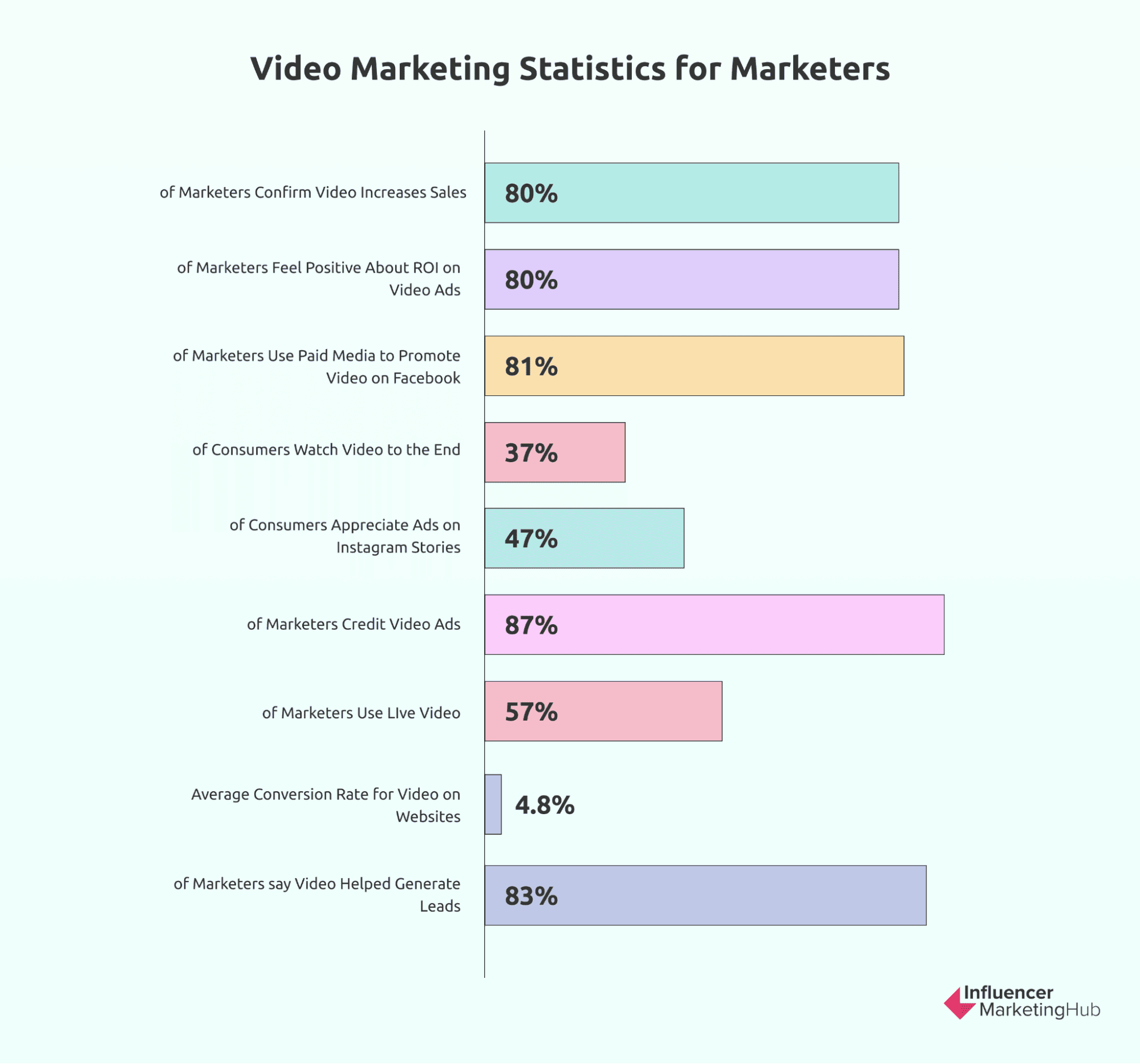
Video is more expensive to create, especially if you don’t rely on AI to create it. Yet, short videos dominate when it comes to factors used to rank content because they require more watch time and generate more saves and shares to appease the algorithm and generate more organic reach. Video also provides other benefits, as shown in the image above.
For a small business, investing so much time, money, and effort into creating videos, even short ones, consistently is too difficult. Changes in the AI era make it harder for small businesses to succeed on social platforms.
Alternatives to relying on social media in the AI era
Based on this review of the pros and cons of using social media in the AI era, you might decide to abandon the tactic or at least decrease the focus on these platforms. But what are your alternatives? Here are a few:
Owned media
- Email marketing is a great alternative. In the AI era, shifting your focus to this tactic makes a lot of sense, especially given the ROI it offers (see image). Of course, email marketing requires effort to develop a subscriber list and send segmented messages based on subscriber characteristics.

Image courtesy of Maven Marketing Lab - SMS (short messaging service) and WhatsApp messaging are great tools for local businesses and e-commerce. SMS offers open rates near 90%, delivering a high ROI (up to 71%). You must use this tool sparingly for time-sensitive offers, appointment reminders, order updates, and VIP offers.
- Private communities on Discord or Slack help you foster conversations.
- Your website, with a blog or other tool for fresh content, is one of your greatest assets, even in the AI era where organic reach is challenging.

High-intent discovery
Speaking of your website, operating it using tools designed to improve SEO is no longer enough in the AI era. Instead, you must incorporate GEO strategies that rely on user intent to deliver reach to supplement your SEO.
- Long-tail SEO and writing posts that solve real user problems, as well as evergreen content to solve pain points faced by your target market, will create sustainable traffic to your website.
Image courtesy of Yoast - GEO (generative engine optimization), when used effectively in creating content, helps you show up in inquiries that increasingly rely on AI to deliver answers without a click to a website.
- YouTube is increasingly a search engine rather than a social media tool. Long-form YouTube tutorials, case studies, and how-to guides help you rank both on YouTube and within search engines, including AI snippets that appear at the top of search results to bring qualified leads to your website and shoppers to your stores over time.

Local marketing still performs well
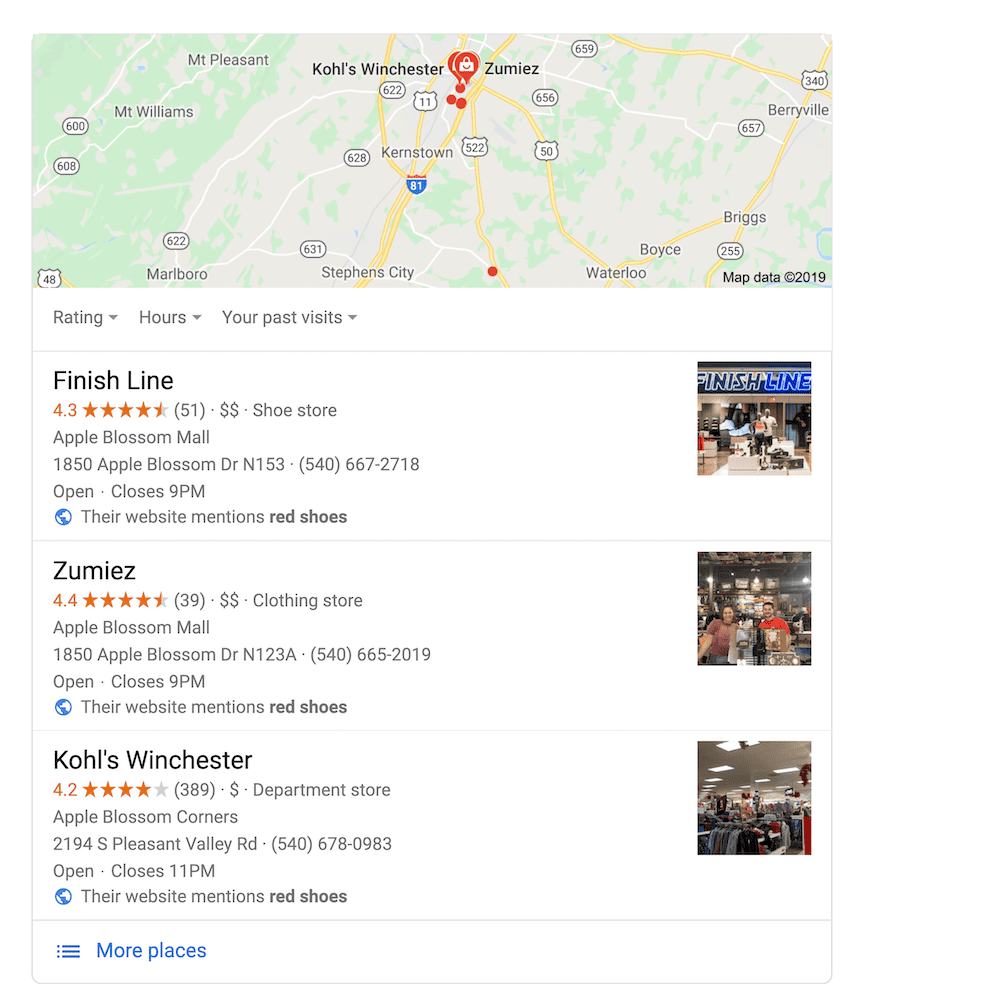
Even in the AI era, local businesses benefit from hyper-local marketing. Developing or maintaining your Google Business Profile with updated hours, photos, and customer reviews helps you show up for local users with enhanced listings like the one below (the query asked for sources of red shoes for women).
Other platforms that serve a local market, such as Nextdoor, also offer a great place to market your brand.
Networking and collaboration
Developing partnerships with non-competing firms and joining networking groups that help you collaborate with partners is a great way to attract new buyers. For instance, you can reduce the cost of traditional advertising by collaborating with another business to promote an event or products. Or, join to share guest posts on each company’s newsletter. You can bundle promotions or co-host workshops to attract shared target markets. Offer to appear or be interviewed on podcasts or YouTube videos for other small businesses that serve the same target market.
You can also join groups where your target market hangs out. The key in these events (whether virtual or in-person) is to share without being spammy. Your goal shouldn’t be to see how many cards you can distribute, but to engage with attendees to show your human side and how your business can solve problems for them as individuals.
Affiliate programs, guest posting, and reciprocal referrals is another good way to bring in new customers.
In-person events in your community
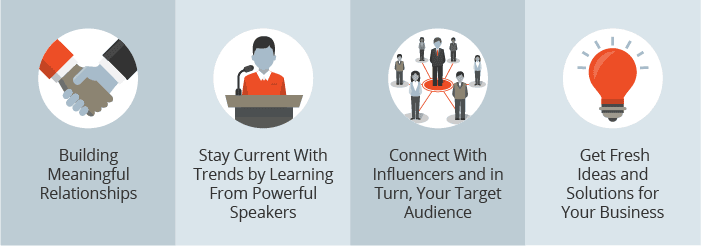
You might offer workshops, demos, or pay to participate in a trade show that attracts your target market. These opportunities not only get your name out there, but also show how your products solve problems and address consumer pain points. See the image above for additional benefits provided by professional meetings.
Word-of-mouth is still the highest-converting option for small businesses. You can offer perks or loyalty programs to existing customers to encourage them to make future purchases from your business. Collaborating with a non-competing brand for these marketing opportunities also offers a means to create awareness of your offerings.
Social media advertising
Advertising on social media is another option that avoids the downfall of organic reach. Not only are paid ads effective and low-cost (I recently placed an ad on Meta where I paid $.05/ click), but they also avoid some of these problems, especially those caused by the algorithm. By carefully choosing your audience with a laser focus on interests as well as demographics, and crafting ad content that addresses objectives, motivates buying, and highlights solutions, you can get similar returns from your advertising.
Summarizing these alternative channels for an AI era
| Marketing Pillar | Primary Objective | Channel Examples | Algorithmic Risk |
| Owned Media | Retention, customer lifetime value, direct conversion | Email newsletter, SMS, private community, customer portal | Zero (You own the list and distribution) |
| Intent-Based Search | Passive, ongoing customer acquisition | Website SEO, GEO/AI citations, YouTube, Google Business Profile | Low to Moderate (Indexed updates, compounding lifespan) |
| Ecosystem Borrowing | Rapid trust transfer and audience expansion | Newsletter swaps, podcast guesting, joint cross-promotions | Low (Direct exposure to established audiences) |
| Experiential / Local | High-touch loyalty and brand distinction | In-person workshops, local sponsorships, pop-ups, referral loops | Zero (Relationship-driven) |
Conclusion
Social media remains one of the lowest-cost alternatives for small businesses to build awareness. However, you must supplement it with other marketing options, such as those suggested in this post if you wish to continue building your brand on social media.
Need marketing help to support business growth?
We welcome the opportunity to show you how we can make your marketing SIZZLE with our data-driven, results-oriented marketing strategies. Sign up for our FREE newsletter, get our FREE guide to creating an awesome website, or contact us for more information on hiring us.
Hausman and Associates, the publisher of MKT Maven, is a full-service marketing agency operating at the intersection of marketing and digital media. Check out our affordable coaching programs to help your business thrive into the future.
Discover more from MKT Maven
Subscribe to get the latest posts sent to your email.


