 logo

Last week, I introduced my Small Business Marketing Video Series, and, over the next few weeks, I’ll provide each video with more information for those who want to delve deeper into the details they need to help their small business grow. Today, we’ll discuss an overview of core marketing concepts. Jump to the bottom of this post to watch the entire video.

Core marketing concepts
Definition of marketing
Let’s start with a definition of what marketing is. According to the American Marketing Association (AMA), marketing is:
Marketing is the activity, set of institutions, and processes for creating, communicating, delivering, and exchanging offerings that have value for customers, clients, partners, and society at large.
Other experts emphasize that marketing involves attracting, retaining, and engaging customers, which is a practical definition, but not as rich as the one offered by the AMA because it doesn’t offer a means to reach this practical end. The AMA definition underscores the four aspects of marketing that help a small business (or any business, including nonprofits, institutions, people, and governments) succeed in achieving its goals. These four aspects, called the marketing mix or the 4 Ps, are:
- Product, which includes both physical products (goods) and services. Without a product aligned with consumer needs, you’ll never sell anything or won’t sell enough to stay in business in the long term.
- Price must match the value offered to consumers by your products. When the price exceeds the value, you can’t sell enough product to survive.
- Promotion is what most laypeople think of when they think of marketing; however, this is only one of the core functions of marketing. Promotion includes all forms of communication to stakeholders (consumers, suppliers, vendors, governments, and internal customers or employees) across a broad range of channels.
- Distribution (place) involves moving the product from one owner to another. This involves logistics and warehousing when it comes to physical products and encompasses retailers, distributors, and even online sellers like Amazon, that facilitate these exchanges.
Recently, academics and practitioners have questioned the validity of the four Ps, recommending additional Ps or alternative configurations as our economy shifts towards service industries and power increasingly shifts to consumers from manufacturers. We’ll stick with the original marketing mix for our discussion of core marketing concepts because it’s most entrenched in marketing.
Building a marketing plan
A marketing plan is a formal written document that details where your business is and where it’s going. Just like a roadmap (now digital from Waze or a similar app) you might use to guide you to an unfamiliar destination, a marketing plan helps ensure you get where you want to go. And just like your roadmap, a marketing plan is built on research and reality, not hopes and dreams. Because building a marketing plan is a critical part of the marketing concept, the second and third videos are devoted to this topic. Thus, we’ll leave this topic for future posts or you can head on over to my YouTube channel to subscribe. This ensures you never miss an episode of my Small Business Marketing Video Series.
 Branding

Another of our essential core marketing concepts involves branding. Think of branding as more than the name or other images associated with a product or group of products. A brand is shorthand for your brand’s identity, what consumers think and feel about your products. To succeed, your small business needs to work to build a strong brand that is associated with positive emotions and thoughts. Let’s take a look at some elements of branding.
Brand identity is what you probably think about first when you think about a brand. It involves the distinct colors, logo, name, fonts, and other graphical elements of the brand. That’s why companies register their names, copy-protect their logos, and even create custom fonts or colors that are exclusive to them. For instance, John Deere green and the distinctive way Coke writes Coca Cola on its bottles (even the bottle shape). Although important for identity, these elements are less important in the grand scheme of things when it comes to gaining and retaining customers.
Mission and values are much more important when it comes to marketing your company. A recent survey found that consumers increasingly buy products based on shared values (70% according to Forbes). As you can see in the image below, some values are critical, especially to younger consumers.

These shared values help to build an emotional connection to the brand and clearly establish the brand’s personality. Nobel-prize winning psychologist, Kanneman, reported in 2023 that approximately 90% of product purchase decisions were influenced by emotion and only 10% based on logic. It’s thinking like that which led to marketing breaking away from Economics nearly 100 years ago.
Consumer perception is another major factor in branding. These perceptions result from marketing efforts, such as advertising, but in an increasingly digital world, these perceptions are built by customers sharing their experiences with larger friend groups, influencers, and informal meetings. That’s why your brand should strive to deliver superior customer service and address any concerns as quickly, transparently, and completely as possible.
Differentiation separates you from your competition. You want to be different from them and fill a void for consumers that they don’t. Developing a unique selling proposition (USP) is a critical element of differentiation. Take a look at the way Apple differentiates itself from other computers to build a loyal fanbase that not only buys their products, but often willingly pays a premium for them.
Promotion
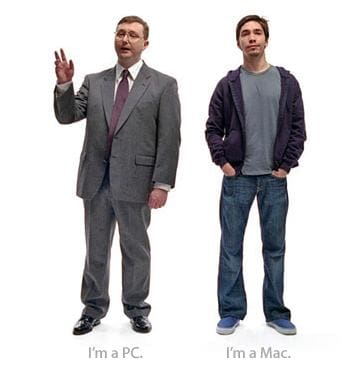
Promotion is a huge part of core marketing concepts. Video five offers solutions for ways small businesses can promote their brand and their products on a budget, which is critically important for small business owners with their limited resources. We can divide promotion into various types, including:
- Advertising, which can be placed anywhere from TV to print to digital to billboards
- Public relations is a form of unpaid advertising, which means the company loses control over the messaging. Small businesses have trouble attracting public relations because they lack the media relationships that often lead to coverage. A great alternative is to host or sponsor local events, which also shows off your values.
- Sales is often beyond the resources of most small businesses, as professional salespeople earn high salaries and commissions. Often, the owners or other principals act as the sales force, which means they must spread their efforts between managing and promoting the company.
- Direct marketing involves sending direct messages via mail, email, text, and SMS (short message service) to a list. Since privacy laws only allow you to buy or rent mailing lists (which involve significant costs for printing and mailing), you must first work to create your own list.
- Sales promotion is a fun tool to promote your small business. It involves printing your name and logo on anything from t-shirts to caps to notebooks. You’re only limited by your imagination.
Analytics
I’ve been in marketing for over 50 years. During that time, much has changed. Nothing more so than analytics. Back when I started, marketers didn’t have hard numbers, except for market research. Much of what we taught and marketers did was based on experience and guesswork rather than data-driven. In fact, most students chose marketing as their major as it was the only business discipline that didn’t involve numbers and analysis.

Today, we are drowning in data and the problem becomes how to analyze all that data to derive useful insights that can help improve performance while avoiding distraction from meaningless data, such as growth in your social media community. It also means you must create dashboards to monitor performance that matters on a daily, maybe even an hourly, basis. You need data visualizations that help you see relationships within the data at a glance. You also need to parse your data to derive deeper meaning, such as dividing your results by territory, store year-over-year, by customer segment, or other meaningful groups.
Conclusion
So, these are the core marketing concepts we’ll cover over the course of the Small Business Marketing Video Series. Be sure to subscribe so you never miss an episode. You’ll find lots of other resources on these pages. Simply enter your query in the search bar or browse the entire blog to learn how to manage your small business more effectively and efficiently, and grow your business. We also offer coaching for those who are serious about expanding their business by marketing it better. You can select either one-on-one coaching or video coaching sessions, which you can access anytime.
Need marketing help to support business growth?
We welcome the opportunity to show you how we can make your marketing SIZZLE with our data-driven, results-oriented marketing strategies. Sign up for our FREE newsletter, get our FREE guide to creating an awesome website, or contact us for more information on hiring us.
Hausman and Associates, the publisher of MKT Maven, is a full-service marketing agency operating at the intersection of marketing and digital media. Check out our full range of services.
Discover more from MKT Maven
Subscribe to get the latest posts sent to your email.


