 logo

Is your marketing screaming into a void due to bottlenecks? Let’s say you’re putting out fresh content regularly, analyzing your metrics, tweaking your strategy based on insights from them, and working to understand your customers better, but still find you’re missing revenue projections. When your marketing fails to deliver, instead, you find your marketing screaming into a void, it often has nothing to do with you not working hard enough. Something in your strategy simply isn’t resonating with your target market.
Maybe your message isn’t reaching them, or you don’t have the right message? Maybe your product line isn’t delivering value or your staff isn’t working well with your market, leading to dissatisfaction? Maybe you’re not listening effectively to hear complaints and developing two-way conversations that engage and build trust with your market. Here are 5 tips to discover and fix the problems that strangle your performance.

Why is my marketing screaming into a void?
Five common bottlenecks often keep your marketing from delivering the results you projected. You’re not reaching your goals, which causes cash flow problems that can easily sink your business. You can’t pay employees on time, fall behind in meeting promises to suppliers, and try to cut corners that only result in poor customer and employee satisfaction. But finding and fixing these bottlenecks can help you reach your goals. Here they are:
- Failing to understand your target market, their needs, and how to reach them
- Mistaking vanity metrics, such as traffic, followers, etc., for success
- Dysfunctional relationships between your business units that create friction, redundancy, bureaucracy, and a lack of cooperation
- Your messaging fails to spark emotion and imagination from your target market
- Too much tweaking or too short a campaign timeline, so you don’t give enough time for your marketing to deliver
To ensure marketing screaming into a void isn’t a problem that’s keeping you from hitting expectations, you need to discover which of these bottlenecks keeps your marketing from delivering, and then fix the issue.
At the end, after we discuss the symptoms of each bottleneck, so you can know what to work on, and the fixes that can help improve market performance, we introduce a strategy for auditing your marketing function that can help keep your marketing from failing you.
1. Do you understand your target market, their needs, and how to reach them?

When I worked for the US Small Business Administration (SBA) as a business consultant, small businesses came in to get help starting or running their enterprise. My first question was always, “Who is your target market?” The inevitable answer is everyone (or, for variety, anyone). That’s the wrong answer. Trying to be everything to everyone is a surefire way to ensure you’re nothing to anyone.
Very few companies can appeal to everyone. Even massive enterprises, like Coke, find they must adapt their products to each target market. If you’ve ever visited Coke World in Atlanta, you’ve been able to taste the wide range of different flavorings and formulations that adapt Coke to local tastes. Why would you think your small business can appeal to the entire world if Coke can’t?
Before the internet gave us enhanced access to users, we didn’t know much about our prospective buyers. We were limited by the types of demographics and geographic data available through public sources, such as the US Census, as market research was too expensive for small and mid-sized businesses. Even our internal metrics about them were limited due to the high cost of storing such data. However, with users sharing even the most personal information and the cost of cloud storage shrinking due to services like Amazon’s AWS, we can now learn much more about our consumers.
We can even build market personas that provide details, including preferred communication channels, interests, hobbies, and much more. You might build personas for each of the consumer types that might value what your business sells, that look like this:

You’re no longer faced with marketing screaming into a void because you know what matters to your target market, so you can craft products, messaging, and pricing that create value and solve their problems (consumers don’t buy products, they buy solutions).
2. Is your marketing strategy built using vanity metrics?
Unsophisticated marketers and their bosses tend to rely on vanity metrics rather than KPIs (key performance indicators). Vanity metrics, by definition, might make you feel successful, but fail to translate into increased sales or other metrics that matter for success. Here are examples of vanity metrics:
- Follower counts
- Clicks
- Website visits
- Time one site
Instead, focus on KPIs that correlate with revenue. Here’s the difference:
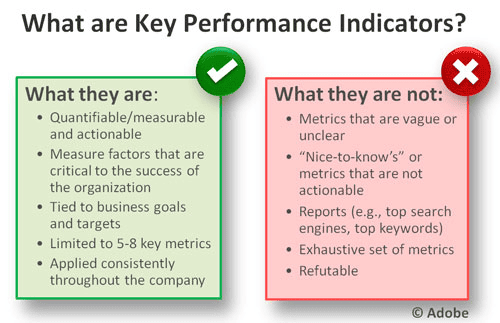
Be sure to assess key metrics from each stage of the conversion funnel, rather than just conversion. Otherwise, you’ll find marketing screaming into a void. Occam’s Razor, written by one of Google’s chief data analysts, recommends creating a dashboard containing 10 key metrics to monitor every day. Here are some metrics to consider:
- Top-of-the-funnel metrics that show how successful you are in attracting prospective buyers to your business. These are important as they indicate potential conversions. Never ignore these metrics. Top of funnel metrics include:
- Low bounce rates
- Post reach and frequency
- Engagement
- CAC (customer acquisition costs)
- Click-through rates
- Middle-of-the-funnel metrics demonstrate how effectively you move those attracted to your business toward conversion. Often termed lead nurturing, these metrics might include:
- Registration and email subscription rates
- Depth of website views
- Email click rates
- Lead-to-opportunity rates
- Cost-per-lead
- Trial rates
- Bottom-of-the-funnel metrics are where the rubber meets the road, as this is what makes the cash register ring.
- Loyalty metrics are often forgotten in assessing the reality of marketing screaming into a void. Here are some to assess:
- Repeat purchases
- Customer satisfaction
- Customer lifetime value
Occam’s Razor defines the funnel and the website metrics to measure each stage of the funnel using the think-see-do-care framework below.

As you can see in this image, each stage of the marketing funnel requires your business to use the right combination of marketing tactics to avoid having your marketing screaming into a void. Your choice of how much to spend in terms of effort and money on each strategy depends on your target market and unique business situation.
In terms of marketing content, each stage requires different types of content. For instance, the attraction phase focuses on crafting information blog posts and videos that sell your message and the benefits your product provides to solve consumer problems. The nurture stage requires lead magnets that encourage engagement from your market, such as an email subscription. Conversion requires product demos, case studies, and a clear call to action. You should create content that spans all these stages.
3. Do you face dysfunctional relationships between business units?
One of the quickest ways to ensure having marketing screaming into a void is to have a dysfunctional organization. Dysfunctional relations either within or between business units lead to poor communication, infighting for resources, a lack of coordination that wastes time and money, bureaucracy that slows decision-making, and low employee morale that results in high turnover, low performance metrics, and high absenteeism.
Fixing this problem isn’t easy. Here are some steps you can take:
- Focus on hiring and training the right people
- Ensure open lines of communication
- Avoid politics, easier said than done
- Set up clear expectations for each unit
- Establish an employee manual that clearly establishes each functional area and the associated responsibilities
4. Is your messaging falling flat with your target market?
As I said earlier, consumers buy solutions to their problems, not products. If your messaging isn’t clearly establishing how your product solves a problem, you’ll find marketing screaming into a void that no one hears. To fix this, focus on the benefits consumers receive when they buy your product, not its features. Instead of talking about how your phone has 5G, tell consumers that this means faster, more reliable communication and internet access. Give your target market a so what.
Also, focus on crafting emotional engagement with your target market through storytelling and social responsibility. For instance, Starbucks sells overpriced coffee (that isn’t very good) because its target market values its accessibility (there’s one around every corner), commitment to customer service (through providing WIFI access without restrictions), and dedication to fair trade policies and the environment.
5. Are you constantly tweaking or cutting short your campaigns?
It takes time and multiple exposures before even interested consumers are willing to take action. While the minimum number of exposures to an ad before taking action varies across studies and product markets, the University of Maryland suggests seven is the magic number. Other experts show that it might take up to 20 exposures before consumers take an action, even if they need the product.
Keeping this in mind, you might find marketing screaming into the wind when you cut your campaign too short or make frequent tweaks that reduce the impact of your message.
Similarly, spending too little or shortening the campaigns by too much can mute your results.
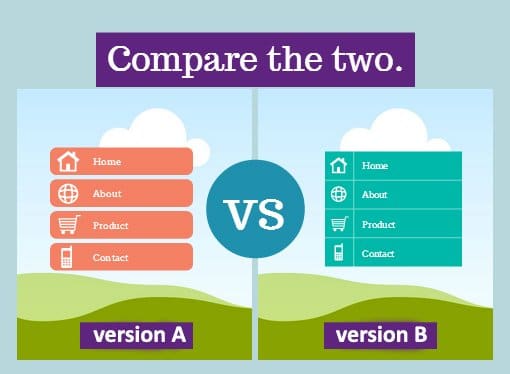
When you develop a new campaign or start a new channel, for instance, give the tactic 90 days to prove itself before pulling the plug. Or, try A/B testing to determine which elements are working before committing to a full launch.
The fix for marketing screaming into a void checklist
If you find marketing screaming into a void, here’s a checklist for each stage of the funnel:
- Top
- Bounce rate
- Audience alignment
- Clear value proposition
- SEO keywords match user intent
- Middle
- Opt-ins
- Lead magnet conversion rate
- Welcome sequence completion
- Email engagement rate
- Bottom
- Frictionless checkout
- Social proof
- Cart abandonment rate
- Conversion rate
To help you avoid marketing screaming into a void, here are some benchmarks for some of these metrics. Monitor your performance against these metrics, then tweak your tactics, messaging, and other marketing elements until you get closer or exceed these benchmarks.
| Funnel Stage | Industry Benchmark | Your Current Metric | Status (Healthy / Leak) |
| Ad Click-Through Rate (CTR) | 1% – 3% (Dependent on industry) | [ Enter % ] |
[ ] |
| Landing Page Conversion Rate | 2% – 5% (Standard pages) / 10%+ (Lead magnets) | [ Enter % ] |
[ ] |
| Email Open Rate | 20% – 35% | [ Enter % ] |
[ ] |
| Email Click-Through Rate | 2% – 4% | [ Enter % ] |
[ ] |
| Sales Page to Checkout Conversion | 1% – 3% | [ Enter % ] |
[ ] |
If you experience high traffic, but low conversion rates, focus on middle-of-the-funnel tactics that nurture leads, such as a stronger email nurturing sequence. If you find you have a lot of leads but few email opens, check your subject lines and your welcome sequence because they didn’t resonate with your target market. If your email open rates are good, but conversion rates are low, check for problems with your sales copy, pricing, checkout process, and call-to-action.
Conclusion
If you find marketing screaming into a void rather than generating sales, there are easy fixes for that. First, audit your marketing using the framework suggested in this post. Once you’ve determined which marketing area is weak, based on benchmarks, goals, or expectations, implement fixes.
Need marketing help to support business growth?
We welcome the opportunity to show you how we can make your marketing SIZZLE with our data-driven, results-oriented marketing strategies. Sign up for our FREE newsletter, get our FREE guide to creating an awesome website, or contact us for more information on hiring us.
Hausman and Associates, the publisher of MKT Maven, is a full-service marketing agency operating at the intersection of marketing and digital media. Check out our affordable coaching programs to help your business thrive into the future.
Discover more from MKT Maven
Subscribe to get the latest posts sent to your email.


