 logo

Businesses, by their very nature, are global businesses even when that wasn’t their intention. That makes it easy to expand your business to serve this inherently global marketing. However, one key factor in achieving success when taking your business to a global market is to adapt your website using globalization tools and technologies. This involves tailoring websites to various languages, cultures, and markets you want to serve so you can attract a range of audiences with different characteristics. As technology advances, new tools and technologies emerge to simplify the process of website globalization. In this article, we will explore some of the trends in the website globalization tool and technology that businesses should take into account if they want to achieve success in their globalization efforts.

Trends in website globalization tools
If you’ve done the right things when setting up your website initially, it may only need a few tweaks to get ready to meet your globalization needs. However, suppose you set up your website as an afterthought without giving due consideration to website standards and good practices in website design. In that case, you likely need a huge effort to get your website ready to meet the more diverse demands of an international market. The days of running separate websites for different global regions are now frowned upon by search engines and may incur a penalty from them that hurts your SEO (search engine optimization).
Let’s start with some specific website globalization tools that assume you’ve already taken care of web design basics. Following that discussion, we’ll discuss the basics of web design for those of you who might need to update your website before getting it ready for international expansion.
Combining machine translation with human expertise
Effective language localization plays a role in website globalization efforts. While machine translation has made progress in recent years, it still struggles to capture cultural nuances and idiomatic expressions accurately. To overcome this challenge, many businesses are now turning to an approach that combines machine translation algorithms with the expertise of translators who understand the cultural and linguistic subtleties involved. This blend ensures a natural-sounding final result, similar to the one derived from website localization software.
Leveraging content management systems for multilingual websites
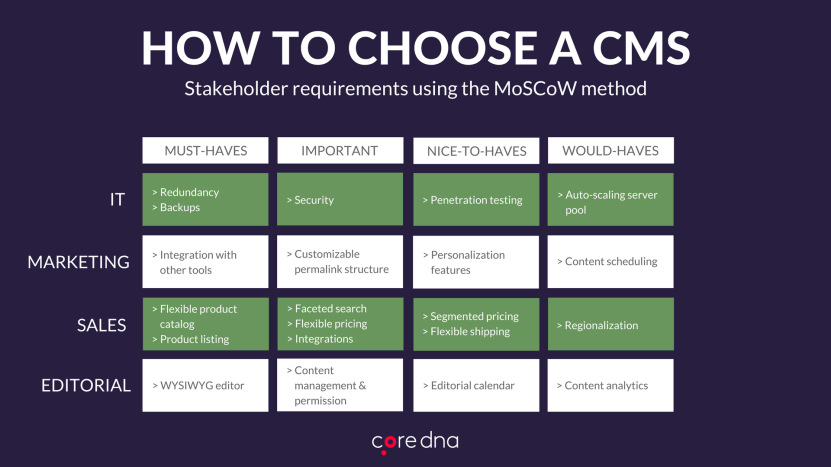
Content Management Systems (CMS) have become tools in web development practices. They offer user interfaces for creating, editing, organizing, and publishing web content without the need for coding skills. For multinational corporations seeking management of websites in multiple languages, having content management systems (CMSs), particularly headless CMS platforms with robust multilingual support, is highly beneficial. These platforms play a significant role in simplifying the process of localizing content by offering tools that make translation management and synchronization across language versions easier.
Continuous localization
One key trend in website localization is the shift towards localization. Traditionally, website localization was seen as a one-off project done during the launch or major updates of a site in markets. However, with businesses aiming to keep up with trends and meet user expectations for content, continuous localization has become essential. This approach involves integrating localization into an organization’s software development workflow through automation and collaboration tools such as integrated translation platforms or agile project management systems that facilitate development and translation processes.
AI-powered cultural adaptation
Another significant development is the use of AI-powered tools for website adaptation. Culture plays a role in shaping how users interact with websites and influences their preferences, behaviors, and buying decisions. Businesses are now employing AI-driven solutions to culturally tailor websites based on user profiles or specific target audience segments. By utilizing machine learning algorithms to analyze user behavior data and harnessing intelligence capabilities, these tools can customize elements, like images, layout, colors, and marketing messages, to align with cultural norms and preferences.
Localization testing automation
Ensuring the accuracy and functionality of localized websites across languages and regions is crucial. Traditionally, manual testing has been time-consuming and prone to errors. However, advancements in technology have introduced automation to simplify localization testing. Automated tools can mimic languages and scripts to detect issues like text expansion or layout mapping discrepancies. By integrating automation into website globalization processes, businesses can save time while upholding quality standards.
Real-time language support
Organizations are adopting real-time language support tools to improve user experience on websites and cater to different language audiences. These tools offer interpreters, or translators access through chat or voice call features embedded in web pages or mobile apps. With real-time language support readily available, website visitors can easily overcome language barriers when interacting with businesses or seeking information.
SEO strategies for multilingual optimization
As businesses expand globally through website globalization initiatives, search engine optimization (SEO) plays a vital role in achieving visibility on search engines. However, what works for SEO in one language may not yield the results in others. To tackle this issue, there is a rise in website globalization tools that are equipped with features to assist in SEO optimization for languages. These tools examine keyword analysis, local search patterns, and metadata across regions to aid businesses in enhancing their websites for rankings and increased visibility in specific markets.
The basics of web design

Designing an effective website for a business involves following several fundamental principles to ensure the site is user-friendly, accessible, and effective in achieving its goals. Here are some essential website design principles every business should consider, along with some special considerations for your global efforts:
User-centric design:
First, understand your audience: Know who your target users are and design the site to meet their needs and preferences. With an international market, this might mean more than translating your website, as cultural differences might impact your success. For instance, users want to see images that represent their culture rather than something generic, or that reflects another culture, especially one they find objectionable.
Use intuitive navigation to ensure the site is easy to navigate, with a clear and logical menu structure.
Responsive design:
A responsive design is mobile-friendly, so the site is fully functional and aesthetically pleasing on all devices, including smartphones, tablets, and desktops. The site must also load quickly. Hence, you must optimize images and other resources to ensure quick load times, especially on mobile networks. This is the same across cultures, although it becomes more critical in regions without fast internet speeds.
Clear call to action (CTA):
The goal of your website is to induce users to do something, whether that’s subscribe to your newsletter, make a purchase, or visit a physical store. Make sure you include a CTA on every landing page and that it’s prominently displayed. Using a consistent color for the button and placement of the CTA makes it easier for the CTA to stand out for users and easy for them to find.
 Aesthetically pleasing design:

An aesthetically pleasing web design entices users to stay on the site long enough to accomplish your goals. Visual hierarchy uses size, color, and spacing to create a visual hierarchy that guides the user’s eye to the most salient elements.
Consistent branding also supports your aesthetics. Maintain a consistent color scheme, typography, and imagery that align with your brand identity across pages and all other outward-facing communication.
Content quality:
Ensure your content is valuable to your target market and displayed in an easily consumed form. For instance, include images, headings, and subheadings to allow users to skim your content for what they need. Consistency is also essential.
Accessibility:
Inclusive design means you ensure the site is accessible to users with disabilities by following web accessibility standards (e.g., WCAG).
Keyboard navigation: Make sure the site can be navigated using a keyboard for those who cannot use a mouse.
Security:
-
- SSL certification: Use SSL certificates to encrypt data and provide a secure browsing experience.
- Regular updates: Keep software and plugins up to date to protect against security vulnerabilities.
Scalability:
Future-proof your design with scalability in mind to accommodate future growth and changes in technology. A modular approach to design and development allows you to adapt to updates and additions easily. Also, keep up with website standards to keep your web from looking dated. For instance, when you see a website using a slider in the hero image, you know that the site hasn’t been updated in years.
Legal compliance:
Privacy policy and adherence to that policy ensures the site has a clear and comprehensive privacy policy that meets regional standards. For instance, the EU implemented more strict privacy protections and failure to adapt to them can hurt your business.

Data protection is also critical for you and your customers. Users becoming aware of a data breach with their information can be a PR nightmare. Comply with data protection regulations such as GDPR or CCPA, depending on your target audience.
Implementing these principles can help businesses create websites that attract visitors, convert them into customers, and keep them coming back.
Conclusion
Website globalization is critical in helping businesses broaden their outreach and engage with audiences globally. By adopting tools such as machine translation combined with content management systems for multilingual sites’ ongoing localization efforts, AI-driven cultural adaptation, automated localization testing, real-time language support, and SEO optimization for multiple languages, organizations can effectively navigate the intricacies of website globalization. By embracing these solutions as new trends emerge and technology progresses, businesses will be empowered to succeed in a competitive landscape.
Need marketing help to support business growth?
We welcome the opportunity to show you how we can make your marketing SIZZLE with our data-driven, results-oriented marketing strategies. Sign up for our FREE newsletter, get our FREE guide to creating an awesome website, or contact us for more information on hiring us.
Hausman and Associates, the publisher of MKT Maven, is a full-service marketing agency operating at the intersection of marketing and digital media. Check out our full range of services.
Discover more from MKT Maven
Subscribe to get the latest posts sent to your email.


