 logo

Do you know what questions to ask to ensure a successful business journey? Do you stumble along, hoping to see higher profits, only to have your hopes dashed quarter after quarter? Maybe it’s time to take a step back to address the core elements needed for a successful business. In this post, you’ll learn the essential questions that distinguish successful businesses from failures and how to master them to make your business a success.

Can you answer the who, what, and why questions for a successful business?
Here are the three key questions you must address if you want to create a successful business:
- Who are my customers? What does my ideal customer look like?
- What is my unique value proposition? What do you offer that might entice your ideal customer away from a competing business?
- Why should a customer buy from you? Do you tell a compelling story that helps convince consumers to part with their money?
While these questions might sound like common sense, I can tell you from experience that most small business owners struggle to come up with a cohesive, thoughtful answer to one or more of them. Then, they wonder why they struggle to keep their businesses afloat, let alone create a successful business.
To help you if your business is in a similar position or if you’re considering starting a new one, let’s go through these questions and how to address them in detail.
Who is my ideal customer?
When I worked as a consultant for the Small Business Development Center, a service of the US Small Business Administration, my first question to small business owners when they walked in for a new consultation was, “Who are your customers (or intended customers)? The inevitable answer was “Everyone”. And that’s the wrong answer.
To understand just how wrong that answer is, you should understand a little about consumer behavior and the notion of a target market.

Creating a target market involves selecting those consumers most likely to buy your products. It doesn’t mean you ONLY sell to these consumers, but by targeting your marketing efforts toward those MOST LIKELY to buy from you, you maximize your results.
So, what should you look for in a GOOD target market:
- The group of consumers shares some characteristics, such as:
- Demographics, such as age, income, or household composition
- Geographic locations, such as a nation, region, city, or select zip codes
- Psychographics, such as tastes, values, hobbies, or interests
- Behavioral traits
- The group should be significant enough to warrant the marketing outlays, or is growing significantly, although with targeted social media, you can target niche markets very effectively
- The group is stable. In other words, it promises to continue exhibiting these differences into the future
- You can reach this market selectively. Again, social media makes this much more doable
In the past, creating a successful business through effective target marketing was challenging and the markets were fundamentally based on demographics and geographic variables because these were easy to assess without expensive market research. Today, we talk about market personas like the ones below, which are richer, containing the psychographics, behavioral variables, and media preferences that make your targeting much more effective. We even give them names to reflect the personal traits and make them more tangible.
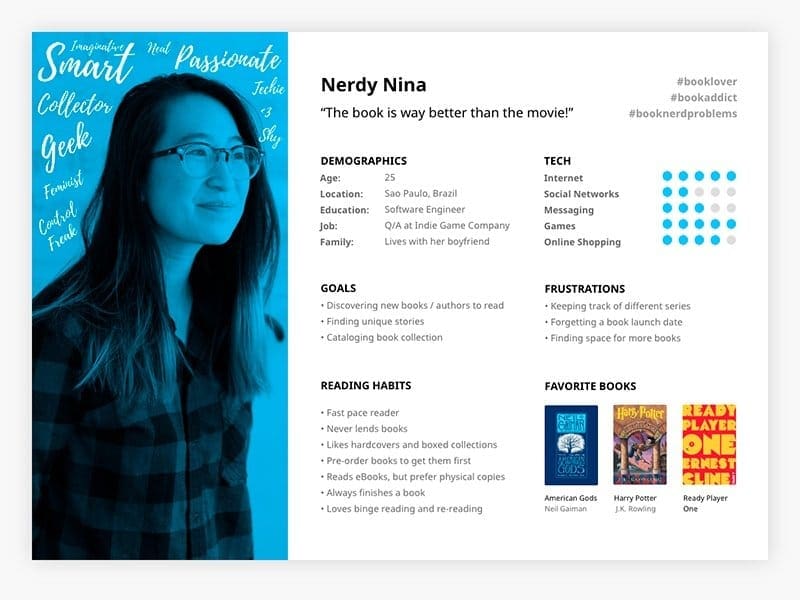
Building these rich personas means delving into your data. Some sources of the type of data you need are:
- Website analytics
- Social media
- Customer and subscriber data
- Secondary data sources. For instance, American Demographics magazine highlights buyer data for various industries every month. The government also collects data, although that tends to encompass demographic and geographic data.
- Send queries to customer-facing employees
- Market research
Armed with this data, your next step is to identify segments within the data. If you’re statistics-savvy, you can run cluster analysis; otherwise, you can manually identify two to five segments that share common traits. Then flesh out the persona with characteristics such as the ones shown in the example from above.
Having a deep understanding of your target market, fleshed out as market personas, allows you to:
- Spend your advertising budget more efficiently. Not only does this help you choose outlets to use, for instance, which social media channels are used most frequently by your target market, but it also helps you construct ads that resonate with a particular group of consumers. Case studies suggest that including people who represent your target market increases the return on that ad. Moreover, consumers are increasingly value-driven shoppers. Demonstrating shared values with your target market increases sales by 85%. Running a successful business means spending your money wisely to get the highest ROI.
- Don’t forget that marketing is more than advertising. Understanding your target market also helps you with:
- Developing successful new products based on the unmet needs of your target market
- Creating the most effective supply chains to meet their needs
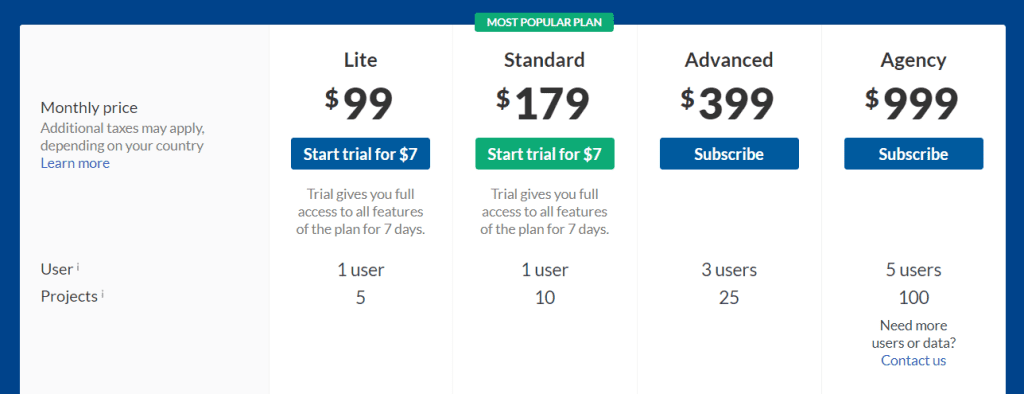
- Determining price points that make your product a good value for your target market. Also, with multiple target markets, you can develop a price lining strategy that lets you maximize profits by selling similar products at different price points, such as in the example below.
What’s my unique value proposition?
Do you have a unique value proposition (UVP), also called a USP (unique selling proposition)? Do you even know what a USP is? Well, let’s talk about that and why you need one.
For nearly every product out there, consumers have choices. How do they choose which one to buy? Well, it’s complicated because consumers only have so much money to go around, so they not only have to choose between competing products, such as Colgate vs Crest toothpaste, but also whether to spend money on a restaurant meal or groceries.
So, how do consumers make these choices? They choose the product that best satisfies their needs. As you can see below, when choosing among grocery options, a number of factors come into play, creating benefits, price points, and drawbacks to each option.
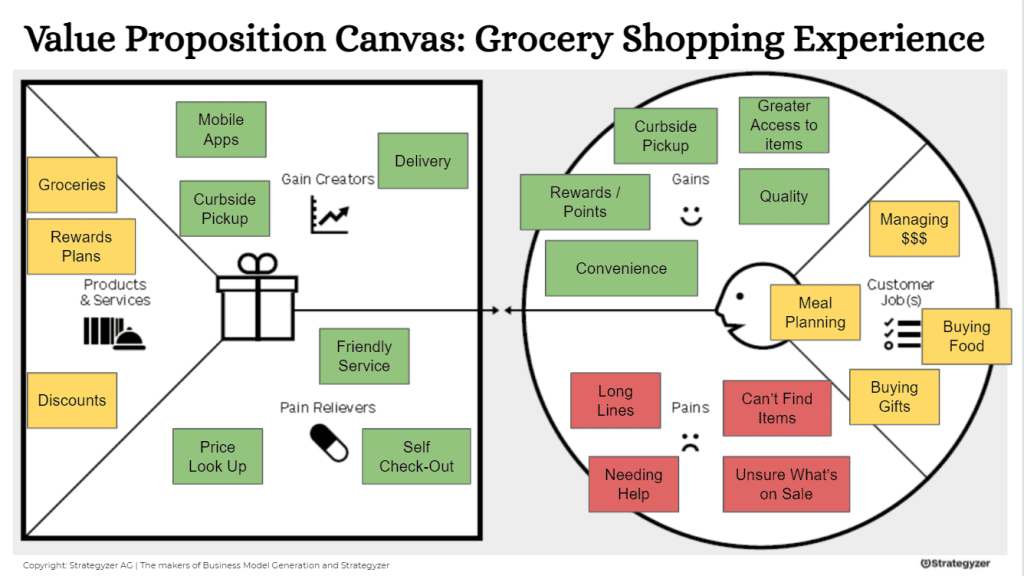
The question becomes, how do you build a USP? While this is primarily a function of the wants and needs of your target market, certain common elements can contribute to your USP. These include:
- Customer pain points, with more value assigned to products that do the best job of satisfying these pains.
- Differentiation from your competition based on a combination of factors, such as price, convenience, quality, or distinct offerings.
- Reputation also feeds into your USP.
- Demonstrated benefits and proof.
- Values that align with your target market.
One of the prevailing myths is that consumers choose the cheapest product out there. If that were true, Apple would have gone out of business long ago, since they are usually one of the most expensive options out there in any product category where they compete. Instead, they are usually one of the most popular brands in these markets.
The answer to this seeming conundrum is that consumers buy based on value, rather than price. As you can see below, when you offer value, your prices and benefits (less detractors) are in balance, so you compete on other aspects of your value proposition.

To build your USP, here’s what you need to do:
- Understand what’s important to your target market
- Survey the competition to determine their USP
- Determine which of your core strengths align with your target market. Do any of these set you apart from the USP offered by your competition? For instance, if your e-commerce store delivers next day, just like your competition, it’s not part of your USP. However, if you offer a more comprehensive product line, that is part of your USP.
- Last comes the hardest part. To create a successful business, you must convince your target market that you possess the characteristics they value, that you do a better job of delivering on them than your competition, and then actually perform in a way that keeps your promise every time.
How to tell your story
We’re now ready to address the last question you need to answer thoroughly to create a successful business. You need to tell a good story that helps your target market feel that your business is a good choice. Business storytelling involves creating a brand story that positions the customer as the hero, which allows the consumer to build emotional engagement with your brand. Consumers buy based on emotion more frequently than based on logic, even B2B consumers, as this quote demonstrates. It also builds trust, as a brand story that resonates with your target market personalizes your brand.
PEOPLE RATIONALIZE BUYING DECISIONS BASED ON FACTS, BUT
PEOPLE MAKE BUYING DECISIONS BASED ON FEELINGS.

As you can see in the image above, there are multiple elements involved in crafting a brand story. So, how do you go about combining these elements?
How to build a brand story

Your brand story represents your brand as a person that consumers can identify with. Increasingly, these brand stories determine whether your business will glean mentions within AI-generated answers, which is increasingly how users get answers to their online queries.
Be authentic
Creating a brand story that isn’t true does more harm than good. Saying that you do one thing while doing another is a disaster. For instance, a bottled water company said their water came from this pure source. When test showed the water was contaminated with harmful chamicals, it nearly sank the company. Data helps support your brand story.
Be interesting
Creating a little drame can go a long way in building a successful business brand story. Share the highs and lows of your creation or development of a new product. For instance, Adobe founders share the story of finding their initial business plan wasn’t viable in the real market, so they pivoted to a different model, which was successful.
Communicating your brand values is key
Building a successful business increasingly relies on demonstrating shared values. Don’t just put them in your value statement, live them. For instance, Starbucks keeps customers happy and built a successful business by only buying fair trade coffee that supports small growers in developing countries. For instance, you might show images of your staff or your company participating in charitable events, coaching a little league team, or donating.
Highlight your people
People are your best asset. By highlighting your people, you personalize your brand and build trust. For instance, many companies use employees rather than models in their advertising. Johnsonville Sausage even uses employees to create the ads, as well as staring in them.
Share user-generated content
Building a successful business requires customer satisfaction. You can highlight customer satisfaction by sharing reviews or other content that supports your brand. For instance, my kid’s orthodontist held a monthly contest where he gave away an Apple iPod (when these were highly sought-after) each month in a drawing comprised of those who shared an image of themselves wearing his brand T-shirt on social media.
Conclusion
The first step to running a successful business is to know which questions are the key to that success and how to address these questions with answers you can use to improve your business. Today, we covered three core questions every business must answer before thinking about the myriad of problems that arise during the day-to-day operation of the business.
If you haven’t effectively answered these questions already, now’s the time to take a step back and answer them. Let me know how it goes.
Need marketing help to support business growth?
We welcome the opportunity to show you how we can make your marketing SIZZLE with our data-driven, results-oriented marketing strategies. Sign up for our FREE newsletter, get our FREE guide to creating an awesome website, or contact us for more information on hiring us.
Hausman and Associates, the publisher of MKT Maven, is a full-service marketing agency operating at the intersection of marketing and digital media. Check out our affordable coaching programs to help your business thrive into the future.
Discover more from MKT Maven
Subscribe to get the latest posts sent to your email.


