 logo

Alrighty, today, let’s take a closer look into the ins and outs of setting and achieving business goals. It’s not just about scribbling some ambitious dreams on a piece of paper; it’s about making those dreams a reality through detailed planning and flawless execution. So, sit back with your feet up, and let’s get started on how to define and nail your business goals! Specifically, let’s talk about achieving stretch goals. What are stretch goals, you might ask? Well, read on to learn how setting stretch goals helps you unlock the potential of your business.
 Understanding the importance of goal-setting
So, why do we even set goals? Think about this as an athlete training for a big individual competition, like a race or swimming event. Do you just go out there and train, or do you time your training to track your performance over time? Likely, you not only time your performance but also set goals to motivate you toward better performance. Maybe you’re training for the Olympics, so you set your goal at achieving world record time. That goal encourages you to train harder and increases the likelihood that your time will improve more than if you didn’t have a goal. Well, let’s say that you’ve never come close to the world record time, but you think you have the potential to get there with adequate training and commitment. That’s a stretch goal. Pushing yourself so you have a shot at achieving stretch goals will take you closer to your full potential than any other type of goal-setting.
Goals are like your business’s GPS, guiding you where you need to go, giving you something to chase, and helping you measure how far you’ve come. Goals guide decision-making and help you allocate your resources wisely. You want to understand the business environment, including economic, competitive, cultural, legal, and technological aspects, as well as your company’s standing and resources to set realistic and achievable goals without being so easy that they don’t push your business toward its best performance.
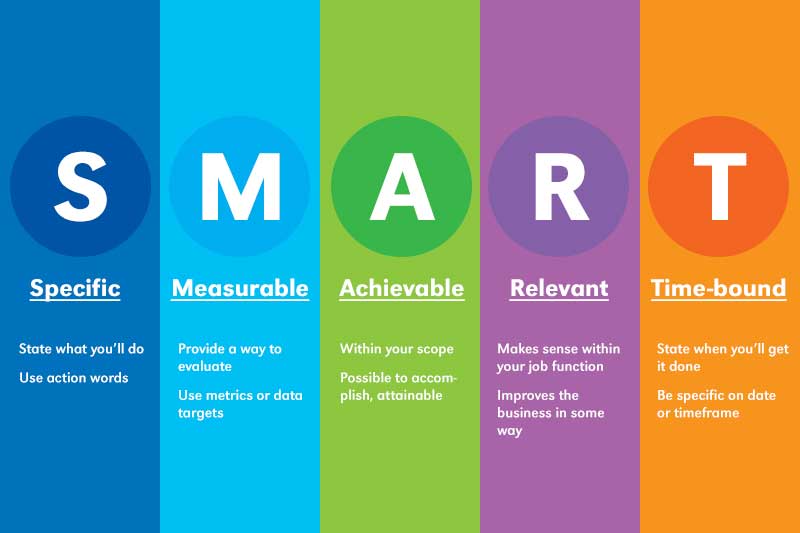
Ever heard of S.M.A.R.T. goals? You need SMART goals as they can guide your decisions better than less refined goals. SMART goals are Specific, Measurable, Achievable, Relevant, and Time-bound. Trust me, sticking to this formula will ensure your goals are clear and actionable. Setting goals like this eliminates ambiguity and energizes your team to achieve more. It provides a clear benchmark for success so you know when to celebrate.
What are stretch goals?
Stretch goals are challenging. They’re designed to push your business beyond what is easy to achieve, thus encouraging innovation and supporting significant growth. Importantly, stretch goals aren’t so challenging that you give up on them before you even get started because you know that, no matter how hard you work, you will never achieve your stretch goals.
Think of stretch goals like an athlete training for an event. A runner doesn’t start out wanting to break the world record in the next 12 months. She would get frustrated because she was only making slow progress toward achieving her stretch goal, resulting in giving up on running. Instead, she sets a time that’s incrementally better than their current time based on their achievements over the previous 12 months. Let’s say that over the last 12 months, a runner reduced their time for the 400-meter race by 10%. In setting a stretch goal, the runner may set it at 15% better than last year.
Achieving stretch goals requires a coherent plan built on prior experiences and implemented effectively.
Steps toward setting stretch goals
Achieving stretch goals starts with creating ones that represent a challenge without being so challenging that you and your team give up before you even get started. Once you define your stretch goals, it’s time to set up to achieve them. Here are the components to put in place if you’re set on achieving stretch goals.
Crafting your vision
Alright, what’s your big vision? Think about where you want your business to be down the road. This vision should be a bit of a stretch but still within the realm of possibility. It’s not just about money—it’s about your impact, your presence in the market, and how innovative you are. Ask yourself what you want people to say about your business. That’s your starting line. A strong vision inspires and keeps everyone pushing forward, even when the going gets tough. It acts as the North Star for every strategic decision you make.
This starts with assessing your current capabilities and prior performance. Define your team strengths, market position, and resources you can apply toward achieving stretch goals. Identify areas where you think you can improve performance based on the metrics used to assess it.
Setting strategic objectives
From that big vision, let’s break things down into more manageable bits—these are your strategic objectives. Say you want to top the market. Your objectives might include ramping up your product line, boosting customer satisfaction, or even pushing into new territories. Each of these goals should be a stepping stone that moves you closer to your grand vision. These objectives give your daily operations a framework and a clear direction. They make your long-term vision attainable by outlining the path in achievable milestones.
Each milestone should reflect a small win to keep you and your team energized and committed to achieving stretch goals. Set realistic timelines for achieving each milestone and use project management software to define the critical path. This ensures you keep your eye on the ball, focusing attention and resources on the elements that might cause you to miss a targeted milestone.
Utilizing resources wisely
Here’s where achieving stretch goals starts to get real: you can’t do everything alone. Sometimes, you need the right partners to make things happen. For example, a top-notch marketing agency uses its expertise and shared marketing tools to achieve a higher return without the high cost of mistakes or going it alone. They can help you reach the right audience most effectively. Plus, embracing tech can simplify your processes and give you killer insights to fine-tune your strategies. Getting the right tools and partnerships can supercharge your efforts, bringing efficiency and innovation. It’s about working smarter, not harder, to leverage every advantage you can.
 Embracing marketing

Now, to look into the role of marketing your business. It helps you shout out to the world about your unique products to create awareness and drive consumers toward purchasing them. Whether it’s through fancy online campaigns, juicy content, or laser-focused ads, marketing gets your message to the people who need to hear it most and then offers the right incentives to move them down the funnel toward purchases, repeat purchases, and referrals.
And that’s how you hit your targets, like expanding your market footprint or boosting your sales. Effective marketing not only spreads your message but also builds your brand’s reputation and creates a loyal customer base.
Measuring and adapting
What gets measured gets managed, right? Setting up Key Performance Indicators (KPIs) for each goal lets you track your progress and pivot when necessary. If something isn’t panning out, be bold—change tactics, tweak your approach, or even overhaul your strategy. Staying flexible is critical. It’s essential to have systems in place that allow you to see the real-time impact of your plan so you can make informed decisions that optimize your market performance. This data-driven approach helps minimize risk and ensures that your resources are being used effectively.
Fostering a goal-oriented culture
It’s not just you chasing these goals; your whole team needs to be in on it. Cultivate a workspace where everyone’s eye is laser-focused on achieving stretch goals, where progress chats are a normal part of the day, and where achievements get some well-deserved high-fives. This kind of environment keeps everyone motivated and on their toes. When your team understands and connects with the goals, their job becomes more meaningful. Creating this culture isn’t just about hitting targets—it’s about building a team that’s engaged, enthusiastic, and committed.
Long-term planning
Don’t just think about today or tomorrow. Where do you see your business in 5, 10, or even 20 years? This long-haul thinking will influence your choices and help you prioritize what’s truly important right now. Such foresight is crucial for sustainable growth and enables you to prepare for future challenges before they arise. It also ensures that the goals you set today are building towards your ultimate objectives. Long-term planning aligns your short-term actions with your long-term objectives, ensuring consistency in your business strategy. It creates a clear pathway for growth.
Risk management
Every goal carries its risks—identifying these early on and planning how to dodge or tackle them is super important. Whether it’s a shaky economy or the next big tech upheaval, being prepared can keep you on track when the going gets tough. Effective risk management not only protects your assets but also ensures that you can seize opportunities where others see obstacles. By foreseeing potential risks, you can craft strategies that are robust and adaptable.
Staying informed and adaptable
The business world never stands still, and neither should you. Become a learning organization like the one depicted below. Keep your ear to the ground for the latest industry buzz, tech advancements, or shifts in market dynamics. Staying informed and adaptable will help you stay ahead of the curve and face challenges head-on. This adaptability is crucial for maintaining competitiveness in a fast-paced market. It allows you to respond swiftly to changes, keeping your business agile and aligned with market demands.

Leveraging networking and partnerships
Don’t underestimate the power of a strong network. Connecting with other pros can open doors to new opportunities, advice, and even referrals. These relationships can be your business’s lifeline and a treasure trove of insights. Networking isn’t just about exchanging business cards; it’s about building relationships that provide real value to both parties. It’s about creating a community around your business that supports and enhances your growth.
Embracing innovation
In today’s market, staying ahead often means staying innovative. Embrace changes and advancements that can propel your business forward. Whether it’s adopting new technologies, exploring new markets, or developing revolutionary products, innovation should be at the heart of your strategy. This mindset not only keeps you relevant but also constantly challenges you to improve and adapt. Being innovative helps you differentiate your business from competitors and can lead to the discovery of new niches or customer needs that have been previously unmet.
Building resilience
Building a resilient business means preparing to face setbacks and failures head-on. It involves creating strategies that help your business bounce back and capitalize on the lessons learned. Resilience is about more than survival; it’s about thriving in uncertainty and turning challenges into growth opportunities. This resilience is what separates thriving businesses from those that struggle to keep up. A resilient mindset also encourages innovation and risk-taking, knowing that the foundation of the company can handle potential impacts.
Achieving stretch goals
Setting stretch goals is only the first step in achieving them. To achieve the goals, you need the following:
- The right team – reflecting the right skills and attitude
- Open communication to develop your vision with feedback from your team and to ensure you communicate your vision effectively. Open communication lets folks know that they can (and should) share mistakes or delays that might impact your ability to achieve your goals.
- Foster accountability by assigning responsibility to the right team member and monitoring progress. Provide incentives to encourage team members to meet their goals. Openly track key metrics so everyone knows where they stand.
- Prepare for setbacks by developing contingency plans. Setbacks are inevitable, regardless of how well you plan. By developing contingencies, you’re ready to implement an alternative quickly rather than wasting time finding a solution to a setback.
- Review progress at regular intervals and share that with your team. You need some flexibility to recalibrate your goals if you see that it’s impossible to achieve your original goals to avoid demoralizing your team.
Conclusion
Defining and hitting your business goals is all about being strategic, adaptable, and proactive. By setting clear, achievable targets, leveraging the right resources, and fostering a proactive culture, your business can not just survive—it can thrive. So, take these insights, tailor them to your unique journey, and turn those business dreams into your business reality. Keep your goals clear, your plans flexible, and your team inspired, and there’s no limit to what you can achieve. Remember, every significant achievement starts with the decision to try.
Need marketing help to support business growth?
We welcome the opportunity to show you how we can make your marketing SIZZLE with our data-driven, results-oriented marketing strategies. Sign up for our FREE newsletter, get our FREE guide to creating an awesome website, or contact us for more information on hiring us.
Hausman and Associates, the publisher of MKT Maven, is a full-service marketing agency operating at the intersection of marketing and digital media. Check out our full range of services.
Discover more from MKT Maven
Subscribe to get the latest posts sent to your email.


