 logo

It’s not enough to have a great website if your target market doesn’t know it exists. Discoverability in AI worlds requires a multi-faceted approach combining both traditional SEO (search engine optimization, including local SEO) in tandem with newer strategies dictated by the reality wrought by AI, which uses generative engine optimization (GEO) to supercharge the discoverability that connects your digital marketing with your target market.
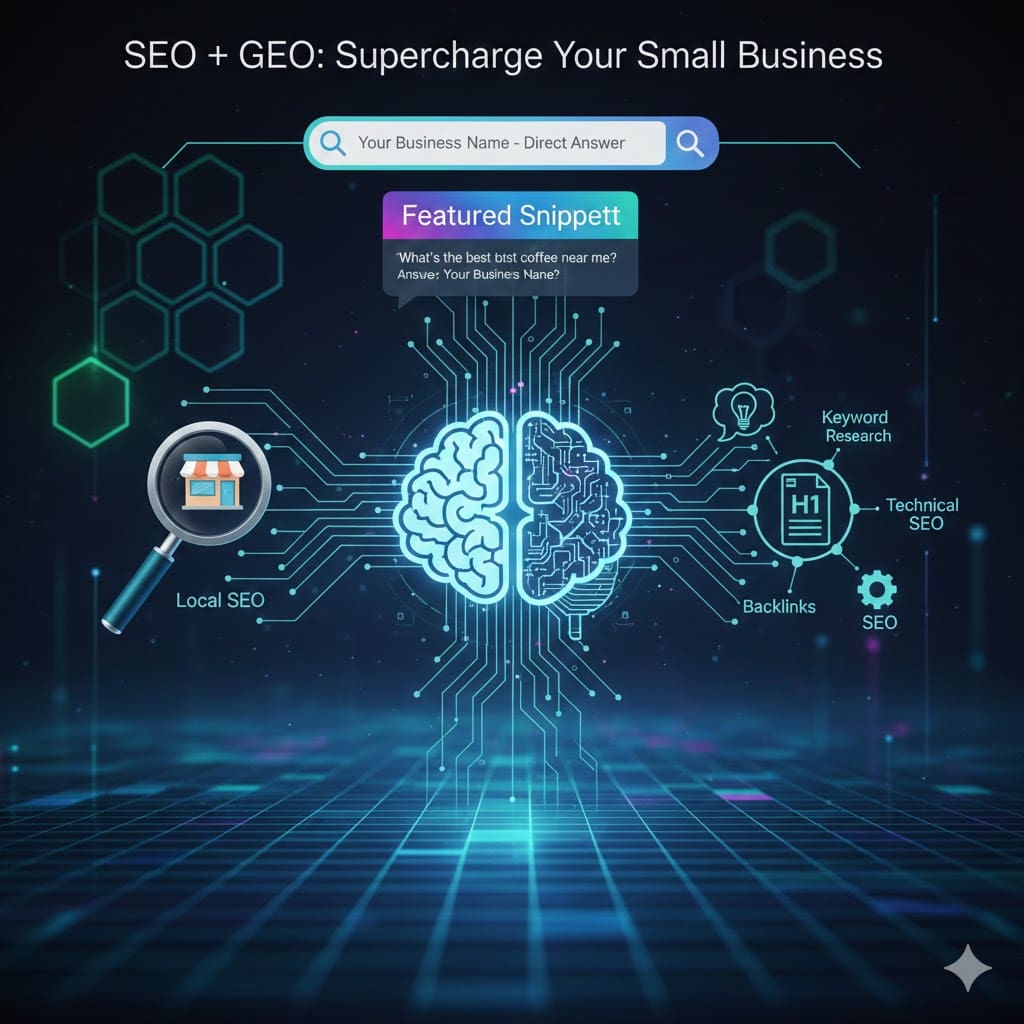
Discoverability in AI worlds
It might make better sense if we talk about discoverability in AI worlds, if we look at the impact of search on your business success. As recently as six months ago, I would have advised your staff to focus on driving organic traffic (traffic from search engines) to your website, since 53% of the traffic visiting your site was from this source and organic traffic converts at a higher rate than any other traffic source, except maybe email marketing.
That all changed about six months ago when LLMs (large language models like ChatGPT and Gemini) began dominating search engine results by delivering answer snippets at the beginning of search results. These snippets contained the answer to the user’s query based on the interpretation of the user’s intent. Users no longer had to select a link from the top of search results to discover your products. The answer provided brand recommendations containing your business (maybe) and those of your competition.
These answer snippets changed user behavior significantly because the options for solving their problems were right there, without requiring them to filter through several links to find the product options. Does that mean traditional SEO is now useless? Absolutely not.
How SEO impacts GEO
First, recognize that any AI model has millions of pages related to a user’s query to choose from. How do you think the model chooses which sources to include when constructing an answer snippet? They use the trust signals reflected by traditional SEO rank. In fact, SEO rank impact 40% to 80% of your chances of appearing in the snippet. This makes sense when you consider that users will quickly avoid answer snippets, just as they do sponsored links, if they determine the snippet frequently provides less reliable results.
In addition to your website rank, LLMs consider the authority and trust implied by what other websites say about your brand. Thus, backlinks, which are the backbone of traditional SEO, still matter.
You need to optimize for both SEO and GEO when creating content. Luckily, most of the content creation best practices you already use also improve GEO, and there’s nothing you do to attract AI attention that hurts your SEO. Hence, my advice is to continue your focus on SEO, while adding some subtle changes to your content that will perk up the proverbial ears of AI models.
SEO is your foundation
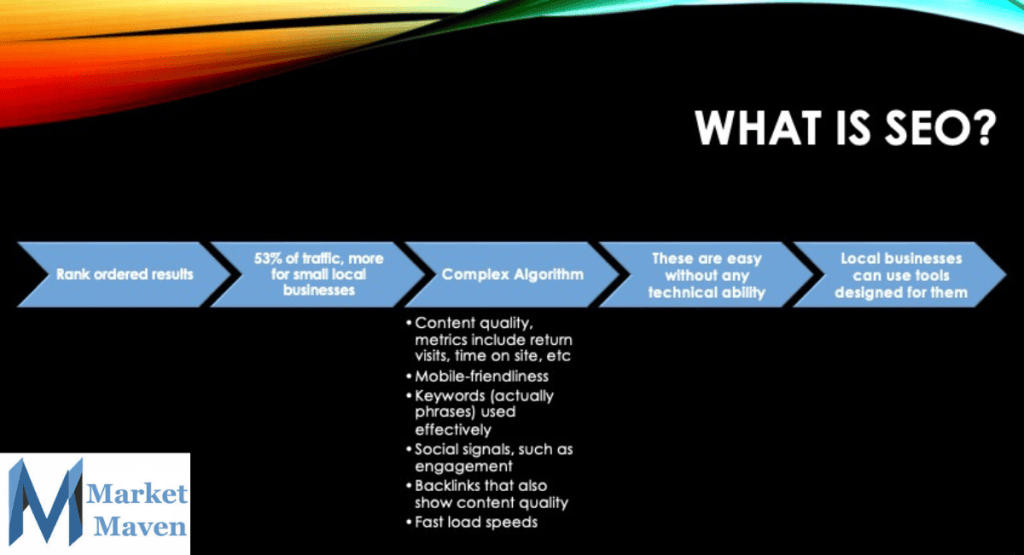
SEO is all about discoverability by search engines. Unless you’ve been hiding under a rock, you’re already doing many of the things that improve your rank in search engines. Here are a few highlights, in case you need a refresher:
- Keyword research helps you understand what terms potential customers search for online. You’ll find a number of great tools, such as Google’s Keyword Planner, that help identify broad terms and long-tailed keywords that demonstrate user intent related to your brand.
- On-page SEO tactics, including:
- High-quality content
- Title tags and meta descriptions that match your keywords
- Header tags that embed your keywords
- Optimized images that contain alt tags matching your keywords
- Internal linking to relevant pages on your website.
- Technical SEO ensures your website is developed to serve your content efficiently to search engines. This is where we find the most overlap to discoverability in AI.
- Mobile-friendliness since a large percentage of your target market likely uses a mobile device to search for products.
- Speed is important because users don’t wait long for a page to load before they leave for another site. AI is even more impatient for pages to load.
- SSL certificates (HTTPS protocol) tell users they can trust your website.
- Crawlability ensures that search engines can index your content, making it easy to find and understand.
- Backlinks from reputable websites, although links from spammy or poor-quality websites might hurt your rank.
Local SEO
While related, local SEO employs a few extra steps to help your content appear near the top when local users search for your products. Here’s an example of these enhanced listings:
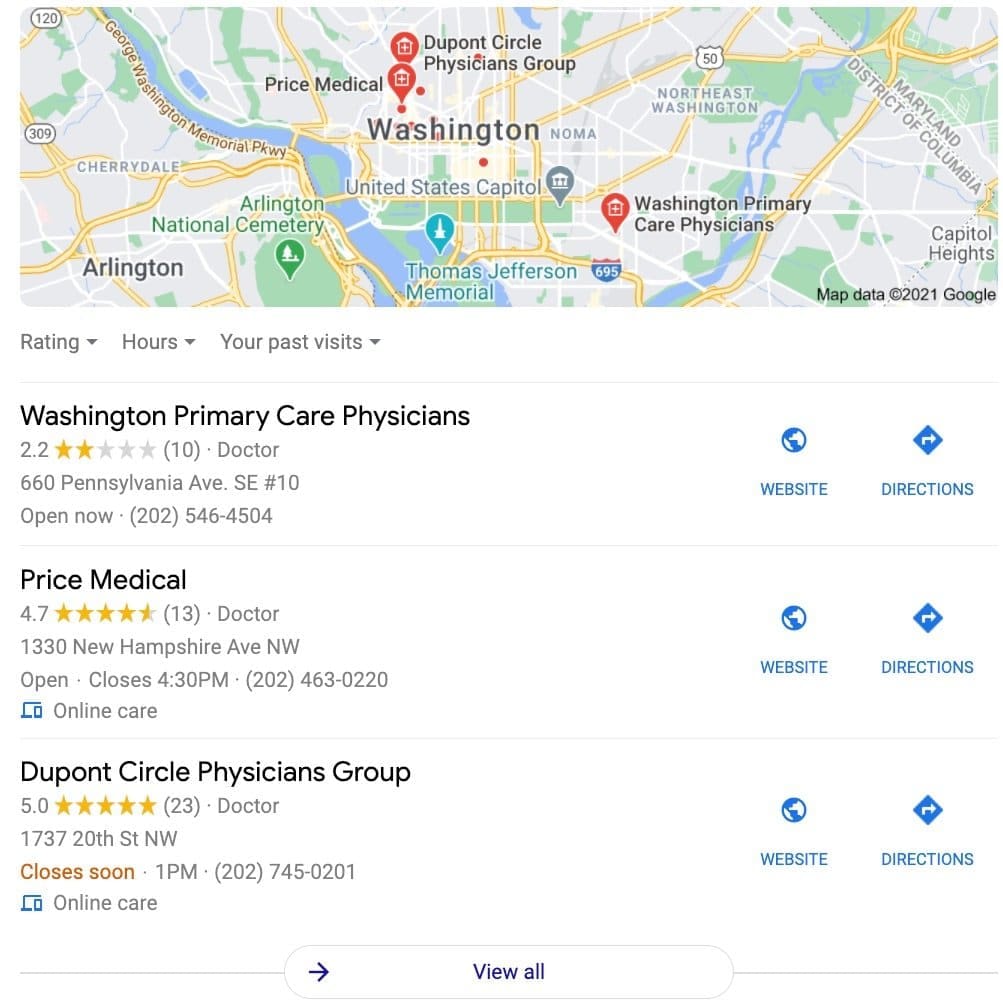
For businesses with a physical presence, local SEO helps local users find you, along with additional information to help entice them to your business. The additional actions needed to ensure good local SEO are:
- Google Business Profile, which is a free service offered to local businesses. You simply fill out all the requested information, validate your location by responding to a snail mail, and encourage customers to leave reviews. Make your business look great with photos, an enticing description of your products, and as accurate information as possible.
- Local citations in directories, such as Yelp and the Yellow Pages, also support your local SEO. Ensure accurate information is part of these directories. Solicit local reviews from these sources.
- Location-specific keywords help your market know your region. For instance, a bakery might emphasize its location in its name and as a keyword in the content created.
Layer GEO on top
Maximize discoverability in AI by making a few subtle changes to your content and the way it’s organized to make it easy for AI models to summarize, synthesize, and incorporate your content into the answer snippet. GEO is more about brand mentions than garnering clicks, so it means using a different set of analytics to assess performance.
Start optimizing GEO
To improve discoverability in AI worlds, you might consider tweaking your existing content, as well as keeping GEO tactics in mind when you create new content. As you review your existing content, you’ll likely find you don’t need to make massive changes if you’ve created content using sound SEO principles in the first place.
First, focus on creating clarity with concise answers to the kinds of questions users might ask about your product or your industry. You probably already do this if you’ve worked to create a great user experience on your website. Focus on headings that define the content embedded in each, as well as providing bullet points. Don’t get lazy by posting content that reads more like a teaser to the real information or doesn’t provide specifics.
Schemas are a way to organize your content that focuses on discoverability in AI worlds. Modern SEO plugins, like Rank Math, provide the types of schema preferred by AI models. While readers won’t see schema types, such as how-to and FAQ blocks, AI models use them when constructing answer snippets. Using schema markup language allows AI models to extract answers to users’ queries.
By creating authoritative, trustworthy content, AI models are more likely to include brand mentions in addressing users’ queries. Demonstrate authoritative content with data, citations to high-quality content, and demonstrate your command of the subject matter by using appropriate jargon and sufficient depth.
AI models value fresh content that’s updated regularly. If you have older posts on your website, consider updating the content, then republishing with a date corresponding to the most recent update. If older content isn’t up-to-date or irrelevant, consider deleting it.
Combining SEO and GEO
You maximize discoverability in AI worlds by combining these tools into one powerhouse. Here are the steps involved in adding GEO to your current SEO-optimized content:
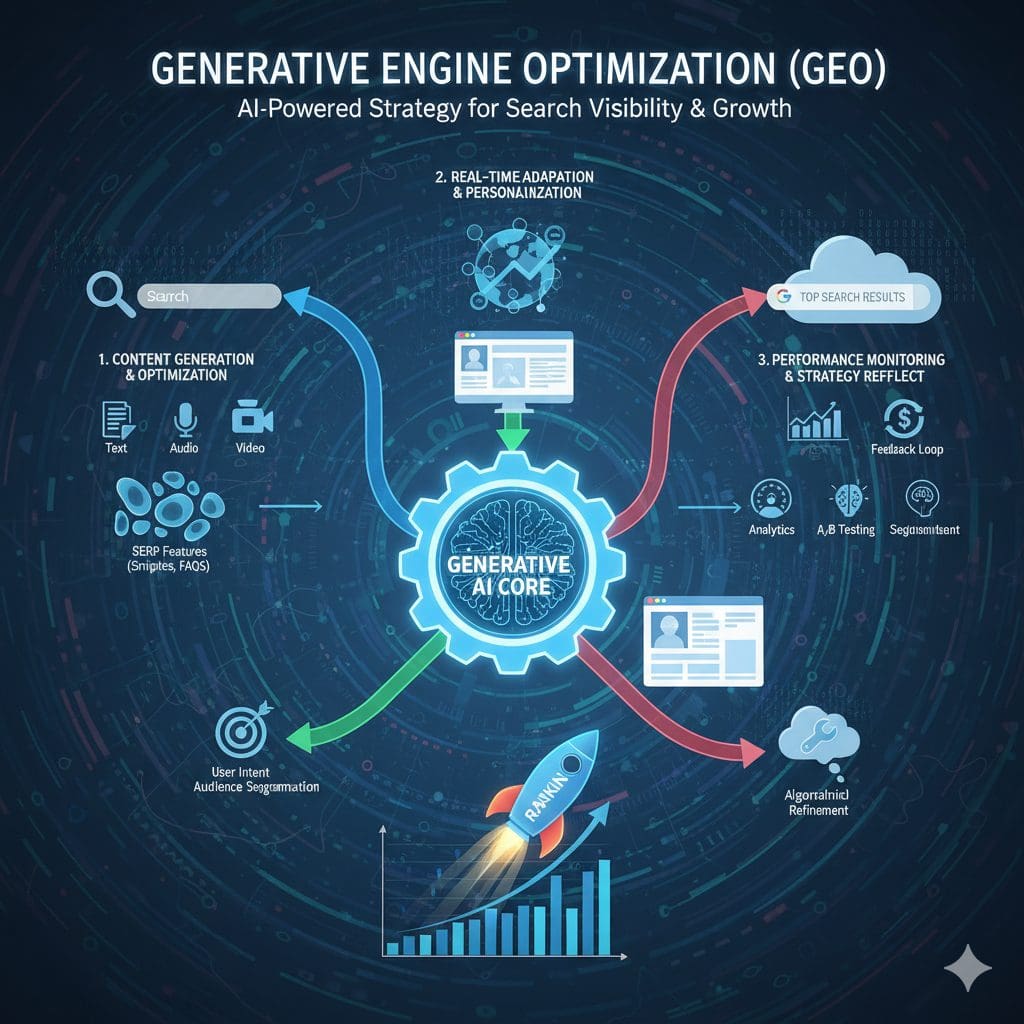
Audit your current content
Consider updating old content, especially content that currently attracts visitors, which demonstrates that the topics are still current.
Identify opportunities
Look for customer questions by reviewing your customer support logs, social media posts and comments to your profile and that of other companies in your industry, or even asking AI what questions consumers in your industry ask.
Implement schema markup
Consider adding an FAQ section to your posts or creating new posts using an FAQ schema. Add a table of contents to your posts. If your SEO tool doesn’t allow for advanced schema markup, consider switching to one that makes it easier for you to implement a variety of schemas.
Improve your Google Business Profile
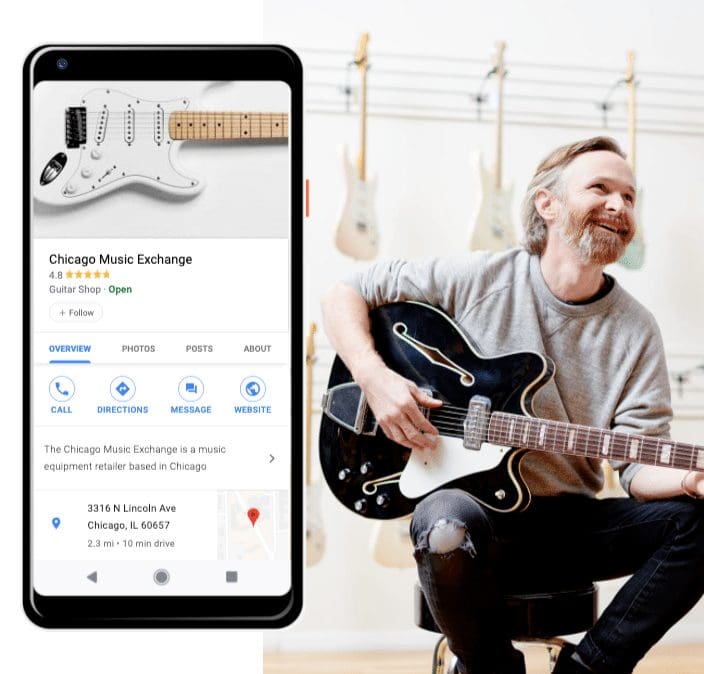
Update your contact information, business hours (especially during holidays), and images used on your profile. Ask customers to post reviews and respond when they do, especially if they aren’t 100% satisfied with the experience. You can even post content, such as FAQs on your profile.
Monitor and adapt
Keep an eye on your analytics to find what’s working and what’s not. Remember, your goal now isn’t just to drive visitors to your website, it’s discoverability in AI worlds. Hence, brand mentions in those critical answer snippets are as important as organic traffic. Supplement your Google Analytics insights by querying search engines about your industry and products to determine whether your content shows up in the answer snippet. Use an AI model to directly ask about products in your industry to see whether brand mentions appear.
An example of an FAQ schema
An FAQ schema markup is one of the most beneficial when it comes to discoverability in AI worlds because it clues in AI models that you’re answering real questions posed by consumers in your industry. Here’s a table to get you started with ideas for an FAQ section of your content:
| Question Type | SEO/GEO Benefit | Example for a Local Bakery |
| The “Cost” Question | AI models prioritize transparency and pricing data. | “How much do custom birthday cakes cost in [City Name]?” |
| The “Comparison” Question | Helps you show up when users ask for “best” or “vs.” | “What is the difference between sourdough and artisan white bread?” |
| The “Process” Question | Demonstrates E-E-A-T (Experience & Expertise). | “How long does it take to prepare a catering order for local events?” |
| The “Local Specific” Question | Essential for Google Business Profile and Local SEO. | “Where can I find gluten-free pastries near [Local Landmark]?” |
Conclusion
The digital world is not just about being found; it’s about being understood. By strategically combining robust SEO (including local SEO) with forward-thinking GEO, your small business improves discoverability in AI worlds. Start today, and watch your discoverability soar!
Need marketing help to support business growth?
We welcome the opportunity to show you how we can make your marketing SIZZLE with our data-driven, results-oriented marketing strategies. Sign up for our FREE newsletter, get our FREE guide to creating an awesome website, or contact us for more information on hiring us.
Hausman and Associates, the publisher of MKT Maven, is a full-service marketing agency operating at the intersection of marketing and digital media. Check out our affordable coaching programs to help your business thrive into the future.
Discover more from MKT Maven
Subscribe to get the latest posts sent to your email.


