 logo

Growth is a great thing until you find yourself facing delayed shipments, customers complaining about poor quality, or an operations department struggling due to a lack of raw materials or employees who complain about excessive overtime. Another challenge facing small business owners at this stage in the process has to do with management. The organization has likely grown beyond the supervision power of a single owner or even a small group of owners, yet many still want to micromanage the operation. Not only does this limit the pace of growth as everyone clamors for approval for every action, which delays progress, but it also fails to build the type of management team necessary to support growth through taking ownership of projects and using creativity to move the business forward. Suddenly, the champagne loses its fizz and you begin scrambling to figure out where you went wrong. But that doesn’t have to be your future. You can scale your business effectively to achieve successful growth. In this post, we’ll share some strategies for doing this.

How to scale your small business effectively

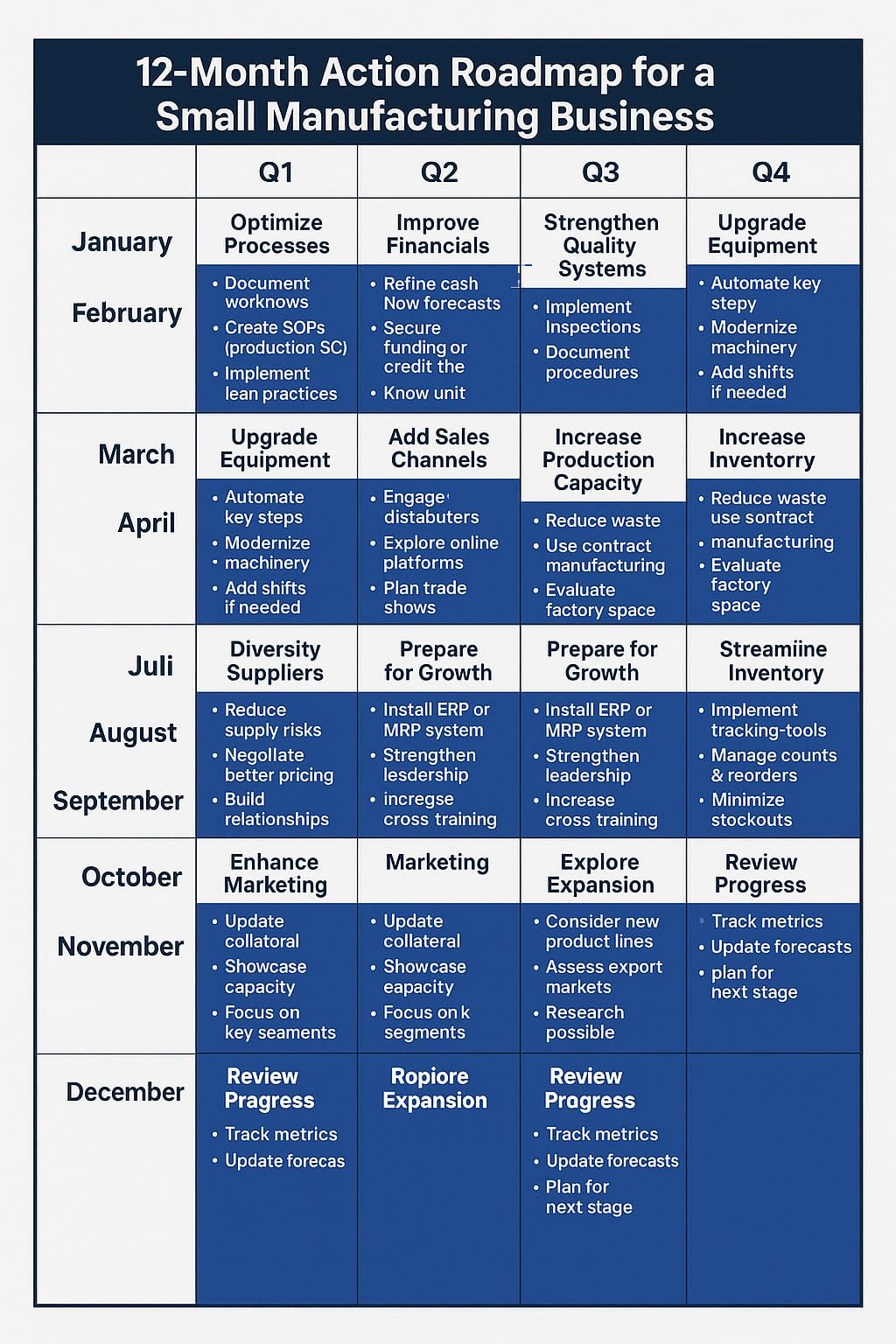
In the following sections, we provide a step-by-step process designed to help you scale your small business without sacrificing quality or developing any of the other common symptoms associated with managing your business’s growth. At the end of this section, you’ll see a 12-month checklist to help you stay on target with effective growth.
1. Strengthen your operational processes
Sometimes, as you start your small business, you’re not quite sure how to set everything up to run an effective business. Quickly, you become so busy addressing the day-to-day demands of running it that you throw things together to address each new need as it arises. Whether it takes a few months or a few years, you’ll ultimately discover that your processes are inefficient, costing you money, time, and generating waste without a well-honed operational process that you modify as the need arises rather than simply attempting to make do with a quick fix. For instance, I once consulted with a business producing custom metal parts for various uses. Some customers required a mirror finish to the completed product. However, the company simply added new machines as the need arose, resulting in the machines needed for some finished goods spread over the massive complex. As metals were transported internally between buildings during the manufacture of these products, the mirror finish was marred, requiring the finish to be refined several times before the process was completed. This cost the business time and money, which was a waste of resources.
To avoid these problems, strengthen your operational process with the following:
- Document your processes by mapping out workflows that span from raw materials to the shipping of finished goods. This will help you identify bottlenecks that reduce efficiency and waste resources. These documents also help with training new employees.
- Create standard operating procedures (SOPs) for every department and product.
- Invest in preventative maintenance to avoid the downtime that wastes resources.
- Ensure you create quality products by using ISO standards that minimize waste. You never want a defective product to reach your customers and the quicker you recognize that your processes aren’t working toward that end, the less costly it is to fix them.
2. Tighten control of resources
You never have money to waste. That means you need to tighten control over every resource used in the business. We already discussed one of these: preventative maintenance, which not only results in less downtime, but also well-maintained equipment lasts longer without needing major repairs. Here are some others:
- Secure your financial resources by paying invoices early to take advantage of discounts offered, such as a 2% discount if paid within 10 days after the invoice date.
- Set up a line of credit to ensure you have money in case of a cash shortfall. This is cheaper than trying for an emergency load to stay afloat.
- Order materials before you run out to avoid the cost of overnight shipping.
- Track waste and reuse materials, if possible. For instance, a client making glass products might save broken or damaged products by color to melt down and reuse them to create new products.
- Protect your resources. Ensure your digital assets are secure from criminals, protect your materials from theft or fire, secure your building with locks and a smart cabinet that keeps keys secure, such as Traka España, and train your staff to protect them from injury that might result in a lawsuit.
3. Expand production capacity efficiently
The timing regarding when to expand your business is a critical decision and there’s no single answer to this. Generally, you want to time your growth when it’s clear that you face sustained demand for your products.
However, one element to consider is referred to as the “make versus buy” decision. This concept takes on many forms. For instance, it might refer to whether to make components of your finished goods or to buy them from another firm. You might even buy finished goods to sell them as your own, which is what several car manufacturers do. You might also consider outsourcing as an example of this concept, whether it refers to outsourcing services such as accounting or outsourcing elements of your process to subcontractors.
Another way to expand capacity to scale your small business is to add additional shifts, which is much less costly than adding more manufacturing space. By the same token, you might consider trading in less efficient equipment for more efficient equipment, such as that which produces more product in the same amount of time.
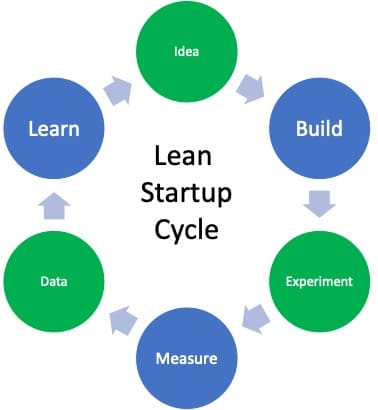
When you decide to expand your product capacity in-house, consider adopting lean manufacturing to reduce waste and improve efficiency. The image above demonstrates the lean process to increase capacity more efficiently.
You can’t scale on heroic personal efforts alone, however. Automate checklists, deadline nudges, batch-number logging – all of the dull stuff a computer loves to process. That frees human attention for anomalies: a sensor reading out of range, a customer ticket hinting at a fault that needs to be investigated, or a supplier who suddenly changes specifications. Quality lapses hide in the weird edges; people need the energy and time to notice them.
4. Build scalable sales and distribution
Customers want what they want and they want it NOW! Any hiccup in your distribution system sends customers and prospects into the arms of your competition. To avoid this, you need state-of-the-art systems to track shipments and a robust communication system to inform customers as quickly as possible if a delay is anticipated. If possible, you can divert shipments to major customers to maintain strong relationships with the valuable partners.
To continue your growth trajectory, it is essential to consistently focus on building new relationships by seeking referrals, attending trade shows, and exploring export markets. A strong marketing plan is also a must.
5. Build a strong team
Running a business based on a top-down bureaucratic style is ineffective when you want to scale your small business as you grow. Instead, you need to hire or develop supervisors, then delegate responsibilities to them so you’re not trying to manage everything. A flat organizational structure like the one shown below not only allows the business to accomplish more, but it also leads to enhanced creativity. Improved adaptability, better communication, and higher rates of collaboration.

Cross-training employees and encouraging them to learn new skills reduces the risk when someone in the organization leaves, while maintaining efficiency when an employee is out on vacation or ill. For example, Johnsonville Sausage offers a pay increase each time an employee masters a new skill.
6. Improve your technology
By adding new tech, you can grow your business more efficiently without some of the common growing pains you might otherwise experience. For instance, inventory management tools are essential if you wish to avoid stockouts or overstocks. An system tied to ERP or MRP system integrates inventory, purchasing, production scheduling, and order processing to ensure your business works like a well-oiled machine. Once you get to a certain point, these tools are essential and upgrading to better ones may be necessary as you continue to scale your small business.
7. Drive continuous improvement
Without data, you won’t be able to scale your small business without threatening quality, wasting resources, or damaging the long-term growth of your business. The first step in this process is to gather KPIs (key performance indicators) for each process and functional area within the company. Monitor these KPIs and share them weekly with department heads to glean insights and solicit ways to improve performance. Create interactive dashboards full of data visualizations to help analyze ways to improve the business.

Recognizing that employees are the biggest resource in your business, ensure employees share in the success of the business both through monetary benefits and recognition. Share your metrics and celebrate when things go right. Don’t denigrate when things go wrong. Share wins, not blame.
According to Deming, most failures are systematic rather than emanating from human mistakes. Fix the problem, don’t blame people.
Conclusion
Scaling isn’t the enemy of quality; doing so without a well-thought-out strategy is tough. Map the processes, clone your good practice, watch your tools as closely as your bank balance, let software nag so people can think, and keep folding lessons back into the system. Do that, and growth stops being a gamble and becomes the proof that what you built at ten units still shines at ten thousand.
Need marketing help to support business growth?
We welcome the opportunity to show you how we can make your marketing SIZZLE with our data-driven, results-oriented marketing strategies. Sign up for our FREE newsletter, get our FREE guide to creating an awesome website, or contact us for more information on hiring us.
Hausman and Associates, the publisher of MKT Maven, is a full-service marketing agency operating at the intersection of marketing and digital media. Check out our full range of services.
Discover more from MKT Maven
Subscribe to get the latest posts sent to your email.


