 logo

The idea of expanding your business internationally is a potentially exciting option that opens new markets for your products. However, to successfully establish a presence for your business in another country or region outside your home country, you need to do some research to develop a thorough understanding of the various factors that might impact your success. You also need a well-thought-out plan that details every aspect you need before expanding your business into another country.

Factors to consider before you expand your business internationally
Expanding your business internationally involves considering several factors unique to the international business environment. Below, we’ll discuss these in more detail, but for now, here are the significant factors you must consider:
- Financial structure
- Legislative and legal environment.
- International marketing
- Logistics
Financial structure
Understanding taxation across borders – A highly complex aspect of international expansion is understanding and managing the tax implications of doing business across borders. Different countries have different tax systems with varying tax rates. Taxation by your home country may also apply to any funds you remove from your international companies, which may result in double taxation for your profits. In the next section, we’ll discuss the legal formation of your international operation, which also has tax implications.
Another thing to consider with respect to international taxation is the impact of tariffs on your pricing. If the country where you sell products imposes tariffs, which are a form of tax, on products imported from your home country or wherever the products are manufactured, you must determine whether consumers will pay the added cost on top of your standard charges for these products. The current tariff war instigated by the policies of the Trump administration currently makes the entire issue of tariffs unpredictable. Quotas, which are a form of non-tax restriction on imported goods, may define a maximum number of products that can be imported and may impact your success.
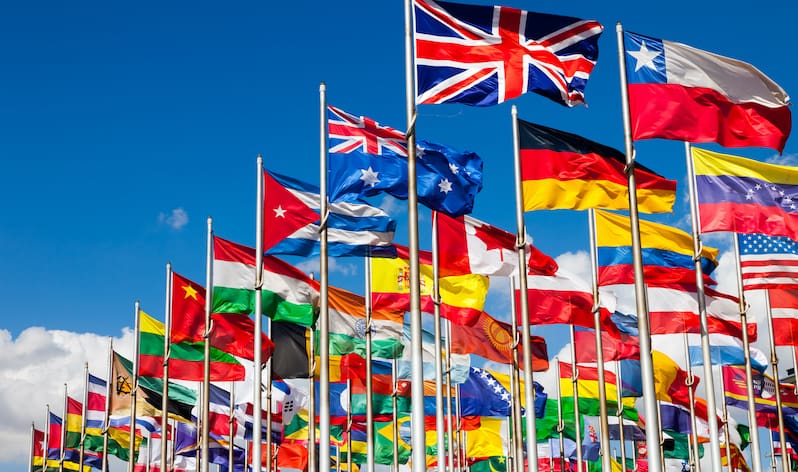
Your international business must navigate these complex laws. To avoid penalties and fines, you need to determine which taxes will apply to your business and employees. This will ensure that the appropriate withholding taxes are paid.
Understanding the tax treatment of employee compensation, social security contributions, or other mandatory contributions is key to determining the feasibility of your business internationally. You may also have to look into payroll taxes. Make sure you are working with an experienced tax advisor who is familiar with both international and local laws. This will help to make things go a lot more smoothly for you. They can help you minimize liabilities by developing a tax strategy. This will ensure your compliance with the regulations in both countries.
Navigating financial logistics – You need to manage international financial transactions if you want to work across national borders. This involves more than just looking at tax compliance. You’ll need to consider currency exchange rates along with the vulnerability that comes with these exchange rates changing over time. You may need help with cross-border invoicing to ensure you receive sufficient compensation that accounts for exchange rates between your home country and the countries where you sell your products. You must also consider the challenges of transferring money from one country to another, as it may take longer than receiving payment in your home country.
Some countries limit the amount of money your business can convert into the currency of your home country. Some of these countries also restrict the money you can take out of their country to fund projects or support operations outside the country. You may also find that banking in some countries is subject to disruptions, which can limit easy access to your funds. Finally, collecting debts in a foreign country may prove challenging. This reflects a risk inherent in international banking.
Another consideration, now that we’re talking about country risk, is the risk of expropriation. Expropriation involves a country taking over your businesses. For instance, when Cuba became a communist country, it took over the operations of the US and other companies located in Cuba.
Legislative and legal environment
Determine business structure – One of the first decisions you’ll have to make when expanding your business beyond its current borders is determining the kind of structure you want for your operation. Will you be willing to set up a branch of your existing company, or do you want to create a subsidiary? Maybe you want to form a joint venture with a local business to benefit from their existing infrastructure, or because local laws require international businesses to have a local partner. Sometimes, the decision is based solely on your interpretation of the context. Each of these options has different operational, financial, and legal implications. For example, a branch or extension of your parent company may need to operate as a separate entity in a new local jurisdiction. In contrast, a subsidiary may need to operate as a separate entity in a new local jurisdiction.
You should also consult with international business lawyers and financial advisors. They can access the legal and economic environment of any country you are targeting. These experts can also help you navigate local laws, industry-specific regulations, and tax structures. This ensures that your expansion will comply with local and international laws, so you won’t run into any issues.
Registering with local authorities – Once you’ve selected the appropriate structure for your business, the next step is to register with all the proper authorities in the country you’re targeting. This will involve submitting documents.
You may also need to submit your company’s articles of incorporation, proof of your financial standing, and other forms of verification. In many countries, foreign businesses are required to translate their documents into the local language. You must do this before submitting them for review. If you are submitting documents to U.S. authorities, it is essential to ensure that a USCIS-certified translation accompanies all documents in a foreign language. You can get a USCIS-certified translation guide service to assist you with this. This type of translation guarantees the completeness and accuracy of the document. This helps immigration and regulatory authorities evaluate them properly. This way, you avoid potential issues with your application and registration.
Complying with local labor laws – Ensuring that you understand and comply with all local labor laws is essential if you want to expand your business internationally. Each country has its own set of employment regulations, and you need to adhere to them. These include working hours, minimum wage, paid leave, and termination rules. You’ll also need to look at employee benefits. All of these regulations vary from one country to another. When you fail to adhere to them, you can end up in costly legal disputes.
As part of this process, your business may also need to submit employee contracts, labor-related documents, and union agreements. Make sure that they are translated into the proper language. If you can use local legal experts, such as lawyers and HR consultants, as these experts can help you avoid a host of problems by ensuring you comply with all local regulations and that contracts are enforceable in the local courts. When you follow proper labor practices, you’ll build a positive reputation and avoid some very costly mistakes.

Managing visas and immigration – If your international expansion involves sending employees to work in specific countries, visa and immigration issues will inevitably arise. Whether you’re transferring employees or planning to hire new local talent, you need to determine the appropriate category and the nature of the work based on the employee’s qualifications.
The visa application process can be complex and time-consuming. It will require a wide range of supporting documents from you. Some of these documents may be academic credentials, work experience letters, and identification documents. If these are in a language other than English, you will need to provide translated versions. This will ensure that you meet all the submission requirements of the immigration authorities. Ensuring you understand the different types of visa options available and their requirements is key to making sure your employees can work legally in the country you are targeting.
In many cases, employees may also need to provide additional evidence, such as proof of financial support or an employer-sponsored petition. Working closely with immigration lawyers can help streamline this entire process. This will minimize all delays.
International marketing
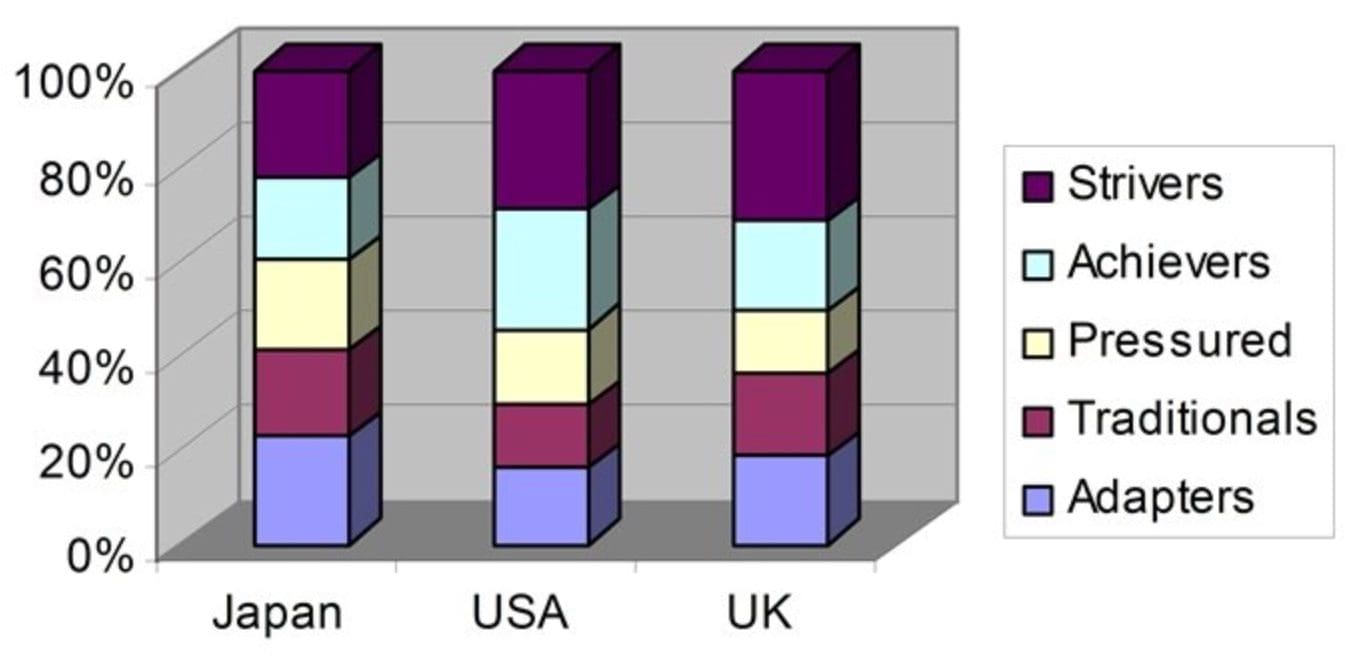
Accounting for cultural differences – When expanding your business internationally, you need to consider more than just legal and financial factors. Cultural differences may also play a significant role in the success of your business. Each country has its own cultural norms, communication style, and expectations regarding how its businesses conduct themselves. When you understand these differences, you’ll build strong and collaborative relationships with both local customers and employees. Below is a comparison of the proportion of the population in three countries that represent each of the five groups based on international values and lifestyles, or VALS.
 For example, businesses that operate in one country may prioritize hierarchy and formal communication. Another country might favor more informal and collaborative interactions as the norm. Additionally, cultural differences may also influence how your employees perceive work-life balance, time management, and team dynamics. For instance, employees working in a paternalistic country, such as India, might prefer clear directions. In contrast, those working in the US or Western Europe might work best when given input into decisions that affect them.
Making sure you invest in cultural trading and local expertise will help you navigate all these differences, which go much deeper than simple language differences. It will also help to prevent misunderstandings. These things have a way of impacting success, and you want to avoid that. You can provide cultural sensitivity training for your employees to improve internal communication and foster an inclusive workplace environment.
Logistics
Moving goods from one country to the next is expensive and fraught with challenges, including:
- Inspection of freight at various points along the journey
- Choosing the least expensive form of transportation while balancing cost with delivery time
- Working with multiple partners in the process, such as freight forwarders, third-party logistics firms, warehouses in free trade zones, and insurance along the journey
- International customs procedures that vary significantly from one country to the next

Conclusion
As you can see, there’s a lot that goes into expanding your business internationally. However, it is also an advantageous experience that can help you grow your business exponentially. You have to make sure to take the time to understand all the laws and the people you are working with. Once you do all this, you’ll be able to fit in and grow your business.
Need marketing help to support business growth?
We welcome the opportunity to show you how we can make your marketing SIZZLE with our data-driven, results-oriented marketing strategies. Sign up for our FREE newsletter, get our FREE guide to creating an awesome website, or contact us for more information on hiring us.
Hausman and Associates, the publisher of MKT Maven, is a full-service marketing agency operating at the intersection of marketing and digital media. Check out our full range of services.
Discover more from MKT Maven
Subscribe to get the latest posts sent to your email.


