 logo

Discussing B2B digital marketing with business owners is frustrating. They think digital marketing only works for B2C brands, and even then, they think it only works for tech brands and those with exciting products consumers can get stoked about. Take a look at the infographic from Relevance at the end of this post for some more ideas on how to drive leads using B2B digital marketing.
 The truth is that digital marketing works for every brand, regardless of whether its customers are other businesses or consumers and whether its brand is an exciting product or not. I mean, think about Dove. How unexciting can you get—soap and lotion? So, the brand creates highly successful digital marketing about something consumers are passionate about—body image. The campaign was so successful that it won the Titanium Grand Prix after reaching billions of consumers worldwide.
Yes, I know Dove isn’t a business-to-business brand, but B2B brands can do the same thing — develop a B2B digital marketing strategy around something their target market is passionate about. Maybe your target market isn’t passionate about your brand and maybe your products compete in a really boring market. Create a campaign around something they do care about.
That doesn’t mean you have to talk about your brand in terms of its marketing day after day. Focus on your brand’s social responsibility and craft a digital marketing strategy around some aspect of that responsibility. Find a social program you’re passionate about and build a digital marketing strategy around that.
Or, focus on how you’ve helped companies, just like the ones you’re targeting, achieve great things. I once consulted for a client who chose to focus some digital marketing efforts around a company they were targeting as part of their marketing effort. Their campaign applauded the prospective client’s efforts at social responsibility. The options for B2B digital marketing are endless.
Recognize B2B digital marketing opportunities
First, just like B2C marketing efforts, you need to think about digital marketing (or even traditional marketing) in terms of a funnel and develop content appropriate for each stage in the funnel.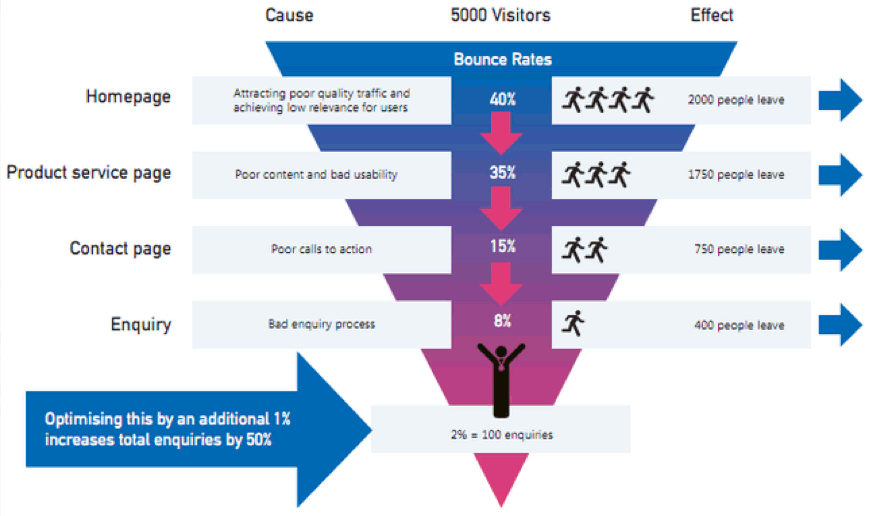
As this infographic shows, visitors come to your website from various sources (organic and paid search, backlinks, social, and direct). Visitors to your website either view content and leave or move to the next stage in the funnel. Or, maybe they don’t move forward during that first visit. Maybe they simply explore your website to get more information. You can use a retargeting campaign to selectively send ads to these folks who already expressed an interest in your products on social media or through an online advertising platform such as Google Ads. Or, collect email addresses from visitors by offering them a small token, often called a lead magnet, such as an ebook or a trial. Then you can email them to improve your conversion rate. A small change in conversion rate (1%) can increase inquiries by 50%. So, optimizing the funnel is critical for improving performance.
Optimize the B2B funnel
Awareness

B2B digital marketing is very different from selling to consumers in a couple of ways. First, your target market is bustling, with people who provide interference to keep you from reaching decision-makers. We call these folks, such as secretaries and administrative assistants, gatekeepers. Second, B2B marketing often involves a team (buying center) rather than a single individual — as you see in this image.
Reaching any (or all) of the buying center members helps create awareness of your brand. Too often, B2B companies only try to reach the busy decision-maker, ignoring much easier-to-reach members, like specifiers. Appealing to the gatekeeper is also essential because they attempt to block the decision-maker.
Because business customers are less likely to talk about your brand or recommend it to employees at other firms, you need to make a more significant effort to create awareness. Using owned, earned, and paid media (plus traditional advertising and PR) is critical for this. The exception to this is at a trade show, where setting up an enticing booth spreads the word to other attendees. For instance, I went to a trade show featuring a company giving away an enticing new product worth over $1000 to lucky winners in their hourly drawing. You bet this attracted a lot of buzz from attendees.
Despite first impressions, B2B brands can use social media effectively to create awareness, especially by using powerful targeting tools so they don’t waste money advertising to users who aren’t part of their target market. Remember, even enterprise companies are composed of PEOPLE who use social networks. Reach those people, and you’ll create awareness of your brand through targeted advertising.
Outreach to other bloggers and profiles is very valuable for creating awareness in the B2B space. Consider creating infographics or putting together videos and podcasts that other sites might want to share with their visitors. These earned backlinks not only make your brand more trustworthy and credible but also help your SEO (search engine optimization) so you rank closer to the top in related searches.
Speaking of SEO, search marketing should be a vital piece of your awareness campaign. Understanding how your prospects search for products like yours is the key to crafting a good SEO strategy.
Interest
Your brand becomes interesting when you show you produce a valuable product and when you earn the trust of buyers.
Create interest in your brand by effectively communicating:
- Unique benefits needed by buyers (USP). Need inspiration? Here’s a post with 10 USPs to spark your imagination.
- Trustworthiness. That’s why many B2B players tout the quality of customers who trust them and display them prominently on their homepage.
- Empathy. Customers (and don’t forget that business buyers are indeed customers) want someone who understands their needs and frustrations.
- Consistency and professionalism. B2B brands need consistent communication with potential buyers because you never know when someone is in the mode to buy. Often, purchases are made a few times a year or by RFP rather than every week like consumers. Email marketing and other contact tools have become indispensable parts of B2B digital marketing campaigns. These conversations must be professional, which doesn’t mean bland or impersonal. Look at the way Trackmaven uses child-like colors and their cute little dog to promote a content-tracking tool despite working for some of the world’s biggest brands. Professional doesn’t have to be boring. Below, you can see recommendations for how frequently you should post depending on the platforms you choose. However, your company blog isn’t an option.

Image courtesy of Plug and Play Tech Center

Notice, I didn’t say you need to do these things. I told you you need to communicate them effectively. The two aren’t the same.
That means knowing your target market and testing your content to ensure your message is heard loud and clear. We’ll discuss the measurement aspects of digital marketing more later.
Intension
I’ve heard Hubspot and others argue that business customers are about 80%- 90% of the way to making a purchase before they contact you. They only want the price from the salesperson.
That means you need to provide a depth of information on your brands through vehicles like white papers, case studies, and a recommendation from clients. Craft landing pages that look attractive, provide valuable information, and ask for the sale with calls to action that stand out.
Let prospects reach out to you for more information without adding pressure to make a decision today. For instance, offer a subscription to a high-quality newsletter to provide helpful information. Or let visitors sign up for a webinar or podcast where they can ask questions and get more information. Be sure to follow up with a recording for folks who couldn’t make the original broadcast time or who want a refresher on what you covered.
Conversion
The conversion funnel doesn’t end with a customer purchase. It’s just the beginning of your relationship with this customer, and it is a relationship.
- You have to follow up with the customer to ensure they received the order in good shape. I remember getting a card with a product order from the person who packed it. It was personal and made me feel like a valued customer. Sending personalized, handwritten thank-you notes to members of the buying center is always a nice touch.
- Offer customer service through a variety of channels available 24/7 so customers can get problems solved quickly and easily. A good example is GoDaddy. I’ve called customer support a few times and found their people friendly and helpful. They never made me feel like I asked a stupid question or that I was too unskilled for what I was doing. And they always had the right answer to help me.
- Periodically, invite customers to a special webinar or to visit you at your booth at an industry event so you can meet them in person. The personal touch really helps. It makes buyers feel special and valuable, which they are.
- Ask for referrals and recommendations. If buyers are too busy to refer you, ask them if they’ll provide a testimonial to add to your website or include it in a newsletter. Also, ask if they have contacts at other companies or divisions of their company who might need your products and be sure it’s ok to use their name when contacting them.
- To ensure continued loyalty, offer exclusive content, a discount, or a special promotion to customers, especially repeat customers. Treating customers right can result in evangelism, which really helps your brand.
Analytics in support of B2B digital marketing
Just like anything else in digital marketing, analytics are critical.
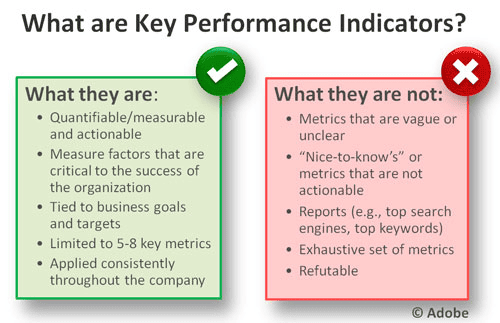
Set campaign objectives in terms of awareness, interest, intention, and conversion. Then, establish KPI metrics that measure these objectives. Below, you can see the difference between a KPI (key performance indicator) and a vanity metric.
Then, look at the actions contributing at each stage in the conversion funnel and assess the performance of these content marketing efforts to answer questions such as:
- Does content resonate with prospects? (CTR, Engagement, Shares …)
- Are you successful in encouraging visitors to move to the next stage of the conversion funnel?
- Are you publishing content at the right time? (Reach)
- Are you publishing too much or too little content? (Unsubscribes)
- Do you get repeat purchases?
- What is your online reputation?
A/B testing is an excellent tool for understanding what types of content get the most response from prospects. So are analytics provided by most digital marketing platforms, especially Google Analytics, which helps assess your website performance and gives some indication of how you’re doing with other digital marketing efforts.
Conclusion
Digital marketing isn’t solely the domain of B2C companies. B2B companies can use it very effectively if they adjust their campaigns to account for differences in the composition of the target market and what is important to them.
Need marketing help to support business growth?
We welcome the opportunity to show you how we can make your marketing SIZZLE with our data-driven, results-oriented marketing strategies. Sign up for our FREE newsletter, get our FREE guide to creating an awesome website, or contact us for more information on hiring us.
Hausman and Associates, the publisher of MKT Maven, is a full-service marketing agency operating at the intersection of marketing and digital media. Check out our full range of services.

Discover more from MKT Maven
Subscribe to get the latest posts sent to your email.


