 logo

Times are tough, there’s no denying it, between trade wars, real wars, and a global economy that’s struggled to recover from pandemic-related supply chain problems. It’s more important than ever to optimize your long-term operational efficiency to ensure your business is more cost-effective and generates more profit. To increase your chances of long-term success, you need to improve operational efficiency at your company.

Of course, that’s often easier said than done. Attempts to improve efficiency require significant operational changes that come with uncertainty, chaos, and expense, so it’s important to prioritize your efforts to get the biggest bang for your buck. However, while this takes a decent bit of work, it doesn’t need to be as complicated as you’d expect. Focusing on these areas of improvement could be more than enough to help address this issue. They should help you achieve significant results as time goes on.
How to improve operational efficiency
1. Analyze current operations
The first step in improving your efficiency is to analyze current operations to determine where you can see the biggest benefits. Begin this analysis with a workflow audit to identify bottlenecks, inefficiencies, and the necessary steps to address them. Sometimes, creating efficiencies requires significant process reengineering, but more often, a few tweaks will yield significant benefits. Talk to employees to get their take on operations, since they’re in daily contact with them. Then, set clear goals and a timeline for your efforts, which improves your chances of making progress.
2. Automate or outsource repetitive tasks
Automation tools allow you to spend more time on the things that really matter. For instance, stopping your work every couple of hours to post to social media involves shifting your focus, leading to inefficiencies and, potentially, mistakes. Instead, use a tool like Buffer to schedule a week or month’s worth of posts in a single afternoon, creating efficiency.
Consider outsourcing peripheral activities, like accounting, to the experts. You could go with a top notch outsourced accounting firm if you need help managing your finances, for example, rather than incur the expense of a full-time, experienced employee who isn’t utilized fully. By outsourcing rather than hiring, you not only save money on salaries and benefits, but also gain the skills of highly trained experts. You’ll find it’s often far more affordable to outsource tasks than to hire someone full-time. See this comparison between hiring a digital marketing agency and hiring an employee.

For non-routine tasks, you might even consider hiring gig workers from platforms like Fiverr.
3. Offer employee training
Your employees are always central to your efforts to improve your operational efficiency. This doesn’t mean just hiring the best people for the job. Instead, it’s worth putting a bit more time and effort into it than that. Investing in ongoing employee training, for example, can be more than enough to help with this. Your employees will ultimately be able to perform tasks better and better.
This doesn’t just mean making them more productive and efficient. It also improves the quality of their work. You’ll see more than a few benefits because of it. Employee training comes at a cost, but you’ll see a decent return on investment.
4. Improve communication
Speaking of employees, work to improve communication, striving for open communication that flows in both directions. Do this by:
- Implementing communication tools such as Slack, Microsoft Teams, or Notion. These tools allow workers to communicate freely without the need for repeated emails. They also generate a better trail of the conversations to ensure everyone is on the same page.
- Create standards and share them between members of various teams to ensure everyone understands how you expect things to be done and where their efforts fit in the grand scheme of operations.
- Reduce email messages and unnecessary meetings. Many meetings, which waste time, increase inefficiencies, and lower employee morale, aren’t necessary. Replace them with other forms of communication, like those mentioned above, and only invite necessary employees to the ones you have.
5. Embrace lean and agile processes
Lean technologies focus on eliminating waste in terms of time, materials, and steps. Using tools that track time and motion is a good first step in identifying the wastes. For instance, I once worked with a company manufacturing custom metal components, with some requiring a mirror-like finish. Because the machines used at various stages in the process were scattered throughout a large facility, transporting materials between them involved processes that scratched the metal, requiring the firm to repeat the polishing step several times.
Agile involves breaking a process up into its component steps, allowing you to gain feedback at each step before moving on to the next one. This eliminates efforts that must be repeated because subsequent steps couldn’t fix problems introduced in earlier ones. For instance, inspecting a product along the manufacturing process to eliminate bad ones is much more efficient than waiting to inspect it at the end. Rejecting a poor-quality finished product wastes both time and materials.
6. Focus on continuous improvements
Once you’ve taken a few steps to improve operational efficiency, you could think you’re all set. While you would’ve made improvements, it doesn’t mean just leaving it at that. You’re better off taking a smarter approach with it. Focusing on continuous improvements helps ensure you’re seeing better and better results. It’s worth putting ongoing time and effort into this.
This doesn’t have to mean always making large changes. Even small changes can help, and they’ll build up over time. You’ll see the results even more as time goes on. With the impact it’ll have, you’ve no reason not to do it.
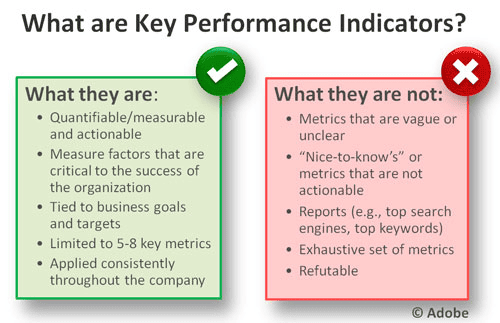
The key is to focus on KPIs (key performance indicators), like revenue, conversion rate, increased number of leads, and lower operational costs, rather than being enamored by feel-good metrics that don’t translate into real improvement. Using dashboards like Tableau makes it much easier to monitor KPIs on a regular basis because they bring all your metrics to one place, allowing you to compare across various metrics. Tableau also translates data into a visual format that’s much easier to analyze than columns of numbers.
7. Build a culture of accountability
An important step in creating operational efficiency in the long run is creating a culture of accountability. Building this culture means you can sustain and build on your efficiency goals because everyone on your team is on board to find and support the changes that make your operation more efficient.
This means you need to set clear expectations for each team and the members of those teams, so everyone understands their part in creating and supporting efficiency. Next, you need collaboration and cooperation if you want changes to go as smoothly as possible. Without employee buy-in, you’ll find it hard to effectively implement changes due to resistance. One way to gain cooperation is to involve employees in making the decisions regarding what changes are necessary and establishing a timeline for implementation. Not only does this ensure greater collaboration, but it also builds on the knowledge, skills, and experience of your employees to develop optimal decisions. Another means for achieving cooperation and collaboration is through adjustments to the reward schedule, so employees are incentivized to make transitions as smooth as possible.
Finally, you want to use check-ins to provide positive feedback on how the changes are progressing, along with suggestions when teams run into snags when attempting to implement comprehensive changes. Use milestones to celebrate achievements as you see success in reaching points on the timeline in an efficient manner. The celebrations don’t need to be elaborate, but research suggests that these interrum celebrations act to recharge your employees and help you reach your goals faster.
Conclusion
Operational efficiency is always worth focusing on with your business. It plays a direct role in how cost-effective your company is to run. It could even affect your profits.
You’ll always need to improve operational efficiency as much as you can. But this often seems like an uphill battle. It doesn’t have to be nearly as difficult as you’d think. By focusing on the right strategies, it could be more straightforward than you would’ve expected.
Need marketing help to support business growth?
We welcome the opportunity to show you how we can make your marketing SIZZLE with our data-driven, results-oriented marketing strategies. Sign up for our FREE newsletter, get our FREE guide to creating an awesome website, or contact us for more information on hiring us.
Hausman and Associates, the publisher of MKT Maven, is a full-service marketing agency operating at the intersection of marketing and digital media. Check out our full range of services.
Discover more from MKT Maven
Subscribe to get the latest posts sent to your email.


