 logo

Ever wonder about the process of customer decision-making?
Or, why you should care?
In today’s post, we’ll discuss the psychology of customer decision-making and how knowing how to use it to provide the right information (and messaging) at the right time during the process can dramatically improve market performance. So, let’s dive in, shall we?
Why should businesses understand the customer decision-making process?
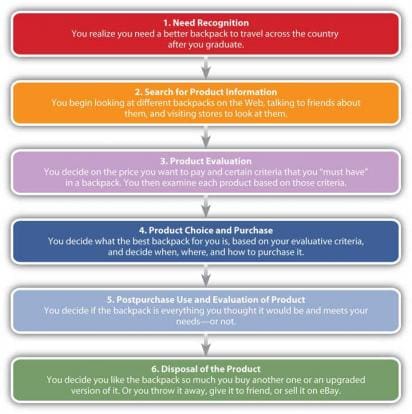
Consumers (whether end users or businesses) go through a process before deciding to make a purchase. That process might be rather structured and logical, as in the image above or it might use heuristic shortcuts that reduce the thinking involved in making a decision. A variety of factors can influence that decision, including product factors (such as price and brand image), social factors (such as peer influence), personal factors (such as pain points and mood), and company factors (such as shared values and trust).
When companies understand the decision-making process, rather than guessing ways that might influence their target market, they fail to effectively move consumers through the process, resulting in wasted money, lower market performance, and poor post-purchase evaluations (like satisfaction).
In the next section, we’ll go through the ways consumers move through the process to make a purchase decision and how your business can influence them to produce a higher ROI for your marketing efforts.
Comparison: Guessing vs. Understanding
| Aspect | Guessing | Understanding Decision-Making |
| Messaging | Generic and “salesy” | Targeted and helpful |
| Budget | Wasted on uninterested leads | Spent on high-intent behaviors |
| Growth | Stagnant or unpredictable | Scalable and data-driven |
The psychology of decision-making
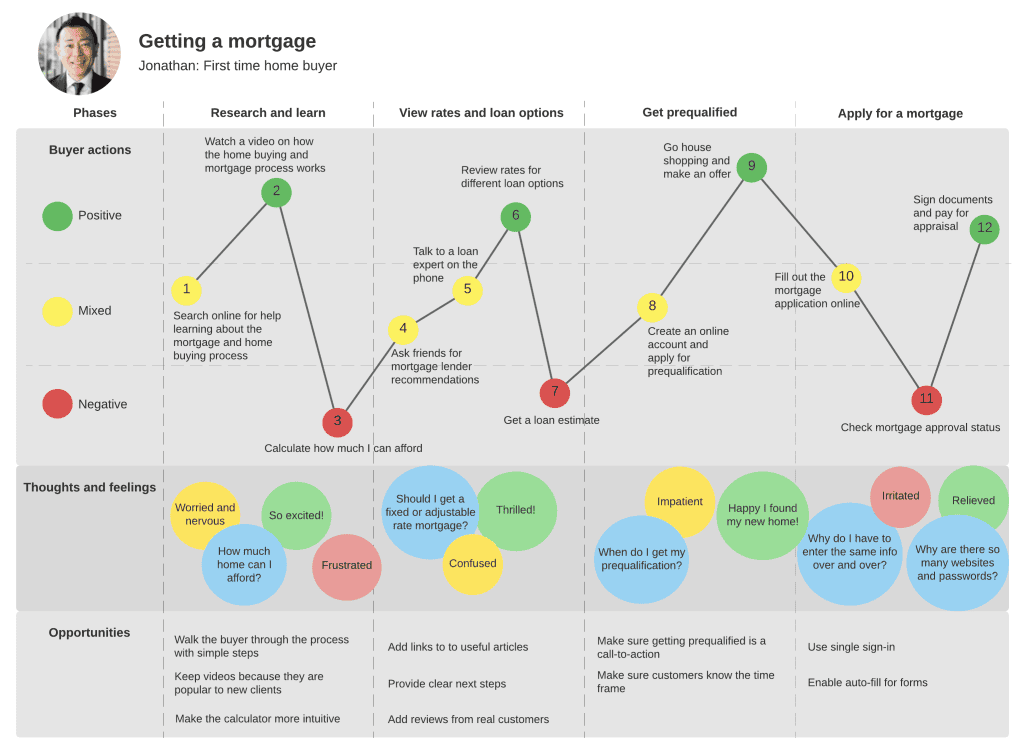
As you can see from the image above, consumers often use a variety of touchpoints before making a decision, often preferring the touchpoint based on where they are in the decision-making process, personal characteristics, and the type of decision.
For instance, when seeking a mortgage, which represents a serious risk if you make a poor decision, you might use many touchpoints and media channels along the way, each involving different questions and feelings. When deciding which package of gum to buy, or even whether to buy one or not, is a low-risk decision that you might spend little time on. In fact, you might use a heuristic such as familiarity or availability to make a seemingly impulsive purchase. Today, we’ll focus on decisions that involve the more structured process from the first image. Let’s break down that process.
1. Need recognition
Here we talk about a gap between where you are and where you’d like to be.
Let’s say you’re hungry. Most people don’t like being hungry, so you’d rather be full, right?
Notice that at this point, you don’t know how you’ll satisfy your need, just that you have one.
2. Information search
Now, you need information to help guide your decision. In the bad old days, that meant going to the store and talking to a salesperson or buying Consumer Reports or picking up some brochures. Anything that would give you more information about available products.
Today, we do most of our information search online, some of it very casually, as opposed to using a very structured approach. We’re also likely to use internal information sources, those inside our own heads, for products we are familiar with. That’s where learning comes into the process, as messaging that leads consumers to remember it, such as jingles or unique images, has a big impact on customer decision-making.
Now, we’re starting to narrow down the options.
3. Product evaluation
Once we have information, we begin to evaluate our options.
Commonly, we put options into something called a consideration set of about 3-5 really good products. Alternatively, we may place options into an inept set, those we find unacceptable.
Sometimes, product evaluation is very purposeful. For instance, we might construct tables of pros and cons to mentally or physically organize the product information and feelings. Other times, we use heuristics to help make product decisions.
4. Decision
We make our selection based on the process.
5. Post-purchase evaluation
At this stage of the customer decision-making process, we decide how much we liked/ disliked the product — satisfaction is something you can only determine after buying the product. In some cases, you have to use the product for quite a while before making a determination of satisfaction. Plus, your satisfaction might change over time. For instance, a product that doesn’t hold up well might get a lower evaluation later than it did initially. As new products come out, you might evaluate your existing product lower because it doesn’t have the cool, new features of the newer products. Think about how you evaluate your mobile phone over time.
Cognitive dissonance is another post-purchase evaluation. Cognitive dissonance is an uncomfortable feeling that you made the wrong decision and is often not a reflection of the product purchased, but of opportunity costs, such as other things you might have done with the money spent.
These post-purchase evaluations are critical because they determine future behaviors, such as repurchase intentions and willingness to recommend the product, as well as the content of your recommendations.
Final thoughts on the psychology of customer decision-making
- You don’t necessarily move through the decision-making process in a smooth, linear fashion. Sometimes you cycle, sometimes several times. Other times, you get stalled at some point and don’t move forward for a long time, sometimes never. The process might look more like this:

Modern - Consumers vary significantly in how they make decisions. Some do it quickly, others take a long time and require lots of information.
- Every consumer uses different heuristics in making decisions.
- Consumers spend a lot of time in post-purchase evaluation to improve their overall decision-making process.
- Outside factors have a significant impact on the customer decision-making process. And that’s what we’ll talk about next.

How marketers can influence the customer decision-making process
1. Need recognition
We have a saying in marketing that marketing doesn’t create needs. But consumers aren’t always aware of their needs, and that’s where marketing comes in. For instance, late at night, you might be a little hungry, depending on when you ate dinner and what you ate. Pizza restaurants tend to advertise their food late at night and emphasize its deliciousness. Because they deliver, it’s the perfect option for late-night snacking and a staple for college students everywhere.
Social media is an important part of need recognition. All those shared vacation pics drive consumers to recognize the need to enjoy these places and experiences. When deciding which needs to work on, we often use this to prioritize those lower in the pyramid over those higher.
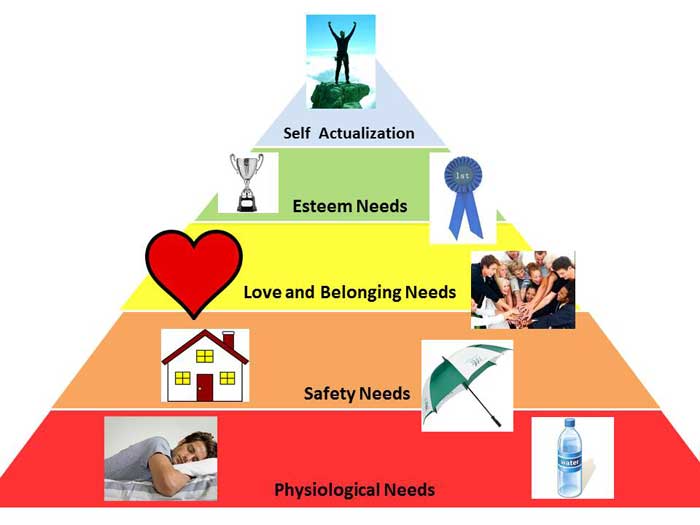
As marketers, we must stimulate awareness of needs, especially when it comes to comparing your current situation with that of your friends, because it’s those comparisons that have the greatest impact. A certain activity, restaurant, shop, dress, or location might never occur to you without the help of your friends.
Friends even have a strong impact on major life decisions. When you see all the wedding pics in your newsfeed, you feel a strong pull to get married, renew your vows, or organize other wedding-like experiences. Baby pics have a big impact on the birth rate.
2. Information search
Your brain is the most common source of information about products. All those positive prior experiences and stored messaging guide your current decisions.
So, make your customers happy and you’ll improve market performance through repeat purchases and positive recommendations.
The second most common source for information search is among your friends and acquaintances. You often gather this information without conscious effort — just from reading your social content — and store it away for when you’re facing a marketing decision.
So, do things that encourage customers to share positive experiences, make it easy for them to share, and you’ll improve market performance. We call this earned media.
The internet is a great source of information. So, put plenty of information online, both on your site and in your owned social networks, make it easy to navigate and you’ll improve market performance.
 The last, and least effective, source of information is from brand advertising. That’s because we know they lie to us, making us distrust the message, and we’ve learned ways to avoid seeing them in the first place. Use paid media to build awareness, rather than motivate decision-making, and make paid media look as much like earned and owned media as possible.
So, paid advertising (paid media) should supplement, not replace, earned and owned media.
3. Product evaluation
- Make it easy for consumers to evaluate your products by including information that might help in evaluations in a consistent and easy-to-find format.
- Make it easy for consumers to download that information.
- Use honest product comparisons to help with evaluations.
- Every consumer needs different information to make evaluations, so provide lots of information in different formats, but keep it easy to navigate.
- Consumers use heuristics to know which types of heuristics dominate decision-making by your customers with market research — more than just where they learned about your product. Use this information to construct heuristic-like information guides.
4. Decision
In marketing, we have little influence over the decisions consumers make beyond how we construct brand messaging and which tools of influence we use. We can attempt to influence their decision in earlier steps, but we have little control over the exact decision.
But we do have a lot of control over making the purchase by reducing roadblocks to purchase. Here are some sources of roadblocks:
- No money — offering credit options or payment terms greatly improves market performance
- Payment options — I love PayPal, although I would like to see it made better. I love that I don’t have to share private information with websites I don’t know well. I love that I never have to go searching for my credit card before making a purchase. I love having all my purchases organized. Making it easy to pay improves market performance
- Shipping – some folks need stuff NOW, some folks don’t like things delivered when they’re not home. If you’re a brick-and-mortar, think about product selection, sizes, and colors to offer the most attractive assortment. When you’re running low on product, trade with other local stores. Don’t run out of stock. Offer lots of ways to get the product, such as in-store pickup, and ensure product availability and you’ll improve market performance
- Returns are a hassle. Consumers won’t reorder something until they get confirmation of the return, and if they return frequently, they may not buy. Several brick-and-mortar stores went out of business by making returns a big hassle.
5. Post-purchase evaluations
Try to delight customers — by giving them some extras — don’t just satisfy them, as this final stage of the customer decision-making process builds over time when you do.
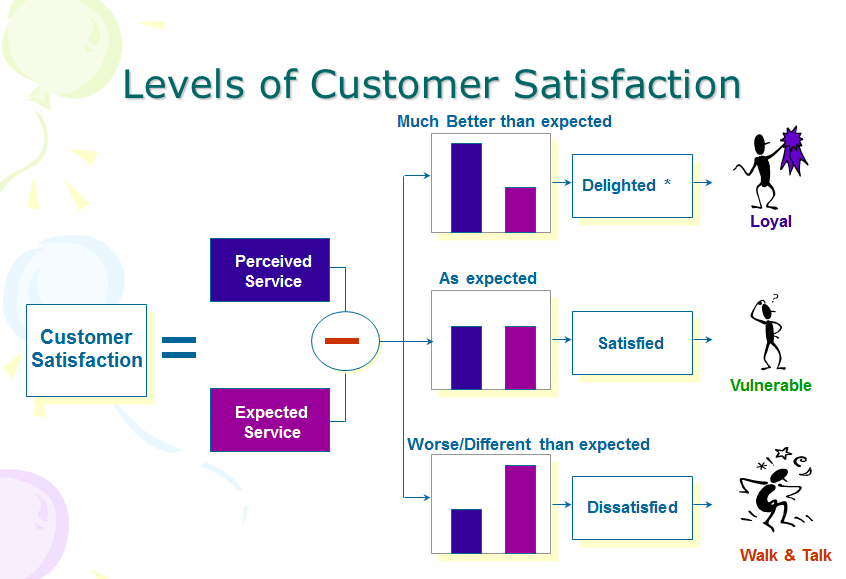
A big part of customer satisfaction comes from keeping your promises, both real and implied, as this impacts expectations (see image above). Don’t promise things you can’t deliver and try to over-deliver. If you can’t keep your promise, make it up to the consumers.
For instance, I once ordered boots from LL Bean and they couldn’t deliver on the scheduled date. They sent me a replica of the boots as a keychain to let me know I hadn’t been forgotten. It was a nice touch. Another time, I got a personal, handwritten note from the woman who packed my order when my local store didn’t have the product I wanted. That was so nice I kept the note — and continue shopping at that store frequently.
Remember birthdays, anniversaries, send thank-you notes … Be a good corporate citizen by giving back to your community.
Eventually, folks will dispose of your produce. Help them do it responsibly because nothing is worse advertising than seeing your product become trash on roadsides and empty lots.
Some final thoughts on marketing based on customer decision-making
Just as consumers vary in how they move through the customer decision-making process, products impact that process.
For instance, impulse purchases might skip straight to the decision, with minimal effort on the other steps. Some products use more emotional input into making the decision (commonly, these are convenience goods), while other products involve more cognitive steps (these are shopping products and specialty goods). Trying to make consumers think about toilet paper, commonly a convenience good, just doesn’t work well.
Use remarketing and set up email marketing so you don’t lose customers who got stalled in the decision-making process. The same goes for existing customers. Periodically remind them to buy from you again.
The customer decision-making process works within B2B markets, not just B2C.
This stuff is important, not just a little something extra. The difference in market performance is striking.
Need marketing help to support business growth?
We welcome the opportunity to show you how we can make your marketing SIZZLE with our data-driven, results-oriented marketing strategies. Sign up for our FREE newsletter, get our FREE guide to creating an awesome website, or contact us for more information on hiring us.
Hausman and Associates, the publisher of MKT Maven, is a full-service marketing agency operating at the intersection of marketing and digital media. Check out our affordable coaching programs to help your business thrive into the future.
Discover more from MKT Maven
Subscribe to get the latest posts sent to your email.


love it ncie amaizng thanks for this
Thanks
Understanding customer psychology is essential for modern digital communication and marketing strategies. Many messaging platforms, including gb whatsapp, became popular because users prefer more personalization, privacy, and control over how they interact online. This article explains those decision-making behaviors really well.
Thanks.
Great insights on how psychology influences customer decisions. The points about emotional triggers and trust are especially important because users often choose products and services based on perceived value rather than just features. This is exactly why platforms like Loklok Premium attract users — not only because of the content, but also due to the smooth experience, perceived exclusivity, and convenience. Understanding these psychological factors can help businesses position their offerings more effectively and build stronger customer loyalty.
Great insights on how psychology influences customer decisions. The points about emotional triggers and trust are especially important because users often choose products and services based on perceived value rather than just features. This is exactly why platforms like Loklok Premium attract users — not only because of the content, but also due to the smooth experience, perceived exclusivity, and convenience. Understanding these psychological factors can help businesses position their offerings more effectively and build stronger customer loyalty.