 logo

SEO (search engine optimization) is critical for success in running a modern business where customers frequently start their product searches online, as you can see in the graphic below. Since users are most likely to choose a link that shows up near the top of search engine results pages (SERPs), you need to pay attention to SEO to attract more visitors to your website, giving you more opportunities for conversion. Effective SEO isn’t a simple process. It involves managing various factors, especially user experience, that figure into the search algorithm created by search engines to ensure users get the most valuable information at the top of the search results page.

Some of these factors are assessed by the search engine based on on-page content and other factors apply to the website as a whole. Thus, just because one page on your website ranks near the top doesn’t mean all your pages will. While these algorithms consist of up to 200 factors, only a handful of them are weighted in a way that makes them essential for any firm that wants its target market to find them online. Among these are (in no particular order):
- Content quality
- Number of backlinks and the quality of the sites linking to your content
- Technical SEO, such as mobile-friendliness and crawlability
- User experience
- Schema markup
- Social signals, especially engagement on your social pages
- Brand signals, such as your reputation
Older SEO tactics like keyword stuffing and artificial backlinking (such as linking from poor-quality websites or websites where there’s no natural fit with your content) are no longer the key to success. Search engines now prioritize human behavior and experience. In fact, usability may surpass most SEO factors when it comes to boosting your website’s ranks. This shift in focus underscores the growing significance of user experience in the digital marketing landscape.
That’s why a high-ranking website needs SEO and user experience to work together. These websites follow SEO best practices and have intuitive UX designs. Good UX design boosts site traffic, engagement, and rankings. User experience and user interface work together as part of a successful SEO strategy to deliver results for your brand that can’t be matched with any other online strategy, with the possible exception of email marketing.
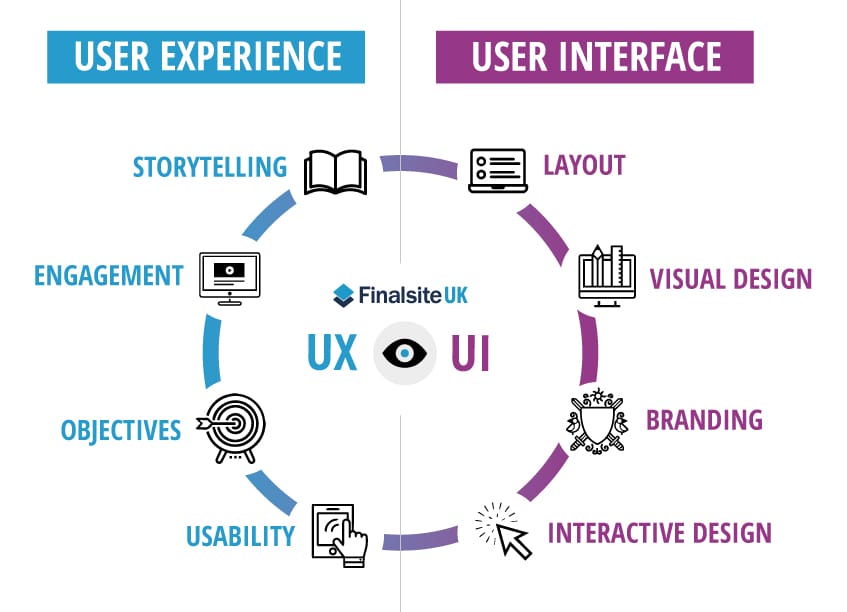
Many UX design elements already use SEO best practices. These include rapid loading, mobile-friendliness, simple navigation, and engaging content.
Pogo lingering indicates that customers can’t discover what they want on the site and is consistent with a high skip rate. Sites with a higher skip rate or pogo staying aren’t meeting customer expectations. The site’s high bob rate, which refers to the frequency of users returning to the same page after visiting other pages, is beyond the search tools’ comprehension. They monitor client traffic and rank locations as needed.
User experience is essential
As discussed above, the way users interact with your website is the prime indicator of a good user experience that search engines reward. A big factor is the bounce rate, which indicates users leave after viewing a single page. Search engines interpret this as a website that didn’t provide a good User experience (UX). Another is the percentage of repeat visitors your website achieves.
There are many reasons customers may leave your site. For instance, an informational website answers a visitor’s question quickly without requiring them to visit multiple pages. A poor UX design is a big reason why visitors might leave another type of website quickly without finding what they want.
A robust UX strategy, which includes straightforward navigation, user-friendly language, fast load times, and a defined goal, is essentially a form of SEO in itself. By aligning your UX and online search optimization efforts, you can effectively cater to the needs of online users, thereby enhancing their satisfaction and engagement, leading to improved website performance.
When you improve your site’s UX design to provide customers with a great experience, Google rewards your page with a better rank for searches related to your content. UI UX design services, in this case, can help not only provide a good user experience that translates into opportunities to achieve your goals but also better search rank.

SEO and UX best practices
The question becomes, how do you create a website that excels in providing a great user experience? There are so many elements on each page, so much competition in almost every business niche, and algorithms that change constantly that it’s hard to stay on top (or get on top in the first place). To ensure you’re not wasting your efforts on a UX design that doesn’t meet the needs of your customers or web crawlers, use the following SEO and UX recommended practices:
Mobile-friendly pages: More than half of website visitors use phones. You should carefully evaluate your portable site’s design, style, feel, content, photos, and experience. Those without a dynamic website must make time to create one. Ensure you use a template that includes a responsive design and test pages with different screen sizes, especially critical pages like your homepage and landing pages.
Speed up: A website that loads quickly improves customer satisfaction. In 2024, if your page doesn’t load in three seconds, you start to lose visitors. Thus, web spiders rank webpages that load quickly higher than those that are slower. You can improve your load speed by using lazy loading for images, learning clean code, caching your content, and using a faster web server. Improved site components reduce load times and boost web optimization.
Easy site navigation: Focusing just on Web SEO and rankings might lead to convoluted routes and heavy website engineering. Sites are easier to use with basic navigation that allows users to go to the page they need quickly, which helps visitors complete tasks faster and with less frustration.
Content quality: Having more website pages isn’t always the best solution, although producing quality content on a routine basis is essential. Quality content and easy-to-use associations are helpful for SEO. Strong multi-page sites are wonderful for SEO as long as they’re easy to navigate.
Use headings: Make your content scannable with headings and subheadings so visitors can quickly find what they need. Including a table of contents with hyperlinks to various sections of the content is also valuable.
User-friendly layouts: Website design improvement may be affected by format settings, content links, and font size. Include photographs and video, utilize sources of related content as a means of assuring the validity of your content, use clear headers, organize the material to make it easy to comprehend without jargon, and link to additional content on your site so readers can learn more. You may use a substance or image pivot script to modify site satisfaction randomly with each visit. These suggestions, combined with UX setup best practices, can help SEO.
Clear logo: Your logo, or site ID, is one of the first things visitors notice. This ID should be uncluttered and apparent. Your logo or slogan should describe your site and meet user demands.
Test: Continuously testing SEO and UX is one of the greatest strategies for enhancing your website. Knowing how UX and SEO function can help you optimize your site wisely. Keep improving these parts of your site to provide consumers with a fantastic experience.
Conclusion
SEO and UX are increasingly intertwined. Your website needs good UX and SEO to rank well. Luckily, no JSX expertise is required. Non-coders may utilize good website builders with UX design integrated into templates. Just use these ideas, and you will have a tremendous advantage.
Need marketing help to support business growth?
We welcome the opportunity to show you how we can make your marketing SIZZLE with our data-driven, results-oriented marketing strategies. Sign up for our FREE newsletter, get our FREE guide to creating an awesome website, or contact us for more information on hiring us.
Hausman and Associates, the publisher of MKT Maven, is a full-service marketing agency operating at the intersection of marketing and digital media. Check out our full range of services.
Discover more from MKT Maven
Subscribe to get the latest posts sent to your email.


