 logo

The landscape of web design is evolving faster than ever. With user expectations constantly shifting and technology advancing at breakneck speed, businesses must stay ahead of the curve to maintain relevance and engagement. In 2025, website design and redesigns are increasingly driven by AI-driven personalization, immersive experiences, and accessibility-first design. These UI/UX trends help redefine how users interact with digital platforms, making intuitive, seamless, and inclusive interfaces more critical than ever, resulting in digital success.
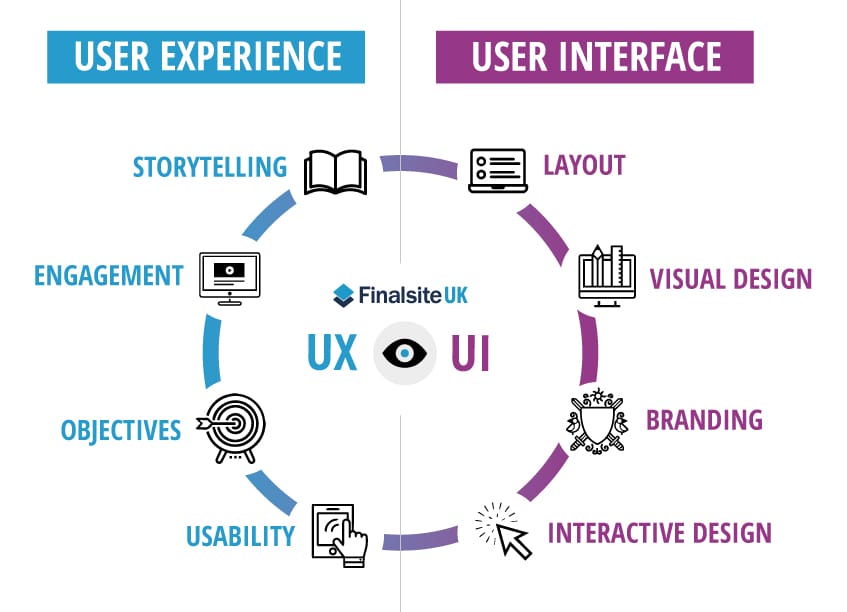
In this post, you’ll discover the latest UI/UX trends shaping website redesigns in 2025. From AI-driven personalization to immersive 3D experiences, learn how businesses can create more engaging, accessible, and future-ready digital experiences.
For businesses looking to stay competitive, investing in website redesign services is no longer just an option—it’s a necessity. A well-executed redesign doesn’t just refresh a site’s aesthetics; it optimizes performance, enhances user engagement, and ensures compliance with evolving accessibility and SEO standards.
Let’s explore the top UI/UX trends shaping website redesigns in 2025 and how businesses can leverage them for success.
Top UI/UX trends in 2025
Hyper-personalization with AI and machine learning (ML): The era of digital intuition
In 2019, a global e-commerce brand launched a highly anticipated website redesign. It had sleek visuals, a refined navigation structure, and a faster checkout process. Yet, within months, customer engagement plummeted. The problem? The website treated every visitor the same way—offering identical product recommendations, static homepages, and a one-size-fits-all experience.
Fast-forward to 2025, and such an oversight is almost unthinkable. Modern web users expect something far beyond a polished interface. They demand digital intuition, a website that anticipates their needs, adjusts to their preferences, and delivers a journey tailored uniquely to them. Enter AI-driven hyper-personalization—not a trend, but an inevitability.
Traditional personalization was simple: display recently viewed items, suggest similar products, or greet returning users by name. But these tactics now feel primitive. AI and machine learning have redefined the game. Websites in 2025 no longer respond to user behavior; they predict it.
A visitor who lingers on high-end watches will see a dynamically adjusted homepage that prioritizes luxury accessories. At the same time, a returning customer might find a completely different UI layout optimized for faster navigation. This level of personalization extends beyond content curation—AI can now modify entire page structures, call-to-action placements, and even typography based on real-time behavioral insights.
Take Netflix as an example. Its recommendation engine, powered by deep learning, doesn’t just suggest movies—it subtly tweaks the thumbnails, highlights genres a user subconsciously prefers, and even rearranges content sections based on engagement patterns. Imagine applying that same principle to website UX. E-commerce platforms, SaaS dashboards, and even B2B service sites will no longer present a static journey. Instead, they will shift, morph, and realign—crafting a unique digital landscape for every individual visitor.
From predictive search suggestions that preempt user queries to adaptive UI elements that streamline navigation based on browsing history, AI-powered hyper-personalization is transforming websites into self-optimizing ecosystems. And businesses that fail to embrace this shift? They risk offering users a digital experience as outdated as a flip phone in the era of touchscreens.
Immersive 3D and augmented reality (AR) experiences
Imagine walking into a high-end furniture store where, instead of relying on static images or swatches of fabric, you can place a life-sized 3D model of a sofa right in your living room. You rotate it, test different colors, and even see how it looks under different lighting conditions—without ever leaving your home. This isn’t a futuristic fantasy; it’s the new standard for digital interaction, and in 2025, website redesigns will no longer be two-dimensional experiences.
The boundaries between the physical and digital worlds are dissolving. Web design is stepping beyond flat interfaces and static images, venturing into immersive 3D environments and AR-powered experiences. Companies that integrate real-time 3D rendering, interactive product displays, and spatial computing into their websites aren’t just enhancing engagement; they are redefining how users interact with digital content.
Take Nike’s AR-powered shoe fitting tool, which lets customers scan their feet with a smartphone to get precise sizing recommendations. Or IKEA’s AR shopping experience, where users can visualize how furniture fits within their space before making a purchase. These aren’t gimmicks—they’re powerful UX innovations that eliminate uncertainty, increase confidence, and drive higher conversions.

Beyond e-commerce, 3D and AR interfaces are revolutionizing industries like real estate, automotive, and education. Virtual property tours eliminate the need for physical showings, interactive car configurators let users explore every detail before stepping into a dealership, and online learning platforms use 3D simulations to create more engaging and effective training environments.
As one of the UI/UX trends, these websites evolve into dynamic, exploratory spaces. Traditional layouts are giving way to depth-driven designs, neomorphic-inspired interfaces, and physics-based interactions that mimic the real world. Instead of clicking through static menus, users will navigate through environments, manipulate objects, and interact with brands in ways that feel more intuitive and tactile.
The challenge is to ensure that these highly visual, data-heavy experiences don’t compromise performance. Advanced WebGL, AI-driven content optimization, and lightweight 3D frameworks will be key to delivering seamless AR and 3D interactions without slowing load times or alienating users with weaker devices.
By 2025, the web will be more than just something we scroll through—it will be a place we explore. Businesses that offer immersive 3D and AR experiences will not only grab our attention but also pull us into totally new digital worlds, making engagement more interactive than ever.
Accessibility-first and inclusive design: The Internet for everyone, no exceptions
A beautifully designed website that excludes part of its audience isn’t just a UX failure—it’s a missed business opportunity. In 2025, accessibility-first design is no longer optional; it’s the foundation of a truly modern digital experience. Websites that fail to accommodate all users, regardless of ability, will not only fall behind in usability but also face legal risks, SEO penalties, and brand perception damage.
True accessibility goes far beyond adding alt text to images or ensuring color contrast meets minimum standards. The web is evolving into a space where adaptive interfaces, AI-powered assistive tools, and voice-driven interactions reshape how users navigate digital platforms.
Consider the rise of voice UI (VUI)—a game-changer for users with motor impairments. Websites that integrate speech-to-text commands, AI-driven voice search, and gesture-based controls will make navigation effortless for those who cannot rely on traditional keyboards or touchscreens. Similarly, real-time captioning, sign language avatars, and AI-powered readability adjustments are redefining inclusivity in content consumption.
 A prime example is Microsoft’s AI-driven accessibility features, which analyze website layouts and adjust font sizes, spacing, and contrast based on individual user preferences. Meanwhile, brands like Apple and Google are investing heavily in adaptive UX, where interfaces automatically adjust to the user’s needs—whether that means simplifying navigation, enhancing keyboard shortcuts, or offering customizable UI themes for different visual impairments.
But accessibility isn’t just about compliance—it’s about creating frictionless experiences for everyone. Neurodivergent users, for instance, benefit from minimalist interfaces with reduced cognitive load, customizable color schemes, and content pacing adjustments. Users with temporary impairments—like a broken arm or a noisy environment—also rely on accessibility-first design without even realizing it.
For businesses undergoing a website redesign, adopting WCAG 3.0 guidelines isn’t just about ticking a compliance box; it’s about future-proofing their digital presence. Google’s algorithms now prioritize accessible websites in search rankings, making inclusivity a direct factor in SEO performance and discoverability.
Given the UI/UX trends, 2025 websites will no longer be static layouts built for a single “default” user—they will be fluid, adaptable ecosystems that reshape themselves in real time based on who is visiting. And brands that prioritize accessibility-first design will not just gain compliance points—they’ll gain trust, loyalty, and a broader, more engaged audience.
Micro-animations and motion UI for enhanced engagement: The web comes to life
Imagine visiting a website where every interaction feels fluid, intuitive, and almost alive. As you hover over a button, it subtly expands, giving a tactile sense of response. As you scroll, content glides seamlessly into view, leading your eye effortlessly from one section to the next. These are not merely aesthetic flourishes; they are the essence of Micro-Animations and Motion UI—the secret ingredients that make modern web experiences feel engaging, interactive, and deeply intuitive.
Motion in UI design is no longer about flashy transitions or distracting gimmicks. In 2025, UI/UX trends will focus on functional, purposeful animation that enhances usability and guides user behavior. Every movement—whether it’s a hover effect, a dynamic loading indicator, or a swipe-triggered transition—is designed to communicate intent and improve the overall experience.
Take Google’s Material Design language, where elevation changes, button ripples, and transition effects all serve a function: reinforcing the connection between user input and system feedback. Similarly, brands like Stripe and Airbnb use subtle motion cues to guide users through complex workflows, ensuring that actions feel natural and rewarding rather than overwhelming.
Where motion UI makes the most significant impact in 2025:
- Micro-interactions for feedback and navigation buttons that pulse slightly when clicked, form fields that shake when input is incorrect, and menus that expand smoothly rather than appearing abruptly—all these micro-interactions create a sense of responsiveness, making the user feel in control.
- Scroll-based animations and parallax effects: Instead of bombarding users with static content, websites are increasingly leveraging scroll-triggered animations that reveal information progressively, reducing cognitive overload. Parallax scrolling, where background and foreground elements move at different speeds, adds depth and immersion, turning a simple webpage into an experience.
- Gesture-based motion for touch interfaces with mobile-first design dominating, swipe gestures and physics-based animations are redefining how users interact with digital content. Instead of relying solely on traditional buttons, interfaces respond dynamically to touch, drag, and tilt gestures, creating a more intuitive browsing experience.
- Load-time optimization with motion: no one likes waiting, but animated skeleton screens, creative preloaders, and dynamic progress bars can make load times feel shorter. By providing visual feedback, users stay engaged even during inevitable delays.
The challenge, of course, lies in balance. Motion UI should enhance usability, not distract from it. Poorly executed animations—those that are too slow, too exaggerated, or purely decorative—can frustrate users rather than improve their experience.
By 2025, websites that master the art of micro-animations and motion UI will create digital experiences that feel less like navigating a static webpage and more like interacting with a living, breathing interface. In an era where engagement determines success, that level of fluidity will be the defining factor between websites that captivate and those that get left behind.
No-code and low-code web design revolution: democratizing digital innovation
A decade ago, building a website meant diving headfirst into HTML, CSS, and JavaScript—or hiring a team of developers to do it for you. The process was slow, expensive, and often out of reach for small businesses or solo entrepreneurs. Fast-forward to 2025, and the landscape has transformed. The no-code and low-code revolution turned website creation into a highly accessible, drag-and-drop experience where anyone—not just developers—can build stunning, functional websites in record time.
This shift isn’t just about convenience. It’s a paradigm change in web design. Businesses no longer have to choose between high development costs and limited template-based platforms. Today’s no-code and low-code solutions offer AI-assisted design, advanced automation, and scalable integrations, enabling non-technical users to create complex, high-performance websites without writing a single line of code.
The two sides of the revolution: no-code vs. Low-code
- No-code platforms: Tools like Webflow, Wix Studio, and Framer allow complete beginners to design websites visually. AI-powered interfaces suggest layout improvements, optimize responsiveness automatically, and generate custom animations with just a few clicks.
- Low-code platforms: Systems like Bubble, WordPress with Gutenberg, and OutSystems provide developer-friendly flexibility. They offer pre-built components with the ability to insert custom scripts when needed, allowing for scalable, enterprise-level solutions without the complexity of traditional coding.
Why no-code and low-code are reshaping website redesigns in 2025
- Faster time-to-market
Traditional website development can take weeks or even months. With no-code tools, full-scale redesigns can be executed in days—sometimes even hours—thanks to pre-built design systems, reusable UI components, and AI-assisted page builders. - Cost-effective digital transformation
Businesses once needed expensive development teams to maintain and update their sites. No-code platforms eliminate this dependency, allowing in-house teams to make real-time updates, deploy A/B tests, and iterate on UX/UI without external help. - AI-powered automation & design intelligence
Platforms like Webflow AI and Framer AI are taking automation to new heights. Imagine a website that rearranges its own layout based on user behavior, auto-generates landing pages based on marketing goals, and optimizes for SEO in real time—all without human intervention. - Scalability without compromise
A common misconception is that no-code solutions are only for small-scale projects. However, enterprises are now using low-code platforms to build complex applications, progressive web apps (PWAs), and fully integrated e-commerce solutions with real-time data processing and automation workflows.
The future: will no-code replace developers?
While no-code and low-code tools drastically reduce the need for manual coding, they won’t make developers obsolete. Instead, they shift the role of developers from writing repetitive code to focusing on custom integrations, advanced security, and API-driven workflows so they can incorporate many of the UI/UX trends that support your website performance. Think of it as the evolution of software development—where creativity takes the lead and technical bottlenecks disappear.
Conclusion
By 2025, websites will no longer be static assets that require months of development and constant external maintenance. Instead, they’ll be fluid, AI-driven, and fully adaptable—built by designers, marketers, and business owners without needing to touch raw code. The businesses that embrace this shift will outpace competitors in agility, innovation, and digital experience by implementing the newest UI/UX trends to capture, convert, and retain visitors. And in an era where speed defines success, that advantage is game-changing.
Need marketing help to support business growth?
We welcome the opportunity to show you how we can make your marketing SIZZLE with our data-driven, results-oriented marketing strategies. Sign up for our FREE newsletter, get our FREE guide to creating an awesome website, or contact us for more information on hiring us.
Hausman and Associates, the publisher of MKT Maven, is a full-service marketing agency operating at the intersection of marketing and digital media. Check out our full range of services.
Discover more from MKT Maven
Subscribe to get the latest posts sent to your email.


