 logo

It’s tempting to cast a wide net with your marketing campaigns, including LinkedIn advertising. The naive notion is that the more people you reach with your appeal, the better your sales. However, that couldn’t be farther from the truth. In fact, this “spray and pray” strategy (actually a non-strategy), long debunked in traditional media, wastes resources without delivering sales. More impressions might seem like more reach and more opportunity, but a focus on niche targeting, designing your strategy to address the problems of that niche directly, far outperforms sheer volume. Focus strategically to maximize your results.

Marketing segmentation, targeting, and positioning
Niche targeting is a representation of a well-established marketing concept that consists of the related tactics of segmentation, targeting, and positioning your brand to appeal to your chosen niche.
Segmentation
Take any population and you’ll find distinct differences between its members. Just as depicted in the image above, some might represent older people and some younger, some might be wealthy and others poor, some might be Christian and others Muslim, and some might have a college degree while others haven’t finished high school. These are demographic differences and they exist in almost every population, except for those formed intentionally, such as at an Ivy League school, where such differences are less pronounced.
Companies use these differences, along with geographic, psychological, and behavioral ones, to form distinct groups, or segments that share similarities along these variables. Hence, the members of a segment have more in common and are different from members of other segments.
Niche targeting
Once you’ve formed segments, the next step is to target one or more of them as the most likely to purchase your products. Targeting doesn’t mean you ignore requests from those outside your niche or kick them out of your store; it simply means you develop your marketing strategy around this segment or segments (target market(s)) that represent low-hanging fruit and are, thus, easier to sell.

Positioning
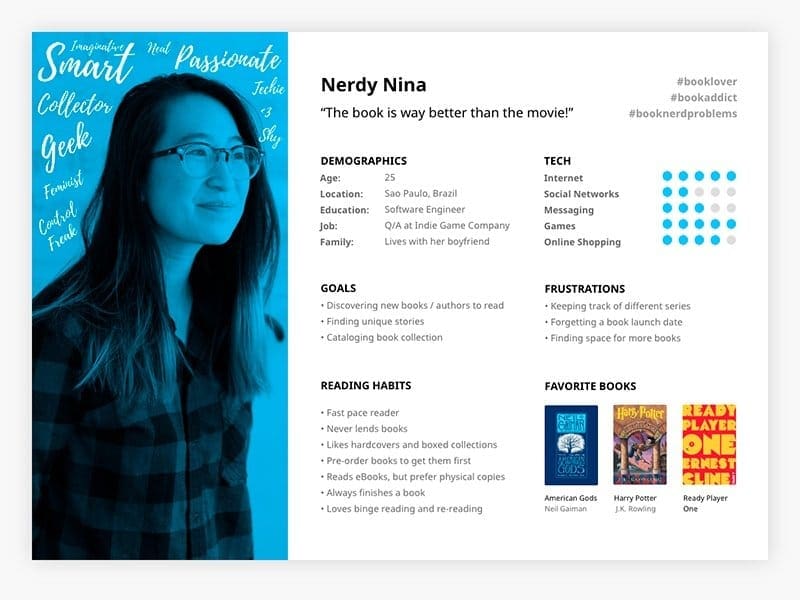
When your message tries to speak to everyone, it often ends up resonating with no one. Broad campaigns can generate clicks and vanity metrics, but they rarely drive meaningful engagement with the right people. Worse, they water down your positioning—turning bold propositions into vague promises. Instead, imagine the members of your target market. Flesh them out by answering the following questions to build a clear image of your ideal customer (we call these personas).
- What are the problems they face?
- What factors come into play when making a decision? We call these hot buttons.
- Where are you most likely to reach them?
- What words or phrases will they respond to?
- Are there colors or images that will evoke an emotional response? If so, avoid those that evoke a negative one and focus on those with a positive response.
- Who are the influencers and taste setters that impact their decisions?
Now, create campaigns based on your answers to capitalize on those aspects that appeal to them most. In B2B marketing situations, where deals are long, complex, and deeply considered, the sharper your message, the stronger your impact and the better your results. And that starts niche targeting to position your brand to appeal to your target market.
Successful niche targeting on LinkedIn
The case for going narrow
The most effective LinkedIn campaigns don’t target broad job functions like “marketing” or “operations.” They speak directly to revenue operations managers at Series B SaaS companies. Or to procurement leads in the healthcare sector. Or to CFOs in logistics with teams of fewer than 50 people. As examples.
This level of focus isn’t overkill. It’s how you make relevance feel personal.
When your audience sees messaging that sounds like it was written just for them, they stop scrolling. They engage. And they remember you later—when the problem you’re solving becomes urgent.

Diluted messaging slows down the funnel
Here’s what happens with broad targeting:
- You get more impressions, but from audiences of mixed quality.
- Your click-through rate drops because the message isn’t tuned to any segment’s profile specifically.
- Sales follow-up suffers because leads don’t fit the ICP—or worse, they’re not sure why they clicked in the first place.
And if your ad leads with generic copy like “Struggling with operations challenges?” you’re likely competing with ten other vendors offering completely different solutions. Niche targeting lets you drop the buzzwords and speak like a real person to a real pain point, which not only attracts consideration, it reduces the amount of competition you face.
Micro-audience building: Where agencies earn their keep
The challenge isn’t just crafting the right message—it’s building the right segments to deliver it to. This is where agencies bring real value. Experienced LinkedIn partners know how to build nuanced audience structures that go way beyond basic targeting.
They’ll:
- Map audiences by industry, seniority, company size, and geography in combination
- Layer custom lists with lookalikes and CRM data
- Create exclusions to avoid overlap and wasted spend
- Align creative with buyer stage and role—not just persona
This level of control helps campaigns stay lean, focused, and scalable. And it’s how they begin to compound over time.
Campaign examples that nail it
Want to see niche targeting in action? Here are a few proven examples that beat the usual spray-and-pray approach:
- Product Marketing Leaders in B2B SaaS
Objective: Drive downloads of a messaging framework.
Tactic: Target by job title and company headcount, exclude agencies, and deliver carousel ads with playbook snippets. - Legal Ops Leads in Healthcare Enterprises
Objective: Start sales conversations for a contract automation platform.
Tactic: Use a single-sentence video ad highlighting HIPAA compliance pain points. - CFOs in Logistics, APAC Region
Objective: Book demos of a financial planning tool.
Tactic: Direct response ads showing industry-specific ROI outcomes with subtle localisation in imagery and copy.
Each campaign is tight. Each audience is small. And yet, they consistently outperform larger, less focused efforts.
Start with problems, not personas
A good niche campaign isn’t just about targeting—it’s about relevance. You don’t need a 20-page persona document to get started. You just need to know what your buyer is trying to fix, prove, or protect.
That’s where messaging should begin.
Focus on the pain points that are specific enough to feel personal, but common enough to scale. Then build micro-campaigns around those angles. And don’t assume you need dozens of audiences to make this work. Sometimes, just splitting your core ideal customer profile into 2–3 buying roles (and giving each their own tailored message sequence) is enough to move the needle.
Why is this one of the best practices for LinkedIn Ads
One of the Best practices for LinkedIn ads isn’t flashy creative or high budgets—it’s segmentation. And not just audience segmentation, but message segmentation. When the two are aligned, performance follows. This approach doesn’t just improve engagement. It makes your sales team’s job easier. When leads come through from campaigns that already speak their language, the sales conversations feel less like introductions and more like continuations. That’s the power of showing up as the obvious choice—for the right person, at the right time, with the right message.
Conclusion
Whether you’re selling in B2B (business-to-business) markets or directly to consumers, the related tactics of segmentation, targeting, and positioning are keys to success. Without a careful and thorough evaluation of who represents your best marketing opportunities, you waste money and other scarce resources reaching people who are unlikely to buy your product or have a very low probability of buying your product in response to your campaign.
Niche targeting allows you to laser-focus on particular markets, then customize your approach to appeal to that group, which increases sales potential.
Need marketing help to support business growth?
We welcome the opportunity to show you how we can make your marketing SIZZLE with our data-driven, results-oriented marketing strategies. Sign up for our FREE newsletter, get our FREE guide to creating an awesome website, or contact us for more information on hiring us.
Hausman and Associates, the publisher of MKT Maven, is a full-service marketing agency operating at the intersection of marketing and digital media. Check out our full range of services.
Discover more from MKT Maven
Subscribe to get the latest posts sent to your email.


