 logo

Do you ever ask yourself, “Why are my marketing efforts failing”? Well, any number of factors can explain why your marketing efforts are failing. And, of course, getting them back on track means figuring out why your marketing efforts are failing. So, let’s explore some of the common causes for your marketing efforts to fail. Below are some of the major reasons why your marketing efforts might be failing.
 Why my marketing efforts are failing
In this post, we’ll discuss common reasons why your marketing efforts are failing. Note, however, that the only way to determine which factor or which combination of factors actually accounts for your lackluster results is to delve deeply into your analytics. As we move through a discussion of how and why each factor contributes to marketing failure, we’ll point out some symptoms you might see in your data that point to this problem.
So, buckle up and learn ways you can determine why your marketing efforts are failing and possible solutions that improve performance.
Lack of strategy
Building a sound marketing plan based on a thorough understanding of your market and factors that impact that market is critical for success. Simply doing something just because it feels like a good way to market your brand is a bad decision that’s likely to waste time and money without generating sufficient results.
Building a marketing plan isn’t something that you can do in an afternoon, but neither is it beyond the scope of most entrepreneurs and business owners. I’ve written a couple of posts to help guide you through the process of building a marketing plan so you end up with a strategy fit for your market.
Briefly, a marketing plan begins with an internal and external scan. Like a “You are Here” tab on a map, these scans identify what’s going on and what you can see on the horizon based on data like GDP, consumer confidence, changes in technology, and what’s going on with your competition. Once you’ve collected and analyzed primary data (i.e. your sales and cost figures, how existing marketing campaigns performed, etc.) along with secondary data from government sources, competitors’ annual reports, and forecasts from industry experts, you can develop realistic goals for the upcoming 12 months that guide the development of your strategies. The best way for you to achieve success here involves determining your business goals, both for the short term and less specific goals for the long run. Otherwise, you may find that you are just wasting time and money on tactics that don’t get you where you want to go.
Armed with this plan, the next step is to develop action plans that spell out the steps needed for each element of the plan, the budget for the action, who is responsible for each element of the action plan, and establish a timeline to ensure the elements come together when needed. Below is an example of an action plan template for a campaign.
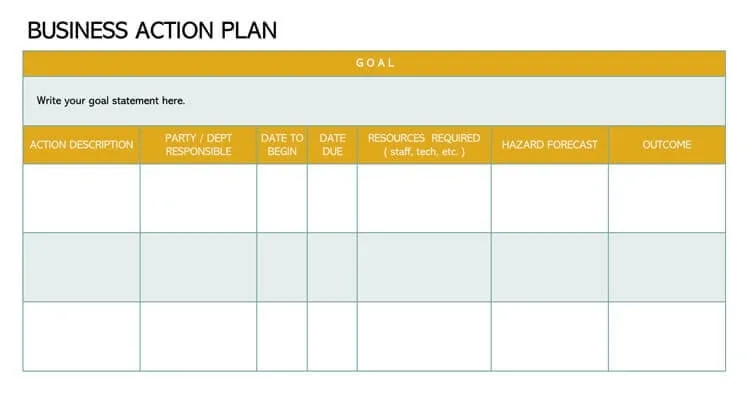 You should develop your marketing plan to cover 12 months in great detail while you set up tentative plans for the next 3-5 years. Each year, you flesh out the next year’s marketing plan and add another year to the end of the existing plan.
You don’t know your customers
When was the last time you sat down and spoke to your customers? When was the last time you phoned them or met them in person so you could understand what was going on in their lives? Did you make a conscientious effort to get deep insights from a representative number of members from your target market rather than settle for those who speak up on social media or call your offices? Do you constantly learn about what’s going on in your target market and their lifestyle? If not, then you can’t hope to serve them well, which means you won’t capture new customers and might not keep your existing customers.
First, build personas for each segment of your target market. These personas go beyond simple demographic factors to include:
- lifestyle factors like hobbies and interests
- values
- major pain points
- slang and common vernacular
- major influencers
- where they spend their time online and off
Armed with this information, you can create campaigns that resonate with one or more personas, which results in higher sales.
Poor targeting/ positioning
Targeting and positioning involve creating campaigns designed to reach one or more of your personas with content likely to be seen favorably and motivate your market to make a purchase. Trying to create a generic campaign designed to reach everyone or one that attempts to reach personas with different characteristics is often less successful than creating a campaign tailored for one persona or several similar personas. Poor targeting and positioning fit happen when you don’t understand your target market well, but it can also happen even if you know your target market when you miss the mark. Since you must encode what you know about your target market into words and images for your campaign, sometimes you miss the mark. Maybe the language doesn’t resonate or a subtle aspect of the image tells your target marketing this brand doesn’t fit their lifestyle or values. However, knowing your target market means you have fewer campaigns where you miss the mark, or you miss by a smaller distance.
The best way to determine if your targeting or positioning is the reason why your marketing efforts are failing is to compare campaign results across different campaigns. Are some working better than others? Do some posts do better than others? Learn from these results by finding what’s in common between the campaigns that do better/ worse so you can use this information in creating new campaigns.
No CTA of the wrong CTA
When it comes to digital marketing, it’s very easy for you to get wrapped up in social media and to be involved with content writing without giving a second thought to your CTA or call to action. But, not having a CTA leaves visitors wondering how to get the things you offer. Don’t make them work for it. The wrong CTA might not generate the returns you expect or want. For instance, will your target market respond better to a discount or an offer of an additional product, such as a bundle? Knowing how your market will respond is key to running a successful campaign.
There’s no way to know for sure what CTA will work. And, a good CTA might not work in subsequent campaigns. That’s where A/B testing comes in. By running campaigns with different major elements to compare results, you get a good idea after a few days. You can then eliminate the elements that don’t perform as well in favor of those that do.
Insufficient budget
While digital marketing is much less expensive than traditional marketing tactics, it still costs money. Allocating a sufficient budget delivers success while too few dollars allocated to a campaign may mean you get no results and think the tactics don’t work for you. Below, you can get an idea of how much you should budget for marketing (as a percentage of sales) based on your industry.
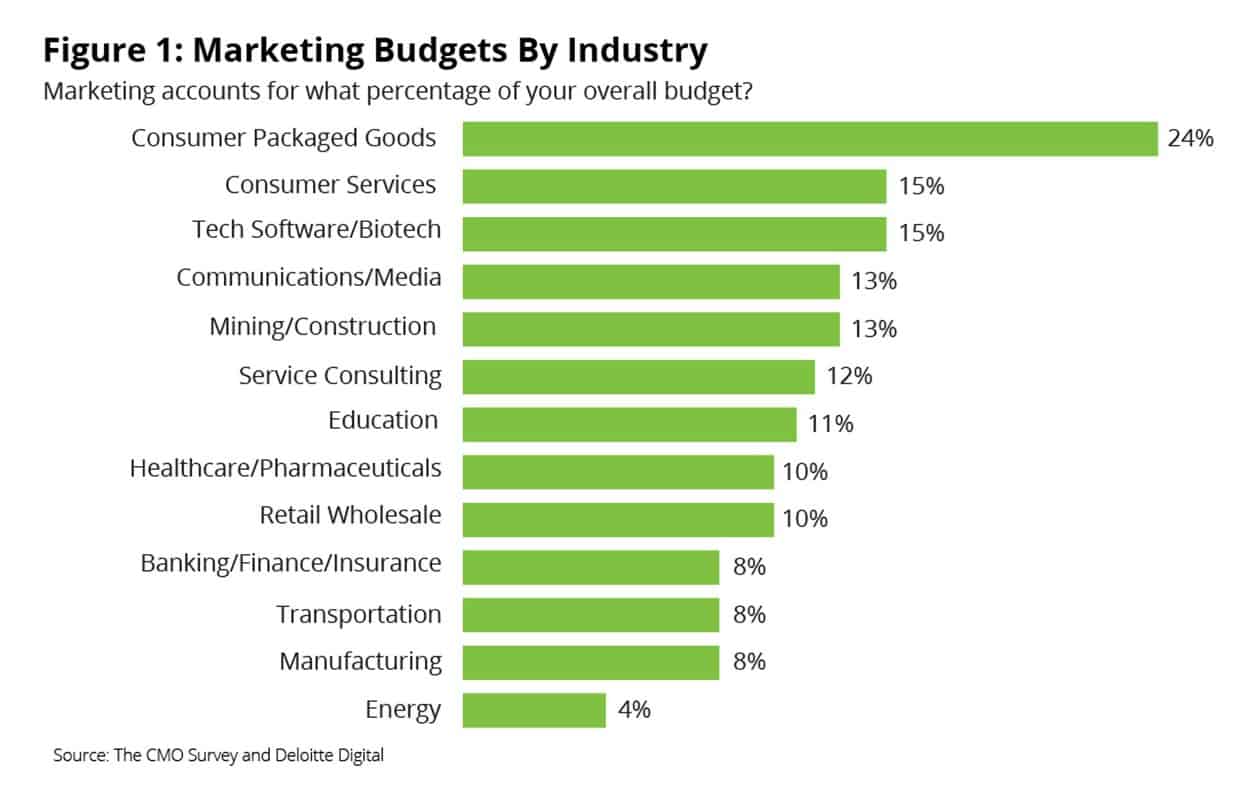
I use the glass of water analogy to explain this. Unless you fill a glass to overflowing nothing spills over the top. The same is true for digital marketing. Spend too little and you might make no progress toward reaching your goals. If you don’t have sufficient cash flow to fund a reasonable budget, you might apply for business funding. When you do, you can then focus on the core aspects of your business with much more efficiency.
Poor product/ service
Product quality is a key element in attracting and keeping customers. Providing good quality services before and after the sale not only translates into repeat purchases but favorable recommendations that bring in new customers. Poor quality can sink your marketing efforts through poor recommendations and complaints on social media.
Not patient enough
It takes time for any marketing campaign to bear fruit. It takes a minimum of six months of concentrated effort to get the kind of results you need from a campaign and it may take much longer, especially if your budget is on the low side. If you’re not patient, it’s hard to separate a campaign that didn’t run long enough from one where your marketing efforts are failing.
Conclusion
So as you can see, there are many things you can do to make sure your marketing strategy doesn’t fail you, and if you follow the above tips, you will soon see a major difference in how successful your business can be. Keep this in mind if you want to make a positive difference going forward.
Need marketing help to support business growth?
We welcome the opportunity to show you how we can make your marketing SIZZLE with our data-driven, results-oriented marketing strategies. Sign up for our FREE newsletter, get our FREE guide to creating an awesome website, or contact us for more information on hiring us.
Hausman and Associates, the publisher of MKT Maven, is a full-service marketing agency operating at the intersection of marketing and digital media. Check out our full range of services.
Discover more from MKT Maven
Subscribe to get the latest posts sent to your email.


