 logo

Turning data into growth may sound like a strategy reserved for tech giants and enterprises, but even small businesses can do it. In 2025, nearly anybody can do data-driven marketing, which relies on data rather than guesses or feelings to make decisions, thereby turning data into growth. Armed with a few inexpensive tools and a little bit of know-how, your small business can use data to increase revenue, improve customer satisfaction, and ensure the long-term growth of your business. That’s our topic for today.

Table of Contents
Turning data into growth
Start with a plan
Turning data into growth starts by forming a plan. And that plan starts by understanding your goals, the metrics needed to monitor your performance on those goals, and the tools needed to collect and build insights from that data.
Let’s start by talking about goals. You need to build SMART goals for every aspect of your business. Since we talked about marketing on this site, we’ll focus on your marketing goals. Sure, you want to measure what are called terminal goals, such as conversion rate, customer acquisition cost, customer lifetime value, and ROAS, which stands for return on advertising spend. But you also need to consider intermediate goals, such as brand awareness, market share growth, lead quality, customer satisfaction, customer churn rate, and engagement.
Plus, you likely have goals related to individual marketing tactics. For instance, if you do e-mail marketing, you likely want to set goals related to open rates and click rates. You also might want to establish goals for market segments. For instance, you might want to develop goals for reach and engagement among Gen X consumers.
Armed with these goals, you’re now in a position to identify the metrics needed to monitor your progress towards reaching these goals. We call these key performance indicators (KPIs) because they directly correlate with achieving your goals.
In contrast, vanity metrics may make you feel good, but don’t directly impact your progress towards reaching your goals. Follower counts are examples of vanity metrics. However, even vanity metrics might have some importance when measured against time. By monitoring follower counts and graphing them over time, you can monitor your success in reaching new audiences. This allows you to assess the performance of your content marketing and, if you use it, advertising.
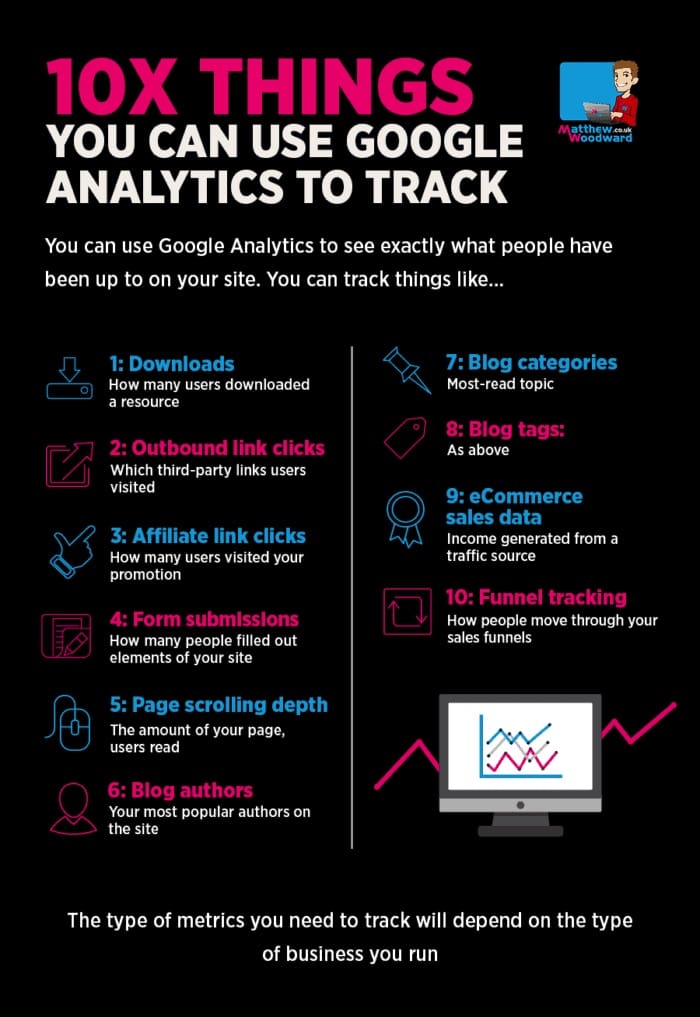
We’ll leave the discussion of tools until later in this post.
Segmentation and personalization
No matter how small your business, you’ll find that there are differences among your customers and prospective customers. Understanding and using these differences when creating content, products, and advertising is key to turning data into growth.
Use care in defining your market segments to avoid making inaccurate assumptions or stereotyping people. For instance, a cigarette company created a product designed for Black Americans, which the community saw as an insult to their collective intelligence, given the negative health consequences of these products. Here are the common ways to segment your market:
- Demographic segmentation: based on age, gender, income, education, etc.
- Geographic segmentation: based on location, region, or climate.
- Psychographic segmentation: based on lifestyle, personality traits, values, etc.
- Behavioral segmentation: based on buying behavior, usage, or loyalty
From a marketing standpoint, we often find that psychographic and behavioral segmentation offer the best results. We also combine these various factors to form market personas, which define various aspects of a segment, such as those shown in the image below.
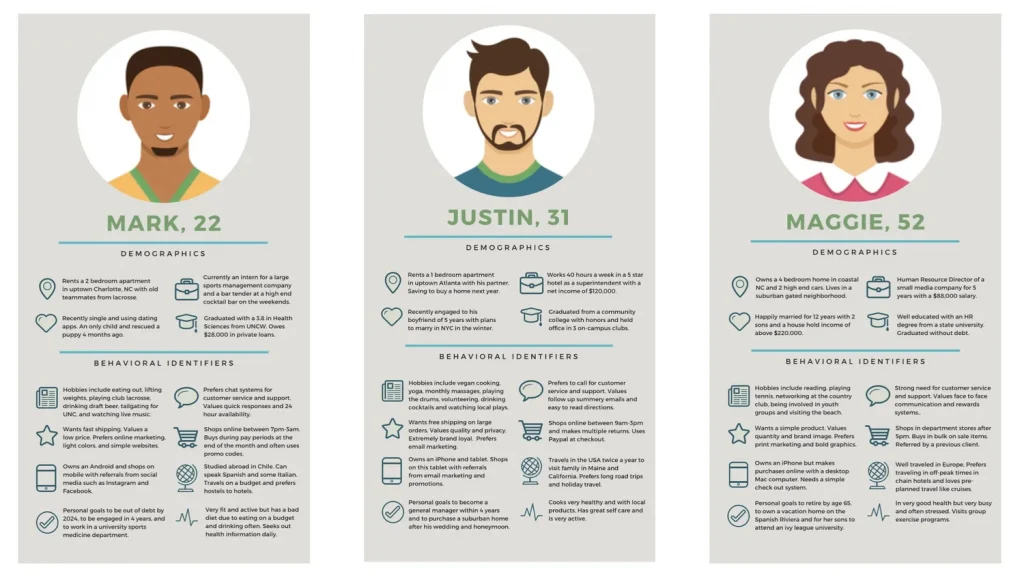
Based on segmentation, you must develop personalized market strategies and content that’s most likely to entice someone in a specific segment to make a purchase. Here are some of the benefits of personalization:
- Crafting personalized email campaigns that address recipients by name, recommend products based on past purchases, and include targeted offers. This helps increase open and click-through rates. For instance, personalized subject lines improve open rates by 26% and purchase rates increase by 5.7 times.
- Suggesting products based on a customer’s previous browsing or purchase history is common in e-commerce platforms like Amazon, which use algorithms to recommend products customers are likely to buy.
- Behavioral data, such as the pages a user visited, time spent on-site, or items added to a cart, can be used to create more personalized advertising and retargeting campaigns.
- Changing the content of a webpage dynamically based on user data improves performance. For instance, an e-commerce website could show different banners or product categories depending on whether the visitor is a returning customer or a first-time visitor.
Data-based decision-making
Making data-based decisions is a key element of turning data into growth. Use your data analytics tools to identify elements that are working as well as those that are not working. Look at the results you achieve before determining where to spend your money and effort. Beyond just cataloging metrics, you need to use data to build insights. For instance, by segmenting your results based on available demographics, you might determine that your success in selling products is low among older consumers.
In the graphic below, from Google Analytics, you can see not only the number of sessions from each traffic source but also a more critical metric: engagement.
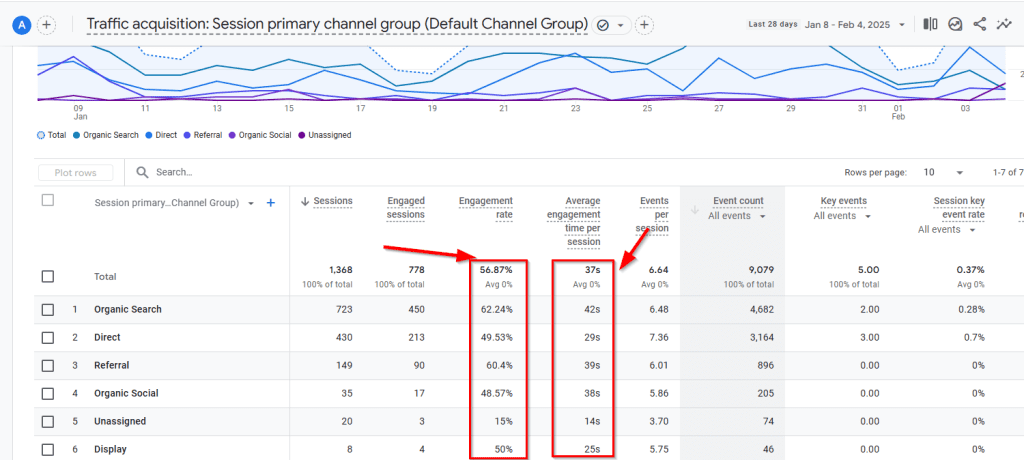
Bringing all of your data into a single dashboard often yields deeper insights than looking at each metric individually. Google Analytics offers interactive dashboards that you can customize to contain data from your website, Google Ads, and the Google Play Store with just the metrics you want to analyze. To bring together data from a variety of sources, you can use a tool such as IBM’s Cognos.
Testing and iterating
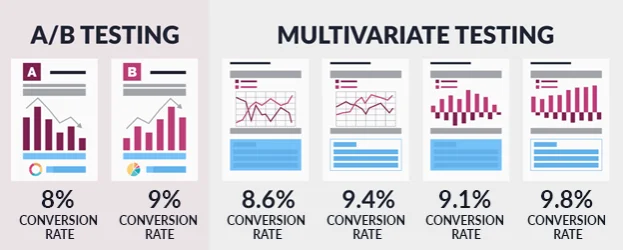
In addition to testing the data generated by your efforts, it’s important to test critical elements of your marketing strategy to determine if there are ways to improve your performance. A common tool used is A/B testing, which compares two versions of a marketing tactic. For instance, you might compare two different subject lines in an e-mail podcast to determine which one performs better or you might compare images on your ecommerce site to determine whether buyers respond better to one versus the other.
With modern data analytics, it is not limited to just comparing two versions of a marketing tactic. You can do multivariate testing, which allows you to test multiple elements of the tactic to determine which combination performs best. Many ad platforms, like Google Ads, automatically include multivariate testing to determine which version of the ad performs best quickly. Google Ads now allows you to add a number of headings, descriptions, and calls to action. This recognizes that sometimes a combination of elements interacts to perform better than if you were just testing two elements against each other.
Tools of the trade
Your choice of analytics tools depends on a number of factors, including your budget and the metrics you want to assess. You’ll obviously need to choose multiple tools since you will want to measure various aspects of your market strategy. The ones I recommend in this post are either free or offer an inexpensive tier that’s affordable for most small businesses. That said, don’t skimp on tools to save a few dollars because the outcome of flying blind, without the aid of data, is more costly than these tools. Here are a few to try:
- Website and SEO analytics
- Google Analytics is very powerful and free. Google offers free hands-on training and a practice dataset to help you become proficient. This is the tool of choice when it comes to monitoring your website performance.
- Google Search Console is also free. This tool monitors elements of SEO, such as speed (web core metrics), backlinks, performance on keywords, performance on search, and website health.
- SEMrush and similar tools require a monthly charge. They can help find keywords, track your competition, monitor backlinks, and help with content optimization.
- Social media monitoring – Most social media platforms, such as Facebook ex and Instagram, offer native insights built into the platform to track engagement. The metrics are pretty anemic unless you use advertising on the social media platform, but they’re better than nothing. Google Analytics will allow you to see the amount of traffic coming from each social media platform, as well as track that traffic through your website. You can even assess the ROAS of each social media platform through Google Analytics.
- User experience and behavior – Tools like Hotjar help you monitor user experience and behavior on your website by creating heat maps to demonstrate where users look when they’re visiting your website. They can also perform user flow analysis to understand how people use your site, as well as create session recordings. Google Analytics also offers a funnel tool that allows you to track user behavior from entrance into your website to exit.
- CRM and email marketing – Tools searches HubSpot and Salesforce can help with tracking leads, monitoring customer journeys, and monitoring the effectiveness of your email marketing campaigns.
Conclusion
Turning data into growth doesn’t have to be complicated or expensive. It also doesn’t replace your intuition; it just helps you refine your intuition. By following this guide and developing a few data analysis skills, you’ll soon find that your business grows.
Once you have implemented the analytics and analysis strategies discussed in this post, you’re ready to delve a little deeper into data analytics to streamline and optimize other elements of your business.
Need marketing help to support business growth?
We welcome the opportunity to show you how we can make your marketing SIZZLE with our data-driven, results-oriented marketing strategies. Sign up for our FREE newsletter, get our FREE guide to creating an awesome website, or contact us for more information on hiring us.
Hausman and Associates, the publisher of MKT Maven, is a full-service marketing agency operating at the intersection of marketing and digital media. Check out our affordable coaching programs to help your business thrive into the future.
Discover more from MKT Maven
Subscribe to get the latest posts sent to your email.


