 logo

Let’s face it—social media has evolved far beyond being effective channels for influencers, retailers, and sharing snapshots of gourmet meals. In 2025, if you manage a medical practice, your online presence is paramount for attracting and building long-term relationships with patients, just as crucial as the care you provide in your office. Patients today actively engage with posts on social media long before they decide to make that phone call. Perhaps they reach out to their local friends for recommendations to find a doctor, or see your ad on Instagram before deciding to schedule an appointment. They find the information and advice you share on social media valuable in maintaining their health between visits, which helps to build a long-term relationship with your medical practice. They seek to connect with you, understand your expertise, and gauge your trustworthiness. Make sure your social media strategies reflect your professionalism and compassion, showcasing not just who you are, but the exceptional care you offer.

The exciting news? You don’t have to go viral or dance on TikTok to make social media a powerful tool for your clinic. What you truly need are social media strategies, a compelling voice, and a commitment to consistency. In this article, we’ll explore the most effective social media strategies that not only help your medical practice stand out, but also foster meaningful connections with your patients and prospective ones. Let’s unlock the potential of social media together by reading this post and following the recommendations contained in other posts!
Building social media strategies that deliver
Start with a clear content plan
Posting content without a plan is like embarking on a road trip without a map. You might get somewhere eventually, but it will be slow and confusing. That’s why the first step is figuring out what you want to achieve. Moreover, you need content across multiple platforms that fits the platform and the users on that platform. You also need all your content to work cohesively to meet your goals and objectives.
Perhaps you want to attract new patients. Maybe you want to keep current patients informed. Or perhaps you simply want to establish your online reputation. Once you know your goal, it’s easier to create content that supports it. Likely, you want some combination of all three goals so your social media strategies should work to create content that meets each goal, rather than something without a clearly defined goal. You should rotate your content across these goals and aim content at patients with different needs rather than generic content. For instance, maybe you have a segment of your patients who have diabetes and you want to attract more of this type of patient. You might create informational content, such as educational videos or ebooks about treatments, diets, and other tools diabetics can use to avoid the complications they might face without good blood sugar control. A content calendar is a great tool to ensure you meet the content needs of these patients while creating other content pieces for other segments of your patients, former patients, or aimed at attracting new patients.
One element you need to include in your plan, as well as in your content calendar is keyword research for healthcare to see what your patients are actually searching for. These insights can guide your social media strategies just like they do for websites. If a lot of people are looking up things like “seasonal allergies” or “urgent care near me,” you can create content that answers those questions. This keeps your posts helpful and more likely to show up in searches.
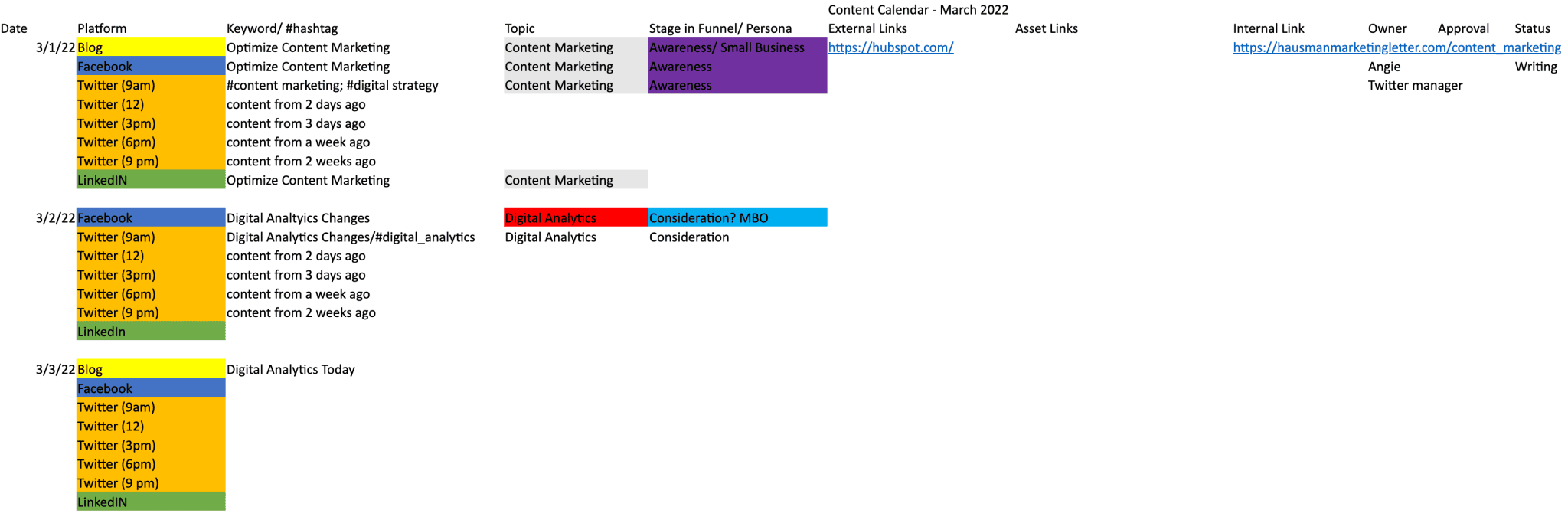
Use those keyword ideas to brainstorm post topics. You can plug them into your basic content calendar, such as that shown in the template above, and plan ahead for things like flu season, wellness tips, or mental health awareness months.
Use real people, not stock photos
People don’t connect with perfect models in white coats. They connect with real people—your staff, your office, your everyday moments. That’s why you should skip the stock photos and start showing what makes your practice different. Choosing a new medical practice is a scarry thing and the more information you provide to get patients ready for that first visit, the less scarry it seems. Share a picture of your nurse prepping a room. Post a birthday shoutout for a team member. Show a quick video of the check-in process. These kinds of posts build trust and reduce dissonance. They make your practice feel welcoming and approachable.
You don’t need professional photos, either. A quick snap on a phone works fine. Just keep it bright, clear, and authentic. And always make sure your staff is comfortable being in the spotlight.
You can also share pics of real patients, with their permission (remember HIPPA rules are very strict when it comes to sharing patient information). Better yet, encourage patients to share information on their social media platforms. This UGC (user-generated content) is great for bringing in new patients and making your practice more relatable.
Educate without overloading
You’ve got a lot of knowledge—but most people just want quick answers. Social media is not the place for long explanations or medical lectures. Keep it short and helpful. Avoid jargon and remember that patients and prospective patients don’t have medical degrees. Ensure everything is shared in laymans terms by testing it with real patients. The key is to keep your language simple. Talk the way you would to a friend or a patient sitting in your office. Clear, friendly content is more likely to get read—and shared.
Try a “Did you know?” post about common health myths. Share a one-slide post explaining how to schedule an appointment. Do a quick Q&A video about common concerns, like flu shots or sore throats.
Pick the right platforms
You don’t need to be everywhere. What matters is being where your patients already spend time. That’s usually Facebook, Instagram, or maybe TikTok. LinkedIn can work if you’re looking to build professional connections.
Here’s a quick breakdown:
- Facebook: Good for community posts, events, clinic updates
- Instagram: Great for visual stories, team photos, and short videos
- TikTok: Useful if you’re comfortable on camera and want to explain health tips quickly
- LinkedIn: Helpful for sharing achievements, hiring news, or thought leadership
Pick one or two platforms and do them well. You don’t have to do everything. Just be consistent where it counts.
Respond like a real person
When someone sends a message or comments on your post, don’t ignore it. Respond like you would in real life—with kindness, respect, and a little personality.nYou don’t need a long reply. Even a short “Thanks for reaching out!” or a heart emoji goes a long way. People want to feel seen and heard. Quick replies show that you’re paying attention and that you care.
And if someone asks a question you can’t answer on social media, point them in the right direction. A simple “We’d be happy to talk more—give our office a call!” can keep things professional and safe.
Use stories and reels to stay visible
Short videos and stories are still some of the most-watched content on social media. The good news? They’re quick to make. You don’t need fancy editing or special effects. Use stories to show day-in-the-life clips from your practice. Share behind-the-scenes moments. Remind patients about health tips or office hours. Reels can be fun and educational—think 15-second clips explaining symptoms or sharing wellness tips.
These tools keep your practice visible in a way that feels personal and fresh. And because they disappear after 24 hours (in the case of stories), you can experiment without the pressure of making it perfect.
Keep it HIPAA-compliant
It might be tempting to post a happy patient photo or a glowing testimonial. But always remember—you need clear, written permission before sharing anything related to a patient. Even small details, like a name in the background of a photo, can cause problems. Make sure your staff knows the rules and follows them every time. If a patient gives permission, that’s great. Just have them sign a simple release form before you post. And when in doubt, don’t post it.
Social media doesn’t have to be overwhelming. When you use it with a clear goal, a friendly voice, and just a bit of planning, it becomes one of the easiest ways to connect with your community. You don’t need a marketing degree to succeed. You need to be real, be helpful, and show up. Patients are already online. They’re looking for answers, reassurance, and care. Your posts could be the reason they choose your practice instead of someone else’s.
Conclusion
Start small. Stay consistent. And always keep your focus on what your patients need most.
Need marketing help to support business growth?
We welcome the opportunity to show you how we can make your marketing SIZZLE with our data-driven, results-oriented marketing strategies. Sign up for our FREE newsletter, get our FREE guide to creating an awesome website, or contact us for more information on hiring us.
Hausman and Associates, the publisher of MKT Maven, is a full-service marketing agency operating at the intersection of marketing and digital media. Check out our full range of services.
Discover more from MKT Maven
Subscribe to get the latest posts sent to your email.


