 logo

Investing in paid ads can eat up your budget pretty fast, especially in niche industries where the stakes are higher. With a smaller audience, the margin for error is razor-thin, so you must optimize your strategy to get every click possible from the right target market. This is precisely where the power of data analytics comes into play. It transforms guesswork into strategic insights, allowing marketers to take full control of their campaigns. By leveraging data analytics, you’re not just spending hard-earned money; you’re investing wisely, optimizing PPC strategy to glean every click and drive your business forward.
In this post, we’ll discuss how to unlock the power of numbers to uncover compelling patterns that drive success. Data illuminates the essential keywords that capture attention, and it also reveals the optimal timing, behavior, and spending habits of your target market. Remember, search intent is not static; it evolves with the seasons, different regions, and various buyer types. By leveraging the right metrics, your campaigns become not just better focused, but also more effective and tailored to your market’s needs. Embrace data-driven decisions by optimizing PPC to see your revenue soar!
How optimizing PPC in niche markets drives success
Targeting niche markets with paid ads takes more than a basic setup. These markets are smaller, more specific, and less forgiving. A few wasted clicks can quickly eat into your budget since PPC inherently involves a fee for each one. That’s why every decision—from keyword selection to bidding—needs to rely on real insight. Data analytics gives marketers the insights they need to fine-tune campaigns and reach the right people at the right time with the right message.
Take the automotive industry as an example to make our discussion more concrete. Within that space, you’re not speaking to one audience. You might be targeting motorsports fans, hybrid car buyers, used truck shoppers, or some combination of market segments with their unique needs and interests. Each segment might search differently, using different keywords and concerned with different benefits. By the same token, each segment likely converts based on a different appeal. Without data, it’s easy to send the wrong message to the wrong person, ignoring segments that represent the greatest potential for your brand based on interests or even order value. With data, optimizing PPC becomes easier, allowing you to match ad content to real demand, control costs, and scale what works.
Optimizing PPC with data insights provides:
- Audience clarity: See exactly who is engaging, down to location, device, and behavior.
- Keyword precision: Identify search terms with high intent instead of relying on general phrases.
- Budget control: Cut spend on low-value clicks and reallocate toward top-performing segments.
- Timing insights: Learn when your audience converts and schedule ads to match.
- Message alignment: Tailor ad copy to match the unique needs of each subsegment.
Steps in optimizing PPC
Finding high-intent keywords
Volume is limited when you serve a niche market, so every click carries more weight than in broader markets. That means keyword targeting must be sharp. Choose keywords with too few searches, with too much competition, or ones that reflect broad interests (ie, cars versus local hybrid car dealers near me), as you may find you’re wasting your precious budget. Achieving this precision starts with data. Analytics, such as Google Keyword Planner, reveal what people search for and which terms signal buyer intent to act. Scanning your Google Analytics can also provide insights based on knowing the keywords that generated a visit, especially those visits that resulted in conversion.
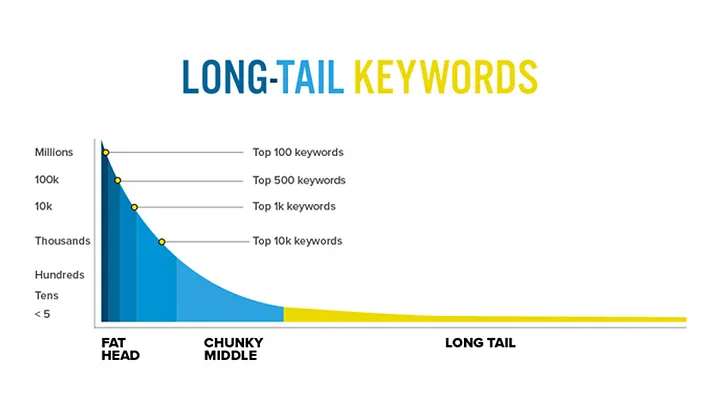
High-performing keywords are often hidden in long-tail variations, like those shown above. These can vary by product type, buyer segment, or even search context. Going back to our automotive example, someone searching for “electric crossover lease near me” has different priorities than someone looking for “family SUV with third row.” Identifying these differences is key to achieving optimal performance.
Working with a marketing firm with a focus on a niche market—for instance, in our case, an automotive marketing and advertising agency—makes it easier to extract and act on those insights. These teams have the tools and benchmarks to spot patterns, test keyword variations, and build out campaigns that reflect real buyer behavior. That kind of focus leads to stronger relevance, lower costs, and better results across the board.
Segmenting audiences for greater precision
PPC campaigns fail when they treat every visitor the same. Each audience segment has unique needs, search habits, and pain points. Additionally, these factors are influenced by timing, such as seasonal variations. Analytics reveals those differences by tracking user behavior, traffic sources, and page interactions. Once you spot the patterns, you can segment your market and tailor your PPC strategy to laser focus on that segment.
Someone searching for fuel-efficient vehicles won’t engage with ads built for motorsports buyers, for instance. Data makes those distinctions clear. You can organize your campaigns by interest, model type, or purchase stage. Each segment gets specific keywords, budgets, and messaging.
Market segmentation improves relevance and lowers wasted spend. There are various ways you can segment your market. You can segment based on demographics, for instance, to create ads for new graduates with smaller budgets, families with the need for larger capacity vehicles, or high-income individuals with the money for luxury cars. You can use your own data to determine which segments responded to various marketing campaigns in the past to construct ads that focus on the messaging that works best with organic marketing efforts. There are endless ways you can cut your market and tools you can use to align campaigns with real user data. Optimizing PPC using data ensures your message hits the mark. That focus leads to better click-through rates, higher engagement, and more conversions. While the image below presents segmentation to aid the performance of your email marketing, the same principles hold true for optimizing PPC campaigns.

Using location and device data to refine campaigns
Where and how people search shapes PPC performance. In niche markets, those patterns matter. Analytics shows where conversions happen and which devices people use most at various stages along the customer journey. That kind of detail helps you adjust targeting and spend with precision.
If mobile traffic spikes after 6 PM, raise bids during those hours. If results improve in suburban areas compared to city centers, shift your budget to match. These changes may seem small, but they can lead to meaningful gains when your audience is narrow. In automotive PPC, these insights help campaigns land better. A phone user searching in the evening may be looking for a dealership nearby. A tablet user on the weekend could be comparing features or prices. When you follow the data, your ads show up at the right moment, when buyers are ready to act.
Making campaigns smarter with predictive and real-time data
Great campaigns don’t rely on guesswork. They evolve with data. Predictive analytics utilizes past data patterns to forecast future events. Real-time data shows what’s happening now. Together, they help marketers respond faster and plan smarter.
Say your campaign history shows an uptick in interest in electric vehicles every spring. That insight can guide when to launch new ad groups or boost spend. At the same time, live data might reveal a sudden spike in clicks for a specific model. You can adjust your budget or copy immediately to catch the momentum. In industries like the automotive sector, trends move quickly. Inventory shifts. Buyer interest changes. Competition might spike during seasonal sales events or consumer interest might spike when the new models are introduced. Predictive signals help you prepare. Real-time tracking helps you act. When combined, they keep your campaigns sharp, relevant, and competitive, no matter how the market shifts.
Tracking conversions and mapping the full buyer journey

Clicks mean nothing if they don’t lead to action. That’s why conversion tracking across the customer journey (depicted above) is essential. You need to know what happens after the click. Analytics tools can track that path, from the first interaction to the final outcome. This shows you what’s going well and what needs to change. Buyer journeys are rarely quick. People might click an ad, visit a landing page, come back days later, and then submit a form. They’re also circular, especially when you sell an expensive, durable good such as cars. Without data, that looks like a failed campaign. With proper tracking, you see the full picture.
This is especially true in automotive, where decisions often take time. A person might start by comparing models, then search for financing options, and finally contact a dealership. If your tracking connects those dots, you can credit each step and invest your budget where it matters most. That insight makes future campaigns more accurate and more effective.
Wrapping up
Pay-per-click campaigns in niche markets leave little room for guesswork. Every decision matters. Analytics helps you make clear, confident decisions. It turns scattered clicks into real outcomes.
In industries like automotive, success comes from precision. You need to know which search terms drive action, when buyers are ready to engage, and how to spend your budget wisely. Data makes that possible. When used well, it transforms PPC from a cost center into a growth engine.
Need marketing help to support business growth?
We welcome the opportunity to show you how we can make your marketing SIZZLE with our data-driven, results-oriented marketing strategies. Sign up for our FREE newsletter, get our FREE guide to creating an awesome website, or contact us for more information on hiring us.
Hausman and Associates, the publisher of MKT Maven, is a full-service marketing agency operating at the intersection of marketing and digital media. Check out our full range of services.
Discover more from MKT Maven
Subscribe to get the latest posts sent to your email.


