 logo

The landscape of marketing was forever transformed with the advent of the digital era, which made access to consumers more affordable for small businesses and helped to level the playing field in their competition with much larger enterprises. Digital marketing is now an indispensable tool for promoting small businesses and communicating about your products to a target market without the wastefulness of paying to reach those not part of that market. Today, we’d like to introduce the critical components behind successful digital marketing strategies and discuss how any business can harness the power of digital marketing to survive and thrive in today’s data-driven marketplace.

Harnessing the power of digital marketing
While digital marketing isn’t an entirely new strategy with totally different rules, it’s sufficiently different from traditional marketing that it’s more than simply another channel for your marketing efforts. If you want a detailed outline of the differences between digital marketing and traditional advertising, I put together a neat little post with a table that goes deeper into those differences, which you can access through the link.
Some things work exactly the same in digital marketing, so to harness the power of digital marketing, you need to understand the concepts inherent in marketing using any strategy or channel. Here are a few marketing concepts to consider:
- Target marketing involves segmentation and positioning. We’ll cover this concept in some depth in the next section.
- Value is a core concept of marketing. Value is the excess of the cost of a product (and any other outlays, such as inconvenience) and what you gain from the purchase. For instance, if you can get a product cheaper from Temu (which might involve waiting for weeks for delivery from China) versus paying a little more to get it tomorrow from Amazon, the value you gain is a function of your willingness to wait for delivery. Value assessments are very individualistic.
- Consumers want solutions, not products. They buy products for the solutions they offer. Thus, a restaurant meal competes with other ways to solve the hunger problem, including purchasing products from the grocery store to make a meal. Of course, not all have the same value. In assessing your market strategy, especially your competitive advantage, you must consider all products that solve the same problem solved by yours.
- Innovation is a prime driver of success. By constantly innovating with new products or significant improvements to your existing products, you can keep customers happy and attract new ones as needs, desires, and external factors change.
- Consumers can only buy products when they know they exist and when you convince them of the solution you offer.
- Consumers are greatly influenced by the opinions, recommendations, and emotions of those around them. Digital marketing relies more heavily on these peer-to-peer interactions because it gives consumers a voice outside their physical communities.
- Prices matter, but being the lowest-priced product isn’t as big an advantage as you might think.
- Distribution is one of the biggest challenges (and highest costs) faced by many businesses that sell tangible products, as we discovered when COVID-19 interrupted many supply chains. Establishing an effective supply chain to acquire the goods you need and distribute your finished products is a serious consideration.
These are just a few of the core concepts from marketing that you must master before you consider taking your marketing strategy into a digital space. Here are some elements that significantly impact a digital world when you harness the power of digital marketing.
Understand your target market
Creating a deep understanding of your target market has always been critical for success. You need to know what they want, how to talk to them, where to reach them, and how to set your brand apart from the competition. However, before digital marketing, it was hard to get this deep information beyond simple demographics such as age, gender, and lifestyle. Even this anemic data was often based on guesswork more often than actual numbers. Collecting more in-depth data was challenging and expensive. You had to employ carefully constructed surveys and then hope you got accurate information from them, which was always iffy.
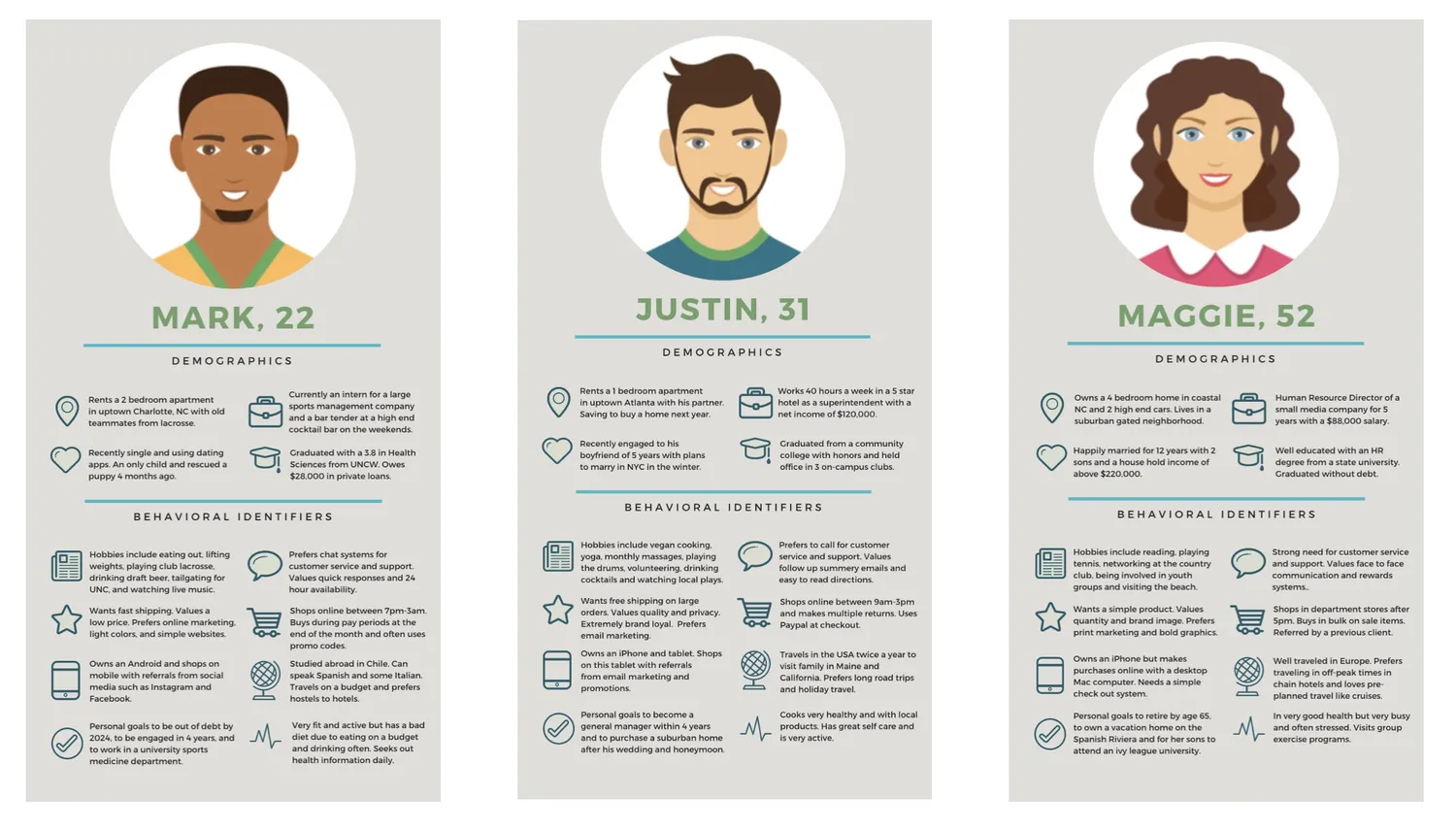
Today, you can access much more detailed and objective data from social media by analyzing your online sales data from Google Analytics and monitoring the performance of your digital advertising. We can now confidently build market personas like the ones above with not only demographics but geographic and lifestyle information that helps us construct marketing campaigns tailored to specific targeted groups of consumers
Leveraging social media for growth
Social media outlets are now essential tools for digital marketing. By creating social media profiles and posting updates that regularly meet the desires of their market persona, businesses can engage with customers and followers to promote their products, build a positive brand image, and develop brand loyalty. Promoting peer-to-peer interactions and reviews on social media also has the benefit of convincing prospects that your products fit their needs.
Another way to use social media to harness the power of digital marketing is through targeted advertising. No longer do you “spray and pray” that your advertising hits your target market with the right message. By using advertising tools available on most social media platforms, you can zero in on those users who fit your persona with a message designed specifically to motivate them.
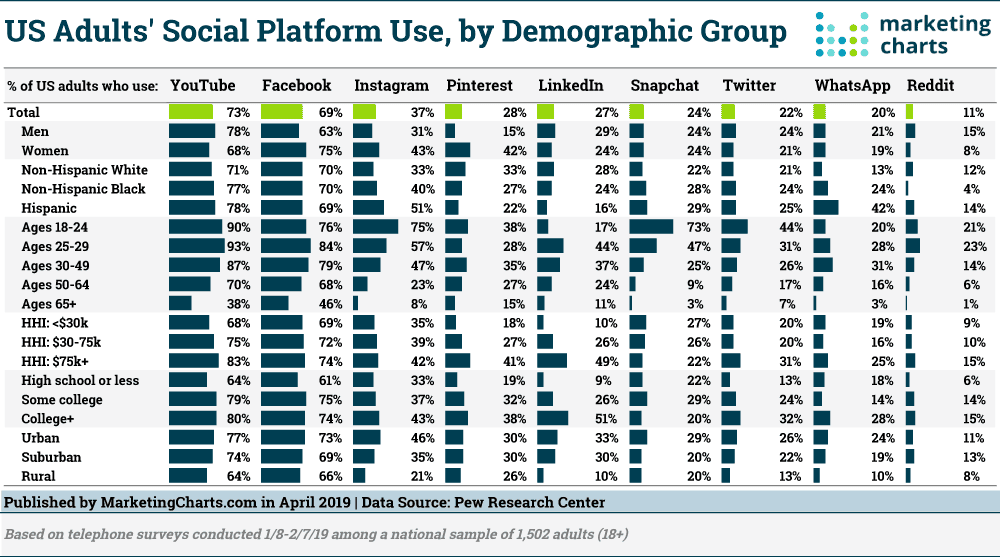
Choosing the “right” social media platforms to match each persona is important for success. Only select the number of platforms that fit your bandwidth so you can post content on the recommended schedule. Otherwise, you’ll find much less success since consistent posting is a big factor in that success. Below is some information to help you choose wisely.
Content marketing
Content marketing is a strategic approach aimed at crafting, sharing, and publishing valuable, relevant, and consistent content across your digital marketing platforms, including your blog (or website), email messages, social media, and SMS (short message service). Creating success with content marketing isn’t easy, as the amount of content available from digital platforms grows exponentially every DAY. Success depends on posting content that’s valuable to your market personas. Using various types of content can help make your content more enjoyable while helping you reach users with different content preferences. Be sure to include images, videos, infographics, text, and topics as part of your content marketing strategy.
Sharing that content isn’t straightforward. SEO or search engine optimization strategies help your content gain more traction when a user searches for content related to your brand. Below are some SEO strategies to consider as you create content:
- Backlinks from high-quality websites demonstrate the value of your content. The same goes for time on site, repeat visitors, and a low bounce rate on your website. The length of your content (word count) similarly suggests value, as does including backlinks to other high-quality websites, which act like citations in an article.
- The keywords you use in creating content and their match to the user’s query. Also, the amount of competition for those keywords is less, making them easier to rank for. Long-tailed keywords offer a benefit in this respect.

Image courtesy of Yoast - Page load speed, mobile-friendliness, and other usability factors
- Social signals, such as engagement on social media
- Technical SEO factors

Embracing CRM within your agency
CRMs, otherwise known as Customer Relationship Management software, provide small businesses with many as-needed tools to manage and analyze customer interactions and data. A holistic CRM for agencies can streamline the process, help manage campaigns better, and effectively track customer data right in integration with their entire business operations.
It conveys targeted instruments for marketing productivity, guides after-sales service maintenance, and creates long-term company friendships. In much simpler terms, it is the ability of agencies to provide custom client services until the end of time.
Conclusion
Digital marketing brings meaning and measure to a business and gives power to businesses to reach their direct consumers. By wrapping this finger of understanding around the target consumer in digital marketing, by using social media, and with the help of flawless content marketing, creating a hero called ‘SEO strategies’, the business can evolve itself to sail in this challenging, modern age of technology. Digital marketing is not a one-size-fits-all technique. It is always searching for an innovative way to be better, faster, and more intelligent than it ever was before, as digital marketing must keep reinventing itself anew to stay ahead of the curve. Keep it as your competitive edge if you want to continue to grow your business!
Need marketing help to support business growth?
We welcome the opportunity to show you how we can make your marketing SIZZLE with our data-driven, results-oriented marketing strategies. Sign up for our FREE newsletter, get our FREE guide to creating an awesome website, or contact us for more information on hiring us.
Hausman and Associates, the publisher of MKT Maven, is a full-service marketing agency operating at the intersection of marketing and digital media. Check out our full range of services.
Discover more from MKT Maven
Subscribe to get the latest posts sent to your email.


Thank you for sharing informative blog article with us.
You’re very welcome.