 logo

Why do you need a tailored SEO framework? Because the digital ecosystem of 2026 bears little resemblance to the search landscape of even three years ago. With the widespread integration of generative AI into search engine results pages (SERPs) and the shifting behaviours of users who now demand instant, hyper-relevant answers, the era of “tick-box” marketing is effectively over.

For high-growth businesses, this evolution presents a stark reality: generic, software-led tactics are no longer sufficient to secure market share. The complexity of modern algorithms requires a shift away from cookie-cutter packages toward bespoke, data-driven frameworks. Success in this new environment demands a sophisticated understanding of technical architecture, user intent, and the subtle nuances that automated tools invariably miss.
Table of Contents
A tailored SEO framework in the age of AI
The primary driver of this strategic pivot is the rise of AI overviews (also called answer snippets that appear before organic search results) and Search Generative Experience (SGE), which require a generative engine optimization strategy. In the past, ranking on the first page of search results was a matter of choosing the right keywords, the optimal keyword density, and backlink volume, metrics that were easily gamified and often successfully targeted by generic marketing software. Today, however, Google’s algorithms and AI models trained on vast amounts of online data prioritize Experience, Expertise, Authoritativeness, and Trustworthiness (E-E-A-T) to a degree that automation and one-size-fits-all SEO cannot replicate.
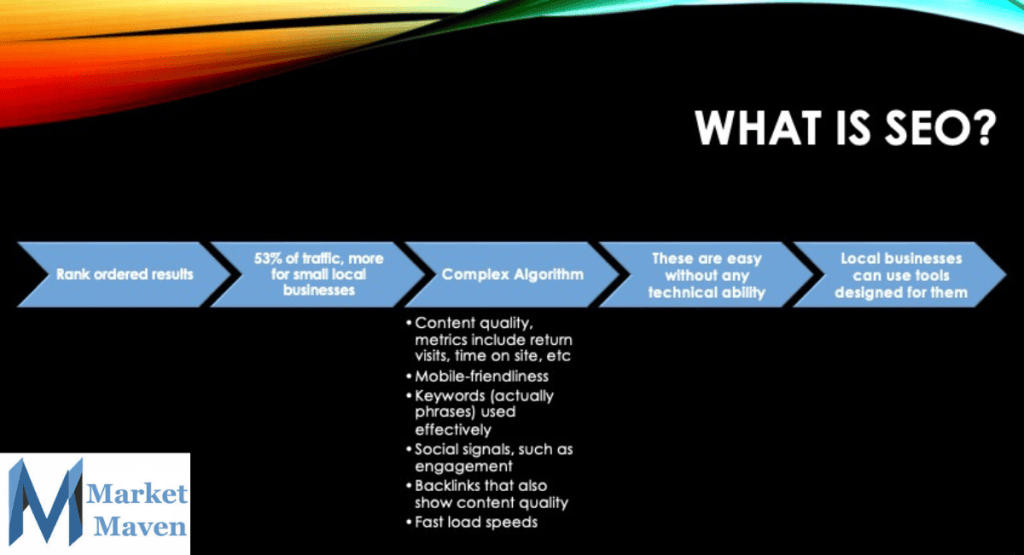
Thus, we are seeing a clear bifurcation in search performance. Websites relying on templated content strategies are seeing their visibility cannibalised by zero-click searches and AI summaries. Conversely, brands that invest in deep, authoritative content, structured specifically for their unique audience, are thriving. Demonstrating this point, the Wall Street Journal found that the impact of organic search results declined by as much as 55% in 2025, and the decline continues as more queries trigger an answer snippet every day.
According to key SEO trends for 2025, the focus has shifted heavily toward “Answer Engine Optimisation” (AEO) and user-centric signals. This data suggests that search engines are becoming semantic engines, attempting to understand the intent behind a query rather than just matching character strings. A generic strategy that blasts the same tactics across a SaaS company, an e-commerce store, and a local service provider will inevitably fail because the intent signals for each are radically different.
Technical precision requires human insight
While software is excellent for diagnostics, it lacks the critical thinking required for strategy. An automated audit tool might flag a “missing meta description” as a high-priority error, but a human strategist understands that for a pagination page or a dynamic filter, that “error” might actually be intentional to prevent keyword cannibalization.
This is where the distinction between a software subscription and a strategic partnership becomes clear. Engaging a professional SEO agency allows a business to access the human expertise necessary to interpret complex data sets to develop a tailored SEO strategy required to satisfy AI and appear in the answer snippet, where brand mentions are the new metric, rather than site visits. Rather than simply fixing errors reported by a crawler, a bespoke approach involves analysing the server-side rendering of a website, optimising crawl budgets for enterprise-level sites, and ensuring that the site’s architecture supports the specific user journey relevant to that industry.
A tailored SEO framework considers the following technical nuances that generic tactics ignore:
- JavaScript Rendering: Ensuring search bots can render content just as users see it, a common pitfall for modern React or Angular-based sites.
- Schema Markup Strategy: Moving beyond basic “Organization” schema to implement complex, nested structured data that helps AI understand the relationships between entities on a page.
- Core Web Vitals Optimization: Treating site speed not just as a score to improve, but as a conversion rate optimization (CRO) lever specific to mobile users in low-bandwidth regions.
The Synergy of Content and Long-Term Vision
Data-driven marketing is often mistaken for a short-term pursuit of “green arrows” on a monthly report. However, true data dependence implies looking at longitudinal trends and accepting that significant organic growth is cumulative.
It is tempting for businesses to seek immediate gratification through aggressive, often risky tactics. However, as rooted in foundational data-driven marketing strategies, sustainable growth requires more than just automated keyword insertion; it demands a continuous, adaptive framework that evolves alongside algorithm updates.

A tailored SEO framework aligns content production with this long-term view. Instead of chasing high-volume, low-intent keywords, a tailored strategy identifies “topic clusters,” groups of interlinked content that establish the website as a topical authority.
The Components of a Data-Driven Content Framework
To pivot successfully in 2025, marketing leaders must ensure their content strategy includes:
- Gap Analysis vs. Competitors: Using data to find what competitors are not answering, rather than simply copying what they are.
- Intent Matching: Creating different content formats for different stages of the funnel (e.g., in-depth white papers for consideration phases vs. concise comparison tables for decision phases).
- Historical Optimisation: Using analytics to identify decaying content and refreshing it with new data, ensuring the site remains “fresh” in the eyes of the algorithm.
- Semantic Enrichment: Writing for topics and entities, not just keywords, ensuring that content covers the breadth and depth expected by modern semantic search engines.
Moving Beyond Vanity Metrics
Perhaps the most significant difference between a generic and a tailored SEO approach is the definition of success. Generic strategies often report on “vanity metrics”, impressions, raw traffic numbers, or rankings for irrelevant keywords. These numbers look good on a dashboard but rarely correlate with the bottom line.
A bespoke framework focuses on ROI-centric metrics. It asks different questions:
- Not “How much traffic did we get?” but “What is the conversion rate of that traffic?”
- Not “Do we rank for X?” but “Does ranking for X actually drive qualified leads?”
- Not “How many backlinks do we have?” but “Are our backlinks driving referral traffic and authority from relevant industry niches?”
 Conclusion: The Strategic Imperative

The marketing landscape of 2025 is unforgiving to those who refuse to adapt. The barrier to entry for content creation has been lowered by AI, resulting in a flood of mediocrity. To stand out, businesses must pivot toward quality, technical excellence, and strategic customisation.
By abandoning generic tactics in favour of a tailored, data-backed framework, companies can insulate themselves against algorithmic volatility. It requires a shift in mindset, viewing SEO not as a commodity to be bought off the shelf, but as a sophisticated engineering and communication discipline that is integral to the business’s digital survival.
Need marketing help to support business growth?
We welcome the opportunity to show you how we can make your marketing SIZZLE with our data-driven, results-oriented marketing strategies. Sign up for our FREE newsletter, get our FREE guide to creating an awesome website, or contact us for more information on hiring us.
Hausman and Associates, the publisher of MKT Maven, is a full-service marketing agency operating at the intersection of marketing and digital media. Check out our affordable coaching programs to help your business thrive into the future.
Discover more from MKT Maven
Subscribe to get the latest posts sent to your email.


