 logo

How can you supercharge marketing efforts in 2026? By employing powerful new tech and state-of-the-art marketing tactics that actually work today. Here’s a harsh truth marketers avoid: “the playbook that worked in 2020 is now working against you.” Once upon a time, the “batch and blast” approach, generic social media outreach, and gated whitepapers that nobody reads were used to fill pipelines. Today, they fill spam folders. Read on to learn how to supercharge marketing campaigns today.
Why you need to supercharge marketing
The buyer has changed a lot, especially in B2B industries. According to Gartner, the average B2B buying group now involves 6 to 10 decision-makers. Each member is doing their own independent research with different goals. And a growing number of them are using AI tools like ChatGPT and Perplexity to screen vendors before a human ever gets involved.
So what does that mean for you?
It means the noise has never been louder. And the window to grab a buyer’s attention has never been smaller. The brands that win in 2026 won’t be the ones with the biggest budgets. They are going to be the ones with the right technology stack working in their corner.
Let’s explore five major emerging technologies that can actually supercharge marketing campaigns today. Understanding how these advancements interact is crucial, as the shift is happening now, not in the distant future.
How to supercharge marketing campaigns for today and the future
1. Conversational ABM and the shift to ABX
If you are already familiar with Account-Based Marketing (ABM), you know the core idea. Instead of casting a wide net, you pick your best-fit accounts and focus your energy on winning them. It is a precise and intentional approach that worked really well for years. But here is the problem with traditional ABM. It treated targeting as the finish line. You identified the account, launched some personalized ads, sent a few tailored emails, and waited. The experience after that first touchpoint? It was usually the same cookie-cutter journey every other prospect got. Buyers started noticing, and they stopped responding.

According to a study by ITSMA and the ABM Leadership Alliance, companies using ABM strategies see a 208% higher revenue impact compared to those using traditional outbound approaches. Here’s what ABM asks:
- “Who should we target?”
- “How do we make every interaction with that target feel like it was made specifically for them?”
IBM used this tactic very successfully to draw in new accounts by using its social media posts to tout the accomplishments of companies it wanted to attract. Since these companies “heard” the flattery and appreciated the attention achieved among its customers through IBM’s efforts, they were predisposed toward positive attitudes toward IBM, as well as more welcoming of their salespeople when they came to call.
ABM in 2026: A Shift to ABX Upgrade
You can supercharge marketing by switching from traditional ABM to ABX. ABX (Account-Based Experience) is what happens when you combine the precision of ABM with real-time conversational data across every touchpoint. Instead of a static campaign, every interaction becomes a live and relevant conversation. When a VP of operations from a target account lands on your pricing page, ABX doesn’t just record the visit; it triggers a response in real time.
For instance, a chatbot opens with a message tied to that company’s actual pain points. Your sales rep gets an instant alert with talking points pulled from that company’s latest news. The whole experience feels like it was built just for them. According to a study by ITSMA and the ABM Leadership Alliance, companies using ABM strategies see a 208% higher revenue impact compared to those using traditional outbound approaches.
Real-time conversational tools like Drift and Qualified now plug directly into your CRM to supercharge marketing with ABX. They recognize high-value accounts the moment they land on your site, serve relevant content, and route live conversations to the right rep. All of this happens without the prospect having to fill out a single form.
This is not a future concept. It is already running in the stacks of your most competitive peers.
2. Generative engine optimization (GEO)

The search engine you knew is changing fast. Think about the last time you searched for a product. Likely, rather than clicking through search results until you found what you were looking for, you scanned the answer provided by Google’s AI overview (the answer snippet) at the top or went straight to an AI model to ask your question. This changed the nature of SEO to GEO, where the goal is no longer to drive traffic to your site, but to glean a brand mention in the AI model.
According to a BrightEdge study, 68% of online experiences still begin with a search. But the nature of that search is changing fast. AI-generated answers are replacing traditional search results. Buyers get vendor recommendations straight from LLMs (large language models). And if your brand isn’t mentioned in those answers, you are invisible to that buyer. In some industries, GEO is swallowing up to 80% of your traffic. Supercharge marketing by adapting to these changes.
What GEO Actually Means
GEO is the practice of structuring your content so that AI models reference your brand when answering buyer questions.
Traditional SEO was about ranking for keywords on a search results page. GEO is about becoming a trusted source that AI actively cites in its responses. Here is what that looks like in practice. When a procurement manager asks Perplexity, “What are the best cloud platform vendors for SaaS companies?” You want your brand to show up in that answer, not as a paid ad but as a cited authority. To get there, four things need to be in place:
- Your content needs to answer specific technical questions clearly and directly. LLMs pull insights from sources that offer structured and useful answers. Content that promotes vague thought leadership doesn’t get cited.
- Your website needs structured data markup, also called schema. This helps AI models understand exactly what your content covers and who it is for.
- You need consistent and credible mentions across trusted third-party sources, such as G2, Capterra, industry publications, and analyst reports. LLMs cross-reference multiple sources before deciding what to cite.
A report by Content Marketing Institute found that websites using structured data saw up to 30% more visibility in AI-driven results compared to those without it.
GEO is not a replacement for SEO. It is the next essential layer on top of it. Brands that start building for GEO now will have a serious head start before AI-driven search becomes the default for every B2B buyer.
3. Autonomous AI SDR agents
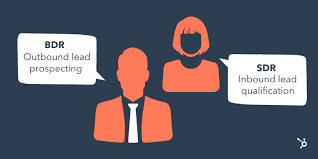
The problem with “old-school sales” outreach is that you get buried under the grunt work. Let’s be honest, sales development is a grind. SDRs spend hours every day doing research, writing personalized emails, logging activity in the CRM, and chasing leads that may not even be close to ready. As proof, research by InsideSales shows sales reps spend only about 35% of their time actually selling. The rest goes to admin work, research, and follow-up tasks that add no direct value to revenue. That is a costly and avoidable problem. Especially when the leads that matter need fast, informed, and relevant responses.
What Autonomous AI SDR Agents Do Differently
AI SDR agents are not the basic chatbots you might be thinking of. They are autonomous and AI-powered software that handle the overall sales workflow. They manage multiple and repetitive tasks, such as prospecting, personalized multi-channel outreach, lead qualifications, and much more. These agents research a target account before outreach even begins.
They pull the prospect’s details from various channels, such as:
- LinkedIn profiles
- Company news
- Funding announcements
- Technographic data
These AI SDR agents use this information to build a real picture or ideal customer profile of a targeted client. Then they write outreach that speaks directly to what that company is actually going through right now. Tools like 11x.ai and Artisan are already running inside live sales teams to supercharge marketing. These agents manage the full top-of-funnel sales sequence, such as:
- They sent the first email
- They follow up and answer basic questions.
- They qualify the lead.
When the prospect shows genuine buying signals, they hand off to a human rep.
Here is the most important thing to understand about this technology. These agents are only as smart as the data they are fed. If your contact database is filled with outdated job titles, wrong email addresses, and companies that no longer exist, even the best AI SDR agent will fail. This is exactly why many high-performing teams now partner with a verified B2B data vendor to access a clean, verified, and accurate contact list. The AI handles the heavy lifting, but it needs quality fuel to perform at a high level.
The result? Your human SDRs spend their time on what actually needs human judgment, which are:
- Building relationships
- Running high-stakes discovery calls
- Handling complex negotiations
All while everything else gets automated by these AI-powered SDRs.
4. Hyper-personalized video synthesis
Personalization has been the key when companies work to supercharge marketing for more than a decade. A message that speaks directly to a prospect’s situation always outperforms a generic one. The challenge has always been doing it at scale.
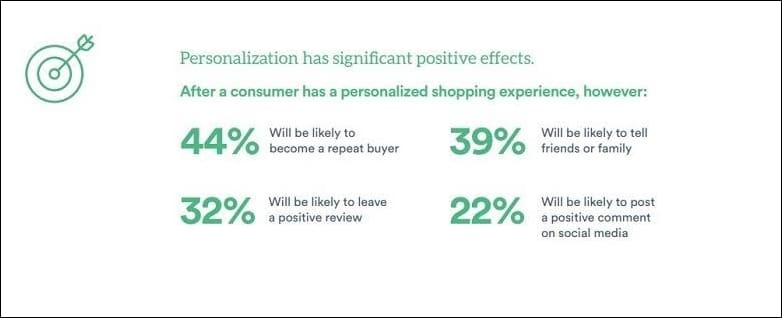
You can’t have your CEO record a custom two-minute video for every one of your top 500 target accounts. That is not realistic, so most teams settle for templates with a first name dropped into the subject line and call it personalized. This results in a phenomenon called “The Personalization Paradox,” the more “personalized” your template feels without actual depth, the more it alienates high-level decision makers.
How AI-Generated Video Changes the Game
Hyper-personalized video synthesis uses AI to create custom video content at scale. You record a base video once, then the AI generates individual versions for each target account. Each version can be personalized using the prospect’s key insights, such as:
- Company name
- Specific industry challenge
- Current tech stack
- A piece of news tied directly to their business
It looks and sounds like someone spent a full hour creating a video just for that one account. However, in reality, the AI did it in minutes.
Platforms like Tavus and HeyGen are already making this possible for B2B teams. According to Vidyard’s Video in Business Benchmark Report, personalized videos generate a 16x higher click and open rate compared to standard email formats.
Think about what this means for your most important accounts. Instead of a case study PDF, they receive a 90-second video referencing their exact pain point. Instead of a generic product demo invitation, they get a walkthrough built around their industry and use case. When the prospects feel genuinely seen or heard, they respond. That is not a marketing trick; It is basic human psychology to supercharge marketing.
This technology becomes even more powerful when combined with ABX. Your high-value accounts get a fully customized experience from the very first touchpoint, making it very difficult to ignore your outreach.
5. Predictive intent orchestration
All these years, for marketing teams, intent data meant tracking website visits or content downloads and form fills. Someone downloaded your pricing guide, so a sales rep called them. Someone visited your comparison page, so they got added to a retargeting list. This insight was useful. But it was always looking backward. You were reacting to signals that had already happened, often too late to be the first vendor in the conversation.

What Predictive Intent Orchestration Looks Like
Predictive intent orchestration uses deep-learning models to detect buying signals before a prospect even visits your website to supercharge marketing and produce results. These models pull from a wide range of data sources, such as:
- Job postings from target accounts
- Social engagement signals
- Funding announcements
- Leadership changes
- Content consumption on third-party publisher sites
- Search behavior patterns across the open web
By gathering all these details, you get a clear picture of which accounts are entering a buying window right now, before they ever raise their hand.
Platforms like 6sense, Bombora, and TechTarget Priority Engine are leading this space. According to 6sense’s own research, 67% of the buyer’s journey is already complete before a prospect contacts a vendor directly. That means if you are waiting for a form fill to start the conversation, you are already late.
Predictive intent tools let you get there first. Your team can reach out to the right account, at the right time, with the right message, before your competition even knows that account is in the market.
But here is the catch that most teams overlook. These models are only as accurate as the data feeding them. If your account database is stale, your firmographic data is wrong, or your contact records are outdated, the model will make predictions based on bad inputs. The output will be irrelevant targeting, missed opportunities, and even a bad reputation for your brand.
This is why the most effective teams treat their B2B data foundation as a core part of their tech strategy. Most successful firms now partner with a credible B2B database provider to ensure their AI models are working from clean and real-time intelligence rather than running on guesswork.
When the data is right, predictive intent can supercharge marketing and produce higher revenue into 2026 and beyond.
Conclusion
Now you know how to supercharge marketing to achieve your goals in a world that’s changed dramatically from the one you faced just a few years ago. A few caveats, however.
Don’t supercharge marketing by thinking that it relies solely on your tech stack. Humans are still a critical element in the process. Instead, tech merely acts to save time and effort by doing the grunt work for you; elements where technology excels. Humans are still essential for developing strategy, building relationships, creative thinking, and establishing trust; all essential elements to supercharge marketing.
Author bio:
Kiara C, a Marketing Director, has over 11 years of experience in B2B marketing. Her expertise in content strategy, content editing, and market analysis has helped our organization achieve brand excellence. Kiara’s leadership skills, combined with her talents as a marketing specialist, have paved the way for our organization to maintain a competitive edge in the B2B landscape. Under her guidance, Avention Media is set to become the global leader in providing data-driven insights on marketing!B2B marketing
Need marketing help to support business growth?
We welcome the opportunity to show you how we can make your marketing SIZZLE with our data-driven, results-oriented marketing strategies. Sign up for our FREE newsletter, get our FREE guide to creating an awesome website, or contact us for more information on hiring us.
Hausman and Associates, the publisher of MKT Maven, is a full-service marketing agency operating at the intersection of marketing and digital media. Check out our affordable coaching programs to help your business thrive into the future.
Discover more from MKT Maven
Subscribe to get the latest posts sent to your email.


