 logo

4 stops along the road to digital marketing success
It is a no-brainer that businesses should go where their customers are.
So, suppose your customers are online (and, in 2025, you have to hunt really hard to find a prospective customer who isn’t online, given the average person spends about six and a half hours online every day with younger consumers spending an hour more than this average). In that case, it makes sense to have a strong online presence. In the increasingly digital world, digital marketing becomes vital if they wish to harness the extraordinary powers of the internet to drive their business. For effective marketing, a robust, comprehensive strategy and a definitive “ROAD map are critical.”
 The ROAD to digital marketing success contains:
- Research
- Optimization
- Analytics
- Distribution
Stop 1: Research
Research is a necessary first stop on your road to digital marketing success and consists of several different types of research.
The primary research you want is to find out exactly which digital marketing model will work best for you. This greatly depends upon which industry you are in. These models, based on extensive communication research, look like this.
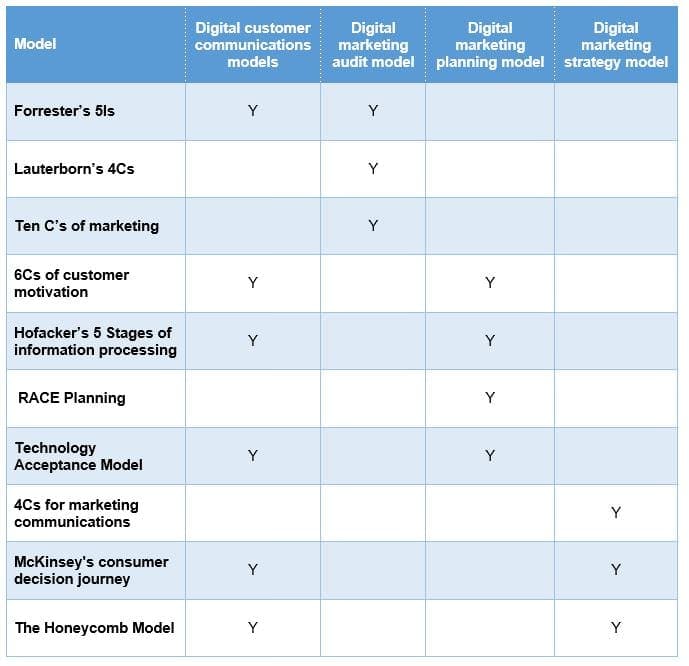
Some of these models are a little dated, but others still work despite their age. For instance, the technology acceptance model posits that users accept new technologies based on the perceived usefulness and ease of use of the technology. This explains much of the early success of Apple computers and phones. Steve Jobs insisted that his company’s products be intuitive for users.
Once you’ve determined which of these marketing communication models works best in your industry, you need to start collecting detailed data on consumer behavior for variables comprising the model. Before finding people who will become paying customers and will turbo-charge your sales, you need to understand what excites them and what matters to them. It is worthwhile to research your audience before you chalk out your digital marketing strategy.
Define your target audience first and then get insights about income, occupation, age, gender, and education through their online behavior. Understand their expectations and aspirations. Then, create a strategy that serves content that the audience wants and not what you want to serve them. Eventually, both of these will become the same. This is when you have achieved the perfect balance.
The process of discovery should include insights about your competitors, along with your audience. It is worthwhile to know what your competitors are doing and then take a leaf out of their playbook. Smart Insights beautifully explores this process of discovery when it states that research is about.
collating and analyzing insights about brands, their competitors and most importantly, the characteristics, beliefs, behavior and perceptions of their audiences
Some tools to help you research your audience and the markets are –
- MakeMyPersona – This app lets you create buyer personas for you once you have answered a series of questions about your customers. It’s simple and fun!
- MyBestSegments – Provides insights on trends, lifestyle habits, and demographics of a particular area.
- This blog gives you 17 more such market research tools to help jumpstart your campaign.
- MktMaven also provides insights for doing digital marketing research.
Stop 2: Optimization
Next on the road to digital marketing success is optimization.
If you are not getting found in the digital sphere by your customers, you are not going to get anywhere. Your website and all the content you create are at the mercy of the search engines, which bring more than 50% of the traffic visiting your site. Getting found by the search engines and ranking consistently higher on SERPs (search engine results pages) requires optimization or SEO (search engine optimization). Below, you can see how this optimization works.
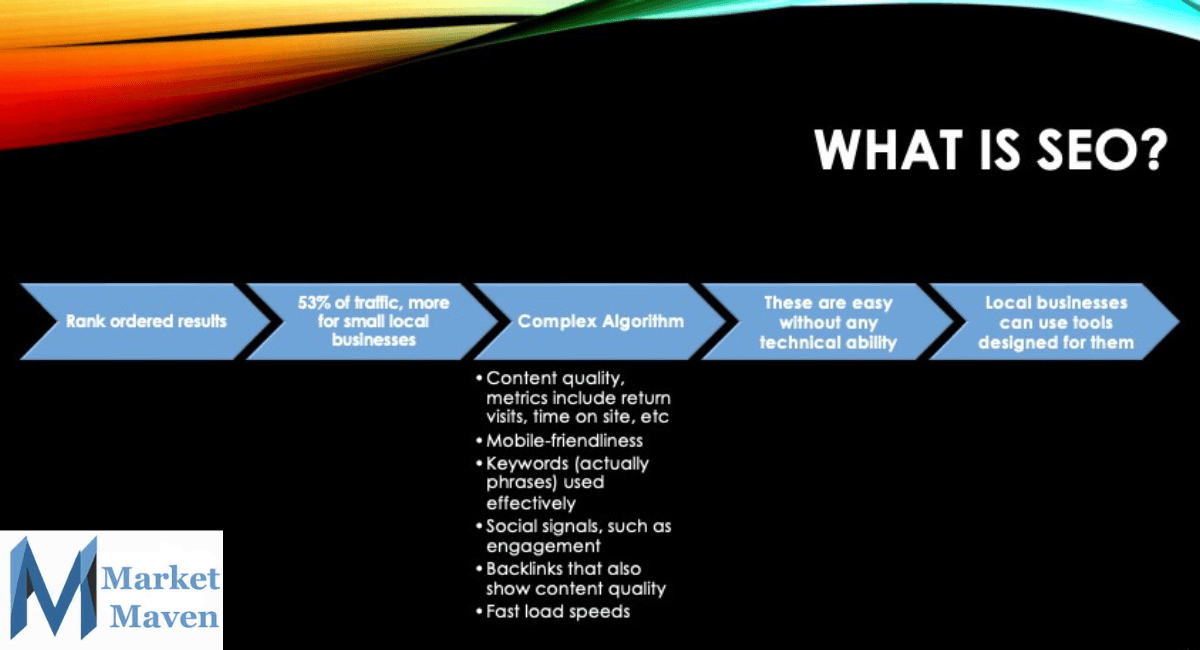
But remember, optimization is like perfection. It is an ongoing process rather than a one-time effort.
Beyond simply ranking well to attract prospective customers, you need to entice them once they reach your site. This is a state (in a perfect digital world!) where every piece of content, page, image, and call-to-action is perfectly aligned with the needs of the customer. You must track variables like keyword demand, user preferences, and search and social platform updates to move towards a more optimized site or content,
So, as the adage goes, “Aim for perfection; you are bound to achieve excellence.”
Google only loves you when everyone loves you first!
This great quote from Wendy Piersall nails it perfectly. Create content not for Google (or other search engines) but for your customers. If your customers love your content, Google will too, since Google’s goal is to satisfy users’ search needs. It updates its search algorithm constantly to ensure users find the best content to meet their query. Use SEO techniques diligently and better rankings follow. Unlike the situation just a few years ago, search engines are intelligent and don’t reward you because you successfully stuffed keywords into your content. They reward you because your content offers value to the reader. For a moment, forget everything you know about keywords in the content. Think from the perspective of your customer. If you address your customer’s need for information on your website, search engines will reward you with better rankings.

Linking
Interlinking pages or internal linking within your website to achieve semantic SEO is a good practice. Create a chart of your web pages according to page rank and then cross-link high-performing pages with relevant pages. Also, include semantic markup in your HTML by using tools like Schema.org, which allows you to identify products, places, or people in your HTML. Assign these attributes to entities with trending search terms.
External links are also valuable. First, external links show your visitors and search engines that your content was researched, especially when you link to authoritative websites in your industry. Second, external links encourage those websites to link to your pages. These backlinks are a means to demonstrate the value of your content to search engines as well as bring new visitors to your website. Your pages will rank higher in SERP with such linking, which positively affects CTR.
Stop 3: Analytics
A significant issue on the road to digital marketing success is ANALYTICS. According to sources, analytics is the weakest link on the road to digital marketing success. However, not all metrics are created equal. Instead, you need to monitor key performance indicators (KPIs), as these metrics impact your performance. KPIs include variables such as bounce rate (which assesses the quality of your content), conversion rate, and repeat visits. Vanity metrics, on the other hand, make you feel good while not contributing significantly to your performance. Follower counts, visits, clicks, and similar metrics are examples of vanity metrics.
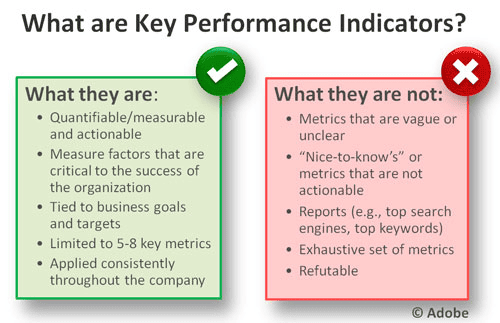
Analytics involve monitoring and analyzing campaigns, which is absolutely vital for companies to understand where they spend their marketing dollars and which campaigns offer the highest return for that investment (ROAS or return on advertising spend). Marketing analytics also provides insights into sales and lead generation, as well as customer preferences and trends. And yet, in a survey published in the Harvard Business Review, more than 80% of the respondents (senior marketing executives) claimed dissatisfaction with their ability to measure marketing ROI. According to another study, 37% of the companies did not have competent staff to perform analytics of their marketing campaigns.
Analytics begins, essentially, with defining your KPIs and developing a plan to collect and analyze this data so it provides insights to guide your decisions. You need to “measure what matters,” as Neil Patel, founder of KISSmetrics, says. You need to evaluate things like who is coming to your site and what they do there, which of your channels drive buying customers, who convert, which conversions drive revenue and deepening relationships, and so on.
Distribute
 Once you have created excellent content, you need to get it out across various platforms to people who represent your target market. Also known as content marketing, content distribution provides value. Deliver it to people who will likely find it valuable. Most companies focus so heavily on creating great content that they forget this content needs to reach the right audience to create value.
Distribution channels
Essentially, two types of distribution channels exist – owned (internal) and earned (external). Here are examples of internal channels:
- newsletters
- RSS subscribers
- Twitter followers
- Facebook fan page
- LinkedIn followers
- and more
External channels include:
- forums (like growthhackers.com, inbound.org, Reddit, Quora, and Quibb)
- communities (like LinkedIn groups, Facebook groups, Medium, List.ly)
- and more
Each type of distribution channel is unique. Internal distribution channels are hard to build, but once built, they are easy to manage and provide a lot of value. External vehicles, on the other hand, are easier to develop, give you the chance to connect to a larger audience, and give you quicker results.
To gain traction on social media platforms like Twitter (now X) and Facebook, you need to share a single piece of content multiple times due to the very short lifespan of Tweets and FB posts, although you need to adjust each share to match the style of the platform you’re using. You also need to adjust each share if you share multiple times so the platform doesn’t delete it as duplicate content. For example, it makes sense to share content on Twitter at least two to three times the day it publishes, one to two times every day for the next couple of weeks, and share the most popular pieces of content months later.
Numerous content distribution platforms exist, so selecting the right ones for your business goes a long way to determining the success of your distribution strategy. Plus, you must share on a regular basis to perform well against the algorithm and keep your audience engaged. You should plan to share at least once a day on platforms like Facebook, Instagram, and TikTok (although you must avoid oversharing), five or six times a day on X, and multiple times a day if you use Pinterest. Test sharing newsletters at different time intervals, or you’ll lose subscribers. A content marketing calendar helps you manage your content needs so you publish fresh content on a regular basis. If you need help with this, I created a post designed to help you create and maintain your content marketing calendar, which includes a template you can use. Marketing automation tools like Salesforce, Buffer, and Hubspot really help when it comes to content distribution. Without these tools, you interrupt your day multiple times to ensure you’re sharing content on the right schedule.
Conclusion
The digital marketing landscape is a dynamic, ever-shifting one and the job of a marketer has never been so tricky and complex. The journey of digital marketing can be summarized as follows –
- Data will drive digital marketing. The collection, analysis, and use of data on how, when, and where customers spend their time is the basis of a successful marketing strategy. The quality of research on all aspects of your customers will either make or break your marketing strategy.
- The traditional marketing funnel is a thing of the past. Today, customers take different journeys to conversion, and what is essential is effective cross-channel campaigns that look like an ecosystem rather than a funnel. Content marketing plays a vital role in creating such an ecosystem.
- Engage socially. Learn about your audience online. See how fans interact with your brand and what they think of it. Use this feedback to strengthen the voice of your brand. Talk to them and engage proactively. Social marketing is fun. Enjoy it.
 Today’s guest post comes from Avinash Nair.
Author Bio: Avinash Nair is a Digital Marketer at E2M, one of India’s fastest growing Digital Marketing Agency committed to meeting the highest ethical standards of digital marketing strategies and driving sustainable business growth. He is responsible for SEO and Content Marketing Services. You can find him on Twitter: @AviNair52
Need marketing help to support business growth?
We welcome the opportunity to show you how we can make your marketing SIZZLE with our data-driven, results-oriented marketing strategies. Sign up for our FREE newsletter, get our FREE guide to creating an awesome website, or contact us for more information on hiring us.
Hausman and Associates, the publisher of MKT Maven, is a full-service marketing agency operating at the intersection of marketing and digital media. Check out our full range of services.
Discover more from MKT Maven
Subscribe to get the latest posts sent to your email.


