 logo

In the ever-evolving landscape of digital marketing, staying ahead of the competition requires businesses to leverage the latest tools and strategies. Yet, I’m constantly amazed at how businesses ignore the mountains of data they have, settling for measuring ROI, rather than IMPROVING it. They act like they’re scared of predictive analytics, which seek to improve your bottom line. Predictive analytics empowers digital marketers to make data-driven decisions, identify trends, and forecast future consumer behavior. This article delves into the world of predictive analytics in digital marketing and how you can harness it to unlock the full potential of your digital marketing efforts.

In marketing, this reliance on terminal measures, such as ROI, made sense from a historical perspective. Before digital marketing, we didn’t have access to the data needed for more sophisticated analysis without expensive market research studies of dubious quality (remember the mistaken analysis leading Coke to introduce New Coke).
Today, with the plethora of data available through websites, social media, email marketing, and other sources, we have access to extremely rich and valuable data, including natural behaviors of consumers online. We can now make data-driven decisions that optimize our performance, but only if we use that data effectively to build relevant insights.
Table of Contents
Building insights with predictive analytics
Different levels of analysis
In the image above, you can see the various types of analytics.
Descriptive analytics
Much of what you see related to digital marketing analytics deals with descriptive analytics, which describes what happened. Bound up with this analysis, if you dig a little deeper than the raw data provided by tools such as Google Analytics and Facebook Insights, is diagnostics. While powerful, this type of analysis can provide insights into a limited number of marketing issues. Examples of insights from descriptive analytics include:
- Which content received the most clicks, drove the most engagement, and led to the most conversions?
- What types of visitors converted at the highest rate, ie, older versus younger, men versus women?
- Did groups of consumers, as defined by demographic or geographic variables, represent different AOV (average order value), were they more loyal, or did they remain on site longer?
- Which campaigns performed better and worse?
- Were some sources, such as Ads or Facebook, responsible for more visits and/ or higher conversion rates?
- And many more
As you can see, there’s value in these insights that help you build better campaigns, more engaging content, spend your marketing budget more wisely, and focus your efforts on certain groups of consumers that represent a higher value to the organization. These types of analysis are fairly easy, although many businesses, especially small ones, still don’t have a handle on even these analytics basics.
As shown in the image below, 45% of firms either don’t measure the ROI of their digital marketing campaigns or don’t know what their ROI is. The rest, except for about 11%, aren’t satisfied with their ROI using existing descriptive tools. Hence, the rationale for moving to more complex and challenging types of analysis, such as predictive analytics, our topic for today, and prescriptive analytics, a topic for another day. These types of analysis offer greater insights, leading to higher ROI and greater competitive advantage for your firm.

Predictive analytics
Predictive analytics involves the use of historical data, statistical algorithms, and machine learning techniques to predict future outcomes or trends. Using predictive analytics in digital marketing means using data to anticipate customer behaviors, preferences, and responses to marketing campaigns to better plan and optimize these campaigns.
The defining feature of predictive analytics over descriptive analytics is that the firm uses data to build complex models (called algorithms) to predict future actions. While nothing new, marketers haven’t used these predictive models to their full advantage in part because traditional marketing doesn’t produce the richness necessary to build models that provide insights useful for planning and optimizing.
Predictive models use existing statistical tools such as regression analysis to build a model that represents past data. This is the training phase and results in some combination of variables (factors) and weights assigned to each one that predict past results. For instance, you might build a model predicting sales that looks something like this:

This model was built using the slope of a line summarizing the data points for sales reps, sales calls, and sales. Plugging the number of sales calls into the model, we find that if a salesperson makes 20 calls, they should sell somewhere around 42 copiers. We can use this information to evaluate salespeople and to project our sales for budgeting (more on this later).
A more sophisticated way to build a predictive model is to use statistical software like SPSS or Python. These tools allow models that are more complex and would require building lines in 3 dimensions (ie, involving many variables) and more types of modeling, such as maximum likelihood, as well as defining ways to treat missing data. making them far superior to the linear method.
INC had this to say about predictive analytics:
Predictive analytics is the use of statistics, machine learning, data mining, and modeling to analyze current and historical facts to make predictions about future events. Said another way, it gives mere mortals the ability to predict the future like Nostradamus or Carnac the Magnificent (but without funny hats).
Here are some possibilities for using predictive analytics to improve your bottom line:
- Recommendation algorithms
- Manage the customer journey
- Segmentation based on CLV (customer lifetime value) or other variables
- Optimize the deployment of company resources
- Hire the best employees for a job
- Detect fraud
Let’s explore a few of these options in detail.
Recommendation algorithms
Even folks who couldn’t identify an algorithm in a line-up, know the word courtesy of media attention to algorithms such as those used by Netflix and Amazon to get you to buy more of their stuff or Facebook’s algorithm determining who’s lunch selfie will show up in your Newsfeed (BTW, Twitter is introducing its own version of an algorithm to keep your Twitter Feed from working like a fan, from the breeze of all those Tweets scrolling down your feed.)
Fortune attributes much of Amazon’s 29% sales increase to its recommendation algorithm.
Algorithms are great — until they aren’t.
Ever get a recommendation from Amazon to buy something you’ve just purchased FROM THEM? I get this all the time — hence the title of this post. You really think I need another pair of the same hiking boots I JUST BOUGHT FROM YOU? Seriously.
The right hand (marketing) doesn’t seem to know what the left hand (sales) has been up to. That just makes you look stupid.
Even worse, you’re wasting money on ads to get me to buy something I just bought from you because the cookie you put on me didn’t update based on my purchases.
Effectively integrating marketing and sales data to provide a better recommendation algorithm is the closest thing to printing money a business can get.
Even low tech business can get into the recommendation business. For instance, a company might use its loyalty card to track purchases, then email recommendations based on an algorithm. Wouldn’t that be great — no more ads for diapers when my baby is 23 ! She’s been out of diapers for 21 years.
Managing the customer journey
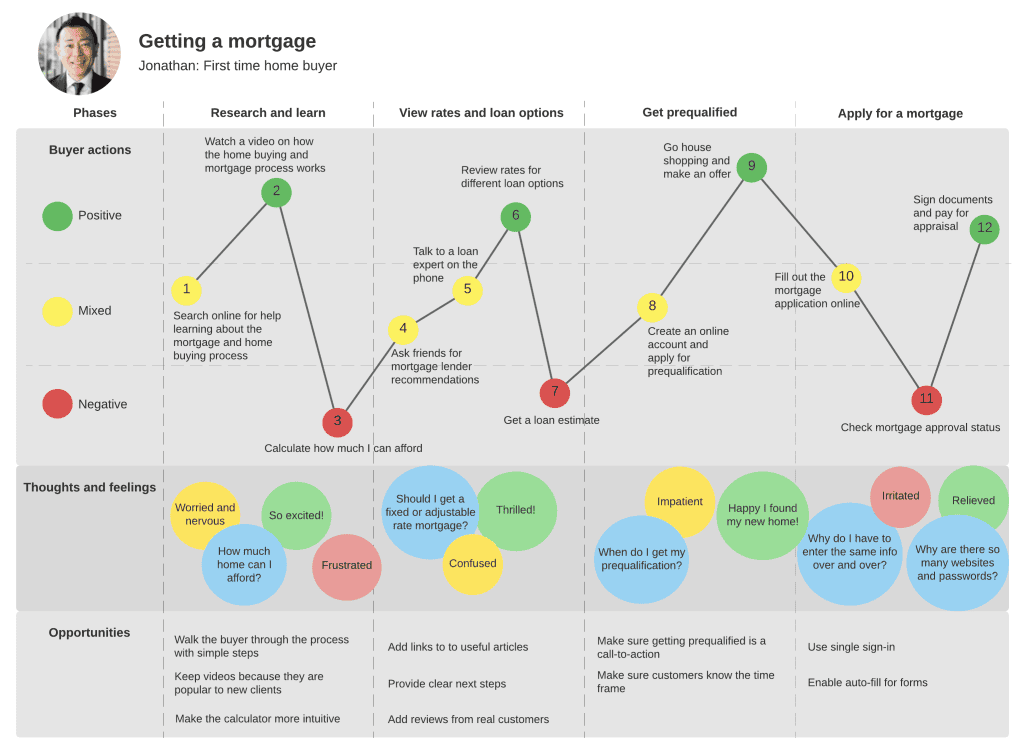
Unless you’ve been hiding under a rock for the last year or so, you know the customer journey is the hottest thing in marketing today.
If you need a refresher, here’s a good intro to the customer journey.
Predictive analytics allows you to predict where a customer is along their journey so you can provide the right information at the right time to optimize that journey — and result in a sale.
For instance, maybe my cookies show I’ve been searching for boat shoes. I’m likely on your site looking for boat shoes, so show me them on your home page. If I’m not interested, I can easily search for what I am looking for. If I’ve been looking at mortgage rates, maybe I’m also interested in living room furniture, instead of boat shoes. Don’t laugh, online retailers increasingly sell a wide range of products.
You don’t have to rely on cookies, either. Google can sell you anyone interested in anything, especially if you use Chrome and log in with your Gmail account. Then Google has a treasure trove of information about you.
Now, to some this might seem a little like stalking or kinda ‘Big Brothery’, but I’d much rather be approached about something I’m interested in buying than something I’m not — like diapers.
Segmenting consumers
Segmentation is a bastion of marketing, but it was usually pretty anemic based on demographic or geographic variables. Using predictive analytics, firms can segment their customers or prospects on many more influential variables.
Take CLV. Not all customers are created equal. Some are more important because they spend more time with you. For instance, Wal-Mart is a bigger customer for P&G than is the local mom and pop, just as a person who buys your brand every week is a bigger customer than someone who only buys your brand occasionally.

Segmenting consumers based on CLV optimizes your marketing efforts. For instance, you’re better off spending your marketing budget reaching high CLV customers than spreading your budget across all your customers.
Allow Facebook sign-in and you now have a wealth of information about prospective customers because you know who their friends are. Now they’re not JUST like their friends, but they probably share some attitudes, beliefs, and behaviors that give you clues as to how to best market to them.
Optimize deployment of resources
Company resources are expensive, and not deploying them correctly has a very high customer piss-off quotient when customers have to wait for service.
Predictive analytics can help you optimize the deployment of these resources, whether they be physical or personal. Using data, you can determine what days and times require more personnel or fewer. If you provide social services like police, fire, or EMS, predictive analytics can predict where services will be needed so you can stage personnel for quick response. For instance, I saw a case study where there was a correlation between sporting events and needs for emergency services that allowed management to reduce response time without hiring more providers.
Travel providers can use predictive analytics to determine when they’re likely to experience problems from weather or mechanical failure. Knowing what’s likely to happen helps businesses plan better and reduce the negative impact on customers.
Improved customer understanding
Predictive analytics enables marketers to gain a deeper understanding of their target market. By analyzing past interactions, purchase history, and demographic data, you can create detailed customer profiles. These insights help the firm craft personalized marketing messages that resonate with individual preferences.

Examples of this include the recommendation engines used by e-commerce firms like Amazon and streaming services like Netflix, as well as the autocomplete used by search engines. Even the search algorithm used by search engines and guides companies in creating high-performing content is a type of prediction of consumer (user) behavior. The purpose of improved customer understanding is to craft personalized messaging that benefits users, as well, by reducing the effort needed to find the items they will most enjoy from vast numbers of options.
Enhanced campaign targeting
Predictive analytics can identify the most promising leads and prospects for your campaigns. By focusing your efforts on those most likely to convert, you can maximize your ROI and marketing efficiency.
Churn prediction
Losing customers is very costly for an organization. Estimates suggest the cost of replacing an existing customer is five times the cost of keeping that customer. In the same article, they provide evidence that increasing retention by as little as 5% can increase revenue by 25-95%.
Predictive analytics can help identify customers who are the most likely to churn before you lose them, and what factors might lead to churn, so you can fix them before losing any more customers. By addressing their concerns and needs proactively, you can retain valuable customers and reduce churn rates.
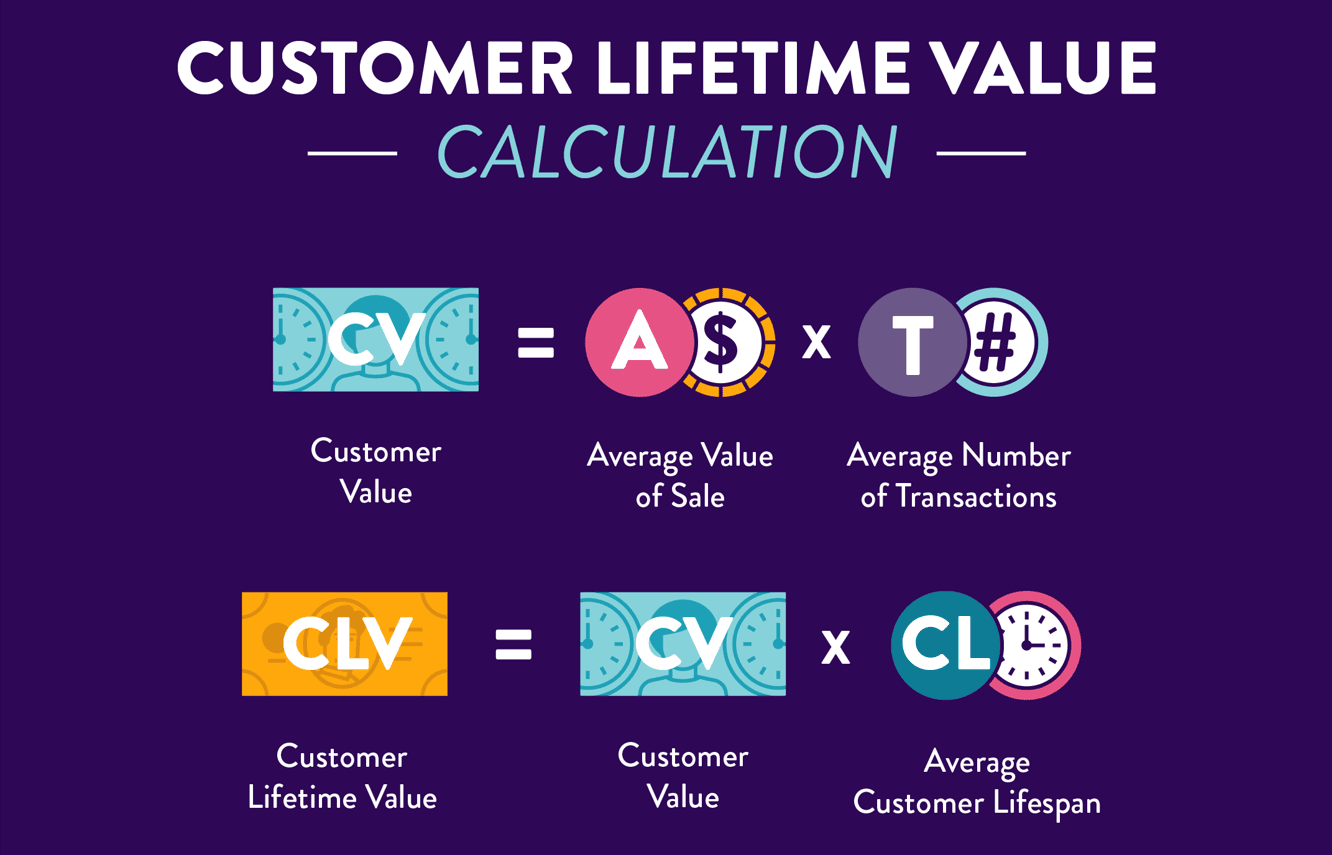
Just as it’s important to predict churn, it’s important to predict which customers represent the highest value to the firm so it can engage in efforts to keep these customers, while taking resources away from customers with lower value to the firm. Below, you can see how firms calculate the CLV (customer lifetime value) to help them get and keep the right customers.
Content optimization
Knowing what content will perform well is crucial in content marketing. Predictive analytics can help determine the type of content, headlines, and topics most likely to engage your audience. Multivariate testing using predictive analytics allows you to test an almost infinite number of combinations of these crucial elements to quickly determine the best combination, which reduces your reliance on A/B testing, which takes more time. For instance, the new version of Google Ads doesn’t ask users to create discrete ads but multiple headings, descriptions, and calls to action, which it then combines in multiple ways to quickly determine which combination will produce the highest click-through rate.
Other forms of optimization also rely on predictive analytics. For instance, airlines use predictive analytics to build complex models that constantly recalculate a ticket price based on city pairs, current percentage sold, historical sales data, and more. That’s why each seat on a plane potentially generated a different amount of revenue and represented a different passenger cost.
Campaign ROI and revenue projections
Predictive analytics can estimate the potential return on investment (ROI) for different marketing campaigns to aid in the budgeting process. This helps a firm allocate resources to the campaigns with the highest expected ROI, thereby optimizing budget allocation. Predictive analytics allows firms to do complex analyses to predict revenue changes based on company actions, such as offering a discount versus a rebate or a discount versus increased advertising spending. Thus, firms can optimize their marketing campaigns to generate the highest ROI possible.

Budgeting begins with revenue projections. Using figures like the one above, firms rely on projected sales as the starting point in determining the marketing budget; in fact, every budget in the firm. If that projected revenue is wrong, everything else in the budget quickly falls apart. Companies don’t have the right amount of inventory to meet demand, don’t have the right staffing to meet the company’s needs, have excess capital that isn’t working for them or need to borrow at the last minute to meet current needs, resulting in higher interest rates, and many other inefficiencies that result when companies budget incorrectly.
Commonly, businesses simply extend a trend line in determining the revenue for the next planning period, but there are major flaws with this simplistic method. For instance, changes in the economy like consumer confidence and inflation, changes in customer tastes, changes in competitive offerings, and more. Building a predictive model, including the impact of these variables on sales using historical data, means you have a more accurate projection of the revenue in a future period.
Conclusion
Predictive analytics in digital marketing is a powerful tool used in the right way by those with adequate training. By harnessing the potential of predictive analytics in digital marketing to guide your efforts, you can gain a competitive edge, improve customer satisfaction, and optimize your marketing campaigns. Start by collecting and integrating your data, choosing the right tools, defining clear objectives, and developing predictive models. With the right approach, predictive analytics can be a game-changer in the world of digital marketing.
Need marketing help to support business growth?
We welcome the opportunity to show you how we can make your marketing SIZZLE with our data-driven, results-oriented marketing strategies. Sign up for our FREE newsletter, get our FREE guide to creating an awesome website, or contact us for more information on hiring us.
Hausman and Associates, the publisher of MKT Maven, is a full-service marketing agency operating at the intersection of marketing and digital media. Check out our affordable coaching programs to help your business thrive into the future.
Discover more from MKT Maven
Subscribe to get the latest posts sent to your email.


This is very nice article. I also come across a new tool which will be useful for others also
Its available on http://twitics.co
Hi, Angela!
Excellent article on predictive analytics. Enjoyed a lot while the article. Well said analytics is very important for businesses to their customer well and provide services accordingly. Marketers are trying their best to get each and every information related to their customers so that they can make more targeted strategies. Implementing social login is one of the revolutionary methods that help you to get first-party data and analysis your customers at more advanced level.
Thanks for your kind words.