 logo

If you’ve read my blog over the last couple of months (and you really should), you know I’ve been laser-focused on updating small businesses about threats to their survival posed by changing tech and consumer behavior. Today, let’s discuss three massive marketing mistakes you might be making, without realizing it, that make you invisible to AI agents. We’ll start by discussing what AI agents are and why they matter if you want your business to survive.
What are AI agents?
If you’ve never heard about AI agents or agentic marketing, it’s the newest thing interfering with your ability to reach prospective buyers who search for related products. We first noticed these AI agents answering the queries posed by users who search Google and other engines for answers. These AI agents are adept at translating user intent, conducting research, and making decisions about content that best addresses the user’s query. Now, they’ve become true agents capable of making transactions on behalf of humans through natural conversations.
It’s one of the massive marketing mistakes to underestimate the impact of these AI agents on your digital or even physical marketing efforts. Using tools like Google’s Vertex AI, these AI agents are capable of:
- Reasoning: using logic and available information, the AI draws conclusions, makes inferences, and solves problems based on data to make informed decisions.
- Acting: they perform tasks based on decisions, plans, or external input. This includes physical actions when using embodied AI, or digital actions such as sending messages, updating data, or triggering other processes.
- Observing: by gathering information about the environment or situation through perception or sensing. This may be perception, such as computer vision, natural language processing, or sensor data analysis.
- Planning: AI agents with planning capabilities can identify the necessary steps, evaluate potential actions, and choose the best course of action, considering potential obstacles and the outcomes of each action.
- Collaborating: by working effectively with others, both humans and other agents, to reach intended goals by communicating and working effectively with both humans and machines
- Self-refining: AI agents with self-refining capabilities can learn from experience, adjust their behavior based on feedback, and continuously enhance their performance and capabilities over time.
And you can expect these capabilities to grow and become better over time, as technology advances, other devices integrate with the AI agent, and humans become more facile with them.
Your customers and prospects, especially those in a B2B industry where early adoption is most likely and costs are a lesser concern, will soon find that these AI agents not only find purchase options, but also compare them based on price and specifications, then make a decision leading to a purchase, taking the decision away from humans to optimize purchases for the buyer. One of the massive marketing mistakes is to ignore the potential of these agents to reduce the effectiveness of your marketing efforts, rather than make adaptations today that make your products more attractive to AI agents, so your products are the ones purchased.
What does this mean for marketers?
- Your Audience Has Expanded because you’re marketing to both humans and agents
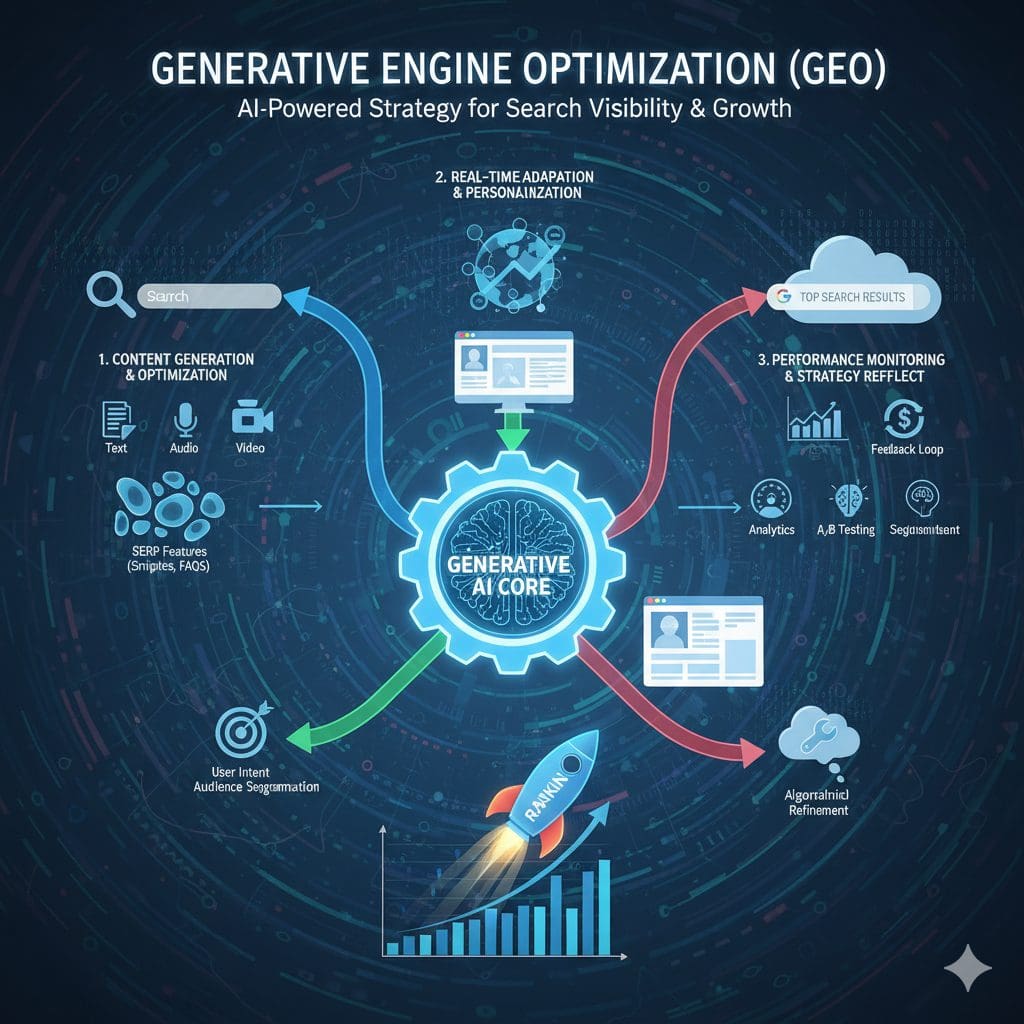
- Clarity, Transparency, and Structured Data are Paramount. This is the same advice we gave you when discussing the transition from SEO to GEO (generative engine optimization). You should read that post to learn how to provide this structured data to the AI agent.

- Semantic Markup: Implementing schema markup (like Schema.org) to clearly define your product, price, reviews, and availability.
- API Integrations: Exploring ways for agents to directly query your inventory, booking systems, or service details.
- Simple Language: Avoiding jargon and crafting content that is easy for a machine to process.
- The era of “Invisible” Conversion Paths is here, which means you need to move beyond analyzing website analytics to consider agent-driven conversions to adapt to the factors these agents consider in completing a transaction. You also need to focus on trust signals because agents are programmed to prioritize sources that demonstrate these with a stellar reputation, positive reviews, and robust privacy policies.
- The battle for agent loyalty over customer loyalty by focusing on providing clear information and frictionless transactions, which you should already be doing to appeal to human decision-makers.
3 massive marketing mistakes that make you invisible to AI agents
If you’re not using AI yet, you’re making one of the massive marketing mistakes that can not only reduce your competitiveness but also result in higher costs as you seek to meet your content creation needs. Without this expertise in using AI, your business is already behind the eight ball when you must now consider adapting to the fact that AI might now be your primary customer, especially in B2B industries, but, over time, you’ll find them increasingly directing consumer purchase decisions.
Prospective buyers no longer scroll through links on a search engine; they’re asking AI agents, like ChatGPT, Gemini, Claude, or any one of a burgeoning number of AI tools. This is agenic marketing and it’s here to stay, growing in usage almost daily. For instance, a user might ask an AI agent to find a vacation, complete with flights, hotels, rental cars, and excursions in their destination. If you’re not in the mix of options offered to the user, you’re making one of the massive marketing mistakes that might cost you your company’s future. You’re now invisible as an option for users to consider when making a purchase if you’re making any of these three massive marketing mistakes.
Here they are:
Massive marketing mistakes: #1 Speaking only to humans and ignoring schema
AI agents are smart, but they’re also dumb. They’re trained on massive amounts of online content from which they build algorithms to answer users’ questions, hence the name large language models (LLMs). They don’t care about emotional content to drive decisions the way humans do. They look at how you’ve structured the content. Do you make it easy for the AI agent to ingest your content by structuring it with not only headings, but also lists and how-to schema? Adding a table of contents to your content helps AI agents find and categorize your content.
AI agents are incredibly smart, but they are also literal. When they scan your site, they aren’t looking for witty puns or emotional storytelling first; they are looking for structured data. The mistake is constructing your content the way you always have, with big images and bold text, which machines don’t interpret well.
This is one of the common, but one of the massive marketing mistakes we see businesses, especially the small businesses whose owners and managers read my content, making because they just don’t understand how AI and AI agents have changed what works in content creation.
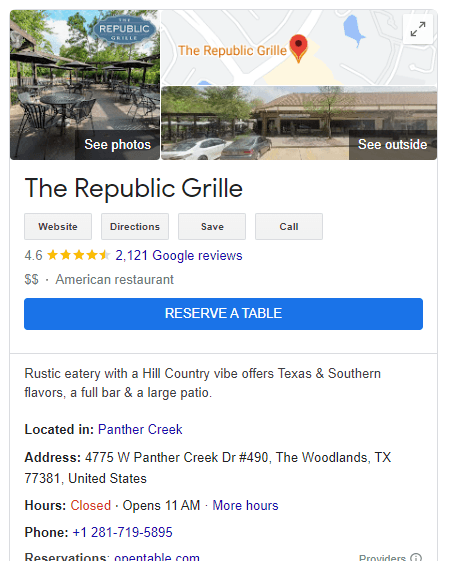
The fix involves using schema markup or structured data for Product, FAQ, and LocalBusiness schema (see above for an example) on your site. There are multiple ways to implement this schema markup. One way, especially if you use a CMS like WordPress, is to add a plugin to offer these markup options to use when you create content. You’ll need to use the block editor option within WordPress rather than the classic editor you might be more used to. It’s well worth the effort required to learn this option if you aren’t already familiar with it.
If you’re not using a CMS that offers a plugin to handle schema markup, you can use a tool like Google’s Structured Data Markup Helper to create the appropriate HTML, which you then add to your content. This helps you recover from one of these common massive marketing mistakes by providing insights to your content in an AI agent’s native language, which is JSON-LD.
Massive marketing mistakes: 2 Hiding critical data behind gates
For years, companies were advised to hide pricing and detailed specifications behind a “Contact Us for a Quote” form as a tool for using lead generation to funnel prospects through your salesforce. In the age of Agentic Marketing, this is one of the massive marketing mistakes companies make when they don’t understand AI agents.
Thus, it’s a mistake to gate information because an AI agent won’t consider your product when making recommendations or purchases for a user. You can’t expect an AI agent to include your information and wait to hear from a rep after filling out the quote form. Besides, even humans want to know the cost before asking for specifics to ensure their decision fits within their budget before spending time and effort to add the product to their list of options.
I once discussed this with a pool installer, who said he really cleaned up by including pricing and images for completed projects, along with basic pool prices based on pool size, to visitors. Obviously, this wasn’t a firm quote, which most visitors understood, but allowed them to decide whether the firm’s pricing fit their budget.
This fixes another of the common massive marketing mistakes that make you invisible to AI agents.
Massive marketing mistakes: #3 Writing only for SEO and ignoring GEO
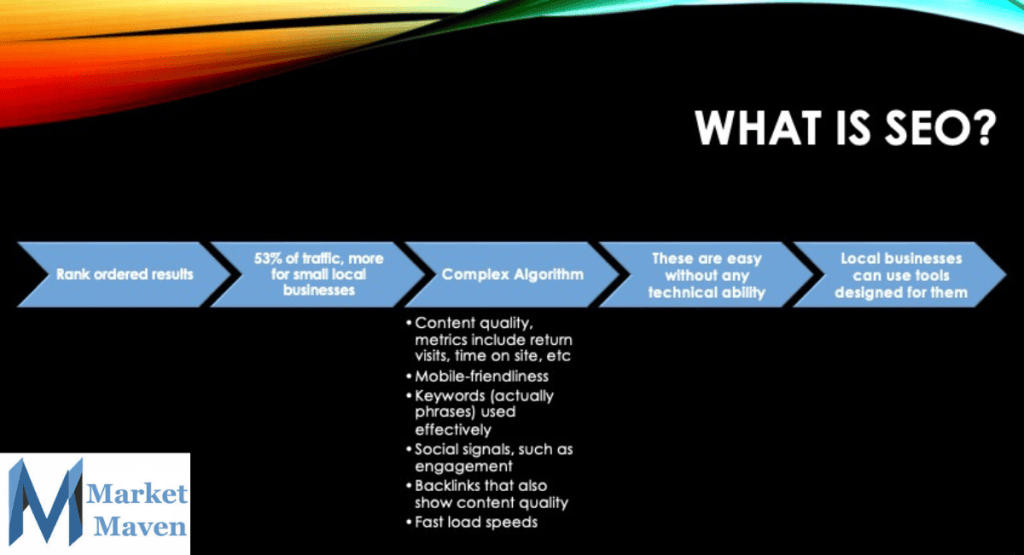
You still need to write for SEO (search engine optimization). which means using keywords, gaining backlinks, and other tactics (see image below).
But you also need to write for GEO (and by extension, AI agents). This means you need to encourage them to include your content in the answers provided to users. It focuses on gaining brand recognition rather than clicks. Of course, you’ll still get clicks when the answers tantalize users to visit your site to get a more robust answer or more information.
This is one of the massive marketing mistakes that involves creating fluff pieces that don’t provide valuable information. AI looks for information density when considering offering your content in partial answer to a user’s query.
Fixing this requires you to adjust your content creation to be more than an abstract or something written to entice visitors to consume more pages of your content. This is also called AEO or answer engine optimization. To do this, consider the types of questions your target market might ask, then create content that provides facts, data, and directives that address these questions.
Conclusion
The gatekeepers have changed. We are moving from a visual web (designed for eyes) to a semantic web (designed for logic). If you fix these three mistakes, you won’t just survive the AI shift—you will become the trusted source that the agents recommend first.
Need marketing help to support business growth?
We welcome the opportunity to show you how we can make your marketing SIZZLE with our data-driven, results-oriented marketing strategies. Sign up for our FREE newsletter, get our FREE guide to creating an awesome website, or contact us for more information on hiring us.
Hausman and Associates, the publisher of MKT Maven, is a full-service marketing agency operating at the intersection of marketing and digital media. Check out our full range of services.
Discover more from MKT Maven
Subscribe to get the latest posts sent to your email.


