 logo

Running a small business means you never have enough time or money to do what you need to do, so marketing is often relegated to a “nice to have” instead of a “must have”. That means marketing on a tight budget, but it also means you must add “marketing expert” to the many hats you must wear. That’s because without effective marketing, there’s no way your business can succeed, especially if you’re up against larger or more established competitors with deeper pockets, an established brand image, and a depth of marketing talent.
Thus, marketing on a tight budget is challenging, straining both financial and human capital resources, but there are at least six ways that can help you stretch those resources. Add to this the nimbleness of a small business and its blank slate when it comes to branding, and you may even have an advantage over your competition in a rapidly changing marketplace.

Table of contents
Develop a strategy for marketing on a tight budget
Creating and publishing content without a well-defined strategy adds to your costs and reduces the quality of your results. Doing so can also tarnish or dilute your brand. Before you start a content marketing campaign, you should have a strategy that includes some basic elements:
- Achievable and measurable goals that support your overall business plan. Start simple and make sure everyone on your team understands what they are trying to accomplish.
- Research that discovers the needs, problems, questions and desires of your readers. Your research should include a study of the content published by your competitors.
- Performance measures that help you determine the effectiveness of your content. You’ll need to know what you’re trying to accomplish.
- Decide what types of content you will produce and where you will publish it by learning the favorite venues of your target market.
- Schedule your content so you have a steady flow of new material that keeps your audience coming back.
Marketing on a tight budget
When you lack the deep pockets of a big corporation or the established loyalty that comes from an established brand image, you need to get the word out there so your target market knows about your brand, what it stands for, what products you offer, and why they should buy your products over those offered by competitors, such as higher quality or better fit to their unique needs. That means focusing on your values and the benefits you offer that make your brand a better choice.
If you’re the kind of business owner who prefers to get your content on a visual platform, rather than reading a detailed post about the tools you need for marketing on a tight budget, here’s a video created as part of my Marketing Your Small Business video series.
1. Master local SEO
Most small businesses cater to a local market. This includes service businesses, like plumbers, lawyers, and salons, and retail businesses, like restaurants, boutiques, and shops. That makes local SEO (search engine optimization) an indispensable tool in reaching local customers. Google Business Profile is a free tool created to help market your business to local consumers. With an optimized profile, you appear in the 0 position, above organic search results with an enhanced listing, such as the one below for doctors near me.
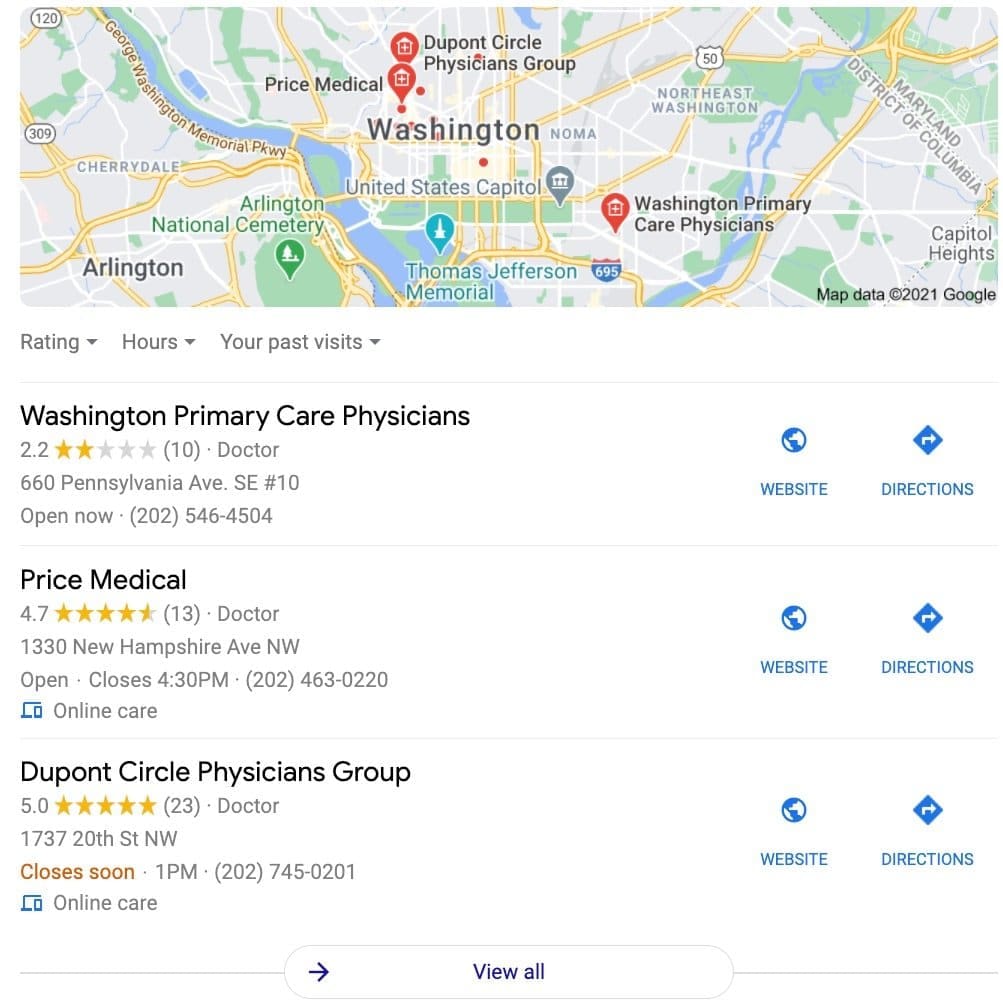
Mastering local SEO takes some time and effort, but, as you can see in the listing above, the results can drive new customers to your business and help existing customers learn more about you, such as whether your business is currently open and how others review your business.
Start by claiming your profile and filling it out completely. Update information as your hours change, even a temporary change for holidays, and you add new products or eliminate old ones. Encourage customers to leave reviews and engage with those who interact with your profile.
2. Content marketing is king
Content drives SEO and GEO (generative engine optimization – which means showing up in those AI snippets that increasingly show up to answer users’ queries without requiring a click on content links). Since these two search optimization tools are key to marketing on a tight budget, you should work to create fresh, valuable content on a regular basis. Focus on quality rather than quantity.
In most cases, your blog will be the cornerstone of your content marketing effort.
And, you don’t have to spend much money to get your blog started, making it perfect for content marketing on a tight budget. After choosing a domain name, based on keywords, and a web hosting service, you can set up WordPress, a powerful, free website development tool that is one of the world’s most popular systems. And, if you think building a website is expensive, you can build one for around $150 by doing it yourself. How’s that for marketing on a tight budget? And, you don’t have to write a single line of code. I wrote an ebook that steps you through the process with tons of screen grabs and suggestions for powerful, yet inexpensive (or free) tools that you can use to create a website in an afternoon with no prior experience or coding.
You can create your content by yourself to save the expense of paying a professional writer to do the work, if you’re on a really tight budget. Depending on the situation at your company, you might be able to share the load with your team members, if you can do so without overloading them or distracting them from their primary responsibilities. Remember, even with a tight budget, you have to balance content marketing with the other tasks necessary to run your business.

AI is a great tool to help with your content marketing needs. I use Gemini (which is about $20/ month) to create drafts of content and images that I significantly edit to meet my needs. Remember, copying and pasting this content is often considered duplicate content that won’t help your SEO or GEO. AI content is also often wrong or too low quality to really help you. But a solid draft cuts your writing time and helps you think more broadly about topics where you’re already an expert. User-generated content is also a great idea, so hosting contests or accepting guest posts from readers is a great way to produce quality content without the time needed to create it from scratch.
Hiring freelancers can also help you get the content you need, often for a price range of $20 to $30 per article or a firm like ours to manage the entire content marketing process from strategy to analytics.. Of course, you can also hire a remote worker whose sole responsibility is publishing content for your blog. Regardless of the option you choose, you might be surprised at how little your blog can cost.
3. Build engagement on social media
Social media isn’t the place to advertise your brand or toot your own horn. It’s a place to build an engaged community of followers interested in what you do. It’s a place to share your blog posts, offer advice, demonstrate your commitment to the values you say are important to you, and create unique content that your community will love.
TikTok and Instagram Reels are great places for short-form video content, while YouTube is great for longer videos. You don’t have to create studio-quality videos and, in fact, less perfect videos convey more authenticity and build better engagement than more professional ones. If you want information about how to create videos when marketing on a tight budget, I created a post that helps, including suggestions for topics and the tools you need.
While video dominates social media views right now, other types of posts can supplement them and are useful on platforms that don’t feature videos prominently, such as LinkedIn.
In addition to posting content, you build engagement by interacting with your followers.
-
- Respond to queries and comments quickly,
-
- Never hide negative comments. Instead, respond with empathy and transparency. Detail how you’ll fix the problem and reduce the chances it will recur.
-
- Use contests, polls, and ask questions to solicit user-generated content.
-
- Join groups related to your market niche and your community. Offer helpful and valuable comments, not sales pitches.
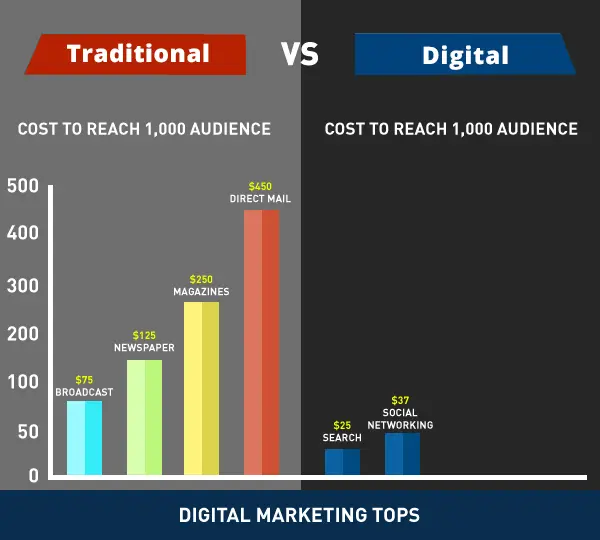
Also, consider advertising on social platforms to build your following, remind customers to come back, and promote your offerings, such as events. While advertising isn’t free, digital advertising fits into the notion of marketing on a tight budget because it’s very effective relative to its rather low cost.
4. Email marketing is the most effective, lowest-cost option
The ROI of email marketing is the highest of any marketing option, making it a must for marketing on a tight budget. While estimates vary, the average ROI is around 4000%, which is awesome.
Email marketing is a two-pronged strategy, as you must first build your subscriber list (most countries don’t allow you to buy, rent, or borrow another company’s email list), then send targeted messages to segments of your subscribers. The greater the personalization used in sending these messages, the more effective you’ll find your marketing program.
5. Partnerships are valuable
Marketing on a tight budget doesn’t mean you have to do everything on your own. Instead, consider cross-promotions, such as a local gym partnering with a boutique that sells workout clothing. You can split the cost of a digital ad or host a contest with products from both companies as prizes. Or you can swap guest posts that might interest your target market. Finally, you might mention your partner in your newsletter or share their promotions on social media. Tit for tat is a powerful tool for marketing on a tight budget.
Partnering with small influencers with an engaged following is another type of partnership that benefits your small business without a huge cost. Often, the nano-influencers will promote your brand or review your products in exchange for free products or a small payment.
6. A referral program
In marketing, we have the concept of market mavens who know a lot about a particular market niche. They love to talk about their favorite products in this niche, especially new products entering the market. Similar to nano-influencers, you can create a referral program where customers are rewarded for bringing in a friend who signs up for your SAAS products or buys a product from you.
You can offer these referrers a discount on their next purchase, lower their monthly costs for subscriptions, or create exclusive products only available to referrers.

Conclusion
Without effective marketing, you’ll struggle to simply survive as a small business, let alone to thrive. With these six ways for marketing on a tight budget, you’ll find you can do successful marketing without a huge budget or the stress of overburdening yourself or your staff.
I’d love to hear from you. Write in the comments below if you’ve used any of these ways to market your business and how it worked out for you. Other readers might find your comments valuable. Let’s build a community where readers help each other succeed.
Need marketing help to support business growth?
We welcome the opportunity to show you how we can make your marketing SIZZLE with our data-driven, results-oriented marketing strategies. Sign up for our FREE newsletter, get our FREE guide to creating an awesome website, or contact us for more information on hiring us.
Hausman and Associates, the publisher of MKT Maven, is a full-service marketing agency operating at the intersection of marketing and digital media. Check out our affordable coaching programs to help your business thrive into the future.
Discover more from MKT Maven
Subscribe to get the latest posts sent to your email.


