 logo

What is the marketing mind? Simply put, the marketing mind combines an analytical approach to marketing with creativity that aligns with the way real consumers make decisions, which is much less logical than is often envisioned by non-marketers. Even B2B firms make buying decisions based on a myriad of variables, not all of which are purely logical.
 Thus, marketing is much less a function of catchy jingles or celebrity endorsements and more based on a marketer’s ability to understand how their efforts encourage consumption of their products, using data to support their improved understanding of their target market. Read on to learn how to develop a marketing mind and which factors interfere with a consumer’s decision to plunk down their hard-earned money.
- The marketing mind
- The analytical marketing mind
- Sharing the marketing mind
- Data helps tailor content
- Why high demand fails at the checkout line
- The marketing mind: mapping the consumer decision-making process
- 1. What factors interfere with cognitive decision-making
- 2. Factors that influence our buying behavior
- 3. Group influences
- 4. Emotional decisions
- 5. Personality
- Conclusion
- Need marketing help to support business growth?
The marketing mind
Take a look at the image above (if you have trouble reading it, simply click on the figure to enlarge it). The image shows a look inside the marketing mind.
Dividing the brain into 2 hemispheres (unfortunately, a division of labor that has fallen out of favor in the medical community) makes the distinction between analytical and creative aspects of marketing. In the not-too-distant past, these activities would have been similarly divided, with the IT and Finance functions concerned with analytical components and marketing/ sales folks owning the creative components of marketing. Just as the notion that the 2 hemispheres of the brain function independently has been debunked, so has the functionality of dividing analytical and creative activities between different departments or functional areas.
Today, I’d like to focus on the data side of the marketing mind. For more on the creative side, check out my posts on content marketing. Following this, we’ll discuss how knowledge of the consumer decision-making process, combined with data, helps you supercharge your sales. So, read on!
The analytical marketing mind
It wasn’t so long ago that marketing was dominated by creatives and quantifying marketing performance relied on squishy metrics such as ad recall and reach, which are only loosely related to sales (if at all). Today, properly constructed marketing efforts generate a host of metrics that help businesses optimize market performance in terms of sales, conversion rates, AOV (average order value), and customer acquisition — things that translate to the firm’s bottom line.
Based on the infographic, data analysis generates 7X as many inquiries and 4X as many leads compared to firms who don’t analyze such data. I leave it to you to see other benefits of having an analytical marketing mind.
Caveats:
All data has a cost. Those costs may reflect costs to gather, analyze, and store the data. Or, the cost may reflect annoyances to prospective customers that might interfere with conversion–opportunity costs. Either way, you should only collect data that help improve your marketing efforts to reduce these costs.
Data quality is another critical consideration as well. Bad data leads to bad decisions, and the prevalence of inaccurate data makes this a serious concern. Data mistakes come from a variety of sources, but the most common is human error–either the data was input incorrectly or there was a problem constructing the database. Sometimes, data errors come during analysis when data are combined without a clear understanding of the data contained in the database. For instance, combining inquiries with conversions would be inappropriate, but if analysts don’t clearly understand what is in the database, they might make such a combination.
Companies with clean data are 3X more likely to see revenue growth.
Data analysis and application
In the old days, marketing or someone in the C-suite might ask a business intelligence employee to create a report that could run daily, weekly, etc., or a custom report. The request might take days or weeks to complete. Plus, without a clear understanding of the consumer decision-making process, the report and its interpretation might yield inaccurate decisions.
Today, we need up-to-the-minute data, often in real-time, and our data needs change frequently. Hence, marketers must become more analytical, with the ability to query databases using SQL, Python, and other tools. At the same time, traditional marketing research is less about surveys analyzed using SPSS and more about qualitative data collection using text analytics, as portrayed below.
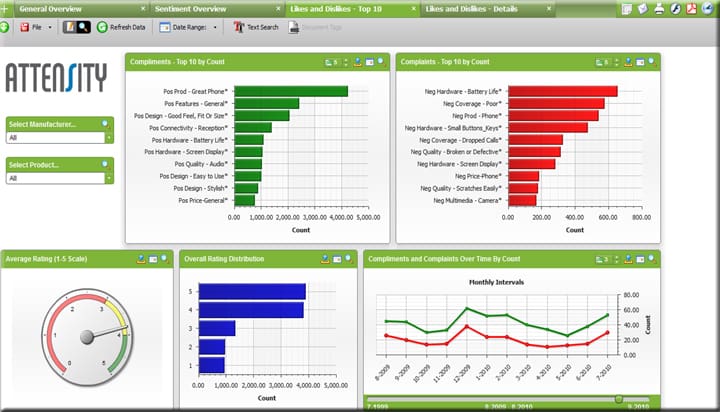
Data analysis has moved beyond targeting, to focus on marketing personas, which contain rich behavioral and psychographic data in addition to demographics.
Sharing the marketing mind
Data must be shared among the various folks who’ll use the data–such as sales, creative, operations, NPD (new product development), and other functional areas. Holding the data hostage with only a few people able to access it is counterproductive. The same goes for politics in developing a data-driven strategy.
Aligning the creative with data is necessary to optimize market performance. Good, quality, fresh leads need to go out to the sales force (who also need to funnel insights back to the corporation rather than hold them close to the chest). Creative needs to understand which offers, headlines, images, sharing options, and posting schedules are most effective, they need to understand how and why subscribers respond to email messages, they need to know which social media strategies are working best on which platforms. Helping creatives glean actionable insights from the data is critical for performance.
And that’s why it’s often ineffective to use statisticians or other data crunchers for data analysis. It’s not that they aren’t experts at data manipulation because they are. But without an understanding of marketing concepts, these data jockeys don’t know WHAT to look for, as not all metrics that contribute to market performance are obvious to those without such training. By the same token, data analysts might have a hard time translating the data into action for creatives who may also not have a good understanding of marketing concepts.
Hence, someone needs to bridge the hemispheres between data and creatives.
Data helps tailor content
Another way in which the complete marketing mind facilitates market performance is through using data to tailor content to individual users. For instance, knowing that a particular visitor is interested in a particular product and how they’ll use that product, helps creatives tailor their content to better align content with the needs of that customer. Knowing where a customer is along the journey toward conversion and loyalty also helps creatives craft content that specifically addresses concerns a visitor might have based on their own customer journey. Knowing how to effectively address these concerns leads to improved market performance.
Why high demand fails at the checkout line
Part of the marketing mind is understanding which metrics matter and what insights those metrics provide to drive strategy. Rather than focusing on vanity metrics, like impressions, follower counts, and click-through rates, businesses must concentrate on metrics that translate into sales, loyalty, and higher AOV (average order value). Even armed with metrics that can improve performance, businesses that don’t understand why demand doesn’t translate into sales, but stalled deals, leads that evaporate, and abandoned shopping carts.
The answer lies in not understanding how consumers move through the journey from awareness to conversion, and beyond to repeat purchases, if not loyalty. Moreover, they fail to account for the forces that influence or interfere with purchase intentions from coming to fruition. Thus, unlike the traditional vision of the customer journey as a funnel where adding more prospects at the top increases flow through to conversion, I envision that journey as a series of concentric circles where consumers flow both forward and backward, or get stalled along the way.

Adopting a marketing mind requires not only arming yourself with metrics that provide the insights needed to develop winning strategies, but also clearing these roadblocks that can thwart your efforts before resulting in sales.
The marketing mind: mapping the consumer decision-making process
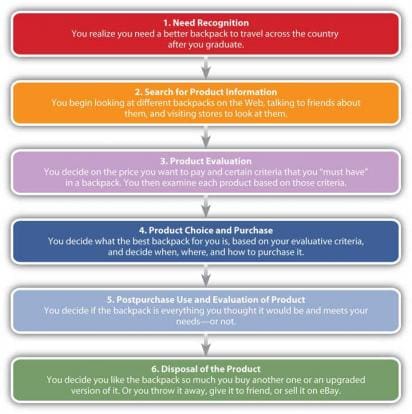
While decision-making involves a logical progression through the various stages shown in the image below, this doesn’t tell the entire story. According to modern psychological theories of decision-making, there are two pathways: a cognitive one and an emotional one. The image shows only the cognitive pathway. As we’ll see later, various factors interfere along the way toward conversion, as well as reasons for converting to the emotional pathway. According to multiple sources, emotions influence between 70 and 90% of all consumer decisions.
1. What factors interfere with cognitive decision-making
The following are common factors can interfere with cognitive decision-making:
- Friction in the buying process, such as
- too many clicks
- requests for too much personal information or a login
- unexpected shipping fees or other costs
- projected shipping delays
- insufficient payment options or financing for large expenditures
- Too many options that increase cognitive load
- Conflicting reveiws
- Time pressure forces an immediate decision
- Competing priorities
- Lack of availability
- Risk aversion
2. Factors that influence our buying behavior

In the image above, you see a variety of factors that influence buying behavior. These include:
- Personal factors
- Psychological factors
- Cultural factors
- Social influences
3. Group influences
None of us live in a vacuum; we’re surrounded by influencers, from close ones, such as family, friends, and colleagues, to commercial ones, including advertising and promotions, to others, such as online influencers and even folks in a retail venue who share their advice. Even observing a positive or negative interaction between a consumer and a business representative can influence our purchase decisions.
Something as simple as seeing images shared on Instagram showing a particular venue, product, or environment can influence our decisions. These tacit endorsements, especially from those we admire, have a subtle way of worming themselves into our thought processes in ways we might not even notice. Maybe you see a post showing a family on vacation at a theme park. Even though you never considered visiting the park, all of a sudden you can envision happy days spent with family at the park. Or you view the happy family and become depressed because you don’t have close family to share vacations with.
Group influences are particularly powerful in influencing decisions, so they warrant a separate discussion. We each feel pressure to conform to the norms of our social groups, whether that’s family, friend groups, religion, or national culture. These norms influence our buying behavior, as you can see below, but only because we care about how we view ourselves and how we think others view us. Without our willingness to adhere to normative behavior, norms have no influence.
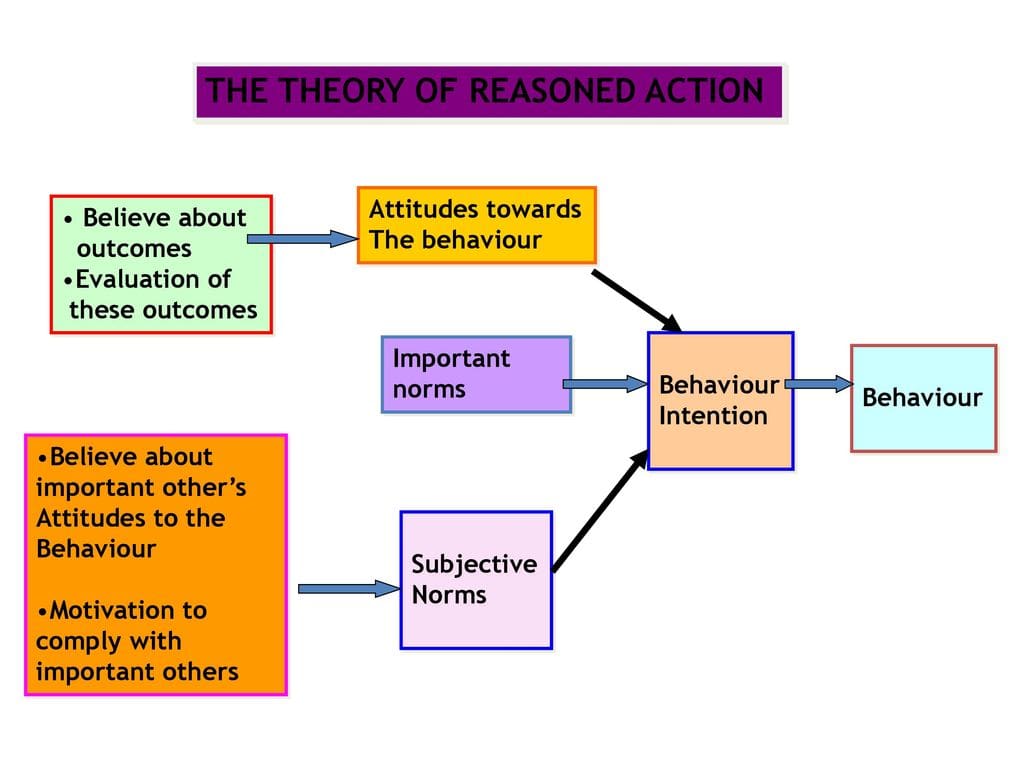
Sometimes these norms are consistent, driving consistent buying behaviors. More often, they’re in conflict, and our buying behavior might be situational, based on which normative group we feel is influencing a particular decision. Potentially, even the venue, those around us, and shopping companions can influence the primacy of our various norms.
4. Emotional decisions
As stated earlier, emotions influence at least 70% of consumer decisions, whether for individual consumers or businesses (which are less committed to cognitive decision-making than you’d think). Emotions help us set priorities and influence our wants. For instance, hunger is a basic human need, but emotions might influence our choice of how to satisfy that hunger. The fact that McDonald’s supports families with sick children might influence your choice of a Big Mac, while having a celebrity endorse a product after being accused of bad behavior might convince you to avoid it. Primary emotions directing behavior are:
- Fear
- Anger
- Happiness and joy
- Sadness
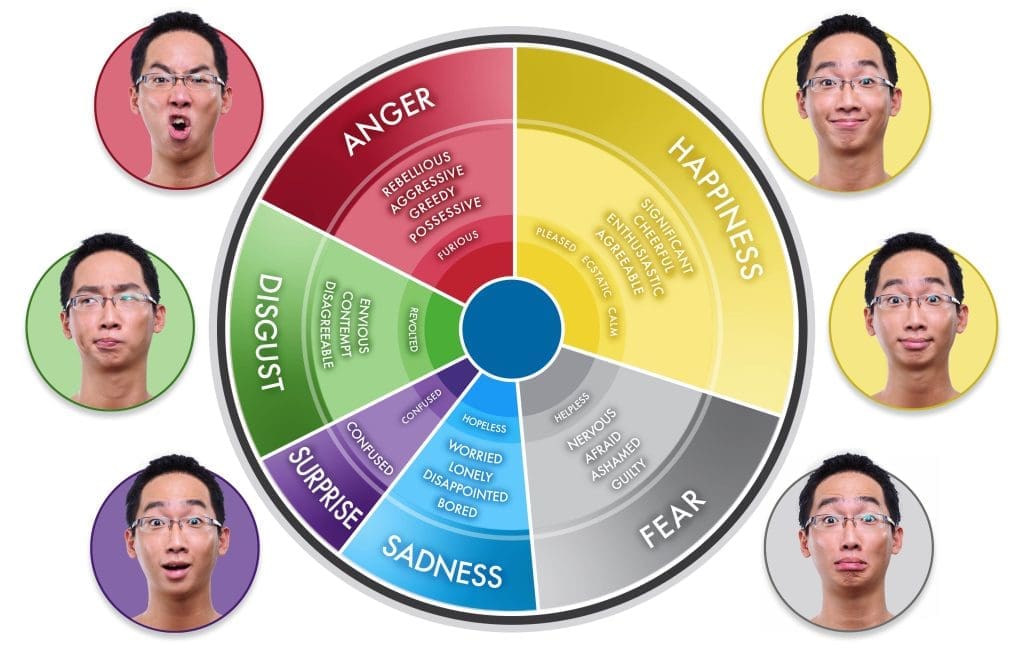
Businesses practicing a marketing mind might manipulate these emotions in their advertising or promote their contributions to society.
5. Personality
Personal factors, such as age, income, and lifestyle, impact the choice of products to fulfill your needs, but personality impacts your choice of brands, how you make decisions, and, through its influence on your social group, how others impact your brand choice. For instance, a wealthy consumer might choose a Rolex when she needs a new watch, while a younger person might choose an Apple Watch because others they know own one.
Meanwhile, a person high in innovativeness might quickly adopt new technology, while someone lower on this personality trait might become a laggard or non-adoptesomeone high in innovativeness might quickly adopt new technology, while someone lower on thisr. Below are the major personality traits that impact buying behavior.

Conclusion
Adopting the marketing mind allows you to understand your market at a deeper level, both through a focus on the types of metrics that offer insights that drive strategy and by understanding how consumers make decisions and what influences those choices. Applying a marketing mind in building strategy encourages businesses to focus on:
- Content creation at each stage of the customer journey, rather than just at the top
- Limiting choice to a few options through filtering to reduce cognitive load
- Using social proof to allay risk and fear
- Streamline your purchase process
- Ensure clear, direct, accurate product information
- Allow easy returns and offer guarantees of satisfaction
The marketing mind encapsulates the entire marketing structure rather than occupying a single unit within the department.
Recognize that consumers don’t always make snap decisions about purchases. Adobe research finds that less than 1.5% of conversions happen during that first visit. While ultimately 84% of those with intent will likely convert over time, it’s essential that businesses employ a marketing mind beyond the initial visit by engaging in effective lead generation, including:
- Retargeting campaigns
- Lead nurturing campaigns via email and SMS
- Reaching out when a visitor leaves a product in their shopping cart with incentives to complete the sale
Need marketing help to support business growth?
We welcome the opportunity to show you how we can make your marketing SIZZLE with our data-driven, results-oriented marketing strategies. Sign up for our FREE newsletter, get our FREE guide to creating an awesome website, or contact us for more information on hiring us.
Hausman and Associates, the publisher of MKT Maven, is a full-service marketing agency operating at the intersection of marketing and digital media. Check out our affordable coaching programs to help your business thrive into the future.
Discover more from MKT Maven
Subscribe to get the latest posts sent to your email.


Excellent article, thanks to the author. Now I’m interested in video marketing, I think that now it is the best tool for promotion. Perhaps could you tell me which format would be perfect for a new travel agency? I would like to make the video with the high conversion in the Instagram. Just interested in the question, what company can do the high quality video? I have a couple of options, but I can not choose.
Thanks. Video is an excellent tool, especially in your industry. I can’t comment much on platforms or companies, but I can say that the key to successfully marketing travel using video requires that viewers see themselves in the video and that they see personal aspects of the travel experience.
thank for all about those knowledge and informationabout this subject
thanks Angela for these information .please i would like to send me your link about your book data driven social media marketing please
Thank you