 logo

A lean startup is probably the hottest concept in entrepreneurship today. Maybe you’ve heard of it, but you’re not quite sure what all the hype is about. Well, the father of lean startups, Eric Ries, sums up the lean startup concept:
The Lean Startup provides a scientific approach to creating and managing startups and get a desired product to customers’ hands faster. The Lean Startup method teaches you how to drive a startup-how to steer, when to turn, and when to persevere-and grow a business with maximum acceleration. It is a principled approach to new product development.
The lean startup process looks like this:
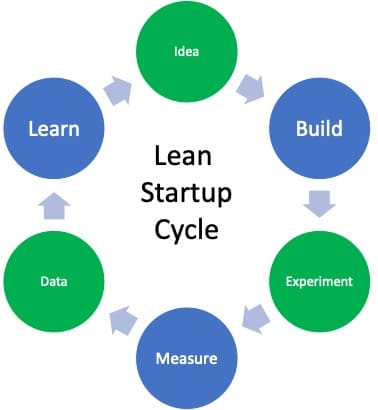
Embedded within this process is the concept of failing fast — in other words, learning quickly whether there’s a market for your great idea and whether what you’ve planned solves a consumer problem faced by real people at a price consumers are willing to pay.
Lean startup versus traditional entrepreneurship
The high failure rate with traditional startups
According to the Harvard Business Review, the concept of a lean startup changes everything in the startup ecosystem. One of the most significant differences between a lean startup and traditional entrepreneurship is that the latter delays market testing of a new idea until months or years (and thousands or millions of dollars) have been spent developing your idea into a new product or service that consumers might soundly reject. Yet, despite careful planning, time, and money being poured into the venture, 75% of startups fail, according to a new study by Harvard Business School and Dr. Ghosh. As you can see in the image below, the fundamental reason why these startups fail is there was no market need for their product either because an existing competitor already satisfied the consumer need adequately, consumers didn’t like your company’s solution, or there was never any problem corresponding to the one your product is solving.
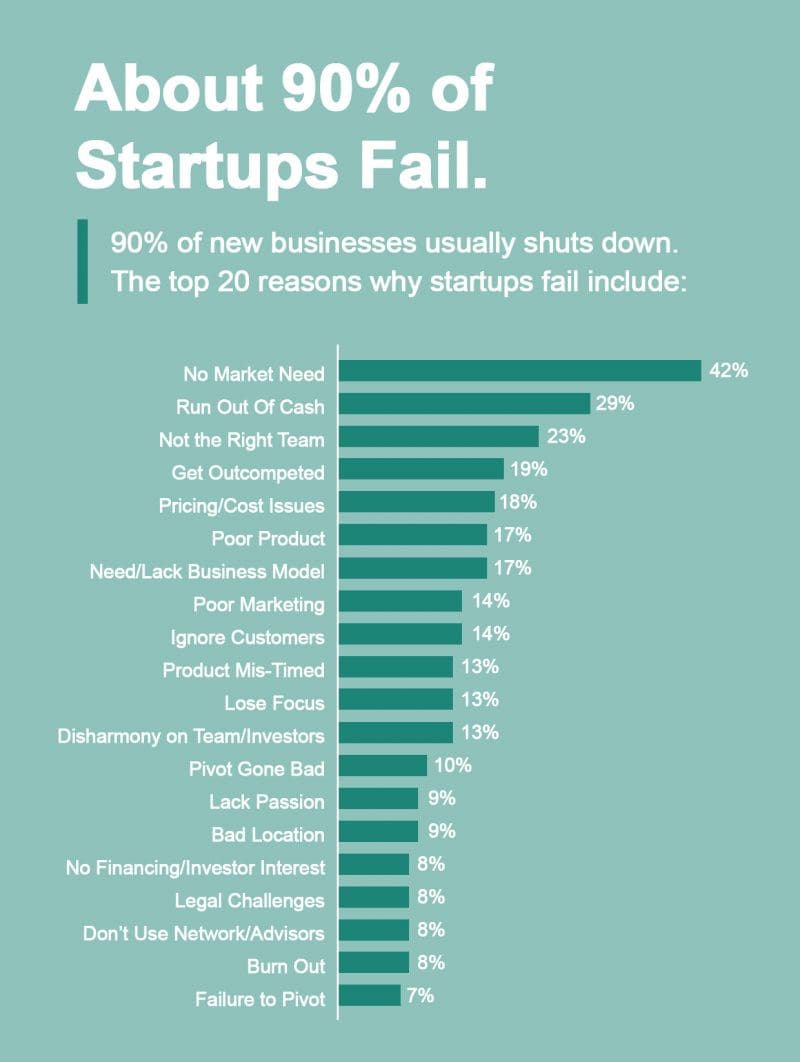
In my experience working with the SBDC (US Small Business Development Center) and private clients, my guess is the 75% failure rate actually underrepresents the actual number of startup failures and that the true failure rate is closer to the 90% portrayed in this image. The undercounting is due to the failure of startups before they even reach the point where they’re recorded.
Move market testing to the forefront
Lean startup methodology eschews extensive planning and hyping investors for big pots of money to fund their venture in favor of developing an MVP (not the most valuable player, but a minimum viable product). In theory, at least, the concept of an MVP makes perfect sense — you test the waters with consumers before spending months or years and millions of dollars building a product no one wants. The Field of Dreams approach of traditional startup planning often only works in the movies.
Using an MVP to test the waters means startups don’t spin their wheels and waste money developing elegant solutions to problems consumers don’t want to solve or developing a solution that prospective buyers don’t find valuable. As small organizations without a top-heavy bureaucracy that destroys nimbleness, startups learn from early customer experimentation and iterate through to a product that meets customer needs; something termed agile development. In the lean startup process, startups discover what works in terms of reaching customers, effective messaging, production, and distribution opportunities — in essence, discovering and testing rather than planning in isolation.
Pivoting is also critical for lean startups. Pivoting implies a malleability and openness to change that’s hard to develop and harder to manage because it means a company opens itself up to quickly discarding things that don’t work and moving on to alternatives that might. Thus, companies iteratively build, test, reimagine, rebuild, retest, ….
I once worked as the CMO for a tech startup building a complex SaaS product. We built a user interface using a flow chart, tested it with prospective users, discarded elements that weren’t intuitive or valuable, and rebuilt the flow chart. Once the flow seemed to provide utility to our target market, we built an interactive prototype using a tool designed for that purpose. While the prototype didn’t have a backend, the front end had working links to clearly show how a user might find value by simulating the journey. This took months but had virtually no cost (except for our salaries). Once we had something that prospective users thought worked smoothly, we hired a team of developers to actually build the product (our MVP), which involved a serious outlay of capital. This reduces the costs associated with building your startup.

Alternatively, we might have hired developers to build our initial idea. Had we done so, we’d have spent a large chunk of our startup capital with little left to make changes when our target market failed to find it valuable. We would then have to start rebuilding the product using the feedback from those who rejected the product as unhelpful. As you can see, with most of the expense located in coding the product, every time we faced opposition in the feedback from consumers that forced us to change the product, we would incur a considerable expense to recode it.
Benefits of using a lean startup methodology
According to the Harvard Business Review:
A lean startup approach offers several key benefits, including: rapid product development cycles, reduced risk by validating ideas with customers early, efficient resource allocation, the ability to pivot quickly based on feedback, minimizing wasted time and money on unviable products, and ultimately increasing the chances of creating a product that truly meets market needs by focusing on customer validation through iterative testing and learning.
- Faster time to market because, by using an MVP and rapid testing protocols, startups can quickly find the sweet spot for real consumers. This allows them to bring a desirable product to market much more quickly than when using traditional methods.
- Reduced risk results from constant feedback in the development process. This reduces some of the most common reasons for startup failure, namely, no market need or poor product. Because you used continual feedback when developing your product, you optimize the product marketing fit of the resulting product.
- Less expensive, since developing an MVP involves product testing and iteration with cheap prototypes versus finished products, you don’t waste scarce resources building something your target market doesn’t want or need.
- Early market development results by involving prospective customers in providing feedback and suggestions for improving your product. This type of participative decision-making binds them emotionally to your product, making it more likely they’ll purchase the product once it’s available.
Marketing your lean startup
I see companies with an idea or product that no one asks for or wants every day.
I go to a pitch session where budding entrepreneurs demo their new, great product — often an MVP. The problem is that they’re still developing that MVP in isolation rather than in conjunction with consumers. Entrepreneurs have a great idea (they think) and start coding or tinkering until they have something to show the rest of the world. The problem is, often, that they’re solving a problem shared by a few consumers, for which consumers aren’t willing to pay, or for which consumers are satisfied with current solutions.
For example, if I see one more dining app, I’m gonna puke. Companies like GrubHub, Uber Eats, and others own that model, so don’t even try to horn in on their parade. Even if you offer it for free, I don’t have room for one more app on my smartphone, so NO, I don’t need you.
These folks miss the central point about lean startup methodology — get consumers involved from the beginning, not after you have MVP. Ideas are a dime a dozen — everybody has them. There’s nothing unique about your idea. Consumers buy solutions, not products. Find their problems. Consumers vent their frustrations every day, and that’s your opportunity to become their solution. Social media platforms have made it super easy to find areas where users complain, air their grievances, and offer insights into their frustrations in daily life.
Whether you’re a budding entrepreneur or a big company wanting to grow your product line and bottom line, start with consumers, not products.
Finding customer problems
Get out of your office. Interact with real people and seek out diverse groups. Listen to what people are saying. That’s where your great idea comes from.
As an exercise with MBA students taking my entrepreneurship class, I asked them to think about a new product to solve a problem they see every day by adding or taking away something from an existing product. It’s a great exercise in finding your “big idea.”
Chrysler did this when it introduced the minivan. They sent engineers and researchers to watch consumers using existing car and truck models and report back any frustrations or difficulties they saw. The result was the most successful new automotive product in decades. Over the years, Chrysler and other brands increased the utility of these vehicles by adding motion sensors that detected a foot under the car to raise the liftgate, providing storage so unneeded seats sank into the floor rather than requiring their removal, and integrating entertainment centers to keep back seat passengers from chanting “are we there yet” every two minutes.
Testing your MVP
You can test some solutions without an MVP. You can talk to folks about your idea and get feedback without all the expense and wasted time. The problem with this testing is that consumers might not give accurate feedback about something they can’t see or try yet. When working on a project for the Aquarium in Tampa, we asked hundreds of folks what they thought and got high praise for the idea. We also asked them how frequently they would visit and how much they’d be willing to pay. After the city spent millions building it based on positive reviews of the proposal, attendance didn’t even approach projections.
Or, you can create a down-and-dirty version of your idea to get feedback and be ready to change if your idea doesn’t work. That’s what happened at Facebook when Zuckerberg created his first product — users loved it, but women hated it, and the school accused him of invading the privacy of students by scraping their images.
Pivot.
Facebook is born.
Build. Test. Pivot. Produce.
Laying the groundwork for market performance
Marketing is a significant key to success in finding and developing your MVP — don’t leave marketing until you have a product ready to roll out. In fact, experts recommend adding a marketing professional before writing the first line of code or spending your first dollar on building a physical product.
Just as you’re using marketing tools to uncover unmet needs (problems) and testing your MVP, you should test your positioning, messaging, and plans for distributing your product to consumers — all marketing activities. Marketing develops personas representing likely consumers and develops strategies to reach each persona. Marketing also has a valuable role in developing the user experience (UX).
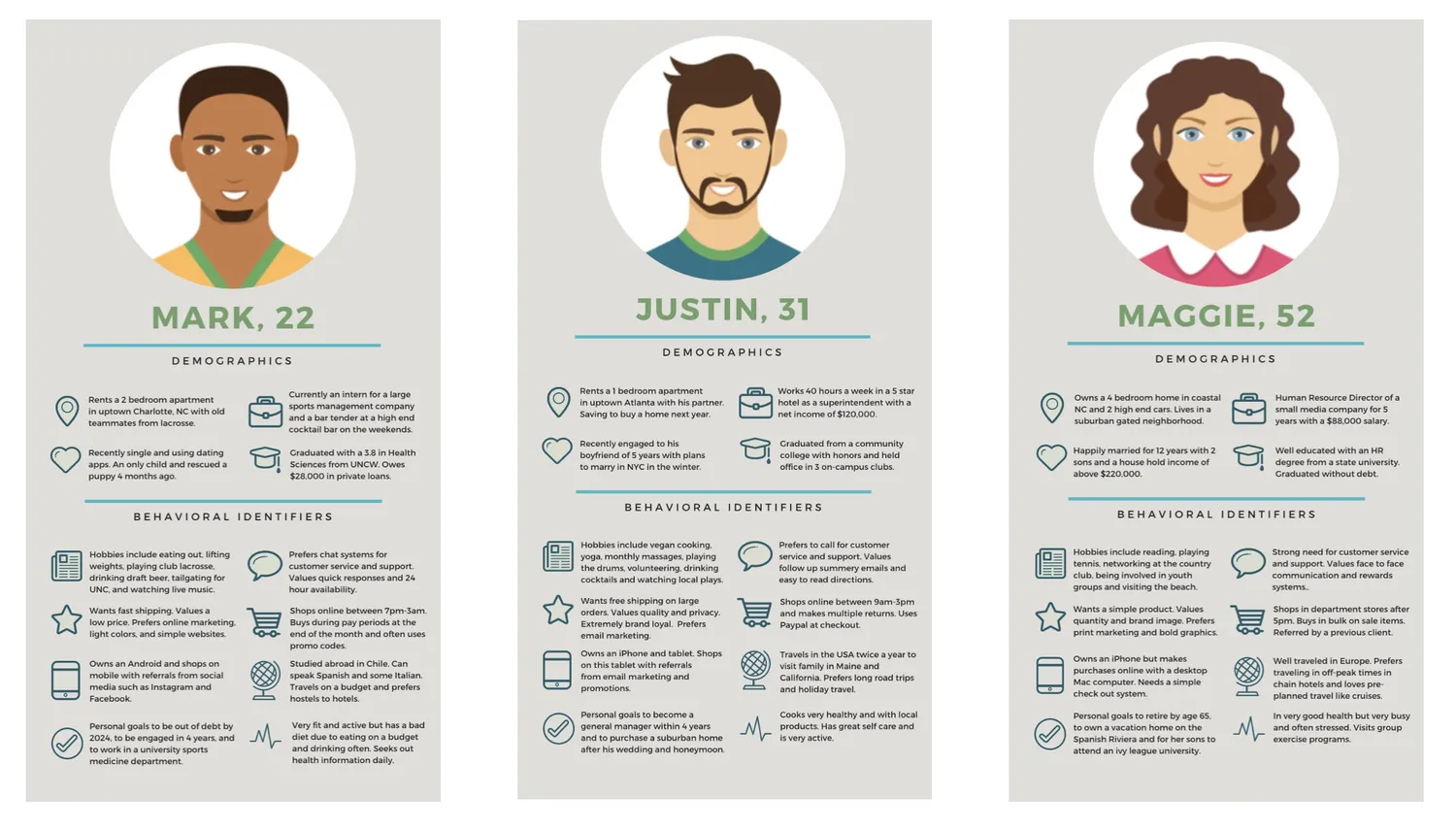
Marketing builds your initial customer base and then follows users with an eye toward iterating the product using customer feedback. Your marketing executive uses initial metrics to determine which platforms are best for reaching potential customers and develops marketing collateral. Then, when you’re ready to roll out the product, you’ve already figured out the best ways to reach and convert potential buyers.
Conclusion
With all the tools required to build your lean startup, there’s really no excuse for doing a startup the old way. Using the principles of lean and agile reduces your risk of failure, lowers the startup costs necessary to get your product to market, and creates a high product-market fit that enhances success. So, why do things the old way?
Need marketing help to support business growth?
We welcome the opportunity to show you how we can make your marketing SIZZLE with our data-driven, results-oriented marketing strategies. Sign up for our FREE newsletter, get our FREE guide to creating an awesome website, or contact us for more information on hiring us.
Hausman and Associates, the publisher of MKT Maven, is a full-service marketing agency operating at the intersection of marketing and digital media. Check out our full range of services.
Discover more from MKT Maven
Subscribe to get the latest posts sent to your email.


Great article
Thanks so much.