 logo

Handling stakeholder interests equitably and maintaining effective, transparent communication is very important for the success of a project, especially when there are different goals and priorities among various stakeholders that can lead to conflict. People who have an interest in the project, like team members from inside or partners outside, as well as those representing the community, often hold varying expectations and demands of how a project should progress as they have diverging interests. It’s crucial to manage these potential clashes by understanding them properly so you can find a balance that maintains support from all groups involved while also helping accomplish what needs to be accomplished in the project. In the article, methods to navigate disagreements between stakeholders are examined. These insights provide useful details for managing stakeholders in an effective way.
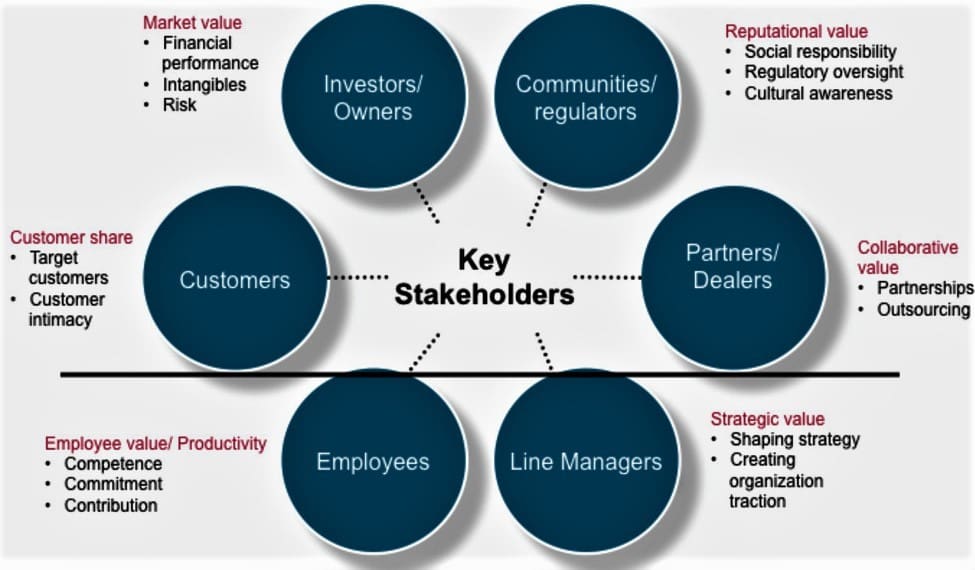
Who are the stakeholders?
As you can see in the graphic above, every organization has a number of different stakeholders and each type of stakeholder shares certain goals. However, these goals are different between stakeholder groups. For instance, employees want competent managers, the ability to make a valuable commitment to the organization, and to be recognized for that contribution. Meanwhile, investors care about short-term profits and gaining a substantial return on the money invested in the firm. This puts these two types of stakeholders at odds with each other, and the larger the payroll (to compensate employees fairly), the less money is left for investors. That creates an inherent conflict between the two groups of stakeholders. The question is how does a firm manage this inherent conflict among various classes of stakeholders. And that’s our topic for today.
Understanding stakeholder conflicts
Stakeholders’ conflicts come from different interests, importance, and points of view. For instance, the people who provide money for a project might be more concerned about short-term returns. On the other hand, community stakeholders could concentrate on how it affects the environment in the long run. Knowing why these conflicts happen is very important if you want to manage them well. Understanding the special concerns and motivations of each stakeholder group helps project managers deal with issues more effectively and find shared solutions that balance the needs of each group. This comprehension is important for making strategies that handle conflicts in a positive way.
How to manage stakeholder conflict
Utilizing technology for conflict management
In handling the conflicts of interested parties, technology can help a lot by giving instruments for working together and openness. For instance, land management software could be used to see and study information linked with stakeholder benefits like how they use land, what’s the impact on the environment and how resources are divided among them. By using such tools, project managers could encourage better decisions and conversations between interested parties. Similarly, technology allows for instantaneous updates and reactions. This could aid in resolving conflicts more effectively as well as keeping stakeholders involved during the whole project.
Develop effective communication strategies
Communication is important for handling conflicts of interest. Make sure to set up regular ways of communication with all involved parties so that any worries they have can be heard and taken care of quickly. It’s important to talk in a way that is easy for everyone to understand, showing understanding and accepting different viewpoints. Communication that is effective includes sharing details with stakeholders and also listening to their feedback. When project managers promote a culture where talking openly is encouraged, it helps to create trust and teamwork in finding solutions together which makes conflicts be resolved more peacefully.
Prioritizing stakeholder interests
In times of conflict, it is very important to give weight to the interests of stakeholders. This means thinking over how each stakeholder’s worries might affect the project’s general success and comparing them with other concerns. When we decide which interest should be given more priority, we can consider things like how much power a stakeholder has, if their goal aligns with our project’s strategy or what problems might happen if we ignore some interests. Using these criteria to sort interests helps project managers in taking decisions and dealing with conflicts by giving attention to the most important ones initially. This aids in reducing disturbance and keeping up with project progress.
Negotiation and compromise
Negotiation plays a crucial role in handling conflicts between stakeholder interests. It means searching for solutions that are acceptable to all parties and can deal with the worries of these involved groups. Doing negotiations well needs an understanding of what stakeholders really want and looking into imaginative solutions that match up with project aims. The process of negotiation includes compromise, where those involved make concessions to get concessions from other people. This can help project managers settle conflicts and create better relationships with stakeholders by encouraging teamwork and readiness to find middle ground.
Building strong relationships
Good relationships with stakeholders are crucial for the effective management of conflicts. Making a connection and creating trust can help lessen conflicts and promote teamwork. Talking with stakeholders frequently, thanking them for their input, and dealing with issues they might have in advance can strengthen relationships and reduce the chances of conflict. If stakeholders feel that their needs and opinions are considered, it becomes easier to negotiate or handle conflicts.
Implementing conflict resolution mechanisms
To deal with stakeholder conflicts in a systematic way, it is important to have formal mechanisms for resolving conflicts. These can be things such as frameworks to resolve conflict, procedures for escalation and processes of mediation. When protocols are set up clearly about how to handle conflicts, project managers can make sure issues get dealt with in an organized and just way. These methods offer a clear direction for settling disagreements and make sure that project goals are kept in mind while handling relationships with interested parties.
Monitoring and reviewing stakeholder engagement
Continuously checking and revising the involvement of people with an interest in the project is very important for handling conflicts and making sure that their needs are met. Regularly looking at how well we manage stakeholders along with getting feedback can help spot problems before they become bigger. By reviewing practices of involvement and changing strategies if necessary, persons controlling projects may improve their way to handle opposing interests while increasing total stakeholder happiness.
Conclusion
To handle diverse interests from different stakeholders, a combination of understanding, communication, bargaining and technology is needed. By using these methods like focusing on stakeholder worries, applying tools such as land management software and building strong relationships – project managers can deal with conflicts in an effective manner while keeping their backing from those involved. The last steps to manage conflicts involve formal methods for solving disagreements and regular checking of how well we engage with people who have an interest in our projects. To make sure of project success, it’s important to balance conflicting interests. This helps in keeping stakeholders involved and supportive during the whole project lifecycle.
Need marketing help to support business growth?
We welcome the opportunity to show you how we can make your marketing SIZZLE with our data-driven, results-oriented marketing strategies. Sign up for our FREE newsletter, get our FREE guide to creating an awesome website, or contact us for more information on hiring us.
Hausman and Associates, the publisher of MKT Maven, is a full-service marketing agency operating at the intersection of marketing and digital media. Check out our full range of services.
Image courtesy of LinkedIn
Discover more from MKT Maven
Subscribe to get the latest posts sent to your email.


