 logo

You need to create a content marketing strategy that effectively drives SEO performance to improve your website’s visibility, attract organic traffic, and build authority in your niche. By improving these metrics, you very likely improve other key performance metrics such as brand awareness and sales. In this guide, we’ll simplify the process necessary to create a content marketing strategy that works for SEO.
 Search Engine Optimization (SEO) and content marketing go hand-in-hand. SEO ensures that your content is easily discoverable by search engines, ranks well in related search results, and drives organic traffic to your website. Meanwhile, content marketing focuses on creating valuable, relevant, and consistent content to attract and engage your target market and convince them your products solve their problem better than others. To rank higher in search engine results, your content must be optimized for the right keywords and structured to satisfy both user intent and search engine algorithms.
For a more creative approach to this process, you can explore how companies like Boring Marketing simplify content strategies by making marketing straightforward yet effective. By combining SEO techniques with clear and focused content, businesses achieve better engagement, higher visibility online, and improve sales performance.
Create a content marketing strategy
1: Define your goals
Before diving into content creation, it’s essential to define clear goals. Ask yourself what you want to achieve with your content marketing efforts. Typical goals might include:
- Driving organic traffic
- Building brand awareness
- Generating leads
- Boosting conversions
Each goal will influence the type of content you create and how you measure its success. You’ll likely want to create a content marketing strategy that blends different pieces of content aimed at each of these goals or some combination of them rather than focus all your content on achieving a single goal. That’s because conversion is a process termed the customer journey that involves moving consumers through these elements (see below).
 2: Research your target market

Understanding your audience is crucial for any content strategy. This involves creating buyer personas—fictional representations of your ideal customers based on demographics, behavior, and interests. Knowing your audience helps you tailor content that resonates with their needs and challenges.
Additionally, research the questions your audience is asking online. This will help you identify topics that are relevant and valuable to them. Tools like Google Keyword Planner, Ahrefs, and Semrush can assist in uncovering popular search terms that align with your audience’s interests.
3: Conduct keyword research
Keyword research is the foundation of an SEO-friendly content marketing strategy. It helps you identify the search terms your audience is using to find information related to your business. Here’s how to conduct keyword research effectively:
- Start with broad keywords: Begin by identifying broad topics related to your industry.
- Use keyword tools: Tools like Semrush and Google Keyword Planner will give you insights into the search volume and competition levels for different keywords.
- Focus on long-tail keywords: Long-tail keywords (phrases with three or more words) tend to have lower competition and higher conversion rates. They are also more specific to user intent.
For example, if you’re a fitness blog, instead of focusing on “fitness tips” (a broad keyword), you could target “best fitness tips for beginners” (a long-tail keyword) to attract a more specific audience.
4: Create high-quality content
Once you have your keywords, it’s time to create content that satisfies user intent. Your content should be informative, engaging, and valuable to your audience. Here are some key content types to consider:
- Blog posts: These are great for sharing in-depth information and can be optimized with keywords for SEO.
- Videos: Video content is highly engaging and can boost SEO by increasing time spent on your page. Use the right AI video editor to edit your videos to make your content stand out with AI features.
- Infographics: Visually appealing and shareable, infographics help break down complex information.
- E-books/whitepapers: These long-form content types are useful for lead generation.
While creating content, keep these SEO best practices in mind:
- Optimize for keywords: Ensure your target keywords appear naturally in your title, headers, meta descriptions, and throughout the content.
- Use Internal and External Links: Internal links help guide users to other relevant pages on your site, while external links to reputable sources boost credibility.
- Focus on readability: Break content into easily digestible sections with clear headers, bullet points, and short paragraphs.
5: Develop a content calendar
Consistency is vital to a successful content marketing strategy. A content calendar, like the example below, helps you plan, organize, and schedule your content publishing. It ensures that you publish fresh content that keeps your audience engaged and improves your SEO performance.
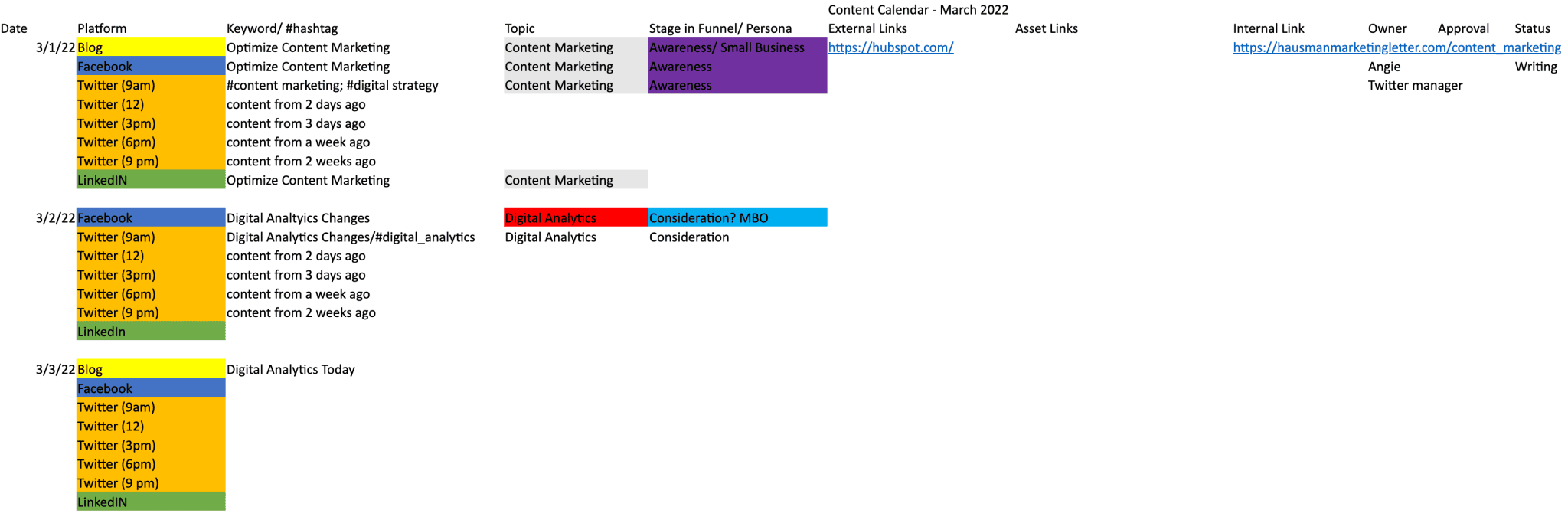 When creating your content calendar, include the following:
- Content type: Whether it’s a blog post, video, or infographic.
- Target keywords: The main keywords you’ll be optimizing for.
- Deadlines: Ensure every piece of content is completed and published on time.
Tools like Google Sheets or project management software like Trello or Asana can help you create and manage your content calendar.
6: Optimize for technical SEO
Technical SEO involves optimizing the backend structure of your website to ensure search engines can easily crawl and index your content. Here are some technical SEO elements to focus on:
- Page speed: Slow loading times can negatively impact user experience and rankings.
- Mobile-friendliness: Ensure your website is responsive and easy to navigate on mobile devices.
- XML sitemap: An XML sitemap helps search engines understand the structure of your website.
- Structured data: Use schema markup to enhance how your pages appear in search engine results.
7: Promote your content
Creating content is only half the battle—promoting it is equally important. Effective content promotion can drive traffic and increase your chances of earning backlinks, which are crucial for SEO. Here are some ways to promote your content:
- Social media: Share your content across platforms like Facebook, Twitter, and LinkedIn to reach a wider audience.
- Email marketing: Send newsletters to your subscribers with links to your latest content.
- Guest blogging: Write guest posts on reputable websites in your niche to gain exposure and backlinks.
8: Monitor and measure results
Lastly, it’s essential to track the performance of your content marketing strategy. Use analytics tools like Google Analytics or Semrush to monitor key metrics, such as:
- Organic traffic: The number of visitors coming to your site from search engines.
- Bounce rate: The percentage of visitors who leave your site after viewing just one page.
- Keyword rankings: How well your content ranks for the target keywords.
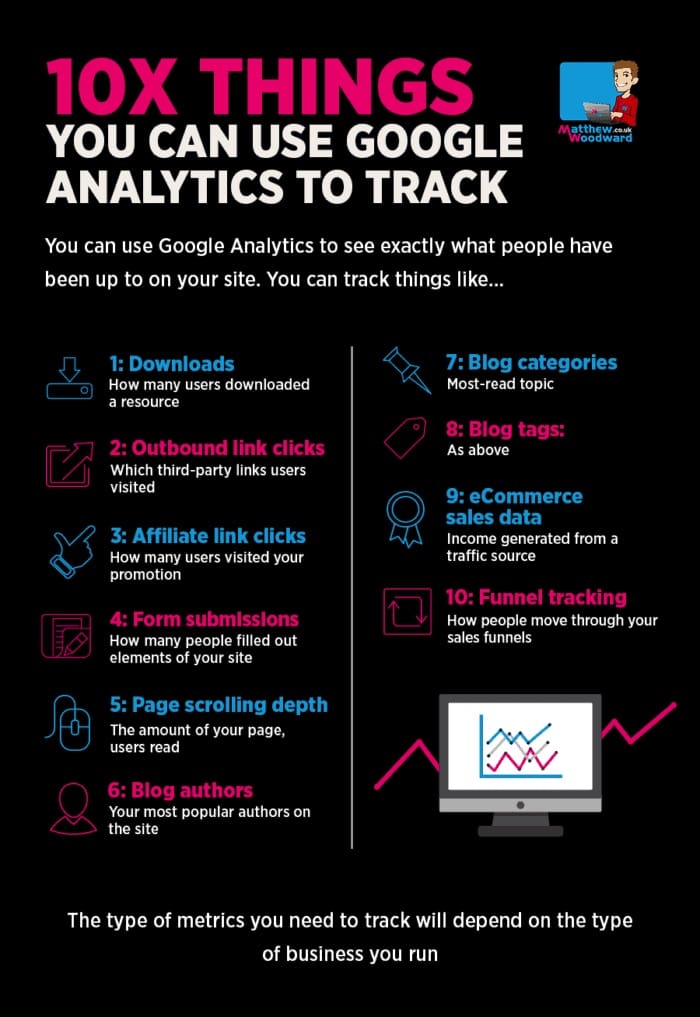
Analyzing these metrics will help you refine your strategy and make data-driven decisions for future content.
9: Leverage content repurposing
Content repurposing is a great way to extend the lifespan and reach of your content. This involves taking existing content and adapting it into different formats, allowing you to target multiple platforms and engage with diverse audiences. Repurposing also saves time and effort since you’re not starting from scratch.
For example:
- Turn blog posts into videos: Convert your most popular blog posts into engaging video content for platforms like YouTube or social media channels.
- Create infographics: Summarize key points from your articles into visually appealing infographics, making the content easier to digest.
- Develop e-books or guides: Combine a series of related blog posts into an e-book or guide that provides more in-depth value to your audience.
- Share on social media: Break your long-form content into smaller posts, tweets, or threads to share across social platforms.
Repurposing your content not only helps you reach a broader audience but also reinforces your key messages, driving consistent traffic to your site.
10: Focus on user intent
Understanding user intent is critical for creating content that ranks well and provides value. When you know what a user is looking for (their intent behind a search query), you can tailor your content to meet their needs. There are three main types of search intent:
- Informational intent: The user is looking for information on a topic (e.g., “how to create a content marketing strategy”).
- Navigational intent: The user is searching for a specific website or page (e.g., “HubSpot blog”).
- Transactional intent: The user intends to make a purchase or complete an action (e.g., “buy SEO tools”).
By aligning your content with the user’s intent, you improve your chances of ranking higher in search results and satisfying your audience. Ensure that your content answers the specific questions users are searching for, whether they want information, products, or services.
11: Build a strong backlink profile
Backlinks are an essential part of off-page SEO. They signal to search engines that your content is trustworthy and valuable because other websites are linking to it. To build a strong backlink profile, consider the following strategies:
- Guest posting: Write articles for reputable sites within your industry and include links back to relevant content on your site.
- Collaborate with influencers: Partner with industry influencers or bloggers to promote your content, which can result in natural backlinks.
- Broken link building: Identify broken links on other websites and suggest your content as a replacement. This helps both the website owner and boosts your SEO.
- Create Shareable Content: Content that provides high value—like in-depth guides, research, or infographics—is more likely to earn organic backlinks.
When it comes to backlinks, focus on quality over quantity. Links from high-authority, reputable websites are far more valuable than numerous links from low-quality sources.
12: Update and refresh older content
Content optimization doesn’t stop once your article is published. Periodically updating and refreshing older content can significantly boost your SEO performance. Search engines favor fresh and relevant content, so revisiting old articles and incorporating new information, statistics, or keywords can give your content a fresh lease on life.
Steps to refresh old content include:
- Add updated statistics or trends: Replace outdated data with the most recent statistics to keep your content relevant.
- Optimize for new keywords: Conduct a keyword audit to see if there are any new opportunities or changes in search trends.
- Improve readability by Breaking down longer paragraphs, adding new visuals or graphics, and ensuring the content flows well.
- Check for broken links: Update or replace any links that no longer work, ensuring your content maintains its authority and usability.
Updating your content also gives you a reason to repromote it across social media and email marketing channels.
Conclusion
Creating a content marketing strategy that works for SEO involves understanding your audience, conducting thorough keyword research, and consistently creating valuable content. By optimizing your content for both users and search engines, you can improve your online visibility, attract more organic traffic, and ultimately achieve your business goals. Combining SEO best practices with a strategic content plan will set you up for long-term success.
Need marketing help to support business growth?
We welcome the opportunity to show you how we can make your marketing SIZZLE with our data-driven, results-oriented marketing strategies. Sign up for our FREE newsletter, get our FREE guide to creating an awesome website, or contact us for more information on hiring us.
Hausman and Associates, the publisher of MKT Maven, is a full-service marketing agency operating at the intersection of marketing and digital media. Check out our full range of services.
Discover more from MKT Maven
Subscribe to get the latest posts sent to your email.


