 logo

If every visitor to your online store converted on their initial visit, wouldn’t that be fantastic? Although this is a marketer’s dream, it is very different from reality. Due to pricing, distractions, the need for a little more time to make up their minds, or a host of other factors that interfere with conversion, the majority of site visitors go without converting on their first visit (or even after several visits). That’s where retargeting ads can save your marketing campaigns.
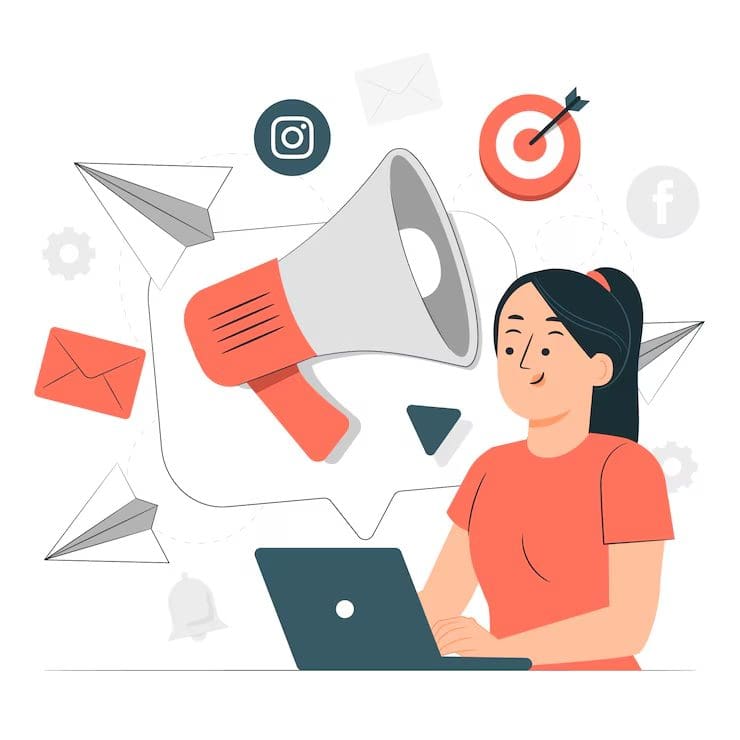
Retargeting advertisements improve performance by reaching out to folks who failed to convert after taking some action, like visiting your website. Since these consumers convert at a much higher rate when you reach back out to them, they make a great addition to any marketing campaign. They help companies use gathered data to optimize marketing efforts, remind customers of their interests, and encourage conversion. According to a recent study, 77% of retailers use retargeting tactics to recover the missing leads.
Let’s examine how retargeting ads can revolutionize custom ecommerce website development, platforms, and e-commerce stores, along with presenting guidelines you can use to create a successful campaign by simply incorporating this into your strategy.
How does retargeting work?
Displaying advertisements to consumers who are already engaged with a brand, app, or website is known as retargeting. It uses cookies or tracking pixels to track user behavior and shows relevant ads to the buyer on multiple websites, social networking channels, and search engine results pages. And, yes, I realize that Google is phasing out cookies, but that only applies to third-party cookies (generated on an unrelated page), not to cookies generated through your own website. Thus, this remains a viable strategy in the future.
Consider the following example of an online cloth shop that added a few things to your cart and left without purchasing anything. Later in the day, when you are surfing on another website or browsing social media, you will find advertisements for those things.
 How retargeting ads work

The mechanics behind retargeting are relatively straightforward yet highly effective:
- Visitor tracking – At any time when a user visits your site, a tiny little code called a tracking pixel embeds itself in the user’s browser. This pixel helps the company track what activity took place, such as viewing particular pages, checking items to buy, or moving stuff to the cart for actual purchase.
- Displaying ads – If such visitors do not convert, then pixel data helps in showing them targeted advertisements on other websites that remind them of the previous actions.
- Promotion of conversions – This makes these ads continue to remind the user to come to the website again and conclude the purchase.
Types of retargeting ads
Display retargeting
They serve as banners or images within websites on the Google Display Network (GDN) or other ad networks to help remind users of products browsed on your site. For instance, if someone browsed through a catalog of running shoes, they are likely to see ads showcasing those same products while reading a blog or browsing through another site.
Search retargeting (RLSA)
Remarketing lists for search ads (RLSA) employ cookies or email lists to remarket to users who visited your website at some point in the past X period of time. For example, suppose someone searches for “ergonomic office chairs” on Google and visits your shop. If they fail to make a purchase, they might get your targeted ad with relevant choices when searching for similar products, thus ensuring high visibility during their active search time.
Email retargeting
Email retargeting uses customer email lists to re-engage users. Let’s take the example of marketing campaigns that offer promotions or abandoning carts emails that prompt customers to finish their purchases. To entice customers to return and check out something they are interested in, an e-commerce business can selectively show ads to consumers on their list or to those who left something in a shopping cart on their site. This can include sending an email offering a price reduction of 15% (for example) on items that are still in the cart.
Social media retargeting
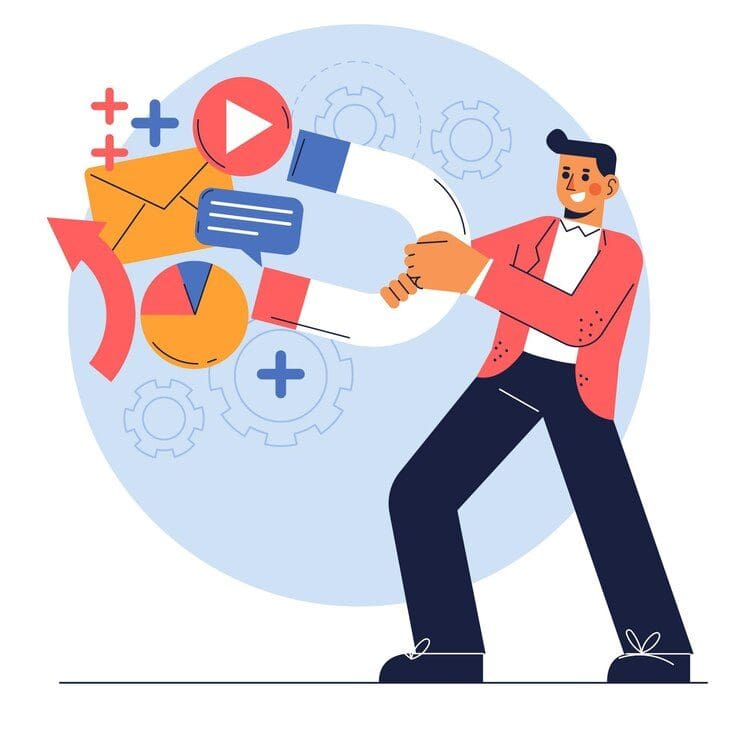
Retargeting may be most effective when done on social media platforms, as consumers spend increasing amounts of time on them. Businesses can display retargeted advertisements based on user involvement or behavior on channels like Twitter, Instagram, Facebook, and LinkedIn. These advertisements frequently have lively graphics and interactive components. For example, an online fashion retailer could use Instagram ads to display clothing items that a user had favorited but not purchased.
Dynamic retargeting
Dynamic ads give the shopping experience a personal feel by showing a user what they looked at or what they placed in their shopping cart. A user interested in a specific smartphone might see ads for that exact product later, with an offer such as “10% off – limited time!”. This targeted method increases conversions by up to 147%.
Video retargeting
Video retargeting uses platforms such as YouTube or TikTok to display video ads in front of users who previously interacted with your site or products. For example, a travel agency would retarget visitors with rich video content featuring destinations the visitor viewed on the site.
Mobile app retargeting
Retargeting ads for business apps encourage re-engagement through the mobile app. Take the case of an e-commerce app, reminding in-app product views via push notifications or in-app advertisements.
Brands are more capable of retaining consumers and turning leads into paying customers when they combine all of these retargeting possibilities with personalized content and alluring offers.
Retargeting vs. Remarketing: what’s the difference?
Here are five key differences to understand:
Channels of engagement
- Retargeting primarily focuses on serving ads across various online platforms, such as websites, social media, or search engines. These ads remind users of products or services they viewed but didn’t purchase.
- Remarketing leverages email outreach to re-engage users. For example, businesses send abandoned cart emails, loyalty rewards, or personalized offers to bring customers back.
Target audience
- Retargeting targets a broader audience, including users who visited your site, interacted with your content, or searched for related keywords. It works well for creating brand awareness and reminding potential customers.
- Remarketing focuses on specific segments, such as past buyers or users who shared their contact information. It is more personalized and relies on existing customer data.
Execution methods
- Retargeting uses cookies or pixels to capture user behavior and serve the ad on places such as Google Display Network, Facebook, or Instagram.
- Remarketing emails or customer lists are used to create targeted campaigns. Examples of such are the promotional newsletter or the discounts that are usually aligned to customer preferences.
Objectives and coverage
- Retargeting focuses on driving immediate conversions through appealing, clickable ads across various channels. It is highly scalable and reaches users even outside the brand’s ecosystem.
- Remarketing focuses on nurturing relationships, encouraging loyalty, and creating repeat customers by offering more personal engagement through direct communication.
Cost and complexity
- Retargeting is costlier in terms of ad placement, bidding strategies, and audience segmentation, thus requiring a more significant budget to reach a wider audience.
- Remarketing is generally cheaper because it uses an existing email list, but it takes time to craft personalized campaigns with high conversion rates.
Whereas both strategies strive toward regaining customers’ interest, retargeting is ideal for seeing web-wide visibility and remarketing at loyalty with a personal touch. Together, they can enhance re-engagement efforts.
Retargeting ads: Pros for e-commerce sites
- Higher conversion rate – Retargeted visitors convert 70% compared to first-time visitors. The retargeted ad acts as a subtle nudge, prompting the user to return and complete the order.
- Higher branding – Even if the user is not converting immediately, retargeting keeps your brand on his mind, thus gradually developing familiarity and trust.
- Better ROI – As retargeting is more focused on high-intent users, the cost-per-conversion is usually much lower compared to a wide-ranging ad campaign.
- Customer-centric experience – Dynamic retargeting ads help deliver a customer-centric experience in shopping by showing them relevant products according to their preferences.
- Re-engaging cart abandoners – The complexity of abandoning carts is enormous for ecommerce platforms. Most retargeting advertising will entice these users back with an incentive, such as promotions or free shipments.
Steps to create an effective retargeting campaign

Identify your target audience
Not all visitors are equal. Segment your audience based on their behavior, such as:
- Pages visited
- Products viewed
- Time spent on-site
- Cart abandonment
This segmentation will allow you to create personalized ad experiences for each group.
Choose the right platforms
Your audience’s behavior will dictate where your ads should appear. For instance, if your target demographic spends significant time on instagram, prioritize social media retargeting.
Set clear goals
Define what you aim to achieve with your retargeting campaign. Common goals include:
- Increasing brand awareness
- Boosting website traffic
- Driving conversions
Leverage data collection tools
Install tracking pixels on your site to get real-time insights about users’ interactions with your ads. Also, create email lists using newsletters or sign-ups into accounts for emailing retargeting campaigns.
Ad creative optimization
Keep your ads looking good and relevant to the audience. Make sure to include the following aspects:
- Eye-catchy visuals: utilize HD images or video clips
- Compelling headline: explain the key benefit or offer
- Strong CTAs: direct customers on what next step they should take- shop now, claim a discount.
Measurement and optimization
Track and continually monitor the performance metrics of a campaign – ctr, conversion rate, and return on investment. The resulting insights would be used for further strategic refinement in your campaign for better outcomes.
Explore the advanced retargeting tactics
- Sequential retargeting – Guide the user through a sales funnel with sequential ads. After a user visits your site, show an ad with product benefits. If he doesn’t convert, follow up with a discount ad that encourages purchase.
- Exclusion lists – Avoid retargeting users who have already converted. By excluding them from your campaigns, you can focus your budget on acquiring new leads and prevent unnecessary ad spending.
- Geo-targeting – Deliver location-specific retargeting ads. For example, to increase the significance and engagement rate of ads for a limited-time deal in New York, only display them to users in that region.
- Lookalike audience retargeting – Create comparable audiences with Facebook’s remarketing data. This allows you to effectively reach a wider audience by focusing on new users with characteristics similar to those of your current clients.
- Dynamic product retargeting – Show ads with the exact same products users looked at or put in their cart. If a person is looking at a specific smartwatch, retarget him with that product and offer a discount on it.
- Video retargeting – Retarget viewers of your videos who did not act upon them. Display follow-up advertisements with more powerful calls to action, including “shop now” or “learn more.”
- Cross-sell retargeting – Following through with a successful purchase, retarget customers with ads for complementary products. So, if someone buys a camera, show them ads for lenses, tripods, or carrying cases.
- Behavioral retargeting – Based on the actions taken by a user, like spending much time on a specific page or clicking a call-to-action. Retarget the people who came across the “how-to guide” by displaying advertisements for relevant products or services.
- Occasion-based retargeting – Connect the user on certain occasions. Use this example by retargeting users on Valentine’s Day discounts by offering relevant products with Valentine’s Day-related discount schemes that they visited.
- Personalized retargeting – Use data to personalize ads with user names or preferences. For example, “Hi Alex, your favorite sneakers are back in stock!”
- Mobile-specific retargeting – Target the type of device used: present the experience with mobile-friendly ads only on smartphone browsers so it remains smooth.
- Content retargeting – Promote blog posts, ebooks, or guides that are in line with the user’s interests based on their past browsing history, gradually building them up to conversion.
- Subscription retargeting – Target users who almost subscribed to your newsletter or service but didn’t complete the process with incentives like free trials or exclusive content.
- AI-powered retargeting – AI tools can analyze the behavior of a user and optimize ad delivery based on the same. Ai will predict which users are more likely to convert and ensure that they see more ads.
- A/B testing in retargeting – Experiment with different ad formats, designs, or messages to determine what works best for your audience and refine strategy based on that.
With these advanced strategies together, businesses can make a complete retargeting campaign across touch points, which enhances trust as well as efficiently converts prospects.
Retargeting for specific e-commerce goals
- Webshop development – In this context, retargeting may be used to present us with your customized Magento development services. Show the features of mobile-friendliness, speed, and smoothness of user experience in order to attract businesses that need tailor-made solutions.
- Seasonal promotions – These are a common goal for ecommerce owners. They often try to promote their product and services based on specific occasions or seasons. This includes retargeting with holiday-themed discounts or sales to get people in the mood.
- Urgency ads – Most of the time, the urgency ads tend to make users act for this kind of promotion. For example, create urgency with countdown ads, such as “Only 3 days left to grab your Christmas gift deals!” This encourages users to act quickly.
- New product launches – Retarget people who viewed related items before the new product launch. This increases the chances of a successful product launch.
Challenges in retargeting and how to overcome them
- Ad fatigue – Users may get annoyed if they see the same ad several times. Combat this with ad creative rotation and limit ad frequency.
- Data privacy issues – With growing pressure on data privacy, it is high time to ensure that your campaign complies with all forms of GDPR and CCPA. Therefore, be as transparent and clear about using opt-in for opt-ins.
- Too many competitors – In competitive niches, your retargeting ads may struggle to stand out. Personalize and differentiate your brand with unique incentives.
Conclusion
Ecommerce websites may increase conversions, consumer awareness, and roi effectively by using retargeting advertisements. It necessitates choosing the appropriate channels, understanding your target demographic, and creating an interesting advertising strategy. In this way, you can re-engage your potential customers and transform window shoppers into loyal buyers. For better outcomes it’s always recommended to connect with an expert.
Author bio:
Bhumi Patel has vast experience in project execution & operation management in multiple industries. Bhumi started her career in 2007 as an operation coordinator. After that, she moved to Australia and began working as a project coordinator/ management in 2013. Currently, she is the client partner – Australia | New Zealand at Magneto Solutions – a leading Shopify development partner in Australia, where she works closely with clients to ensure smooth communication and project execution, also forming long-term partnerships. Bhumi obtained a master of business administration (MBA) in marketing & finance between 2005 and 2007.
Need marketing help to support business growth?
We welcome the opportunity to show you how we can make your marketing SIZZLE with our data-driven, results-oriented marketing strategies. Sign up for our FREE newsletter, get our FREE guide to creating an awesome website, or contact us for more information on hiring us.
Hausman and Associates, the publisher of MKT Maven, is a full-service marketing agency operating at the intersection of marketing and digital media. Check out our full range of services.
Discover more from MKT Maven
Subscribe to get the latest posts sent to your email.


