 logo

Exceptional leaders empower their teams to collaborate effectively and thrive. A cornerstone of this success is masterful negotiation. While some may view negotiation as merely striking deals, the reality is far more intricate. It’s about resolving conflicts, aligning team objectives, and crafting solutions that benefit everyone involved to make your business run like a well-oiled machine. Effective negotiation fosters open communication and strengthens connections, cultivating a vibrant organizational culture, so your organization works in concert to get things done with minimal friction. In this article, we delve into the critical importance of negotiation, its vital role in a manager’s success, and practical strategies to develop and implement negotiation skills that elevate both leadership and business outcomes. Join us as we unlock the power of negotiation to transform the way you lead so you can achieve more significant business growth.

Why negotiation matters in leadership
Negotiation is the art of discovering common ground among varied needs or points of view to achieve a mutually acceptable agreement. Without strong leaders who can negotiate conflict, your teams end up working at odds, each endeavoring to optimize their own outcomes at the expense of others.
Managers are confronted daily with multiple decisions that impact people, projects, and performance. Whether setting priorities or reacting to changing business needs, effective negotiation skills assist leaders in arriving at solutions that suit everyone to move the organization forward. Negotiation is one way effective managers manage. It helps in equilibrating various views, making equitable decisions, and conveying messages effectively.
An effective manager who has mastered the art of negotiation can align team objectives, settle conflicts early before they disrupt the business flow, and build a work environment in which individuals feel heard and valued, which improves their performance. When team members notice their leader is listening, hears them out, and seeks results that benefit the group, they’re more apt to remain motivated and collaborate on shared objectives.
Now that we know why negotiation is essential, let’s examine how it enhances a manager’s effectiveness.
How negotiation skills strengthen managerial effectiveness
Good negotiation skills are part of being a good leader. The reasons why negotiation skills equate to good leadership are the following:
 Better decision-making
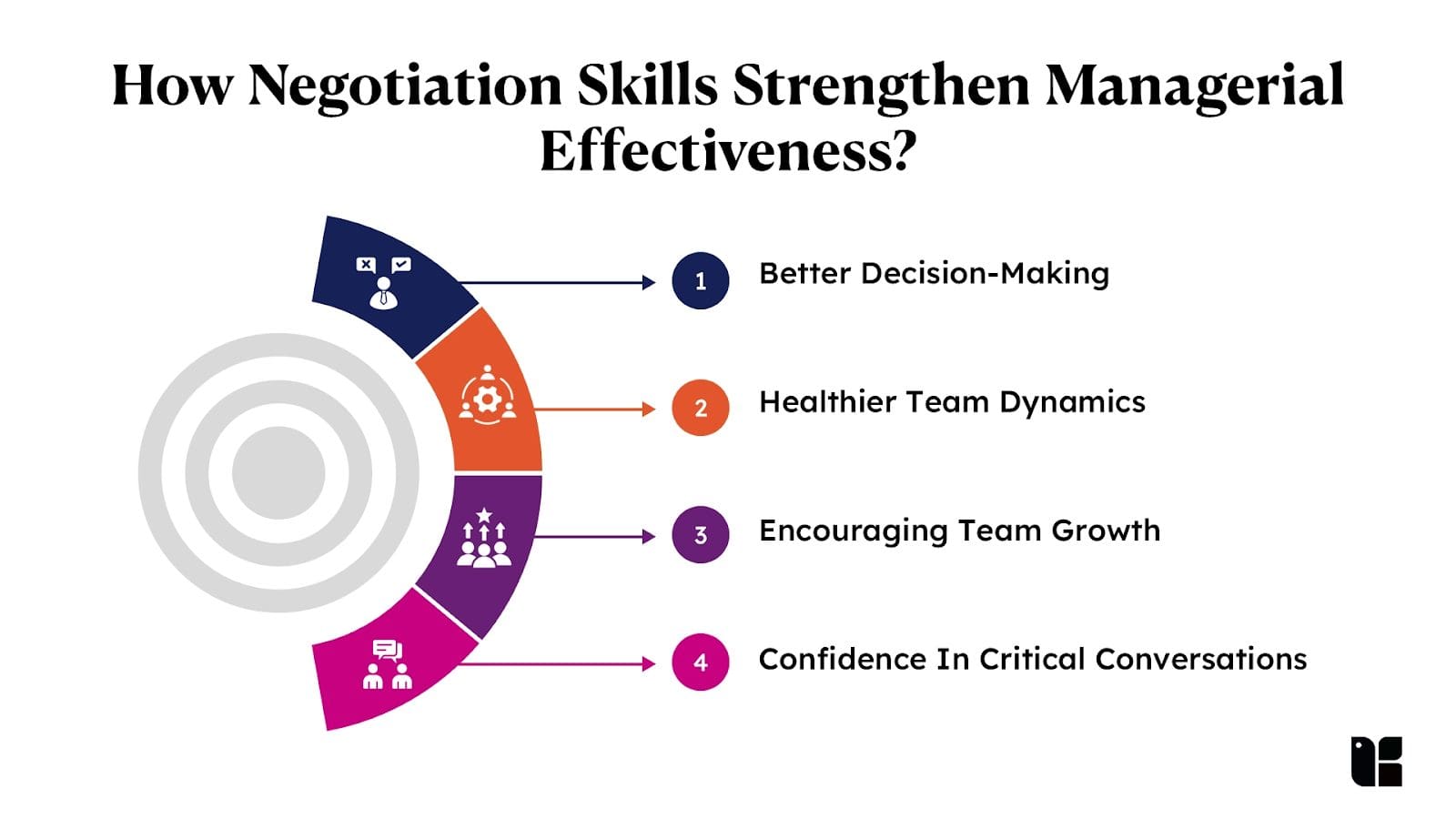
Every day, leaders make decisions ranging from resource allocation to setting team priorities. Negotiation skills allow leaders to balance competing perspectives that represent different members of their team, listen to the opponent’s requirements, and demonstrate how a solution considers the who picture to benefit everyone in the long run. They yield smarter, more balanced decisions that are accepted by the team and reduce resistance.
Healthier team dynamics
Conflict and tension are unavoidable in any work environment. According to the University of Oklahoma, conflict and tension within a business result in:
- lower productivity, which translates into lower revenue
- higher stress that can spill over into poor sleep, disruption in home life, and ill health that can result in absenteeism and, ultimately, turnover
- low morale
- poor team cohesion
- a negative corporate culture
Good managers and effective negotiators can step in early, avoid full-blown issues, and redirect teams back on track. Instead of avoiding conflict or dictating solutions, effective negotiators bring the right stakeholders to the table, listen with respect, and collaborate. This builds stronger, more durable teams in the long term.
Encouraging team growth
Effective management is fundamentally about facilitating the growth and development of team members. This process requires continual negotiation on various fronts, including clarifying job expectations, identifying and creating stretch opportunities, and providing constructive feedback. Managers who approach these negotiations with respect and transparency not only enhance individual growth but also align it with the overarching business goals, demonstrating their capacity to balance personal development with organizational needs.
Confidence in critical conversations
From salary to partnership negotiations, managers are in situations where the outcome is the primary concern. Effective negotiation skills give leaders the confidence to prepare, stay calm under pressure, and find win-win solutions that protect relationships and create value.
Having understood how negotiation skills contribute to a manager’s effectiveness, let’s explore how you can obtain such skills to benefit your own managerial growth.
Developing negotiation skills for managerial growth
Negotiation skills are something that you can learn and use every day to advance in your career.
Collaborative decision-making
Decision-making isn’t the job of a manager alone. In reality, collaborative decision-making not only results in less conflict, but it also eases implementation because there’s less resistance to making changes, according to Penn State University. Although collaborative decision-making takes longer, on average, it results in greater buy-in. By considering the opinions and ideas of those affected by decisions, you can also generate more ideas that might result in better decisions. In a diverse workplace, this outcome is enhanced.
Leading collaborative decision-making sessions requires some negotiation skills, as you must work with various factions to reach a negotiated solution.
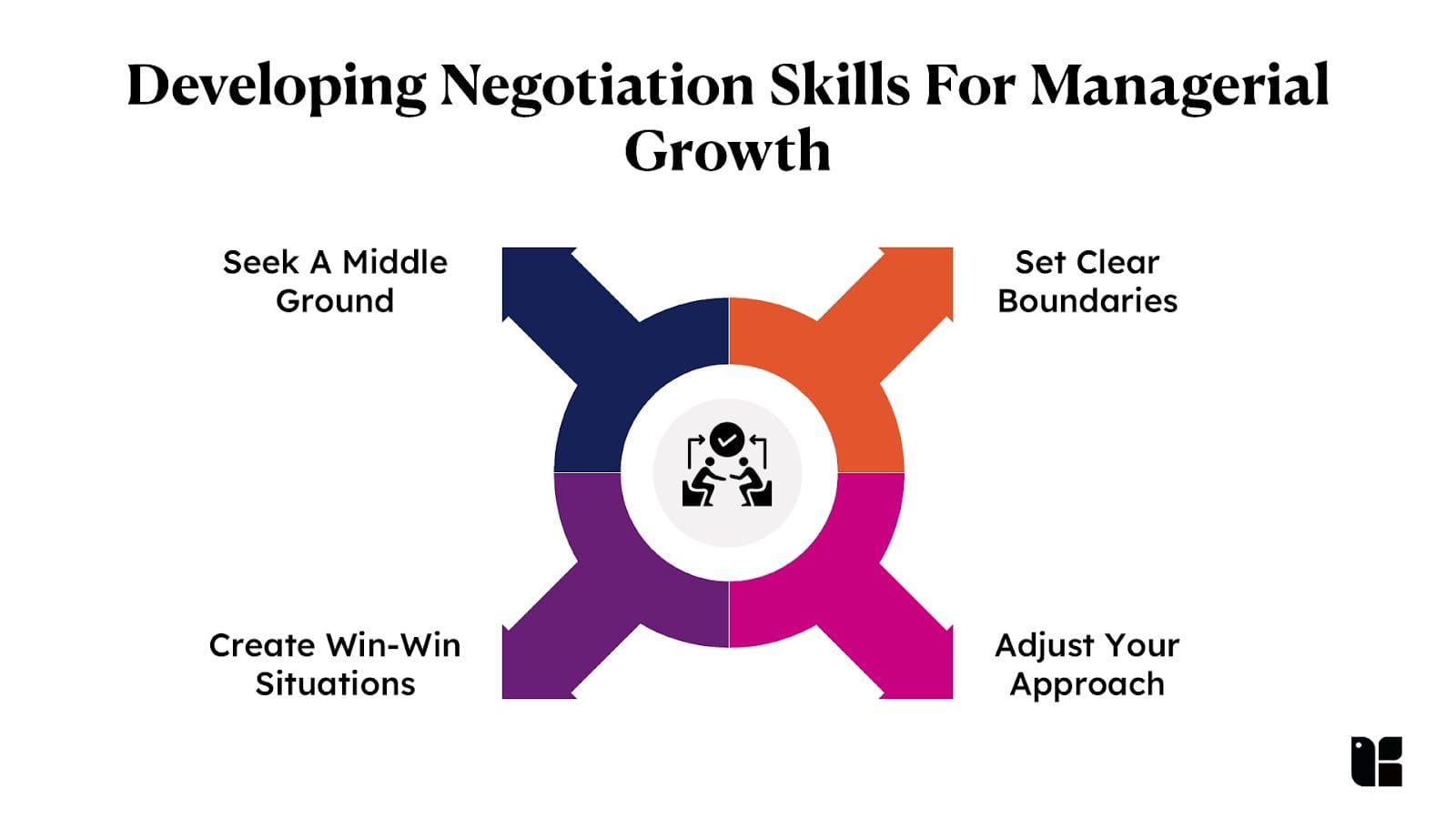
Seek a middle ground
Negotiation is often seen as a necessary compromise that satisfies all parties involved, as discussed in the previous section. Compromise becomes essential when there are conflicting interests among stakeholders. It entails a clear understanding of the non-negotiable elements for you and your team, alongside the aspects where flexibility is possible in order to achieve a mutually beneficial outcome.
In practice, compromise is particularly valuable in scenarios such as:
- Negotiating project timelines: When deadlines are not aligning, being open to adjusting schedules can help maintain relationships and keep projects on track.
- Budget distribution: Compromising on budget allocations can lead to resource optimization and ensure all departments can meet their needs.
- Resolving interpersonal conflicts: Finding a middle ground in disputes can restore team harmony and enhance collaboration.
Overall, employing compromise is instrumental in fostering effective working relationships and advancing crucial organizational goals, as it encourages open communication and collaborative problem-solving.
Create win-win situations
In successful negotiations, it’s crucial that both sides feel they have gained something of value, ensuring that the outcome is beneficial for all involved. A win-win approach is characterized by cooperation and a commitment to mutual benefit, resulting in all parties walking away with satisfaction. Achieving this requires not only imagination but also a deep understanding of the other party’s needs and motivations. This tactic can be particularly effective in various contexts such as client relations, partnerships, team projects, or during any collaborative effort.
For instance, whether you are engaged in a joint venture or working to align departmental goals or negotiating with suppliers, it’s essential to consistently look for solutions that prioritize the interests of both sides. Establishing open lines of communication, actively listening, and demonstrating empathy can facilitate this process, ensuring that each party’s top priorities are adequately addressed and integrated into the negotiated agreement. The result is not just a satisfactory resolution, but a strengthened relationship that may lead to future collaboration and ongoing trust.

Set clear boundaries
Setting boundaries in negotiation assists in ensuring that expectations and goals are communicated properly. It’s important to set what is not to be negotiated on initially so both parties are aware of the boundaries and can work within them. Boundaries prevent future misunderstandings and help you protect your interests. Set boundaries in salary negotiation, project scope, and conflict resolution. For example, negotiating a project deadline, setting boundaries on resource capacity and timeline clearly ensures expectations are aligned from the start.
Adjust your approach
No two negotiations are the same, and the secret is to know how to be flexible with your approach. There are moments when you must be rigid, and there are moments when you must be flexible and accommodating. Being able to break down each situation and then respond accordingly will assist you in overcoming many hurdles. Experiment with being flexible in pressure situations such as negotiating project timelines, resource allocation, or team conflict. Different stakeholders will have different solutions, and hence, flexibility will allow you to decide on the best solution for everyone.
Enhancing these core negotiation skills will make you a better manager and set you up for long-term success.
Conclusion
Negotiation is not just a skill; it is an essential cornerstone for every manager striving for success and excellence. Embracing negotiation skills is a pathway that empowers managers to lead their teams with unwavering confidence, achieve impactful outcomes, and cultivate strong relationships alongside a solid, cohesive team culture. As the challenges organizations face grow increasingly complex and as businesses become more interdependent, mastering the art of negotiation is not merely beneficial—it’s imperative. In the evolving landscape of leadership, negotiation will emerge as a pivotal skill, critical for driving progress and fostering collaboration. Now is the time for every manager to invest in and hone their negotiation abilities to secure their future and the future of their teams.
Need marketing help to support business growth?
We welcome the opportunity to show you how we can make your marketing SIZZLE with our data-driven, results-oriented marketing strategies. Sign up for our FREE newsletter, get our FREE guide to creating an awesome website, or contact us for more information on hiring us.
Hausman and Associates, the publisher of MKT Maven, is a full-service marketing agency operating at the intersection of marketing and digital media. Check out our full range of services.
Discover more from MKT Maven
Subscribe to get the latest posts sent to your email.


