 logo

Unexpected expenses can disrupt a business’s operations and seriously threaten its financial stability. In fact, cash flow problems account for more failures than any other single cause in small companies, as you can see below. A cash flow loan is a vital tool for managing unexpected expenses and uncollected receivables and maintaining financial stability when you face a cash shortfall. By understanding how these cash flow loans work, businesses can better navigate financial challenges and maintain smooth operations.
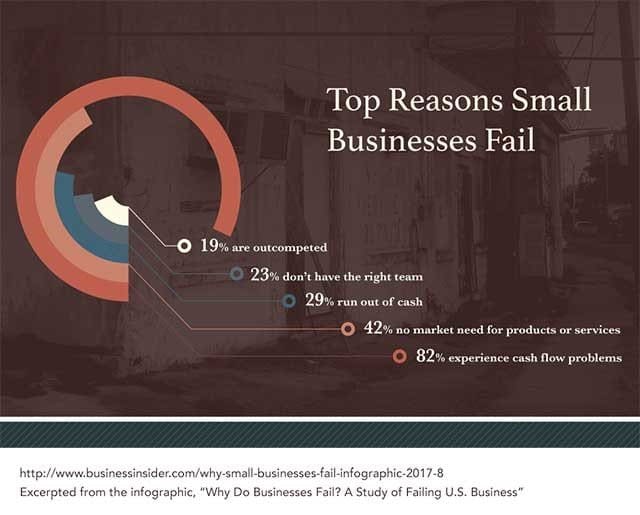
Why businesses face cash flow problems
According to PNC Bank, businesses can face cash flow problems for a number of reasons, including:
- Late payments: When customers are slow to pay, a business may not have enough cash to pay its bills.
- High overhead expenses: A business’s overheads, such as rent, utilities, insurance, and legal fees, can increase faster than its revenue. When you start your business, you should plan to have (and maintain) between three and six months of these expenses on hand to cover operating costs, according to American Express.
- Unexpected expenses: Businesses need to maintain a healthy contingency fund to prepare for the unexpected, such as expensive equipment repairs or storm damage. This should be part of your yearly budgeting process.
- Uncontrolled growth: A business that grows too quickly may face cash flow problems. An otherwise healthy business might struggle with so many opportunities.
- Not having a budget: A business without a budget may not be able to manage its cash flow effectively.
- Not paying yourself: A business owner may not pay themselves a salary.
- Credit accounts: When a customer pays with credit, the income statement reflects revenue, but no cash is added to the bank account.
Cash flow is a metric that shows how money is coming in and being spent for a business. According to SCORE (see the image above), 82% of small businesses fail due to cash flow problems.
Solutions to cash flow problems
To avoid the devastation caused by cash flow problems, you should plan ahead of time before the situation arises. Monitor cash flow and project cash flow problems based on prior history and pessimistic projections so you can anticipate when a cash flow problem might occur. That way, when you project a short-term cash flow problem, you’re already prepared with solutions. This allows you to quickly solve the problem with as little disruption and at more favorable terms than if you let the situation fester until you’re forced into a poor outcome.
Among the options are:
- Arrange for a short-term line of credit you can access when needed
- Negotiate a cash flow loan
- Reduce your expenses when you anticipate a cash flow problem. However, reducing core functions such as staffing or inventory has long-term negative consequences, so avoid these when reducing your expenses.
- Manage your inventory better by employing advanced warehousing technology, including RFID, which allows you to optimize storage space while still maintaining control over your inventory to avoid over-ordering. Adopt JIT (just-in-time) manufacturing and EDI (electronic data interchange) as tools to speed ordering, match inventory levels to orders, and get paid on invoices faster.
- Sell your receivables, a process called factoring, which allows you to collect early for the money owed by your customers.
 Understanding short-term financing

Cash flow loans are a type of short-term financing that helps businesses cover immediate expenses. Unlike traditional loans that may require collateral, these loans are typically unsecured and rely on the company’s expected revenue to determine eligibility and repayment terms. These loans are designed to provide quick access to funds, allowing businesses to address urgent financial needs without significant delays. Lantern by SoFi states, “If your company has a good revenue history, a cash flow loan could be an option when your business needs help covering operating expenses.”
Quick access to funds
One of the main advantages of cash flow loans is the quick access to funds. When unforeseen expenses arise, businesses need immediate financial assistance to address the issue and prevent further complications. These loans often have a faster approval process than traditional ones, allowing businesses to get the money they need quickly.
This rapid access to funds can be crucial when delays could result in lost revenue or additional costs. For example, if a piece of essential equipment breaks down, cash flow financing can provide the necessary funds to repair or replace it, minimizing downtime and maintaining productivity.
Flexibility in repayment
Short-term loans offer flexible repayment terms tailored to the business’s revenue stream. Unlike loans with fixed monthly payments, the repayment amount for these loans can vary based on the business’s cash flow. This flexibility helps companies to manage their finances more effectively, especially during fluctuating income.
The ability to adjust repayment amounts according to revenue ensures that businesses do not face undue financial strain. During high-revenue periods, businesses can pay back more, while they can reduce their payments during slower periods.
Maintaining operational stability
Unforeseen expenses can threaten a business’s operational stability. Whether it’s a sudden increase in raw material costs, emergency repairs, or an unexpected drop in sales, these events can strain the company’s finances. Cash flow loans can provide the necessary funds to cover these expenses and maintain stable operations.
 By using a loan to address immediate financial needs, businesses can avoid disruptions that might otherwise impact their ability to serve customers or meet production deadlines. This continuity is essential for maintaining customer satisfaction and preserving the company’s reputation.
Preventing long-term financial issues
Managing unexpected expenses promptly with a short-term loan can prevent long-term financial issues. When businesses delay addressing urgent costs due to a lack of funds, they may incur additional expenses, such as late fees, interest charges, or even lost business opportunities. A loan helps avoid these complications by providing the funds to resolve issues quickly.
Using financing to handle unforeseen expenses can prevent businesses from dipping into reserves or cutting essential expenditures. This approach ensures that the company’s financial health remains strong and that resources are available for planned growth and investment initiatives.
Boosting confidence and morale
Having a reliable financial solution like a short-term loan can boost business owners’ and employees’ confidence and morale. Knowing that there is a safety net for unexpected expenses can reduce stress and allow the team to focus on their core responsibilities and goals.
When employees see that the company can handle financial challenges effectively, they build trust and commitment. This positive work environment can increase productivity and create a stronger, more resilient business overall.
Conclusion
Short-term financing can be an invaluable tool for managing unexpected expenses. With quick access to funds, flexible repayment terms, and the ability to maintain operational stability, businesses can navigate financial challenges more effectively. By preventing long-term financial issues and boosting confidence, these loans help businesses remain strong and resilient in the face of unforeseen costs.
Need marketing help to support business growth?
We welcome the opportunity to show you how we can make your marketing SIZZLE with our data-driven, results-oriented marketing strategies. Sign up for our FREE newsletter, get our FREE guide to creating an awesome website, or contact us for more information on hiring us.
Hausman and Associates, the publisher of MKT Maven, is a full-service marketing agency operating at the intersection of marketing and digital media. Check out our full range of services.
Discover more from MKT Maven
Subscribe to get the latest posts sent to your email.


