 logo

Today, I’m discussing digital marketing success elements for small businesses to provide a means for these businesses to compete and thrive. In 2026, even the least tech-savvy small business owner should realize that a digital strategy isn’t just something that’s a nice add-on to your marketing efforts; it’s essential for continued growth (maybe even for survival). In this post, we discuss seven elements that are essential if you hope to achieve this success.
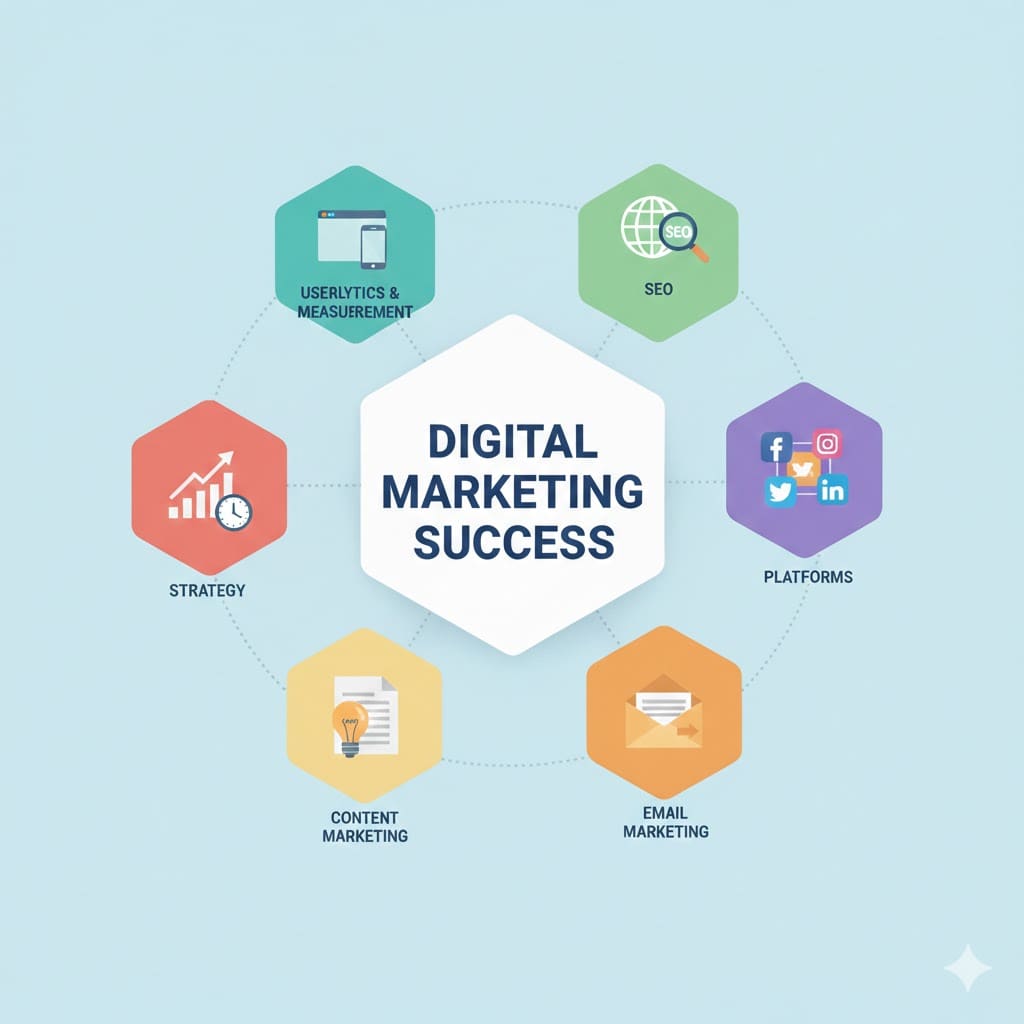
Why should you focus on digital marketing success?
As a small business owner, you likely find yourself pushed in a thousand directions at once. Setting priorities isn’t always easy, especially when you face customer demands and employees’ efforts to impact priorities toward their area of responsibility. But you must recognize that your marketing efforts deserve some of your best efforts. I published a post recently where I offer advice on how to manage your time wisely, so you can devote sufficient time to your marketing efforts.
If you have a limited amount of time, here are some arguments for dedicating much of that time to digital marketing success factors:
- Digital marketing is particularly effective for small businesses — if they can figure out how to cut through the clutter online. That’s because the cost of digital marketing is a small fraction of the costs involved in traditional media, like print and broadcast (TV, radio).
- Digital marketing also provides superior targeting, allowing the small business to optimize its reach and frequency with a relatively small budget.
- While digital marketing isn’t easy, it’s much easier than traditional advertising.
A caveat here: digital marketing won’t be successful if you don’t have your other marketing ducks in a row, as demonstrated in the infographic above. Without research into your market segments, effective targeting (not just with messaging, but other marketing aspects), superior customer service, and the 4P’s, you’ll never reach your goals.
Elements of digital marketing success
To start us off, let’s list the elements necessary to build a strong digital marketing program:
- Strategy
- Platforms – website, social platforms
- Content suitable for each platform
- SEO
- Email marketing
- Automation
- Analytics
Unlock digital success
Strategy
As a small business, you might not need a full-blown digital marketing strategy and you might not need something formal, but you need to consider the following elements before starting your strategy:
- What are my goals? These should be smart goals, and you need to think about both terminal goals (sales, lead generation) and intermediate goals (like bounce rates, time on site, and engagement while avoiding vanity metrics such as followers, visits, and page views).
- Who is my target market (those most likely to buy your products or services)? What do they look and act like? What do they need? What don’t they want? How should I approach them, ie, what message is likely to resonate with them? Where will I find them?

Image courtesy of Prisync - Does my product/ service match what my target market wants and needs? What is the unique value proposition that sets my brand apart from the competition?
- Who are my competitors and how can I set my efforts apart from theirs?
- What resources will I need to reach my goals? And, we’ll talk about these in the next sections.
- How will I assess my performance relative to these goals? What are some of the benchmarks I should reach?
- How do I translate what I learn from metrics into better performance?

Your strategic plan, whether written or retained as more of a Cliff Notes version, is a dynamic framework. You need to update it at least once a year, ensuring it changes as internal and external factors change. Also, use the insights from analyzing key performance indicators to guide your evaluation and adjustments to your plan.
Platforms
Just like traditional media, digital marketing affords a variety of different marketing platforms. The choice of which platforms to use centers around where your target market hangs out and how they use each platform. We primarily divide your choices between a website and social media.
Your website and blog
I think a website/blog is the centerpiece of your digital marketing efforts.
Why?
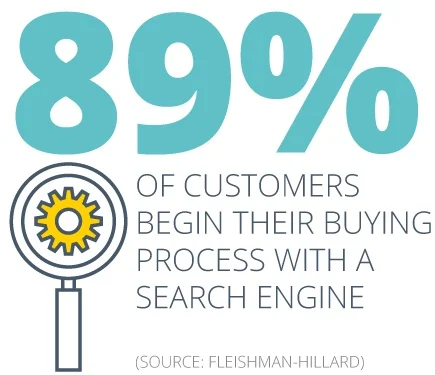
Simple. A website gives you access to a market that increasingly turns to the internet as their first choice when searching for solutions to a problem (as you can see below). Forgoing a website means you lose out on the vast majority of your market potential.
If you’re unsure of how to build a strong website that’s mobile-responsive or think it’ll cost too much money and time, I wrote an ebook that steps you through the process with plenty of illustrations so you can build one on your own without writing a single line of code and a cost of less than $150. If that’s outside your budget, maybe you should rethink your idea of starting or running a small business.
Another good reason for building a website is that you own it — no one can take it away, change the platform without your consent, tell you what you can do … I can tell you horror stories of small businesses that lost access to their social media platforms or found key posts removed for an obscure reason or none at all. That can’t happen to your website, especially if you build a self-hosted one, rather than settle for one of those seemingly easy website builders like Squarespace or Wix.
Recent changes to the algorithms used by most social media platforms mean your reach is significantly lower. Plus, it’s an important element if you’re an e-commerce business, as you control the look and feel of your store.
Digital marketing success relies on a well-designed website that’s user-friendly, contains clear, enticing calls-to-action, and features high-quality content that meets the criteria of both users and search engines (as well as AI models). That’s where adding a blog (regardless of the title used) to your website, as producing high-quality content consistently (at least once a week) leads to digital marketing success.
Social media
But you’ll also need profiles on social media platforms, as well. It’s better to focus on doing a great job on a few social media sites versus doing a bad job on a bunch of them.
I have a couple of recommendations:
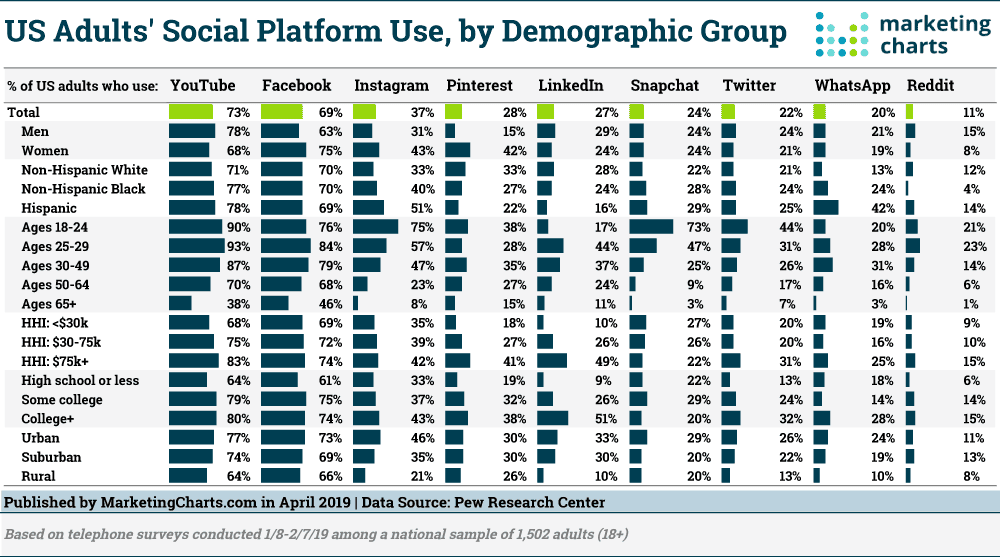
- Choose social media sites that match your target market — be where they are. Start with one or two platforms, then add new ones as you gain skills and have sufficient resources.
Image courtesy of Marketing Charts - Don’t spam your audience. Most platforms perform best when you post consistently, usually once or twice a day. You can vary from this somewhat, especially occasionally, but don’t overdo it on any network.
- Remember, social media is a 24/7 proposition so you shouldn’t schedule all your daily posts at the same time. Spread them out across the day, focusing on times when your audience is likely online. Automation (which we discuss later) helps with this task.
- Don’t talk about yourself too much. Experts recommend an 80/20 split between posting interesting content (80%) and stuff about you (20%). Consider posting educational, entertaining, community-focused, or inspirational content to supplement your promotions. For instance, share backstage aspects of your business, demonstrate a product, answer FAQs, or share about public projects completed by you and your staff.
- Build your social networks organically, don’t buy followers or do a reciprocal arrangement. I found the best way to build a social network is by following interesting folks and sharing their content liberally.
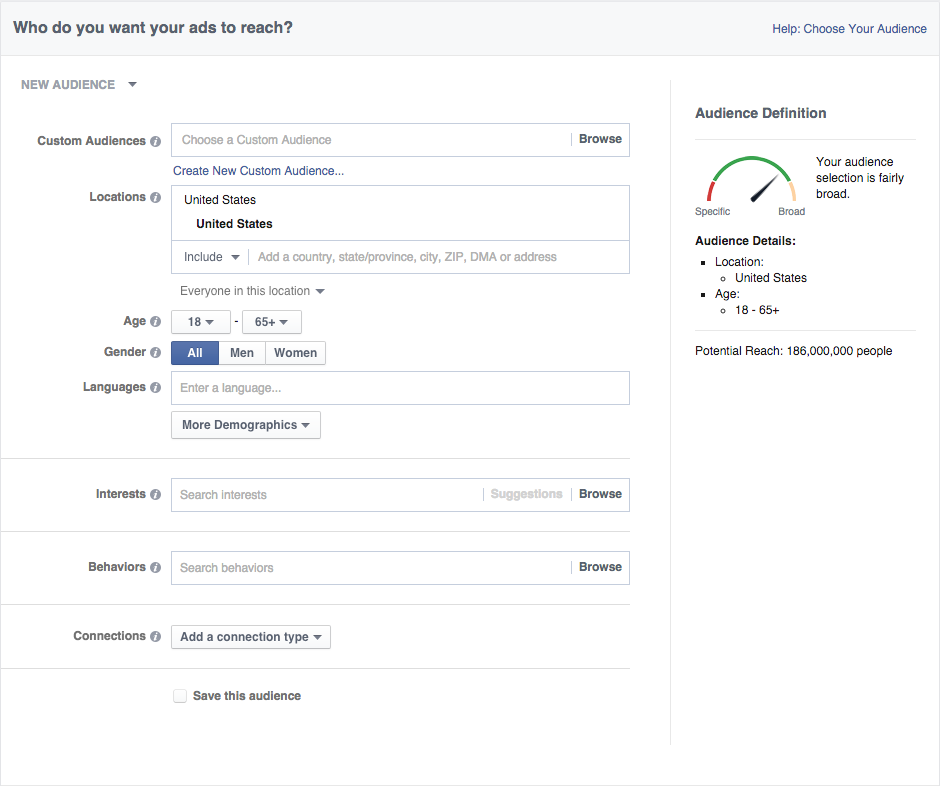
- Consider paid social media posts to reach more users, as the targeting possible on most platforms optimizes your digital marketing success by reducing the waste involved in paying for users who aren’t part of your target market. Here’s an example of targeting through Meta (Facebook and Instagram).
Content marketing
Create a steady stream of content that focuses on solving the problems faced by your target market. Showcase your expertise with in-depth content rather than teasers designed to gain clicks. Then, promote your content across digital channels, including social media, email, press releases, and by sharing it in groups both online and off.
The obvious first step is to create great content — whether it’s long-form, like a white paper or a blog post, short form, like a social media post, or just a snippet — nothing happens without great content. You can read more here about creating a great content marketing strategy. Today, we’ll focus on sharing your content to help you become a content marketing hero.
Let’s assume you’ve already mastered the strategy of crafting great content. It’s time to be a content marketing hero.
Tactics for becoming a content marketing hero involve:
- Determining when to share
- Deciding where to share your content and how to adapt the format to meet the norms of that platform
- Building a community that stands ready to amplify your messaging
- Adding various types of content to provide information, entertainment, and maintain interest
- Using images to illustrate your content (we’re all writing graphic novels now!)
- Making sharing super easy
SEO
SEO or search engine optimization has dominated discussions of digital marketing success for more than a decade. As search emerged as the primary tool for finding new products and the amount of online content exploded, getting found by search engines became increasingly more important. Below you’ll see the basic elements of SEO for digital marketing success. You can learn more about how to improve the rank of your content by reading my posts about SEO.
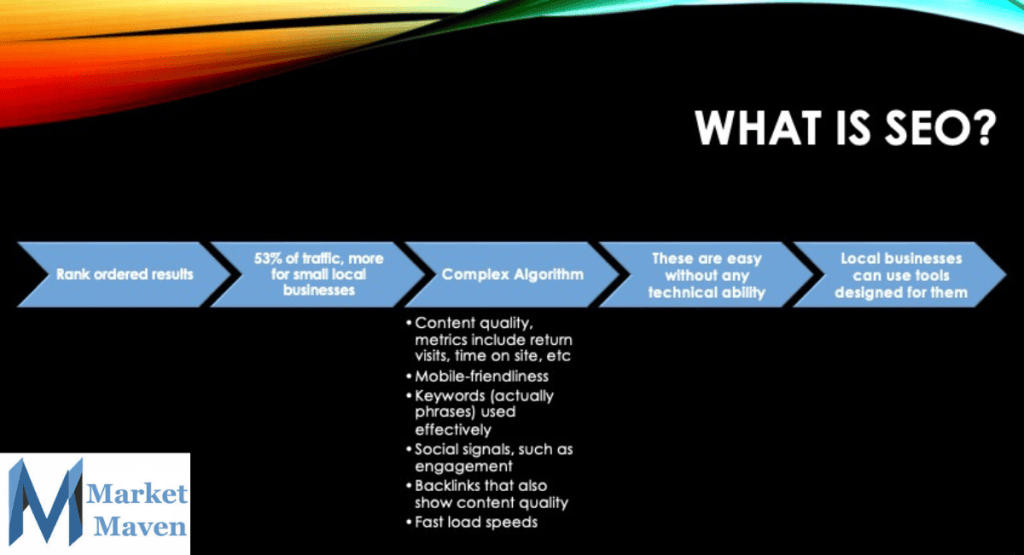
Over the last year, we’ve seen an evolution of traditional SEO with the emergence of AI, resulting in fewer clicks on even content ranking well in the search results. Instead, users increasingly turn to AI tools, like ChatGPT, to answer their queries. In addition, an increasing number of queries to search engines now result in an answer snippet that precedes all the organic links.
Instead of clicking on a link to learn the answer to your query, users now simply read the answer snippet. This evolution means you need to balance SEO (since these efforts also impact GEO or generative engine optimization for AI) with newer techniques that make your content easy for LLMs (large language models) to understand, analyze, and deliver to users in the form of brand mentions.
Email marketing
Email marketing is a two-pronged strategy that requires you first focus on building a subscriber list, and then send messages to these subscribers. Because email marketing delivers the highest ROI of any digital marketing strategy, this tactic deserves the intense focus implied by its nature.
Of course, digital marketing success isn’t quite so simple. Segmenting your subscribers, then sending personalized messages that not only use the subscriber’s name but also include relevant content, delivers much higher open, click, and conversion rates over sending random messages to the entire list.
Automation
We’ve already talked about the topic of automation, but it bears additional attention if your goal is digital marketing success.
I know it sounds like there’s a lot of work involved in digital marketing for small businesses. Automation is a way to help manage daily digital marketing tasks efficiently. Crafting a content marketing calendar and then scheduling a week or month of posts in an afternoon significantly reduces the effort needed for consistency.
For small businesses, I recommend Buffer and Hootsuite and I use them in combination for my smaller clients for around $20/month. Both have trials and both offer free versions, although I find I need the extra tools offered with the paid versions.
These tools allow me to:
- find interesting content and share it on my preferred schedule so I always have new, fresh content to share
- find and follow interesting folks, so I’m building my network
- craft unique images for my posts using AI enhancements
- monitor who’s engaging with me on social networks — nothing kills a social strategy faster than ignoring those who engage with you
Analytics
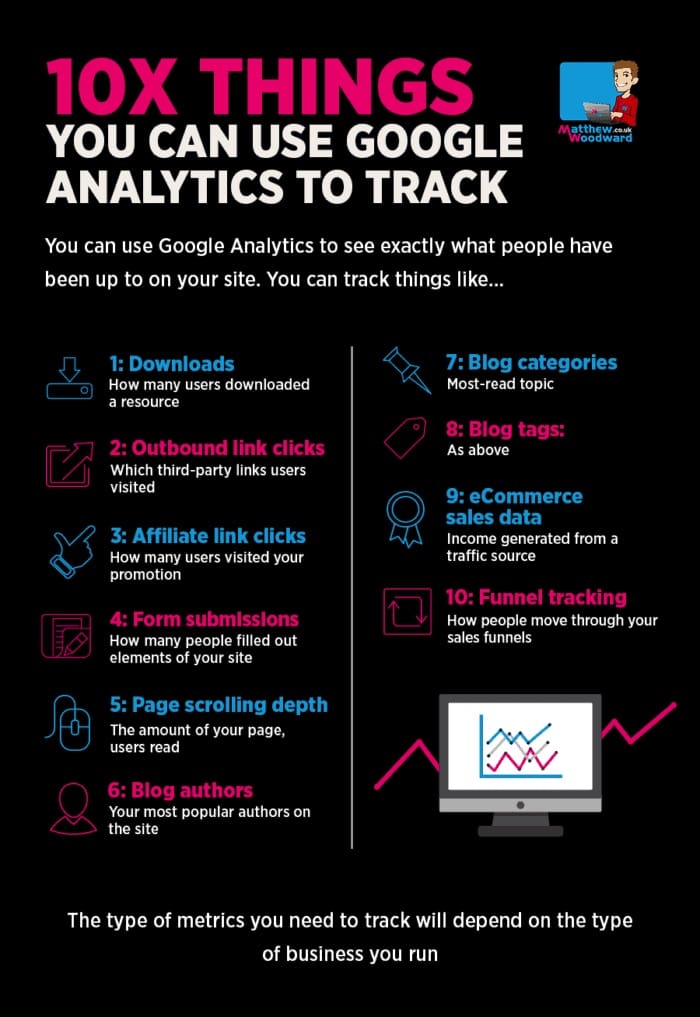
All your work is for naught if you can’t monitor what’s working, then use that information to optimize your market performance. At a minimum, you need Google Analytics (which is another reason for doing a self-hosted website over the alternatives discussed above).
Google Analytics is a free service that gives you incredibly detailed information about your website, including:
- number of visitors and what drove them to your site
- conversion rate, as well as conversion rates by channel (social network, for instance)
- shopping cart abandonment rates (lost opportunities)
- effectiveness of content in driving visits
Final thoughts on digital marketing success
I hope you found this overview of digital marketing success helpful. As you likely learned if you read the entire post, these seven elements of digital marketing success aren’t independent. Rather, they fit together to deliver growth and success. Good luck!
Need marketing help to support business growth?
We welcome the opportunity to show you how we can make your marketing SIZZLE with our data-driven, results-oriented marketing strategies. Sign up for our FREE newsletter, get our FREE guide to creating an awesome website, or contact us for more information on hiring us.
Hausman and Associates, the publisher of MKT Maven, is a full-service marketing agency operating at the intersection of marketing and digital media. Check out our affordable coaching programs to help your business thrive into the future.
Discover more from MKT Maven
Subscribe to get the latest posts sent to your email.


