 logo

Your company’s approach to digital marketing is old-fashioned if you agree with any of these statements:
- Digital marketing doesn’t produce a high ROI
- I only need vanity metrics, like follower counts, to direct my decisions
- A single communication channel is all I need to optimize digital marketing
- Quantity in content is more important than quality
- Digital marketing isn’t right for me (my industry)
- AI is a fad that doesn’t have any impact on my marketing strategy
- Digital marketing is too expensive

Your approach to digital marketing is old-fashioned if:
In 2026, old-fashioned means more than simply basing your marketing strategy on traditional media, such as TV, direct marketing, and billboards. Sure, these strategies still work, but you should use them to supplement modern digital marketing strategies. Even if your marketing strategy prioritizes digital marketing, AI and social commerce have changed the game, so your existing strategies might not be working as well as they once did.
In today’s rapidly evolving environment, digital marketing is old-fashioned if you’re not adapting to new trends. Ignoring the latest tools means your digital marketing is old-fashioned and less effective. Ultimately, if you don’t innovate, your digital marketing is old-fashioned, and you’ll fall behind competitors.
Here are some ways to determine if your assumptions toward marketing show that your approach to digital marketing is old-fashioned.
1. Digital marketing doesn’t provide sufficient ROI
HubSpot’s digital marketing report shows that 3X more businesses report higher ROI from digital than traditional marketing efforts. Case studies reported by Rutgers show industry leaders (and others) gain a higher ROI on digital than traditional. In fact, Nielsen reports only 18% of TV ads generate a positive ROI, despite capturing 60% of spend.
Data shows the positive (superior) impact of digital marketing on your bottom line. Maybe more importantly, analytics available to monitor digital marketing efforts let you fine-tune your marketing strategy in ways impossible with traditional media. With traditional marketing, you’re pretty much operating blind. For instance, this graphic shows the enormous ROI of email marketing, as well as other digital marketing tactics.

2. You only need vanity metrics to make good marketing decisions
Turning data into growth starts by forming a plan. Let’s start by talking about goals. You need to build SMART goals for every aspect of your business. Plus, you likely have goals related to individual marketing tactics. For instance, if you do e-mail marketing, you likely want to set goals related to open rates and click rates. You also might want to establish goals for market segments. For instance, you might want to develop goals for reach and engagement among Gen X consumers.
Armed with these goals, you’re now in a position to identify the metrics needed to monitor your progress towards reaching these goals. We call these key performance indicators (KPIs) because they directly correlate with achieving your goals.
In contrast, vanity metrics, like followers, clicks, and impressions, may make you feel good, but don’t directly impact your progress towards reaching your goals. However, even vanity metrics might have some importance when measured against time.
3. You think a single communication channel is sufficient
Your approach to digital marketing is old-fashioned if you think all you need is a website or a single social media platform.
Sure, a website is critical to a successful online strategy, but you need more. First, you need traffic to that site and digital marketing is a key tool for sending traffic.
Digital marketing, combining your website, as well as a couple of social media platforms, also increases the reach and frequency (2 key measures of how effective marketing communications are) as prospects see your message echoed by their social graph. More importantly, social mentions are more influential than commercial messages (ads) because people trust their social graph more than they do your biased communications (their interpretation), which vastly impacts purchase decisions.
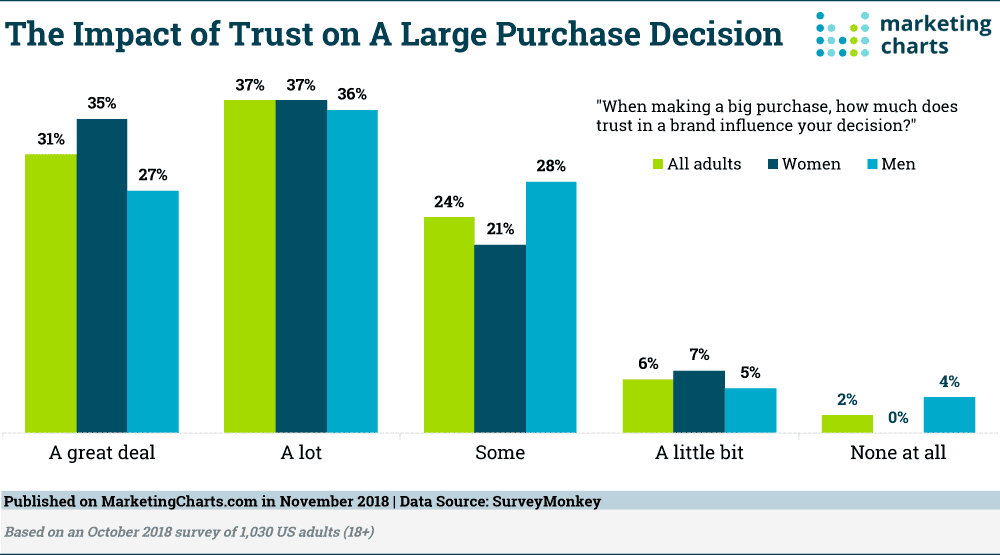
4. Quantity is more important than quality in content creation
If your approach to digital marketing relies on throwing spaghetti against the wall to see what sticks, you’re definitely wrong.
Creating valuable content improves your SEO, but it also persuades visitors to convert. That’s why understanding your customers (and prospects), understanding tools of influence, crafting persuasive messages, and a general understanding of marketing make a huge difference in your bottom line. And this is why you want a marketer running content, rather than a journalist or an English major.
Search engines and AI models punish slop, or low-quality content. Emphasize quality over quantity if you want to expand your reach and increase revenue.
5. Digital marketing isn’t right for me (or my industry)
I’ve heard this approach to digital marketing more times than I care to count — and it’s wrong.
Any industry can effectively use digital marketing.
- B2B firms use it for lead generation
- B2C firms use it to generate sales in stores and online
- Every business benefits from email marketing — which also requires list building
- Social advocates and evangelists amplify your message and support your brand
- Digital advertising offers better targeting, A/B testing to improve returns, and is less costly than traditional advertising
- Even firms that might find it difficult to engage customers/ prospects about their brand can gain traction by using digital marketing to support a cause or celebrate a customer
- In 2025, global online spending was nearly $2 trillion.

6. AI is a fad that doesn’t have any impact on my marketing strategy
Your digital marketing is old-fashioned if you’re still relying solely on SEO. As we’ve discussed in earlier posts, SEO alone isn’t enough; you need to use a GEO (generative engine optimization) tactic to supplement your search engine marketing. By the same token, don’t abandon your traditional SEO efforts based on keywords, as the two tactics work synergistically to help you reach search users.
By focusing on brand mentions and user intent in creating content, then using schema to organize the content for AI models, you increase your chances of showing up in answer snippets appearing at the top of search engine results. Traditional SEO also tells AI models that your content is high quality, increasing your chances of showing up in the links appended to these snippets.
7. Digital marketing is too expensive
Digital marketing is the most cost-effective form of marketing. Period.
And, if you think you can make a business without doing some marketing, you’re wrong. Everyone needs some marketing spend or they’ll never reach their potential.
That said, digital marketing costs money. Having your nephew or daughter do digital marketing only works if they have expertise in marketing. The fact that they have 500+ friends on Facebook doesn’t mean they have any clue about how digital marketing works — especially when it comes to monitoring and tweaking performance to optimize returns. Invest in quality employees or use an agency, which might be more cost-effective for smaller companies, as you can see below.

Also, beware of a number of fly-by-night agencies out there that will take your money without delivering a quality return. If you’re paying less than about $1000 a month, you’re with one of these agencies. Just like cheap web design or any other professional service, a low price often indicates poor quality, but a high price doesn’t often mean you’re getting high quality either.
Instead, read blog posts by agencies you’re considering hiring and ask yourself these questions:
- Do they show thought leadership?
- Is the agency successful with its own digital marketing?
- Is their work cited by other reputable blogs?
Also:
- Look at the agency’s previous clients and get recommendations from them.
- Ask for a detailed proposal that shows some understanding of your unique needs rather than a cookie-cutter approach.
- Who will handle your account — a trained marketer or someone hired by the agency with little background in marketing?
Your 2026 playbook to modernize your marketing
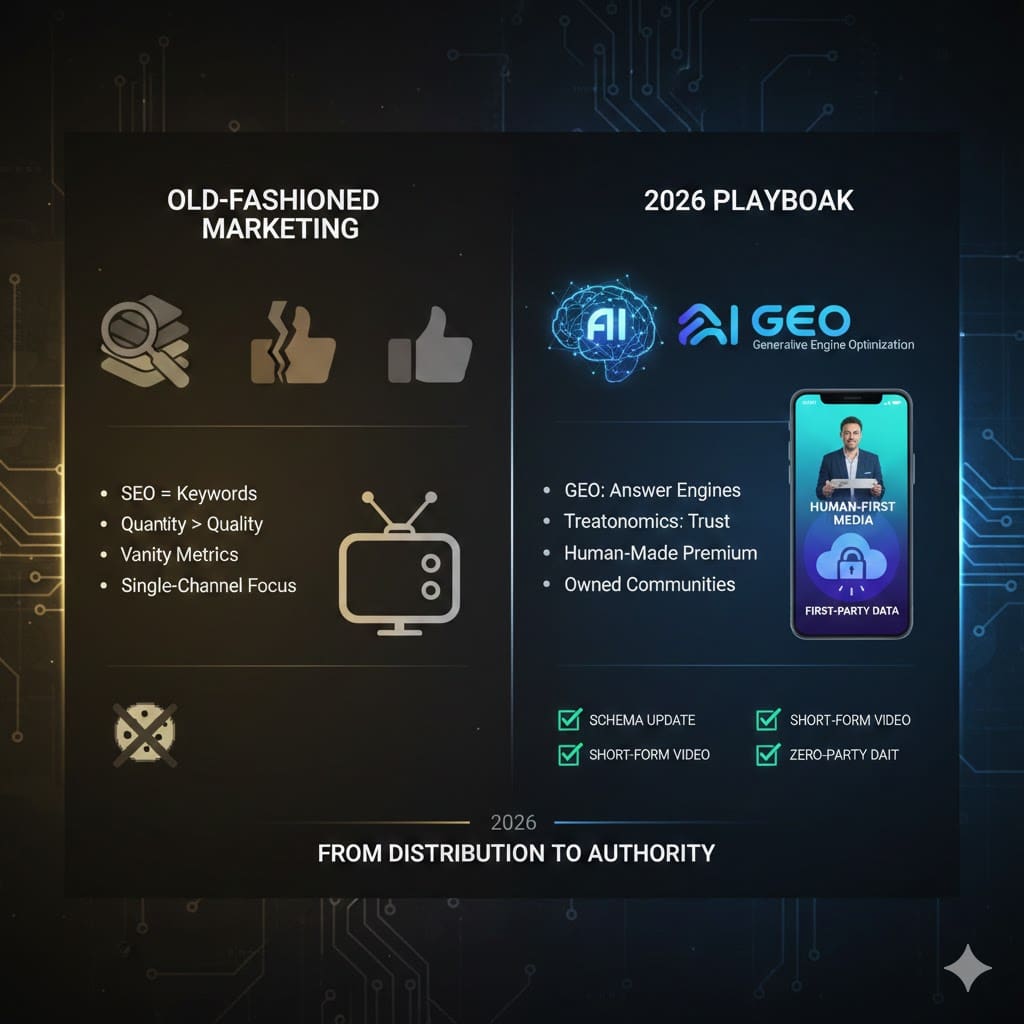
If, after reading this, you feel your digital marketing is old-fashioned, there are ways to fix the problem. Here’s your playbook for that:
Shift from SEO to GEO
Google isn’t the final arbiter of who shows up when users search for related products. AI models, such as Gemini, ChatGPT, and Claude, are the new search engines as content from these models shows up at the top of search results and users increasingly turn to them rather than search engines.
The fix involves changing the way you create content to focus on long-form educational content organized by schema so AI agents can easily consume and recommend your content and products. Focus on brand mentions in addition to gaining backlinks.
Embrace human connections
Consumers want human interaction, so ensure you use AI content as a basis for creating content, rather than for writing content. Avoid overly polished content, relying instead on short-form video that’s messy, rather than commercial quality. Respond to comments and queries quickly to show that a human being cares about your market.
Replace cookies with first-party data
While Google has delayed the depreciation of cookies, it shows that marketing is old-fashioned when you rely on them. Instead, optimize your use of first-party data by creating content like quizzes to get consumers to engage with your brand.
Instead of automating your valuable consumer relationships, automate tasks such as data analysis, A/B testing, posting content, and research.
Conclusion
To know if your digital marketing is old-fashioned, ask yourself these questions:
- Can an AI agent find and recommend my product? (A search of a product like ChatGPT or an evaluation of your Google Analytics for sources will help answer this question)
- Is my content helpful or is it just something to meet my quantity goals?
- Do I own my audience or am I at the mercy of platforms like Instagram or Google to impact my performance with an algorithm change?
Need marketing help to support business growth?
We welcome the opportunity to show you how we can make your marketing SIZZLE with our data-driven, results-oriented marketing strategies. Sign up for our FREE newsletter, get our FREE guide to creating an awesome website, or contact us for more information on hiring us.
Hausman and Associates, the publisher of MKT Maven, is a full-service marketing agency operating at the intersection of marketing and digital media. Check out our affordable coaching programs to help your business thrive into the future.
Discover more from MKT Maven
Subscribe to get the latest posts sent to your email.


