 logo

You and your team put in work every day to build a solid stream of business revenue. But are you achieving the optimal results, or are there some tactics almost guaranteed to improve revenue growth, if only you knew what they were? Well, today, we’ll share five ironclad tips designed to help you achieve explosive growth without a ton of risk or spending a ton of money. Read on to learn how to boost your business revenue.

How to explode business revenue
As you can see in the image above, there are four ways you can increase your business revenue
- Attract new customers
- Increase your average sale per customer and encourage customers to spend more with your company (split into two in the image above)
- Increase prices
- New offerings, new markets
To this list, I’ve added a fifth: operational improvements, such as reducing your cost of goods sold or improving the conversion process. That’s because, when we speak of revenue, we commonly separate gross revenue (the amount of sales) and net revenue (sales less the cost of goods sold). Since there can be a significant difference between gross and net revenue, most businesses focus on net revenue.
Before we start on a deeper discussion, let’s ensure we’re all on the same page when it comes to what we mean by our terms. First, revenue comes from sales of your products (goods and services). Profit, on the other hand, is what your business has left after paying all its expenses (except for the cost of goods sold). Thus, revenue and profit aren’t synonymous.
Next, let’s move on to how to explode business revenue.
1. Attract new customers
Much of the focus on marketing is on how to attract new customers. Recognize that attracting new customers is more than a communication issue, although advertising and messaging have a large part to play in attracting new customers. However, no amount of advertising or messaging will overcome other market failures. Fundamentally, you can only attract new customers when you:
Provide superior products and customer service to the right people at the right time for the right price.
Let’s break down this quote, shall we?
Superior products
A product market consists not only of your product but also of all products that serve as alternatives to it. We talk about direct competitors, such as two restaurants serving the same area, as well as indirect competitors, which might include other ways to satisfy your hunger, such as a home-cooked meal or even a ready-to-eat meal from a grocery store. Obviously, not all these alternatives are the best all the time, but the consumer’s choice depends on a variety of factors, including (but not limited to) time pressure, product availability, resources (ie, money), taste, mood, and the influence of others on the decision.
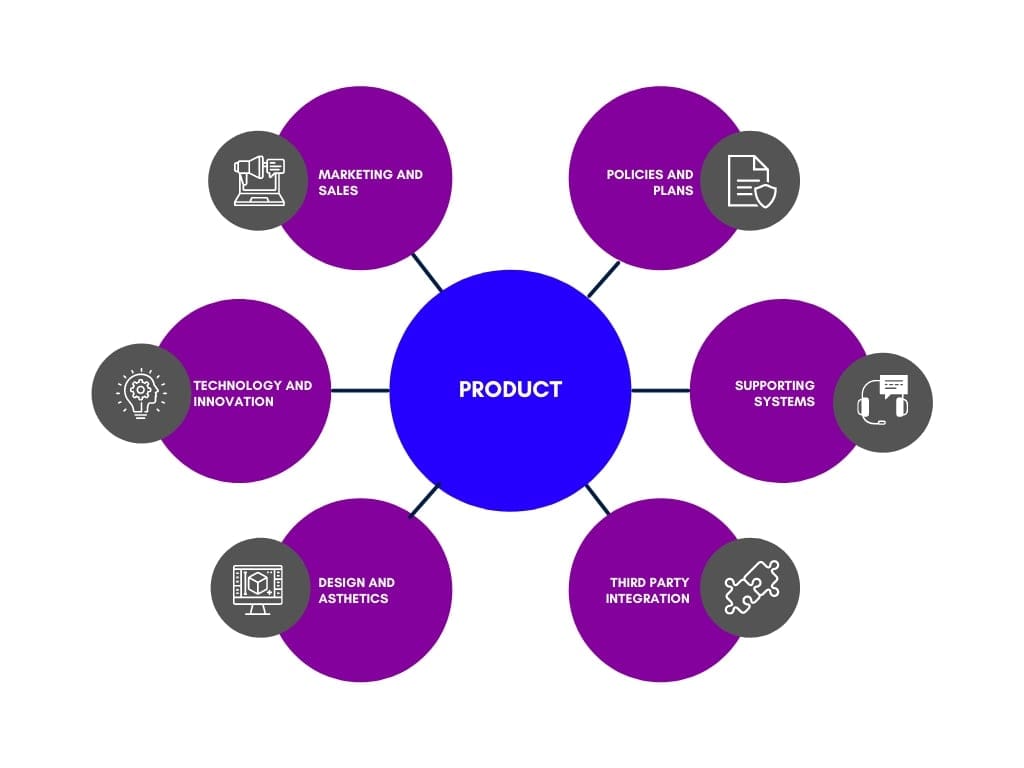
Plus, a product isn’t simply composed of the physical form itself, but includes everything from policies (such as return flexibility and warranty), support systems, compatibility with other products already owned, design and aesthetics, technology, and marketing, such as promises made.
Right people
Product marketing is all about creating a match between your target market and the products you sell. Remember that consumers buy solutions to the problems they face. That means you must understand the problems faced by your target market and then offer them superior solutions to those problems. Market research is the key to finding this elusive match.
It also means that you choose the right target market in the first place. Choosing a target market that’s already happy with an existing product is an uphill battle. Instead, look for holes where no product exists or where there are no good competitors.
Right place
Ensure your products are available in convenient locations; however, note that not all products need or should have intensive distribution. For instance, a Rolex loses some of its cache when sold outside of specialty jewelry stores. For more on this, I wrote a post covering product categories outlining distribution strategies for each category.
Right price
Again, category helps determine your pricing structure, so do your target market and goals.
Obviously, advertising and other communication strategies are central to business revenue gains. You’ll find a plethora of insights on these strategies by reading other posts on this website (find the topics you want using the search bar near the top of the page). Here are some topics to consider:
- social media marketing
- SEO or search engine optimization, as well as GEO or generative engine optimization
- Paid advertising through search or social, which has the advantage of high ROI compared to offline advertising, due to the targeting potential offered
- Landing page optimization
- Email marketing is used as a lead-nurturing program
- Referral programs
- Positive reviews and ranking
- Influencer marketing
- Co-branding
2. Increase revenue per customer
Customers are your best bet for increasing business revenue. They already know and like your products, so it’s easier to convince them to buy more by:
- Reminding them about the value they found in your products with follow-up emails,
- Create a loyalty program that encourages them to spend a bigger chunk of their money with your brand versus a competitor
- Treat them like the heroes they are with special discounts, thank-you notes, or anything that makes them feel valuable. For instance, my dog food company sometimes adds an extra dog treat to my order.
- Offer product bundles or upsell to encourage customers to add more business revenue per purchase
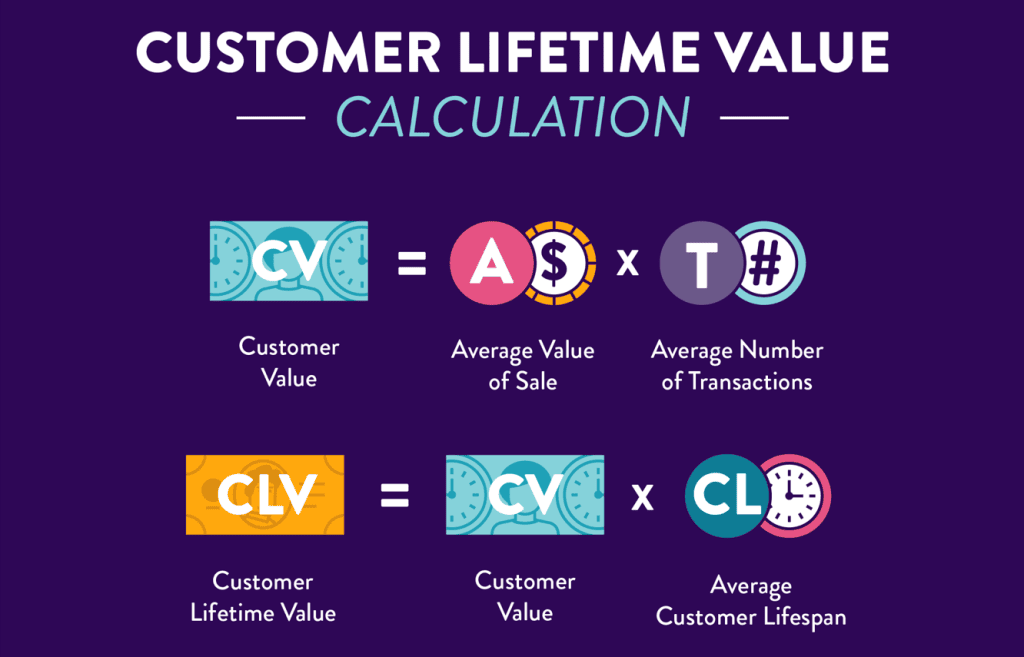
- Focus on customer retention with a strategic program. Business revenue is a function of the value provided by a customer over the life of their association with your brand. We call this customer lifetime value or CLV
- Consistently offer superior products and services, keeping all the promises made by your promotions
- A subscription model, especially one with a hefty discount for pre-paying for a year, not only helps retain customers but also gives your business revenue a boost that allows you to spend on making improvements that benefit customers and create brand value.
3. Increase prices
I don’t recommend this as your first strategy for boosting business revenue because you might find your target market is very price sensitive. This embodies the economic notion of supply and demand, which generates a curve that looks like this:

In the graphic, you can see what a change in price does when you face consumers with higher versus lower price sensitivity (termed elastic and inelastic demand). If you have consumers who are sensitive, a price increase might send them into the waiting arms of a competitor or they might forgo a purchase altogether. For instance, as the price of beef increased recently, consumers substituted other protein sources, such as chicken. If your target market is inelastic, a price increase will, in fact, build business revenue.
4. New offerings/ markets
You can capture additional business revenue by increasing your product offerings (new products) or by expanding into existing markets. Here are two examples:
- New products, especially those that fit your existing target market, offer more chances to sell products to both existing and new customers. This option is essential if you have products that face obsolescence. For instance, in the early days of Apple Computers, after the ouster of Steve Jobs, the company leadership decided to simply continue making improvements to the Lisa computer. The company nearly failed. After bringing back Jobs, the company transitioned to the Mac, which was light-years ahead in terms of technology, leading the company on a path to becoming one of the world’s most valuable brands.
- Expanding into new markets similarly offers opportunities to expand revenue. For instance, GLP-1 drugs are seeking FDA approval for the treatment of other types of addiction, in addition to food addiction, as research indicates the weight loss benefits may extend to curbing the desire for drugs like alcohol, cannabis, and cocaine.
This image summarizes the strategies involved in increasing business revenue through the expansion of products or markets.

5. Operational efficiencies
Since I want to limit our discussion to marketing tools for exploding business revenue, let’s focus on just two strategies under the direct control of the marketing department: lowering the cost of goods sold and improving the conversion rate.
Lowering the cost of goods sold
The cost of goods sold is the highest cost experienced by many businesses, especially retailers. Reducing these costs by a few pennies/ product can greatly reduce the cost, thereby increasing business revenue. Here are some feasible means that even small businesses can use to reduce the cost of goods sold:
- Increase your order size – if it’s possible to buy a larger quantity to get a more favorable price, the cost to store the excess until needed might justify the larger purchase.
- Move to a single-source supplier – while somewhat risky, building a trusting reciprocal relationship with a single source of supply for a wide range of products means you’re purchasing in the larger quantities needed for a discount, plus you often experience more flexibility, priorities in times of supply chain stress, and commitment to the continuation of the relationship. For instance, a client faced the possible strike by employees of one of his major suppliers. The supplier not only warned of the prospect of a strike, but make arrangements for an alternate source of supply.
- Adjust your make-or-buy decisions to select a more advantageous solution.
- Find an alternate supplier that offers lower costs, without sacrificing quality.
Improve conversion rate
If your business is like most, you spend a lot of time, money, and effort trying to attract, retain, and entice greater spending from your target market. Isn’t that all wasted when someone fails to convert? Of course it is. So, let’s explore how to increase your conversion rate beyond those means for increasing business revenue we’ve already discussed.
Shopping cart abandonment
Shopping cart abandonment rates hover around 70%, rising to 85% for mobile users. By improving those abandonment rates by even a small amount, you can increase your business revenue by a massive amount.

As you can see from the image above, shoppers have a variety of reasons for abandoning their shopping carts, which is a total waste of your marketing efforts. Try fixing these problems and you’ll find your revenue exploding.
But all is not lost. You can recover some of these abandonments through additional marketing efforts, such as:
- Fixing issues that interfere with conversion.
- Removing a single click from the checkout process offers a big opportunity to increase sales.
- Be transparent about costs. For instance, Airbnb recently removed the separate cleaning charge, so users see the full cost upfront.
- Offer guest checkout
- Only ask for the minimum amount of information to complete the transaction. You can gain valuable marketing information through a follow-up email.
- Creating an email series designed to recover these sales. Maybe you offer a one-time discount to the hesitant shopper or encourage one who wants to wait before purchasing with something to move the needle. For instance, you might use a countdown clock before a price increase or suggest a limited supply available for immediate delivery.
- Employ a remarketing campaign with ads directed toward shoppers who left something in their shopping cart.
- Offer a variety of payment options, including anonymous options like PayPal and crypto.
- Offer easy financing for large purchases.
- Some shoppers prefer involving a friend in their decision. Make it easy to do this within your e-commerce platform.
Conclusion
As you can see, none of these ways to explode business revenue is very costly or extraordinarily time-consuming. Try adding at least one of them today. Let me know how it’s going by writing in the comment section below.
Need marketing help to support business growth?
We welcome the opportunity to show you how we can make your marketing SIZZLE with our data-driven, results-oriented marketing strategies. Sign up for our FREE newsletter, get our FREE guide to creating an awesome website, or contact us for more information on hiring us.
Hausman and Associates, the publisher of MKT Maven, is a full-service marketing agency operating at the intersection of marketing and digital media. Check out our affordable coaching programs to help your business thrive into the future.
Discover more from MKT Maven
Subscribe to get the latest posts sent to your email.


