 logo

When someone mentions your business name, what comes to mind for the listener? If you don’t know, or the image of your brand doesn’t match that of your target market, that’s a massive problem. Building your brand provides a massive financial and competitive benefit when your brand implies trustworthiness and value. A strong brand allows your business to:
- Sustain a premium price (think of how Apple products often sell at a premium over competitors, despite no clear technical superiority)
- Reduce price sensitivity, meaning you’re less impacted when you need to raise prices; you won’t experience as many customers switching to a competing brand.
- You’ll likely experience lower acquisition costs as prospective customers are already familiar with your brand (may even have seen recommendations by trusted connections), know salient aspects of your brand, and trust your brand.
- It’s easier to hire and retain high-quality employees. And, you won’t likely need to pay a premium to hire these employees.
- When you decide to expand your product line, you’ll find that a strong brand image makes it easier to do so effectively and at a lower cost.

What is a brand?
I like to coach businesses on building a brand by asking them to consider a brand as a hologram containing every attitude associated with the brand (as depicted in the image above). Thus, a brand is MUCH more than the brand name and stylized depiction of the brand (such as logo, color scheme, and font).
According to TechTarget, a brand is:
A brand is a product, service or concept that is publicly distinguished from other products, services or concepts so that it can be easily communicated and usually marketed. Branding is the process of creating and disseminating the brand name, its qualities and its personality.
Thus, a brand is, to an extent, a shortcut for brand meaning, just like your name not only identifies you to others, but also contains everything that makes you, you. And, just like your name, a brand is a placeholder for everything the brand stands for, such as quality, innovativeness, style, personality (see below for examples of brand archetypes), values, and much more.
What three marketing tactics help with building your brand?

When building your brand, you’ll find that three tactics are the most valuable in building a strong one, one built on trust. These three are:
- Crafting a brand identity and story that resonates with your target market
- Ensure you have a distinct positioning that sets you apart from your competition
- Commit to consistency across all forms of communication
Next, we’ll see how you can employ these tactics when building your brand.
Craft a brand identity and story
Building your brand starts with brand identity and your brand story, although as we move through these three tactics, you’ll find a thread that connects the three tactics together to ensure your success.
Your brand identity must resonate with your target market, being what they find important and valuable. Often, the products we buy are a reflection of who we see ourselves as, so you want your brand identity to act as a mirror to reflect the best elements of the target market. We see this in the following Apple meme for their line of computers.
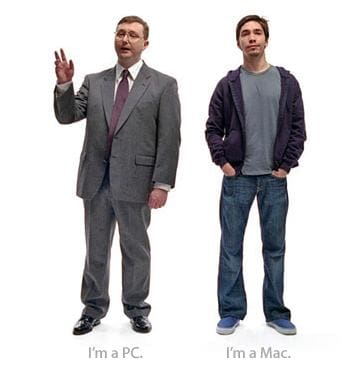
Part of this is forming your brand personality, which comes through your marketing messages and the actions taken by your business. Building your brand personality gives you a place in the minds of your market that helps consumers choose among the many options available to solve their problem (consumers buy solutions, not products).
Many of the brands that come to mind easily fall into one of these brand personality archetypes:

Other elements of your brand identity come from the actions you take, not just your messaging. Among the most important is living the values you put into your values statement. The World Economic Forum presents evidence that 88% of consumers use shared brand values when choosing products, a number only slightly lower (70%) when measured worldwide.
A brand story can support your commitment to values. It can also create emotional engagement (between 70 and 95% of purchases are influenced by emotion), build your brand personality, and build trust.
Speaking of values, consumers consider more than just shared values when building your brand. Thus, building your brand must focus on creating the image of value for your brand, not on price. Customer value results from perceptions of purchases based on their cost and the benefits consumers believe they receive from the product. The higher the perceived value, the more likely a consumer is to purchase the product, repurchase it the next time they need this solution, and the more likely they are to recommend it to other consumers.
If you want to succeed, you should NEVER compete on price, but always compete on VALUE, despite what economists have to say on the matter. That’s because the biggest segment of consumers is value-conscious. Deloitte estimates that between 70 and 90% of the global market is comprised of value-conscious consumers.
Don’t believe me? If you think about your own purchase behavior, you likely find examples where you’ve purchased a product that wasn’t the cheapest one out there. Maybe you bought a name-brand versus a generic product, or you opted for a highly rated wine instead of the cheapest one out there. You made the choice based on value, rather than price. Not surprisingly, the higher the perceived risk of the purchase, the more emphasis the consumer places on perceptions of value.
Strong positioning
Building your brand means creating a strong positioning for your products that satisfies the hot buttons that determine product choices for your target market. Positioning your brand starts by asking your target market to list their hot buttons, then asking for attitudes regarding your brand, as well as competitors that reflect how each performs across these hot buttons. The results are mapped onto a grid that clearly distinguishes your brand from your competition on these characteristics. Your results might look something like this:

Notice the separation between brands such that each brand is clearly positioned relative to the hot button characteristics. If you don’t already have a product or yours isn’t clearly positioned where it might succeed, you can also use this product positioning map to determine a likely positioning that leads to success. Note that some quadrants of this positioning map aren’t viable, either because it’s impossible to create a product in that quadrant (for instance, it’s hard to produce a high-quality product and then sell it for a low price), while some are unappealing to consumers. Hence, some positions aren’t viable.
Building your brand doesn’t have to limit your positioning to only two critical hot buttons. With computers, you can develop multi-dimensional product positioning maps that show positions across multiple hot buttons.
Commit to absolute consistency
Building your brand requires scrupulous commitment to consistency; otherwise, you can muddle your brand image, leading to distrust, poor positioning, and poor performance. Consistency requires that every aspect of your brand, from your visual branding to brand messaging to values to your policies, tells the same story and conveys the same message.
You can start building that consistency through a style guide that clearly establishes elements of your visual identity, including:
- A brand name that reflects your business and its values. Ensure it’s easy to pronounce and doesn’t have a negative meaning in other languages (for instance, the old car brand Nova translated into Spanish as no go. Not the image you want for a car).
- Logo, which makes your brand easy to identify. Your logo should be clean, easy to read and understand, memorable, and easily fit for various uses. Many brands go so far as to dictate the separation between the logo and other elements, positioning relative to the page (or screen on digital), or how it can be used. Choose carefully, as changing your logo as your business model develops can face pushback from loyal customers and cause confusion.

Image courtesy of Design Inspiration - Color palette with colors expressed in both hex codes and RGB to ensure the colors look the same across digital and non-digital assets. Only use colors that are appropriate for digital. Colors are so important that some brands (such as John Deere) go so far as to patent their choice (John Deere Green). Lesser brands might try to copy your color palette to capture some of your brand loyalty.
- Fonts. Just as colors are sometimes patented, fonts are, as well. In fact, many brands pay to have a font created for their sole use.
- Key images that represent your brand.
- Graphical elements, such as textures and symbols.
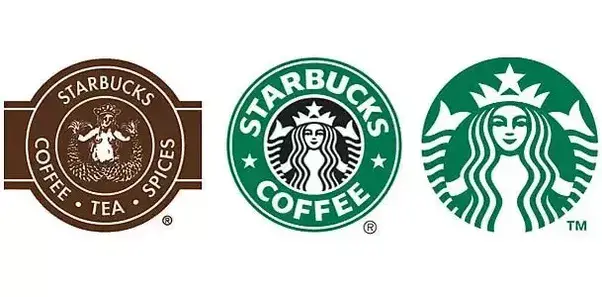
Next, ensure a consistent voice and tone. If you’re old enough to remember Wendy’s commercials with the tag line, “Where’s the beef?”, you may recall that the actor who delivered these lines used her prominence to book other commercials. She was promptly dropped from the Wendy’s commercials and the spending for that message stopped because the voice was no longer associated only with Wendy’s.
Finally, the customer experience should deliver on the rest of your branding if you want to focus on building your brand effectively. That means you must ensure the product delivers on expectations and keeps the promises you made to consumers. In fact, the entire customer experience must consistently deliver. For instance, building your brand requires policies, delivery, and even product packaging to support a consistent message.
Examples of small businesses building a successful brand
My advice on building your brand might seem good, but you might question how you can implement this advice. Here are three small business that used one of these tactics to create a successful brand.
Death Wish Coffee
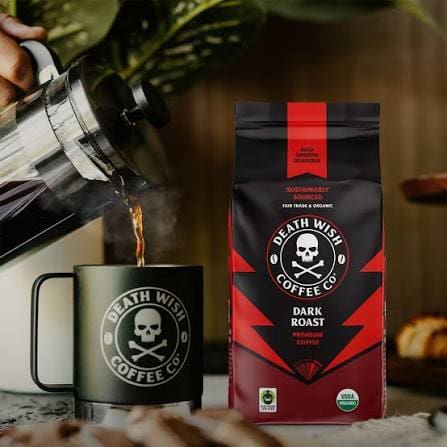
This company succeeded by building a distinct positioning for its brand in a market crowded with larger competitors, like Starbucks.
This brand in Saratoga Springs chose to set itself apart from the Starbucks positioning as a “third place” with premium beans, fair trade coffee, and a cozy atmosphere. The owner branded his product as the strongest coffee in the world and everything from the name (Death Wish) to packaging reinforced this positioning, while maintaining elements important to the target market, such as fair trade.
Sadie’s Artisan Soaps
This brand succeeded through a scrupulous commitment to visual and values consistency. The company’s alignment between its values and those important to its target market was its key to success. The company adopted values of being natural, environmentally friendly, and offering unsophisticated luxury. It carried these values through every consumer touchpoint, from the earth-tones used on its website to the recycled paper used for packaging, and a calm, unfussy voice it uses for digital communications.
Combining these elements flawlessly gives the company the authenticity that it needs to resonate with its target market.

Beardbrand
Beardbrand is a product for men’s beard grooming that distinguishes the brand by separating itself from the rugged, outdoor image commonly shared in other beard products. It brands its products using an emotional valuing proposition that highlights investment in a man’s presentation of self and a style that fits the modern urban gentleman. The website features golf images, rather than the rugged outdoors.
Started as a blog with a small investment in inventory, the brand continued its educational focus on grooming, style, and self-confidence. They also seek to establish a rapport with customers by encouraging them to join the community rather than buy my product.

Conclusion
Building your brand isn’t simple, and it doesn’t happen overnight. It takes a long-term commitment to these three tactics and constant reassessment of them. Occasionally, rebranding is necessary to keep up with competitors and changing consumer needs. Be wary, however, of changing your brand frequently, which is confusing.
Instead, consider building your brand as a long-term strategy. Do your research before choosing a brand image, so it can withstand the test of time.
Need marketing help to support business growth?
We welcome the opportunity to show you how we can make your marketing SIZZLE with our data-driven, results-oriented marketing strategies. Sign up for our FREE newsletter, get our FREE guide to creating an awesome website, or contact us for more information on hiring us.
Hausman and Associates, the publisher of MKT Maven, is a full-service marketing agency operating at the intersection of marketing and digital media. Check out our affordable coaching programs to help your business thrive into the future.
Discover more from MKT Maven
Subscribe to get the latest posts sent to your email.


