 logo

In an earlier post, we discussed why you need to build an Instagram strategy and offered some general instructions you need. In today’s post, I want to delve deeper into the topic of building an Instagram strategy with the details you need to make it a success. Warning: This is a long post, but I think you’ll find that it can really help your business, especially if your target market leans heavily toward younger consumers.
In the earlier post, we shared insights from Hootsuite regarding Instagram’s age distribution, which skews heavily toward users under 35. If you didn’t see it, I’ll share another one that includes not only US users but those worldwide, which mirrors the one in that post.

How to build an Instagram strategy

The image above shows the various elements involved in building an Instagram strategy. We shared this in the earlier post, but I’m going to expand on each area in this graphic, so I wanted to share it again. Let’s start at the beginning.
Create an Instagram business profile
If you already have an Instagram profile, the first step in building an Instagram strategy is to convert that to a Business profile because it unlocks insights, allows contact buttons like email, and appears more credible to users. Instagram doesn’t allow you to create a business profile from scratch. So, first, create a profile with a clear, concise username that matches your business name. Choose the settings tab to change to a professional profile, then select “business” from the available options [source]. You must link your business profile to your Facebook page (Meta owns both) and add your business details.
Add a profile picture such as your logo or a professional, high-quality photo that reflects your brand. Keep in mind that this profile is displayed as a small circle, so make sure it looks good before moving on. You might have to adjust the size to make it look good. You now have 150 characters to create a bio that makes you seem approachable and clearly states why your brand is right for your market. Don’t be afraid to show your personality. Your bio can contain only one link, so make it count. Tools like Linktree allow you to create a landing page containing links rather than linking to a specific page of your website.
Building an Instagram strategy for content
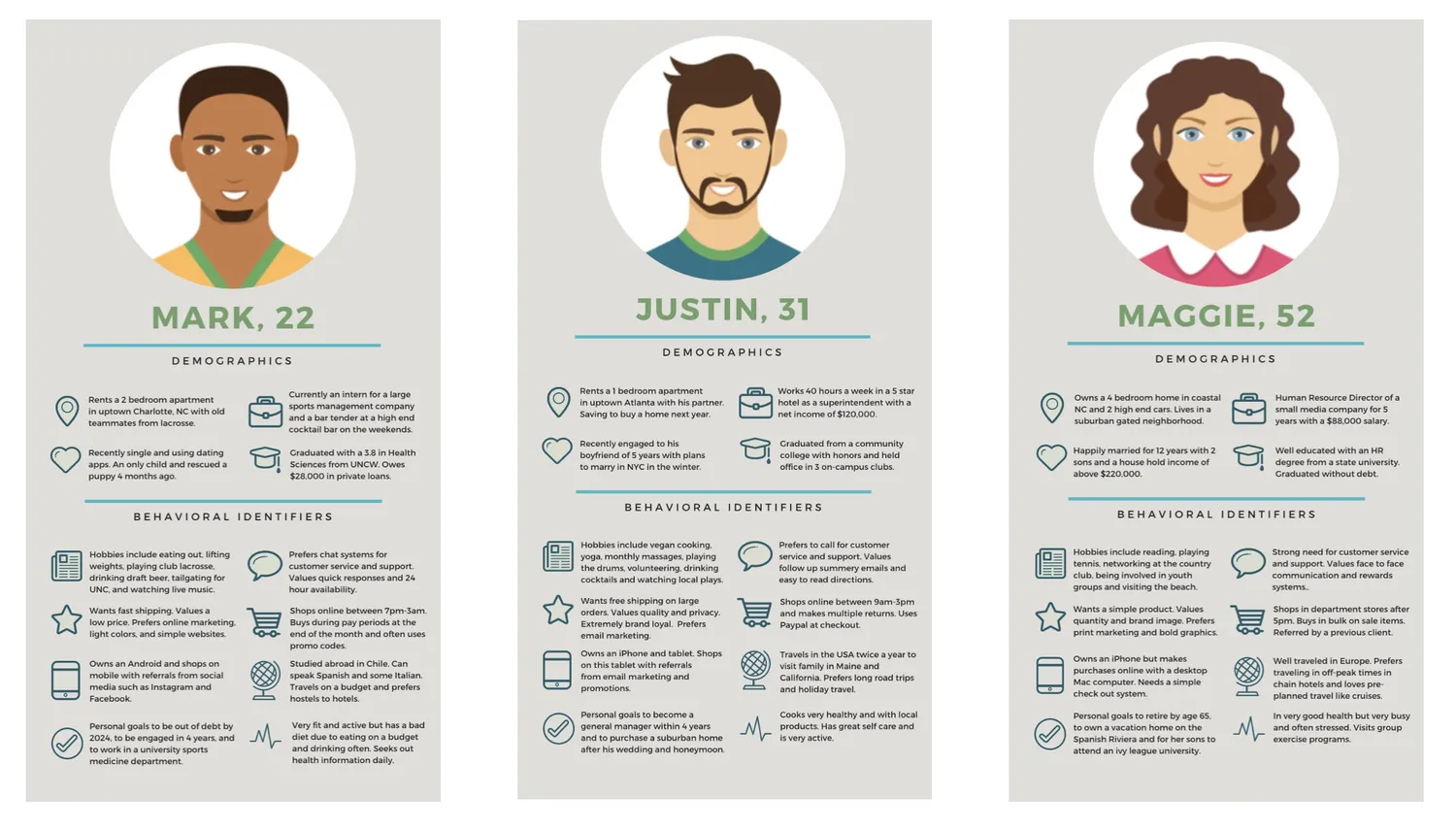
Content is the lifeblood of digital marketing, so you need a content strategy specific to Instagram, which mainly focuses on visual content like images and videos (Instagram Reels). Creating a content calendar helps you plan content to effectively reach your target market(s) regardless of their interests, needs, or stage in the decision-making process. Since your content strategy depends heavily on the character of your target market, your first step in building a content strategy is defining personas if you haven’t done this as part of building your marketing strategy. You need sound information to build this profile, not impressions or opinions. Below is an example of personas so you know what you need to create ones for your brand.
Decide on several themes that match your target market, including options for:
- Educational content that fits your product or market
- Inspirational content like quotes or stories
- Behind-the-scenes posts that help humanize your brand
- Product highlights, such as uses or demonstrations
- User-generated content
- Social action images or videos of your company supporting charities or demonstrating its commitment to the values it shares with your target market
Create a content marketing calendar that uses a mixture of appropriate content types and different combinations of videos, images, and carousels to engage your target market and attract attention. Don’t forget to add a couple of hashtags, as this helps users find your content. Plan to publish at least once a day, although publishing a few times is acceptable. You just don’t want to flood your profile with so many posts that it seems spammy. Also, avoid overly promotional content, as Instagram isn’t the place for the hard sell. Keep your posts light and entertaining to appeal to younger consumers. Include interactive content in Instagram Stories as a way to increase engagement. In building your content calendar, consider the different stages in the decision-making process to provide appropriate content for each stage.
Your content calendar should contain information that helps your content team create content on a consistent basis, as there’s nothing that dampens creativity more than facing an empty screen that needs fresh content today. You might make a calendar for a week or a month, including links to images and videos you want to share, links you want to include with the post (although clickable links are only allowed in Instagram Stories on profiles with over 10,000 followers or in ads), your specific target market for the post, and other resources you need to create a post easily.
Posting at the time when your target market is online means your post attracts more attention. For younger consumers, that often means during lunch breaks, in the evening, or during commutes. Using Instagram Insights, you can collect data to help you determine the best time to post to reach your specific market. Scheduling tools like Buffer or Meta Business Suite allow you to schedule your posts. Hence, you never miss a publication window and, without interrupting your other work to add a post, which improves performance and productivity. You can schedule an entire month or week’s worth of posts at one time, especially if you already have your content calendar filled out.
Remember, quality matters more than quantity. If you’re stuck for ideas, consider checking out posts created by competitors or other brands popular with your target market. Also, monitor trending topics so your posts attract attention.
Building community engagement
Engagement is the name of the game when it comes to building an Instagram strategy or any social media strategy, for that matter. Increased engagement translates into a wider reach, more visits to your website, and improved SEO or Search Engine Optimization, which means your content shows up higher when users search for content related to your site.
When it comes to building engagement, authenticity and value are your goals. Keep your tone conversational. When creating posts, I like to think about talking to a friend or colleague and visualize our conversion. Use personal terms, such as I, we, and you, rather than referring to a group or business. As mentioned earlier, avoid salesy posts. Experts recommend you use a mixture of 90% of your posts that provide some form of value, like entertainment or information, with only 10% of the posts promoting your brand. Below is a diagram showing the engagement engine and how it drives conversion.

In addition, post content that encourages interaction to increase engagement. You can post polls or quizzes that tempt your followers to respond, as users of all ages love to participate. You can also seek comments after sharing some helpful information or request ideas. For instance, you might share ideas for a new product and request feedback from your followers. Instagram even offers a Questions sticker to allow followers to ask questions. You can use Instagram Live or an Ask Me Anything session in Stories.
But remember, engagement is a two-way street. Be sure to thank or respond when your community engages with you. If you post a poll, be sure to share the results.
Influencer marketing
Another valuable tool for creating engagement involves collaborating with influencers. To have any effect on engagement, influencers must have caché with your target market. Influencers with a large following are expensive, but you can easily find micro-influencers with 5k to 50k followers who might collaborate in exchange for your support or a free sample.
Collaborations might include:
- Takeovers, where you invite an influencer to take over your Instagram Stories for the day to share their insights or tips.
- Sponsored Posts, which involve collaborating with an influencer to write a review or demonstrate your product on your feed.
- Co-created content, such as co-hosting an Instagram Live or doing a Reel together.
Working with influencers can be a little tricky, so spend time ensuring that the influencers you work with share your values and present the kind of image you want for your brand. Nothing is worse than having your influencer post something that’s insulting, illegal, or controversial with your target market.
Networking
Building your Instagram strategy means working with others using the platform. Seek out others in your market niche or who have a large following among your target market, then engage with them by commenting on their posts regularly. This not only builds collaboration that might lead to cross-promotions but might attract their followers to check out your profile.
Using hashtags
Hashtags are essential if you want to be discovered and build your community on Instagram. Use a mixture of popular or trending hashtags, as well as those relevant to your niche. You should also create a branded hashtag that reflects your business. Geotags as hashtags are also valuable tools. While Instagram allows up to 30 hashtags per post, don’t overload your posts with more than three to five hashtags. It’s OK to rotate through different hashtags.
Include hashtags in your caption or the first comment. I like to add them in my caption at the end, although either method works as far as the Instagram algorithm is concerned, so both help you show up in searches. Instagram SEO allows the algorithm to search not only hashtags but also keywords used in captions and alt tags used to identify images (you’ll find this feature in the advanced setting). You can also use hashtags to help you find influencers with whom to collaborate or network.
Instagram advertising
Instagram advertising is essential for success in building an Instagram strategy, especially with organic (unpaid) reach declining as Meta (Instagram’s parent company) increasingly emphasizes profits. As you can see in the graphic below, Instagram’s organic reach fell by 18% between 2023 and 2024, and experts expect that trend to continue.
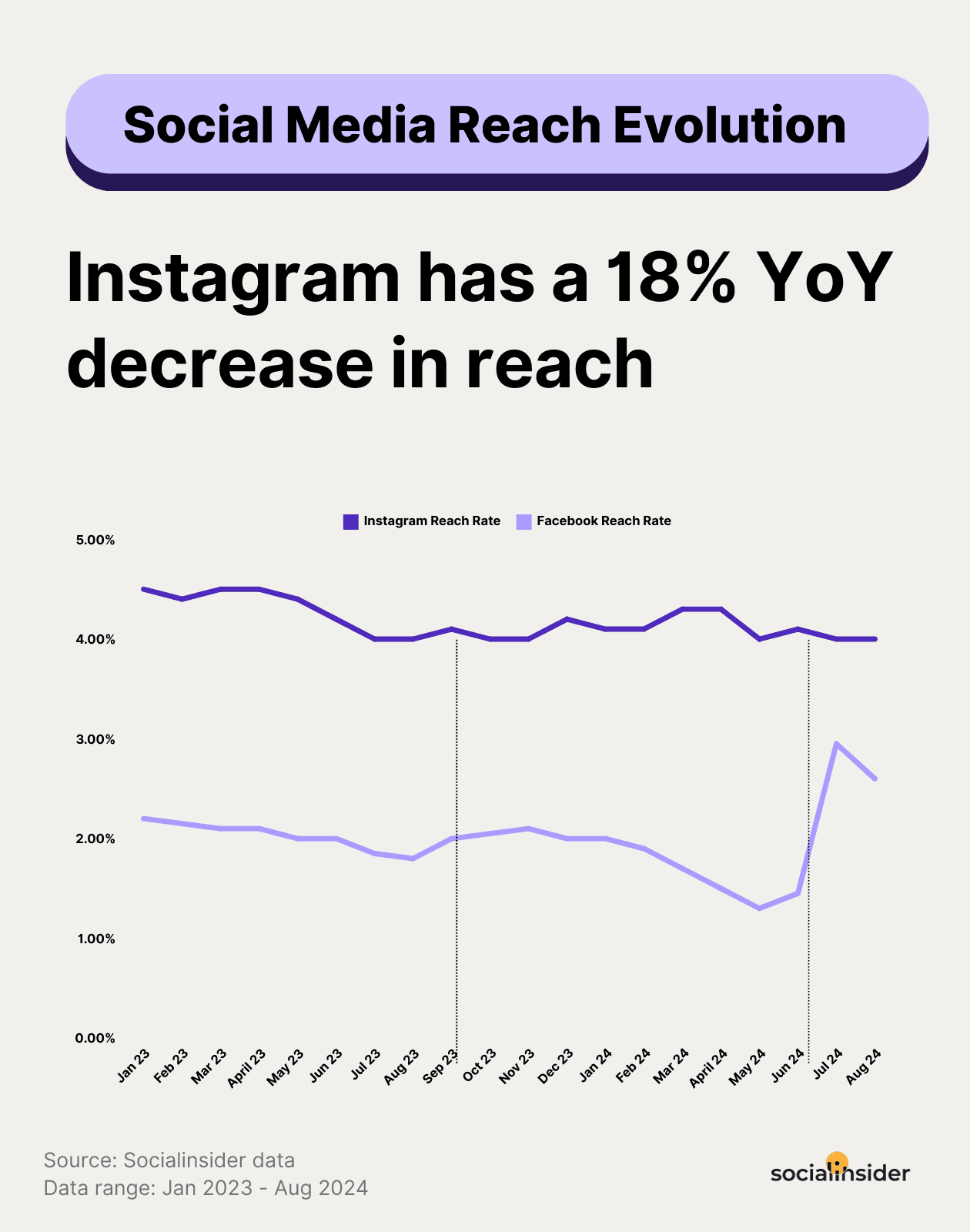
This highlights the importance of adding advertising as part of your strategy.
Creating a successful Instagram advertising strategy is much like advertising on any other social platform. However, the emphasis of these ads is on the visual elements. Since you’ve already defined your target market and built personas as part of your Instagram marketing strategy, here’s what you need to do to create a successful Instagram ad:
- Start with a compelling visual that highlights your product and builds engagement. Images of people are always a great bet.
- Use tags to measure results or set up a Meta API in the Meta Ads Manager, where you set up ads that run on either Facebook or Instagram or both.
- Let Instagram’s algorithm define the target for your ads, which is called broad targeting. Since the algorithm looks at hashtags and keywords to determine targeting, ensure these match your target market and goals (i.e., create engagement, conversion, or generating leads).
- Test and iterate to optimize performance.
- Create your ad using different Instagram options, such as Reels and Stories, in addition to posts. Video ads that don’t force audio work best.
- Watch for Instagram safe zones, which weed out inappropriate content or content that doesn’t display as intended.
Metrics to track growth and engagement

A critical element in building an Instagram strategy is monitoring key metrics (called KPIs or key performance indicators) to optimize your performance. You’ll find these metrics in Instagram Insights, which is available in all business accounts. To be successful, you should ignore vanity metrics, such as follower counts, as these don’t translate into conversions. However, monitoring your community growth tells you a lot about whether your strategy is working. Below are some other KPIs to monitor:
- Reach, which is the number of users who saw each post—also, track impressions, which is the total number of views.
- Engagement
- Audience metrics, such as age, geographic location, etc.
Don’t stop with Instagram Insights in analyzing your metrics. Use Google Analytics to track your Instagram posts once they reach your website. By tracking the performance of individual posts and how visitors from Instagram move through your website, you glean valuable information to help improve your Instagram strategy. You also gain insights into the characteristics of visitors from Instagram, such as age and gender.
Simply collecting KPIs isn’t enough. You need to analyze the metrics to gain insights you can use for decision-making. Data visualizations help turn metrics into insights by using graphics that are easier to interpret than rows and columns of numbers. By bringing all your metrics onto a dashboard, you enhance your ability to analyze the data.
Conclusion
Building an Instagram strategy and refining that strategy takes time. You likely won’t see results for several months after you launch your profile, but with sustained effort that implements these recommendations, you’ll find success.
Need marketing help to support business growth?
We welcome the opportunity to show you how we can make your marketing SIZZLE with our data-driven, results-oriented marketing strategies. Sign up for our FREE newsletter, get our FREE guide to creating an awesome website, or contact us for more information on hiring us.
Hausman and Associates, the publisher of MKT Maven, is a full-service marketing agency operating at the intersection of marketing and digital media. Check out our full range of services.
Discover more from MKT Maven
Subscribe to get the latest posts sent to your email.


