 logo

Are you achieving the goals you set for your digital marketing campaigns or are they falling flat? Do you even have a process for assessing campaign performance that allows you to determine what’s working and what’s not? After all, if you don’t know what the problem is, how can you fix it? That’s where this 3-step framework for assessing campaign performance comes in. Assessing campaign performance starts by filtering out the noise to focus on metrics that impact your results, called KPIs or key performance indicators. Read on to start helping your campaigns reach their goals by accurately determining where the current campaign strategy is failing.

Moving past the noise in assessing campaign performance
In the image above, you see a crowded city with lots going on that might distract you from reaching your goals. The first step in assessing campaign performance is to filter out the noise that can easily distract you from what’s really important. We call these metrics, which directly or indirectly impact your results, KPIs or key performance indicators.
The difference between these metrics and those that simply add noise, which we call vanity metrics, is more than a semantic one. Optimizing for vanity metrics is a waste of resources, including time, money, and opportunity. Focusing on optimizing KPIs will improve performance, although some changes that improve KPIs may take some time before they flow through to your final results, such as income. Below is an image that summarizes the differences between vanity and KPI metrics.
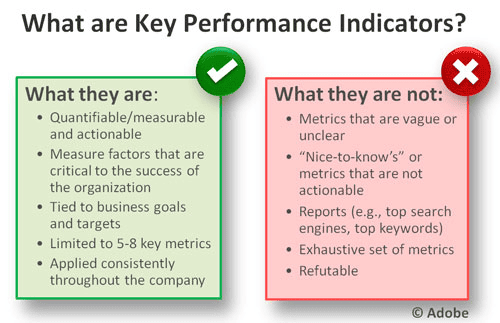
Assessing campaign performance: KPIs
Just a few years ago, marketing teams didn’t have much in the way of real metrics that correlated with marketing performance. Instead, they settled for wimpy metrics like increased awareness and recall. That’s because you can’t get your hands on KPIs like conversion rate in a world where your marketing campaigns consist of TV, newspaper, and billboard advertising. I come from the direct marketing world, back before there was digital marketing, and we were lucky to have hard metrics because we coded our campaign collateral so we knew which mailing or magazine BRC (business reply card) prompted the inquiry or order. With the phone, we knew which list and which offer generated the most sales.
Marketing teams all around the digital world today find themselves falling into the trap of loading down their digital marketing dashboards with as many metrics as they can get their hands on because they’re readily available. Because the vast majority of these metrics look like you’re doing a good job, you tend to ignore the few that might have dropped since last month (or quarter), because they make you feel bad (or look bad to your bosses). Since most marketers working today weren’t trained in data analytics, they’re at a loss for how to make sense of the results.
To help with assessing campaign performance, experts like Avinash Kaushik, the analytics guru from Google Analytics, recommend you break down KPIs based on the way they impact the decision-making process. For instance, when it comes to your website, he recommends the following:

Meanwhile, you can ignore vanity metrics, such as:
- # of visits or visitors
- time on site
- pageviews
- Subscriber count
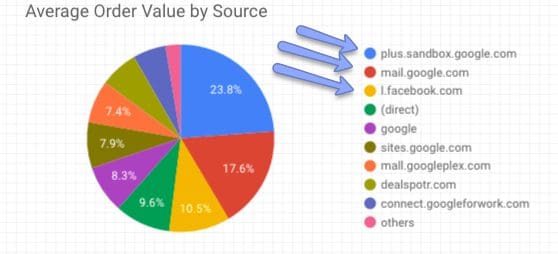
You can now spend your time more efficiently by assessing campaign performance by developing a more nuanced vision of your KPIs. For instance, you can assess your conversion, cart abandonment, or click-through rate by product, region, demographics, or source, such as in the image below:
Of course, so far we’ve only discussed KPIs and vanity metrics related to your website. You should create a similar list of KPIs for each type of marketing tactic you employ, including social media, email marketing, SMS text marketing, and non-digital marketing efforts, such as trade shows.
Now, create an interactive dashboard containing all of your KPIs across various marketing tactics. I say interactive because you should be able to use your dashboard to compare performance across various time periods. product lines, regions, or areas of marketing team responsibility. Tableau is a great tool that allows you to combine metrics from any source into a single dashboard and use data visualizations to get the most insight from each metric. For instance, even some vanity metrics, such as follower counts on social media platforms, gain the ability to provide insights when assessed as a time series rather than a point metric. Hence, if your follower count is growing over time, it might foretell increased engagement in the future, increased likelihood of generating user-generated content, or interest in your brand.
Maximizing efficiency and effectiveness
Efficiency assesses how well you use your resources to create results. Effectiveness assesses how well you move prospects through the pipeline to become customers and then repeat customers.
Here’s the 3-step framework and the resulting metrics I recommend to assess both efficiency and effectiveness:
| Metric Category | What It Tells You | Core KPI Examples | What It Looks Like in Action |
| Efficiency | Are we executing cost-effectively? | CPC, CPL (Cost per Lead), CPM, Email Open Rates | You optimized ad creative to lower your Cost per Lead by 25%. |
| Effectiveness | Are we driving quality actions? | Conversion Rate, MQL-to-SQL Velocity, Pipeline Value | 70% of those cheaper leads match your Ideal Customer Profile (ICP). |
| Impact | Is this moving the needle on revenue? | ROAS, LTV-to-CAC Ratio, Revenue Per Customer | The campaign achieved a 4:1 Return on Ad Spend, directly hitting pipeline goals. |
You need to assess both efficiency and effectiveness in assessing campaign performance.
An efficiency audit
Here you’re looking at your creative. What are your CTR (click-through rates) and how are they changing over time, across posts, across campaigns, and across platforms? Low CTRs indicate your copy isn’t resonating with your target market. Experiment with changing key elements of your copy, such as images, calls to action, headlines, and your hook.
An effectiveness audit
These assess whether you’re driving the “right” traffic to your website with your actions. This is especially important with PPC (pay-per-click) campaigns because a poor performance here means you’re paying to bring in traffic that doesn’t buy.
Factors such as lead quality score, as indicated by traffic that goes past the initial click or takes an action on a landing page, are important metrics to assess effectiveness.
Finally, you need to assess whether you’re getting value for your ad spend. Assessing metrics such as ROAS (return on advertising spend), customer acquisition costs (CAC), and customer lifetime value are important for assessing campaign performance effectively.
Again, don’t settle for overall metrics. Break your metrics down into meaningful segments such as sources, demographics, and product lines.
Turning these metrics into insights
You’re likely to find that poor performance comes from one of three sources:
- You experience a lot of clicks but low conversion, which results when your creative doesn’t engage your target market. For instance, I once saw a campaign that failed in two of three countries where it was shown simply because the license plate on the car was obviously from the third country. This subtly tells consumers in the other two countries that this product “isn’t for them”.
- If your problem is too few impressions for the price you’re paying for the campaign, you’re likely to find that you fail to satisfy the algorithm for that platform. This has become a more serious concern as platforms seek to optimize stockholder wealth by showing content that users engage with. Try selecting your target market more narrowly or using a look-alike audience.
- Conversions aren’t the end goal. The end goal is to make money. You can have low-value conversions that don’t generate much money. For instance, I once found that conversion was higher among younger visitors, while AOV (average order value) was higher among older ones. Thus, older consumers are more valuable for this firm, and it should focus on attracting and converting this demographic.
A comprehensive audit for assessing campaign performance

A thorough digital marketing audit ensures your paid and organic channels are technically sound, structurally aligned, and actively feeding your pipeline. This checklist is broken down by channel so you can systematically isolate inefficiencies and scale what works.
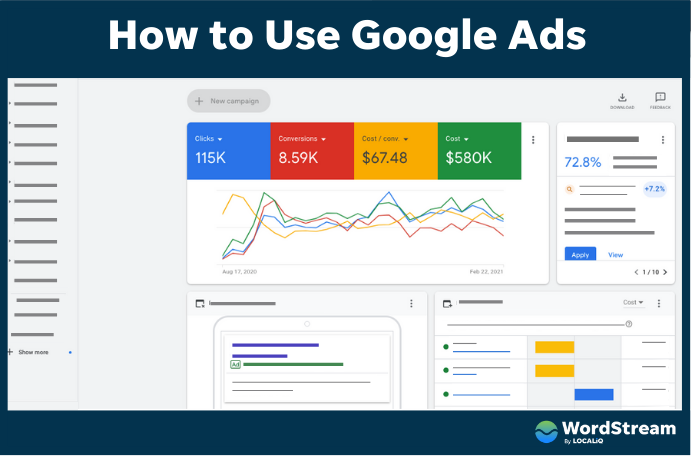
1. Paid Search (Google Ads / Bing)
Paid search demands absolute structural precision. A single broad-match keyword or faulty bidding strategy can drain thousands of dollars in a matter of days.
- [ ] Account Structure Check: Verify that campaigns are tightly organized by theme, product category, or intent stage. Ensure ad groups contain a highly focused cluster of keywords (ideally 5–10) to maintain high Quality Scores.
- [ ] Match Type & Negative Keyword Review: Audit your search terms report. Are broad match keywords pulling in irrelevant, high-cost search queries? Ensure you have an active, updated negative keyword list applied at the account or campaign level to block wasted spend.
- [ ] Smart Bidding & Conversion Alignment: Check your bidding strategies (e.g., Target CPA, Maximize Conversions). Are they aligned with actual revenue data, or are they optimizing for low-value actions like page views?
- [ ] Ad Asset (Extension) Check: Ensure every eligible campaign uses comprehensive ad assets—including sitelinks, callouts, structured snippets, and image assets—to maximize your click-through-rate (CTR) and visual real estate on the Search Engine Results Page (SERP).
- [ ] Budget Cap and Pacing Verification: Confirm that daily budget limits are appropriately set and that budget pacing is smooth across the month, preventing early-month depletion.
2. Paid Social (Meta, LinkedIn, etc.)
Paid social audits focus heavily on creative fatigue, tracking integrity, and audience decay.
- [ ] Pixel & CAPI Validation: Test your tracking infrastructure. Ensure the Meta Pixel, LinkedIn Insight Tag, and Conversions API (CAPI) are accurately firing on all core conversion steps (ViewContent, Lead, Purchase).
- [ ] Audience Overlap Check: Review your ad sets to ensure you aren’t bidding against yourself. If your custom lookalikes and interest targeting share a massive percentage of the same users, exclude past purchasers or specific segments to keep frequency healthy.
- [ ] Creative Fatigue Analysis: Sort ad creative by spend and performance over the last 30–60 days. Look for spiking frequencies accompanied by dropping CTRs and rising Cost Per Acquisitions (CPAs)—telltale signs that it’s time for fresh creative hooks.
- [ ] Offer-to-Funnel Alignment: Ensure top-of-funnel (TOF) awareness ads aren’t aggressively pushing a heavy, high-friction sales offer. Match the asset (e.g., ungated video content vs. a gated strategic template) to the audience’s warmth level.
 3. Organic Search (SEO)
An SEO audit ensures your brand is visible, authoritative, and structurally prepared for both traditional search and Generative Engine Optimization (GEO).
- [ ] Technical Crawl & Indexation: Run a crawl (using tools like Screaming Frog or Ahrefs) to uncover 404 errors, broken redirects (301 loops), missing canonical tags, or accidentally applied noindex tags that are blocking search engines.
- [ ] Core Web Vitals & Page Speed: Review your Google Search Console data. Check mobile-friendliness, Largest Contentful Paint (LCP), and Interaction to Next Paint (INP) scores to ensure site performance isn’t damaging your search equity.
- [ ] On-Page Optimization & Semantic Depth: Audit high-priority pages for keyword stuffing or thin content. Ensure title tags, meta descriptions, H1 headings, and subheadings use natural semantic variations and address user intent clearly.
- [ ] Internal Linking & Architecture: Check that your highest-value content is supported by a clean, logical internal linking structure. High-authority pages should naturally pass link equity to deeper, bottom-of-funnel conversion pages.
- [ ] GEO Readiness: Ensure your informational content answers direct user questions comprehensively, utilizes structured schema markup, and cites authoritative data, making it easily extractable by AI search engines.

4. Content Marketing & Organic Social
This step evaluates whether your organic content distribution channels are actually driving engagement and guiding prospects down the funnel.
- [ ] Content-to-ICP Alignment: Review your recent editorial calendar. Does your content directly address the specific structural pain points, objections, and priorities of your target Ideal Customer Profile (ICP)?
- [ ] Lead-Capture Mechanics: Audit high-traffic blog posts and organic resources. Ensure clear, highly visible calls-to-action (CTAs) are contextualized within the content body rather than relying entirely on generic sidebar banners.
- [ ] Distribution & Repurposing Efficiency: Track your cross-channel publishing cadence. Are you maximizing the life of a single long-form asset by breaking it down into short-form text posts, social graphics, and quick audio/video snippets?
- [ ] Channel Engagement Health: Look beyond follower growth. Track meaningful interaction metrics—saves, shares, detailed comments, and click-throughs—to evaluate content quality and community resonance.
5. Analytics, Attribution, & Data Hygiene
An audit is only as good as the underlying data. This final phase guarantees your reporting metrics match reality.
- [ ] GA4 Configuration Check: Verify your Google Analytics 4 setup. Ensure enhanced measurement events are active, data retention is extended from the default 2 months to 14 months, and internal IP addresses are excluded from live traffic reports.
- [ ] UTM Parameter Standardization: Audit your live URLs. Ensure every paid ad, organic link, email blast, and partner asset follows a strict, standardized UTM naming convention (utm_source, utm_medium, utm_campaign) to prevent mixed lowercase/uppercase data fragmentation in your analytics platform.
- [ ] Attribution Model Baseline: Evaluate your default attribution models (e.g., Data-Driven vs. Last-Click). Ensure you understand how credit is assigned across touchpoints so you aren’t inadvertently cutting budget from vital introductory or mid-funnel assistance channels.
- [ ] CRM Pipeline Reconciliation: Cross-reference your ad platform dashboards directly against your CRM data. Ensure the lead volume and conversion numbers tracked in your analytics align with actual sales pipeline opportunities and revenue numbers.
Conclusion
Assessing campaign performance is a critical step in improving your performance. If you don’t have the expertise for effectively assessing campaign performance, you’ll likely find it challenging to hire trained data analysts in the current tight market. You’ll find lots of resources online to help you learn how to do this in-house. For instance, Google Analytics offers free training along with a practice dataset to help you with assessing campaign performance on your website. Online courses from firms like Coursera offer training from leading universities. I also cover tools and strategies for assessing campaign performance, which you’ll find here.
Need marketing help to support business growth?
We welcome the opportunity to show you how we can make your marketing SIZZLE with our data-driven, results-oriented marketing strategies. Sign up for our FREE newsletter, get our FREE guide to creating an awesome website, or contact us for more information on hiring us.
Hausman and Associates, the publisher of MKT Maven, is a full-service marketing agency operating at the intersection of marketing and digital media. Check out our affordable coaching programs to help your business thrive into the future.
Discover more from MKT Maven
Subscribe to get the latest posts sent to your email.


