 logo

Marketing in the modern age needs an extra special touch to ensure that you meet the consumer’s changing needs, habits, and wants. Whether you’re in the B2B sector or B2C, you need to create a perfectly tailored approach that hits the nail on the head, so they say. If you’re not seeing the kind of results you hoped when you dreamed of owning a business, maybe you’re making these marketing mistakes that hold you back. Today, we discuss some of the biggest marketing mistakes you might be making and how to avoid them.

Are you making these marketing mistakes?
Even if you are an experienced marketer, you may be making these marketing mistakes, or at least a few of them. That’s because marketing is a slippery landscape where everything seems to change overnight. Unless you constantly scan the environment for trends, track your competitor’s actions religiously, and adapt, there’s no way to survive in an increasingly competitive world.
1. Segmentation, positioning, and personalization
Understanding your audience is crucial for a successful marketing campaign. Before creating any content, it’s essential to research your audience’s demographics, preferences, pain points, and needs. This knowledge will help you create a campaign that resonates with your audience and doesn’t get lost in the noise.
A blanket approach is no longer wanted or even tolerated in your marketing campaigns, especially by younger generations. Further, the old ways of segmenting the market based on simple criteria such as age and income won’t cut it anymore. Trying to be everything to everyone is a recipe for disaster. You need to build a deep, nuanced understanding of your target markets and then position your products in ways that appeal to these segments.
Start the process by building market personas like the ones below related to each of your target markets. The data needed to build these personas may come from social media, surveys, or a review of your customer base, but they can’t be based on your assumptions of what your market looks like.
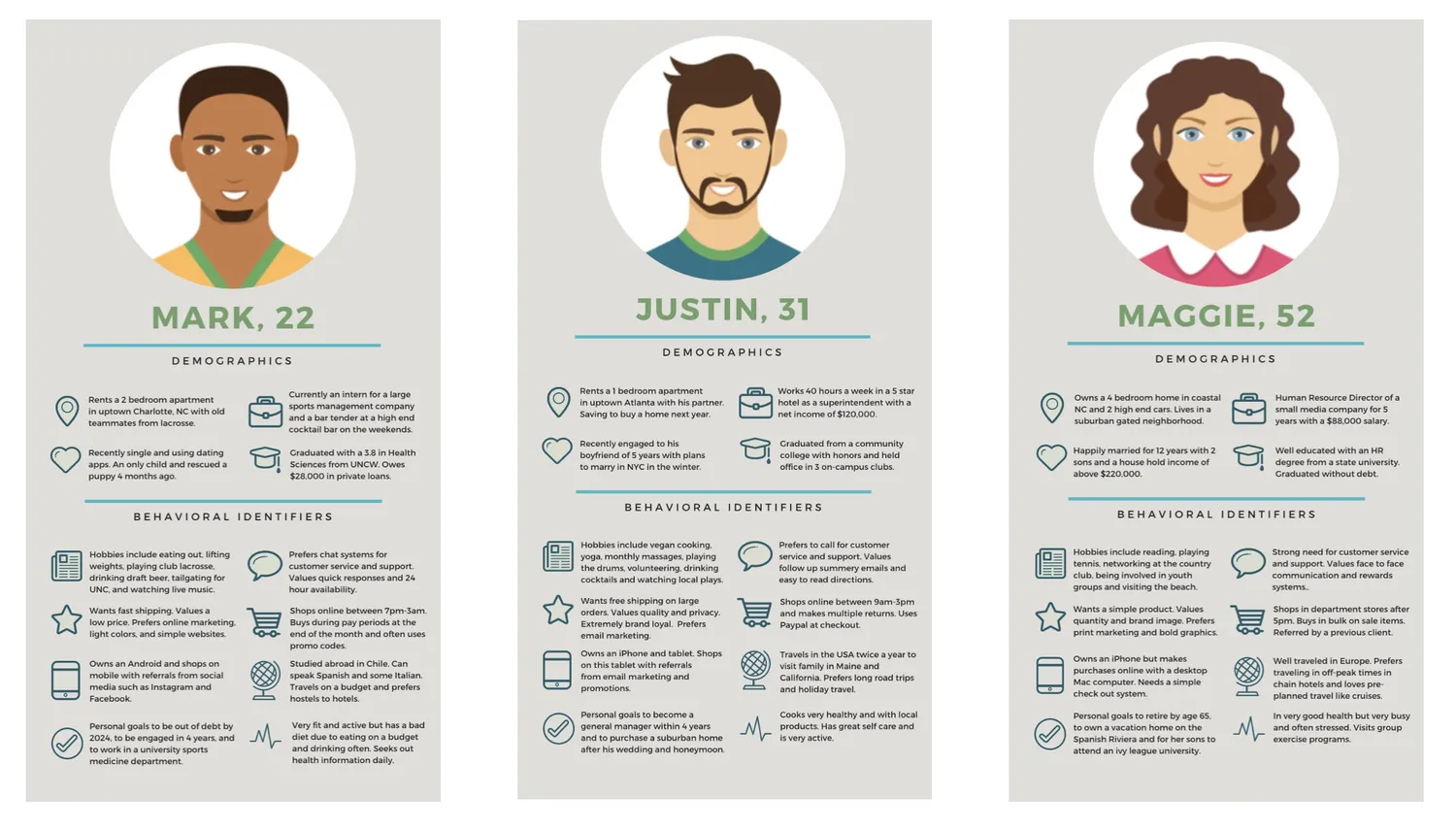
Next, you need to remove the waste from your marketing campaigns so you can deliver a more personalized experience for the customer from the very beginning.
2. Not building a sound marketing plan
You’d be surprised at how many businesses don’t bother with a marketing plan before starting operations or at least committing resources to start a business. According to a 2019 survey, 50% of small businesses don’t have a marketing plan at all. Another big chunk of companies either don’t do a deep dive to ensure their marketing plan is evidence-based or don’t update their marketing plan as conditions change.
I once consulted with a Fortune 100 company and was asked by the CMO (chief marketing officer) for an outline to help him develop a marketing plan. I was floored that the company didn’t have an existing marketing plan and that they’d hired someone for this role who had never developed a marketing plan in the past. If you’re one of those people who never built a marketing plan or would like more information about how to create a marketing plan successfully, you’ll find lots of resources on this page. I recommend you start with this post on building a marketing plan.
A key element in building a marketing plan is developing SMART goals that meet the criteria shown in the graphic below. You then use those goals to guide decisions.
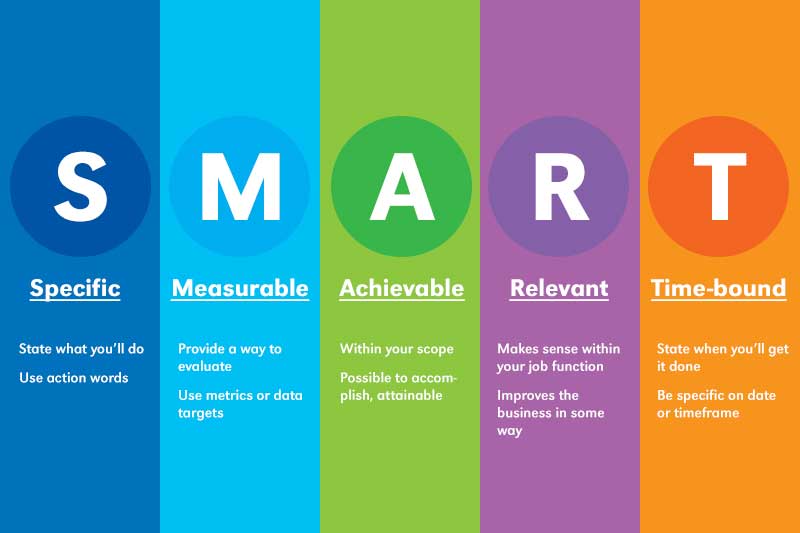
Are you making these marketing mistakes when crafting goals? If so, ask yourself these questions.
- What exactly do you want and need from your marketing? To increase sales? By what margin and in what period?
- If you have more than one product, what sales do you want to increase, and what ROI are you expecting?
- Should you focus on long-term goals or only on short-term goals? Shouldn’t you include a mixture of both?
- If you’re focused only on terminal goals (sales, ROI, revenue), you might be missing the point. Conversion is a process, and to optimize it, you must focus on each stage from beginning to end and develop goals for each stage.
A marketing campaign without specific goals is like throwing money off a building and hoping it lands in the right place. You need to know exactly what you expect so you can tailor your approach to deliver the results. Whether you’re building an email list or launching a new product, your strategy should be purposeful and focused, with clear goals guiding your every move.
3. Not getting help
Not every business needs an extensive marketing campaign carefully curated by a third party. Still, from time to time, it’s a good idea to seek expert advice and assistance with some or all of your marketing strategies. While you might be able to handle some marketing efforts in-house, such as publishing social media content directly yourself, other aspects, like SEO content creation or influencer collaborations, might benefit from a more skilled approach.
Partnering with an influencer marketing agency to help you find the right influencer in your niche with an audience you can utilize for your goals, which can help deliver more exact and measurable results for you; consulting SEO experts can help you uncover seo secrets to give you tailored SEO campaign that can support your marketing for many years to come, or working with graphic designers can deliver you the graphics you need to support your branding and create the visual appeal for your campaign. Remember, you don’t have to do it all alone, and seeking expert help can prevent mistakes and potentially wasted resources.
When it comes to making these marketing mistakes, a common one is to avoid paying for specialized services like these. Yet, the opportunity cost of not optimizing your marketing efforts can easily wipe out any savings you gain by not hiring an agency to help you. That’s especially true when you consider that many of the tools needed to manage your marketing effectively are expensive. By hiring an agency, you can reduce those costs because they’re spread across multiple clients, as you can see below.

4. Not building the proper marketing infrastructure
Unlike traditional marketing, where companies’ marketing efforts centered on advertising, today’s digital world means your company must develop its own infrastructure consisting of:
- A website. A website is no longer an option for any business, even if you don’t operate an e-commerce site. Below, you see the top 5 reasons why every business needs a website in today’s increasingly digital world. Yet 28% of small companies lack even the most basic website, and many others settle for low-value websites hosted by website builders like Wix and Squarespace that provide limited utility. Building a powerful website isn’t that hard or expensive, so this is a top marketing mistake to avoid if you want to succeed. In addition to your website, you should add a blog or similar vehicle that allows you to share valuable information related to your business with visitors constantly. This constant stream of information supports your SEO and guides visitors through the conversion process to deliver sales.
- Social media pages. If used correctly, social media is a powerful tool to support your marketing effort. Your social media page is one of the best ways to convert your prospects into customers. Social media provides the opportunity to spread your content to a new audience while harnessing the power of your community to reinforce and spread your message further. Social media is cost-effective and doesn’t have to take up much of your scarce resources. However, you must maintain a consistent strategy for sharing content on the appropriate platforms.
- Email marketing. You need email marketing as it offers the highest ROI of any marketing platform. That means building your subscriber list using a lead magnet such as an ebook or webinar, then sending valuable personalized messages at regular intervals to your list.
5. Ignoring analytics
When it comes to making these marketing mistakes, ignoring your analytics is near the top.
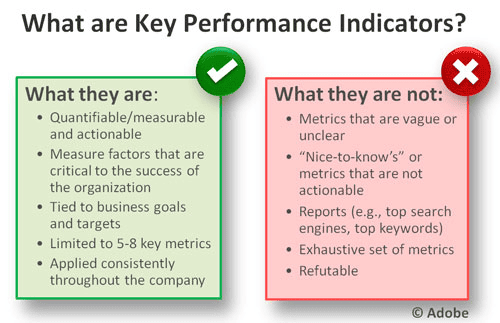
In old-world marketing, it was nearly impossible to get reliable metrics in a timely manner, so marketers learned to ignore numbers. It put them in a bad position when arguing for money to run campaigns, but everyone understood that numbers were hard to come by. But, we now have a plethora of metrics available to help businesses make data-driven decisions. From website analytics to metrics covering your social media and email marketing, marketers today are drowning in data. The trick is now two-fold. First, metrics that impact performance, called KPIs or key performance indicators, are accumulated. Second, these KPIs are used to build insights that guide decision-making.
Here’s a graphic delineating KPIs from metrics you should ignore.
6. Ignoring competition
Your competition’s marketing approach can be a valuable tool in creating your own. Firstly, you can see what they are doing and how they are positioning themselves to gain a competitive edge. You can pinpoint what is and isn’t working, elements you like or can use (the Aldi UK social media team is somewhat expert in using competitors’ activities to boost their visibility and relevance), and create a campaign that exceeds theirs and puts you in direct competition.
7. Not using digital advertising
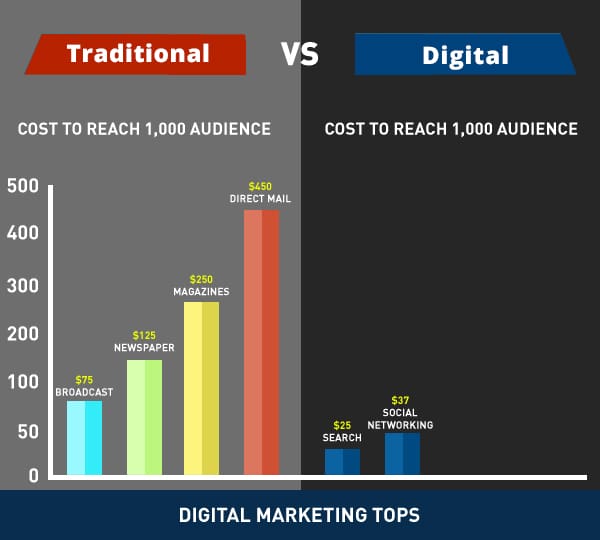
Digital advertising is a powerful tool for businesses, especially those with limited resources. Not only is digital advertising inexpensive compared to traditional advertising, but the targeting tools available allow a business to laser-focus on users most likely to convert, which saves money. Below you can see the difference in cost between traditional and digital advertising that makes this point clearly.

Conclusion
If you’re making these marketing mistakes, you can be costing your business a lot of money, potentially even sending it toward failure. Even if you’re not making these marketing mistakes, if you haven’t optimized these key aspects of your marketing, you aren’t doing everything you can to ensure the long term success of your business.
Need marketing help to support business growth?
We welcome the opportunity to show you how we can make your marketing SIZZLE with our data-driven, results-oriented marketing strategies. Sign up for our FREE newsletter, get our FREE guide to creating an awesome website, or contact us for more information on hiring us.
Hausman and Associates, the publisher of MKT Maven, is a full-service marketing agency operating at the intersection of marketing and digital media. Check out our full range of services.
Discover more from MKT Maven
Subscribe to get the latest posts sent to your email.


