 logo

If your business is like most, you’re struggling with declining digital traffic (see below), which means your business is finding it harder to gain leads and sales. That’s because social media changed over the last few years. Between user shifts that changed the demographics and algorithms that privilege paid content, platforms that were once nirvana for small businesses that allowed them a foothold in competing with bigger brands, your strategy no longer works. But you can still succeed if you follow the new rules of social media. So, let’s get started so you can begin implementing these rules today.

 Social media changed

As social platforms faced the reality of appeasing stockholders and investors, they shifted from a community platform to a money-making engine with algorithms that favored paid posts rather than showing users content based on their interests, relationships, and connections. While the platforms still serve up content based on users’ behavior, such as scrolling and watching, vast amounts of paid content show in users’ feeds.
Other ways social media changed in the last few years include the composition of each social media platform. For instance, Facebook, once seen as the platform for college students during its infancy, is now skewed towards older users, with younger ones taking flight for platforms such as Instagram and TikTok, where these groups are nearly totally absent, as you can see below.

Social media changed in lots of other ways, as well. Some of these present opportunities for businesses smart enough to adapt their strategies. For instance, social platforms are now seen as the primary search engine for many users, especially younger ones. Users look for authentic user product reviews, how-to instructions, and local recommendations on social platforms where they once used search engines for these tasks.
That means changing your social media strategy to emphasize keywords, since the algorithms now index captions, spoken audio, and text from posts. Rather than using hashtags, which still have some value, using long-tailed keywords that match user intent is key.
Social commerce is another way that social media changed over the last few years. Rather than visiting an e-commerce website, younger social media users are comfortable buying on shops such as Facebook Marketplace, TikTok Shop, and Instagram Shopping. Using these shopping sites involves a profit share with the platform, but opens your market up to anyone using the platform. The key is a shorter sales funnel, whereby users can find, learn about, and purchase within a single session.
Posting content on social platforms has also changed. Users now respond better to authentic content devoid of any hint that it was AI-generated. They are more interested in building communities based on conversions, including DMs, as well as comments that provide customer service. Highly commercial content often gets ignored for these more community-focused conversations.
Adapting to the way social media changed
Reading the section on how social media changed provides insights into how businesses must adapt to the emphasis on building trusting, interactive relationships that help users discover your brand. That brings up five new rules for social media success:
- Treat social media as a search and discovery engine
- Dominate on one or two platforms to avoid spreading yourself too thin, especially for smaller businesses
- Use AI efficiently without an overreliance on it
- Treat DMs and comments as part of your primary sales channel
- Connect social content with first-party data
1. Social media is a search engine
Since many younger users expect to find products that match their needs on social platforms, you must optimize for in-app search by using clear, long-tailed keywords in captions, profile bios, audio, and any text included in the post to ensure your content shows up when it matches their intent.
With more users taking advantage of social commerce, you not only have to help them find your products, but you must also encapsulate the entire conversion funnel on the platform, rather than sending users to your website. Thus, you must not only attract users, but also convince them to buy using cogent arguments as to how your products solve their problems better than those offered by the competition.
With transactions through the platform, you must also offer trust signals, especially if your brand isn’t well known among your target market. That means authentic customer testimonials or demonstrating your success (as successful products tend to support the value of the products offered). Offering guarantees or low-risk alternatives, such as free samples or trials, similarly helps users feel comfortable making a purchase from your brand.
Ensure every post looks professional and attractive to your target market, but don’t stress over everything looking like a glossy magazine ad. In fact, stock, highly commercial graphics consistently underperform compared to raw content that looks authentic.
2. Work with only a few platforms
Social media changed, but this aspect remains the same. It’s better to do a great job on a few, highly targeted social media platforms rather than try to be on a bunch of them. Its critical to post consistently, which likely means posting at least once a day, a couple of times a day early on to build up some content.
Another aspect that hasn’t changed is recognizing where you belong. You should carefully analyze your target market, preferably crafting market personas (like the ones below) that reflect the deep personality, viewing habits, demographics, and pain points of your buyers.
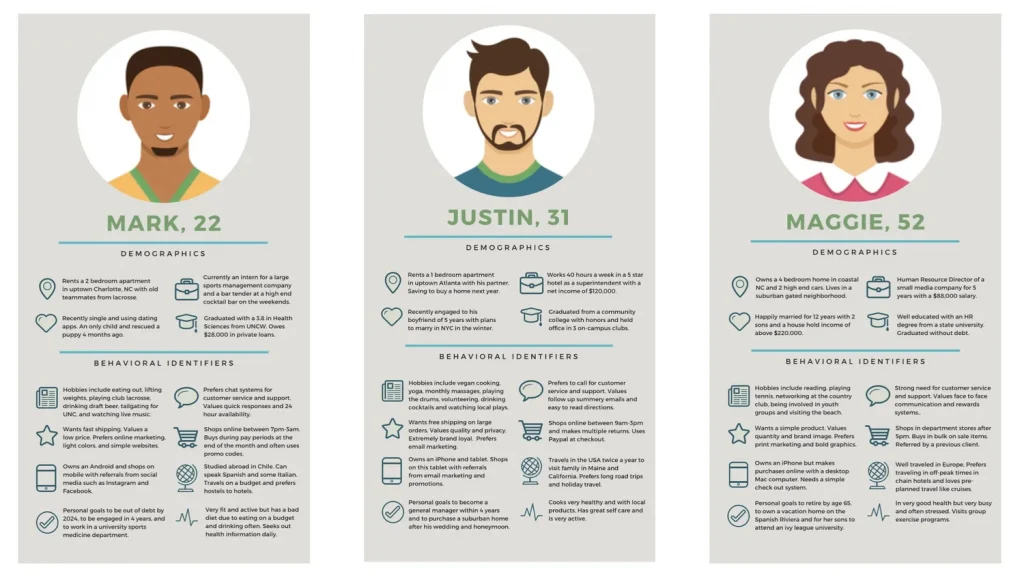
You’ll find major differences both in the types of users across the different popular social media platforms, as well as in the different ways both your brand and the users use the platform. For instance, TikTok tends to attract young users who are looking for entertainment, trendy content, and humor, while Facebook users tend to be older and are looking for community, customer support, and to stay connected with family and friends. Posting content that matches their expectations and your target market will generate more success in a space that’s increasingly competitive.
3. Use care with AI
Social media changed with the explosion of AI, but so did other aspects of life, especially search. Consumers no longer need to search through a bunch of websites to find answers or solutions; AI delivers results directly through the answer snippet that comes before all the organic links. AI also helps take some of the burden off your already stretched business when it comes to creating content.
However, be wary of using AI and always use it as a tool rather than a substitute for creating great content that builds true relationships with your target market. As I said earlier, AI slop is viewed very unfavorably by social media users, so posting more of it will likely damage your brand rather than support your business.
Instead, use AI to help you outline your ideas or even help you identify questions users might ask to help plan keywords and content that matches users’ intent. You can also effectively use AI to help you repurpose existing content, such as crafting videos from blog posts or captioning short videos. AI is also great in helping you identify the best posting schedule, best posts, and other key elements of your social media strategy by analyzing results from your existing strategy to improve your performance.
However you decide to use AI, remember that voice matters, so work on building a consistent brand voice that users identify with. It’s important that your content is open and friendly, drawing users into the conversation.
4. Engagement is the name of the game
Regardless of how social media changed, engagement is still the most important metric of success. Thus, your job is to encourage engagement by responding quickly to direct messages and interacting with users who post comments on your posts. Even if the comment is negative, fight the instinct to argue, defend, or delete the comment. Criticism is vital for the growth and success of your brand.
Instead, probe as to why the user complained or posted a negative comment. An apology goes a long way toward easing frustration and even anger aimed against your business. Empathize with the user who posted the negative comment, offer a solution that fixes the problem, and share efforts you’re making to keep the problem from recurring.
Another aspect of social media that didn’t change was your role in crafting content that drives engagement. For instance, posting queries, polls, and other content that seeks engagement works to build community and engagement.
Not only does building this type of community help drive conversion rates, but the more users also engage with your content, the more content the algorithm will show to those users, as well as new users. Engagement is the engine that fuels your social media strategy, not matter that social media changed.
5. Connect social content and data
While social media changed, you need to recognize that your entire marketing strategy shouldn’t rest on social media. Your social media must connect with other aspects of your marketing strategy. Just like traditional social media uses, you can’t expect conversion to happen in a single interaction, but over the course of multiple interactions. Thus, you need methods to follow up with users offline or on other platforms.
Hence, you should focus on building a subscriber list that allows you to reach out to users as you move them toward conversion. Lead magnets such as free guides, exclusive discounts, and tools are great for encouraging them to subscribe. Once a user makes a purchase, don’t forget that these are your best opportunities for future sales, so feed them into an email sequence that encourages them to stay committed to making future purchases, sharing their reviews and recommendations on social media, and helping them make the best use of the products they purchased.
Speaking of following up, analytics are an important tool for improving performance over time. Rather than focusing on vanity metrics, such as likes and views, focus on meaningful metrics such as conversion, lead generation, revenue, average order size, and customer retention. These are the metrics that generate success.
Social media changed in this aspect, as well. In the table below, you’ll see the legacy approach to metrics along with the modern strategy you should be using.
| Focus Area | Legacy Approach | Modern Winning Approach |
| Content Goal | High post frequency & broad reach | Specific value & direct action |
| Creative Style | Polished, generic promotional graphics | Authentic video, customer proof & case studies |
| Success Metric | Likes, impressions, follower count | DMs, leads, sales, email conversions |
Conclusion
Social media changed in ways that impact your ability to succeed in these digital spaces. You must adapt your strategy to the way social media changed. That means adopting these five rules for the way social media is now.
Similarly, you need to review how other aspects of your marketing strategy, especially your digital strategy, intersect with your social media strategy. Remember, change is ubiquitous in marketing, especially digital. Hence, you should review your marketing strategy periodically so you can adapt to the ways digital and social media changed.
Need marketing help to support business growth?
We welcome the opportunity to show you how we can make your marketing SIZZLE with our data-driven, results-oriented marketing strategies. Sign up for our FREE newsletter, get our FREE guide to creating an awesome website, or contact us for more information on hiring us.
Hausman and Associates, the publisher of MKT Maven, is a full-service marketing agency operating at the intersection of marketing and digital media. Check out our affordable coaching programs to help your business thrive into the future.
Discover more from MKT Maven
Subscribe to get the latest posts sent to your email.


