 logo

Sure, the marketing world is changing almost daily, placing demands on those working in the industry to learn how to operate effectively in this brave new world. I want to remind you, however, that you can’t throw the baby out with the bath water. Many of the proven marketing concepts that have been around for decades not only still work, but the new tactics wrought by technology work best when you employ these proven marketing concepts to underpin your efforts. For today, let’s introduce these five core marketing concepts, then we’ll demonstrate how using these tried-and-true concepts as your foundation for more modern tactics can explode your success.
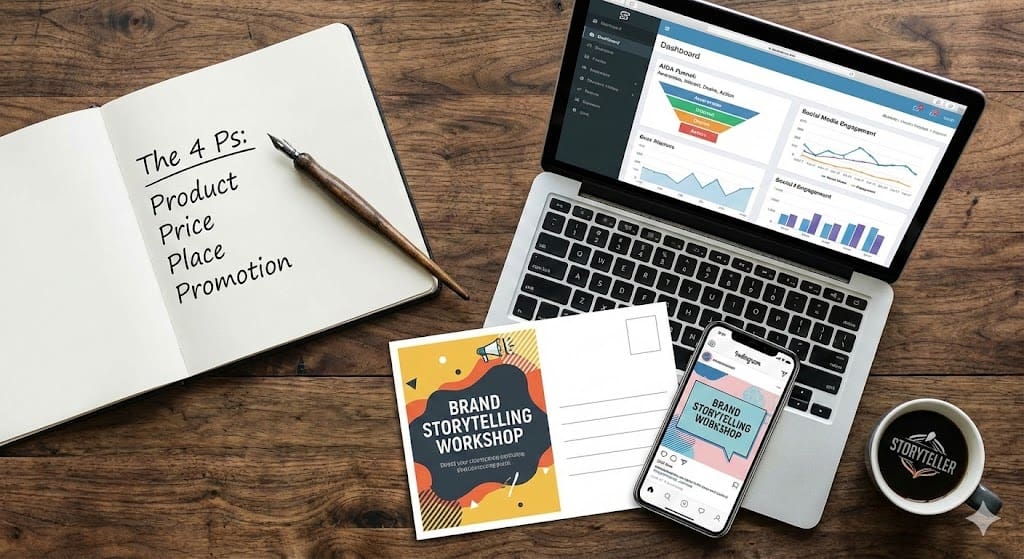
The image above captures this blend of old and new perfectly. A modern laptop displays a digital analytics dashboard, a smartphone shows a social media post, and yet, right beside them, an old-fashioned notebook outlines the “4 Ps” and a physical postcard sits ready for mailing. This visual representation highlights that while the tools may change, the core concepts remain the same.
Let’s start by reviewing the proven marketing concepts that still drive success in the digital age.
5 proven marketing concepts
1. Strategic planning still matters
Strategic planning is a critical process for any organization that hopes to succeed. I know you’ve heard stories of very successful brands formed from a few chicken scratches on the back of a cocktail napkin. Well, those are rare exceptions, not a pathway to success.
The first of our proven marketing tactics is, therefore, strategic planning. If you’ve never built a marketing plan or, more generally, a business plan, I wrote a post that provides clear instructions, so you can build one. Don’t feel intimidated because this process is unfamiliar. Just take the outline in order and work through it one step at a time.
Here are some reasons why you need a thorough, well-researched marketing plan:
- Think of it as your roadmap. You’d never think of leaving the house without clear directions that help you get where you want to go, so don’t think you can just amble aimlessly through your days and hope to take your business where it could go. It’s a plan that guides your daily work.
- Every business, regardless of size, struggles with too few resources to do everything that comes to mind. Instead, each firm has limited amounts of time and money. The key to success is to optimize performance with these limited resources by setting priorities that fit them.
- Businesses face challenges to success. When these challenges aren’t expected, you scramble to recover with a minimum of disturbance. A marketing plan helps you anticipate where problems might arise so you can establish contingency plans that allow you to recover more quickly and with less disruption to your business and its customers. For instance, a SWOT (strengths, weaknesses, opportunities, and threats) analysis helps identify potential problems.
- A well-defined marketing plan helps with day-to-day decision-making. By evaluating actions against your strategic plan, you can determine how it fits (or doesn’t fit) with your plan and, thus, whether to expend resources on the action.
- As your company grows, inevitably, you’ll hand responsibilities to other team members to carry out actions that support the organization. A marketing plan is a blueprint that helps everyone stay on the same page, rather than individual departments or individuals working at odds with each other.
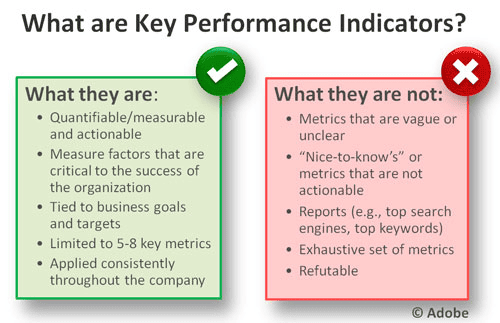
- One element of writing a strategic marketing plan is setting key metrics, or KPIs (key performance indicators), to monitor your progress toward your goals. We’ll discuss this more as we move on to the next of our proven marketing concepts, data-driven decision-making.
Data-driven decision-making
Another of our proven marketing concepts is data-driven decision-making. This is one area where new marketing opportunities actually enhance proven marketing concepts. In the pre-digital age, our access to the kind of metrics that directly influence performance, the KPIs mentioned earlier, was limited. For instance, when you ran a TV ad campaign, you didn’t know who saw your ad, whether you reached the right target market, how they responded, or whether you had sufficient data to determine lift. We had to settle for squishy metrics like awareness and intention to purchase. Acquiring even these metrics was expensive.
That’s all changed today in a digital world. In fact, we’re nearly drowning in so much data that it takes specialized training and tools to derive insights from the constant flood. Yet, the opportunities for applying these insights so you can make better decisions are enormous.
Here are a few ways that data analysis drives better decisions:
- Better decisions based on a correct analysis of the right metrics help you reach your goals more efficiently. Because decisions are based on concrete numbers, it removes the role of “gut” decisions that can cause disruptions to the smooth interactions among departments and individuals. Since data is essentially free from bias, politics, and self-interest, when insights are built correctly, conflict is minimized.
- Metrics allow for unbiased accountability and transparency to make it easier to evaluate completed actions to determine whether to continue them. You can use metrics to justify your actions to stakeholders to foster a culture of evidence-based decisions.
- Reduced waste results when you eliminate campaigns or other plans that didn’t produce the desired return. Hence, if your newsletter isn’t meeting benchmark metrics, you can either eliminate it or focus efforts on making it work more effectively. By the same token, you can extend efforts on tactics that deliver higher than expected returns.
- Armed with better customer insights, you can anticipate customer needs and preferences, helping you develop new products that meet them. Data also drives customization and deep personalization that drive higher returns from your customers.
- Organizations that make decisions based on data almost always have an advantage over their competition because they can identify market trends faster, predict outcomes to more effectively distribute resources, and identify opportunities so they can act more quickly.
3. The 4 P’s or the marketing mix
As shown in the notebook, the 4 Ps—product, price, place, and promotion—are one of the proven marketing concepts and one every marketing student learned early in their career. While this concept is simple, it is powerful.
Despite the fact that you learned this (likely a long time ago), most marketers and almost all laypeople think of marketing as promotion. If you don’t consider the other aspects of marketing, you’re missing huge opportunities.
- Product represents your offerings to the market and is a huge part of your success (or failure). In fact, studies show that 42% of business failures (the most significant impact) come when there’s no market need for your product. A business should constantly seek new opportunities to add new products, improve existing products, or eliminate old products that will turn into a drag on profitability.
- Price sounds like a no-brainer. However, pricing has bigger impacts. For instance, price might signal quality, especially for products that consumers have a hard time evaluating. For instance, a seller of costume jewelry left a message for her manager to discount one case because it wasn’t moving, then went on vacation. When she returned, the entire case had been sold. Congratulating herself on her excellent decision, she discussed it with the manager. Unfortunately, the manager misunderstood her instructions and instead of discounting the products, doubled the price. Cheapest isn’t always the right marketing strategy all the time for a variety of reasons.
- Place refers to where you make your products available.
- And, we all know promotion.
4. The AIDA Model
AIDA refers to attention, interest, desire, and action. The meaning behind this is that consumers go through a decision-making process before making a purchase. My concept of this model, also called the customer journey, looks a lot more like this because the journey isn’t linear, but involves cycles where influences and interests change over time:

5. Brand Storytelling
Emotions are strong drivers of consumer behavior, often overwhelming other buying signals, such as loyalty. Fear is one of the strongest emotions and companies use tools to drive this emotion in attempting to sell their products. But there are other emotions companies use to create an emotional connection with customers and prospects.
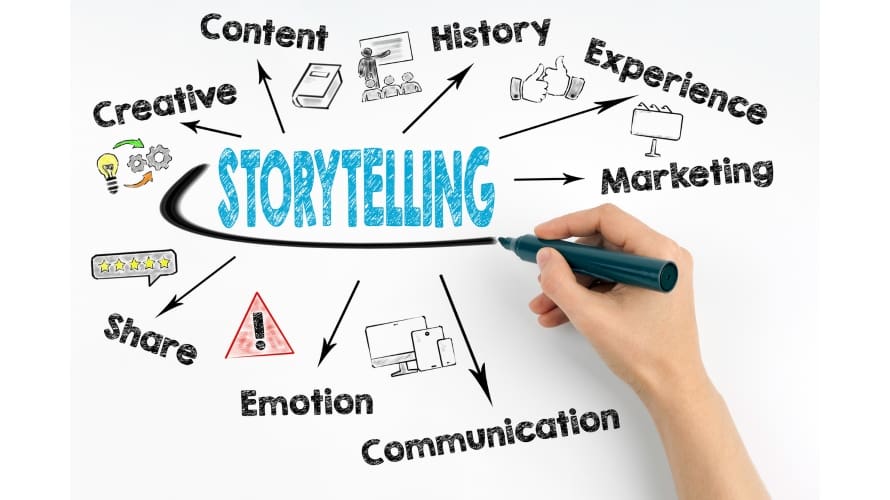
One of the oldest tools in the marketing handbook for driving emotional buying is brand storytelling. In addition to building an emotional bond, this one of the proven marketing concepts that helps by building trust, stating the brand’s values, and making the brand more memorable (22% more memorable, in fact), resulting in increased sales and even advocacy of the brand. Brand storytelling works because our brains are wired to remember facts embedded in stories (and songs, for that matter).
Conclusion
As you navigate the dynamic world of modern marketing, don’t forget the classical concepts that have stood the test of time. The 4 Ps provide your strategic framework, the AIDA model guides your customer journey, and brand storytelling creates the emotional connection that fuels long-term success. By blending these timeless principles with the powerful tools of the digital age, you can create a marketing strategy that is both effective and enduring.
Here is a summary of the importance of strategic planning and data-driven decision-making, which you can add to your list.
Need marketing help to support business growth?
We welcome the opportunity to show you how we can make your marketing SIZZLE with our data-driven, results-oriented marketing strategies. Sign up for our FREE newsletter, get our FREE guide to creating an awesome website, or contact us for more information on hiring us.
Hausman and Associates, the publisher of MKT Maven, is a full-service marketing agency operating at the intersection of marketing and digital media. Check out our affordable coaching programs to help your business thrive into the future.
Discover more from MKT Maven
Subscribe to get the latest posts sent to your email.


