 logo

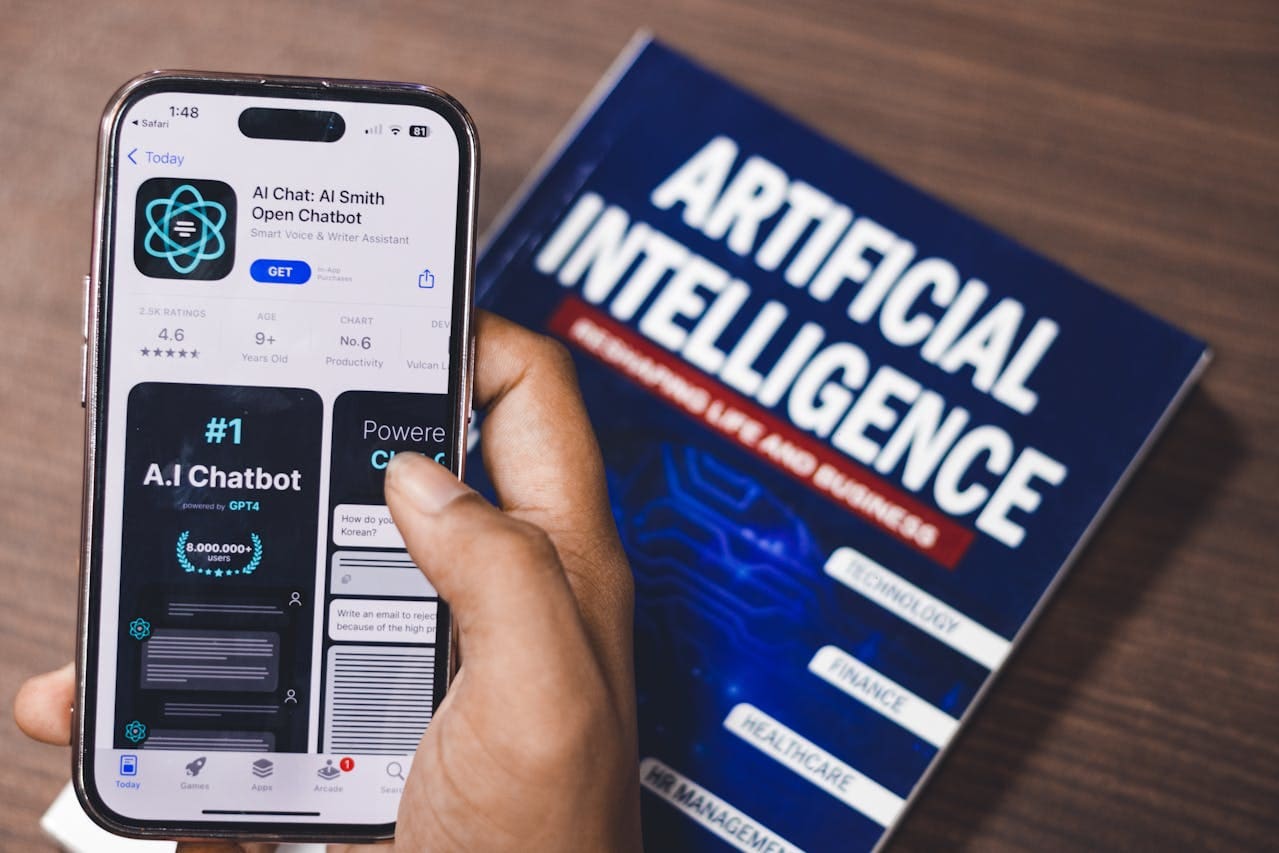
The capabilities of AI in 2024 have surpassed all expectations. Businesses and individuals find a wealth of information, resources, and even fun in what AI offers. Scientists predict that in the future, technology will be capable of many more things, especially with quantum computers. However, it is as unrealistic to express the complexity of a living being in computer code as it is absurd to suggest that machines can replace humans for every task. There are differences between AI and human intelligence. Use the right tool for the right task and you benefit. Using the wrong tool can create massive problems.
AI and human intelligence
I’m sure you’ve heard the dire predictions of AI replacing humans or even destroying all of mankind to replace us with their alternate world. Of course, this is nonsense or science fiction, as humans can do a lot of things that machines can’t manage. At this point, AI can only access information available to the system running the AI, such as ChatGPT, and parrot it back to you. When you enter a query, you get an accumulation of information from around the internet that you could gather by scanning related websites, just as we’ve done for decades. AI just does it faster and filters out poor quality and redundant information. However, AI has no ability to determine if the information it accesses is accurate, biased, or a complete fabrication. A test by a major tech firm used AI to filter through job applications using data from employees who performed well for the organization. Luckily, they discarded the results as they proved biased in favor of white Caucasians since the organization’s employees were overwhelmingly white already.
Yet, AI has its place. For instance, AI is great for creating the first draft of a post for your blog or social media as long as you carefully fact-check the information and edit it. I use AI, especially ChatGPT, for this purpose all the time as I find it helps me consider viewpoints I might have overlooked had the software not discovered the content.
Hence, AI and human intelligence can work effectively together by leveraging their complementary strengths, where AI handles data-driven, repetitive, or complex tasks, and humans provide creativity, emotional intelligence, and strategic decision-making. Here are some critical strategies for enhancing collaboration between AI and human intelligence:
Task specialization
- AI: Automates repetitive tasks, processes large datasets, and performs complex calculations faster than humans. It excels in pattern recognition, predictive analytics, and optimization.
- Humans: Focus on creativity, critical thinking, problem-solving, and decision-making based on judgment and intuition. Humans bring emotional intelligence, ethical reasoning, and adaptability to the table.
- Example: In customer service, AI can handle routine inquiries via chatbots, while human agents manage complex, nuanced issues that require empathy.
Augmenting human capabilities
- AI Tools: AI can act as an assistant by providing humans with valuable insights and recommendations. This can help humans make more informed decisions or perform tasks more efficiently.
- Humans: Use AI-driven insights for strategic planning and refining processes. Humans can interpret data in context, adjusting AI outputs to align with broader business goals or personal preferences.
- Example: In healthcare, AI can analyze medical records, suggest diagnoses, and predict patient outcomes, while doctors interpret results and make final treatment decisions based on experience and patient interaction.
Continuous learning and improvement
- AI: Constantly learns from new data and adjusts its models to improve performance over time.
- Humans: Provide oversight, correct AI mistakes, and ensure continuous improvement by refining AI algorithms based on real-world feedback.
- Example: In manufacturing, AI robots learn from production data to optimize assembly line efficiency, while human engineers make adjustments for product quality and safety standards.
Collaboration in creative fields
- AI models can act as an assistant in generating content that represents divergent ideas, analyzing trends, and automating aspects of design, writing, and media production.
- Humans: Use AI as a tool to spark new ideas, refine creative outputs, and bring personal storytelling and artistic touches to the process.
- Example: In marketing, AI can analyze consumer behavior and recommend personalized campaigns, while human marketers craft the messaging and ensure alignment with brand values.
Ensuring ethical AI use
- AI: It may lack ethical reasoning or an understanding of societal context, leading to biased or inappropriate decisions, such as those discussed earlier when filtering job applications.
- Humans: Act as guardians to ensure AI operates within ethical boundaries, adjusting for fairness, transparency, and inclusivity.
- Example: In hiring, AI can screen resumes based on specific criteria, but humans ensure diversity and fairness in the final selection process, mitigating the risk of algorithmic bias.
Enhanced decision-making
- AI: Provides data-driven predictions, analyzes scenarios, and simulates outcomes.
- Humans can allow loyalties and other variables to impact their decisions that aren’t based on data or logic.
- Example: In finance, AI can predict market trends and investment opportunities, while financial advisors use these insights to craft personalized client portfolios based on their knowledge of client preferences.
Mutual learning and adaptation
- AI: Can adapt to human inputs and preferences over time, improving personalized user experiences.
- Humans: Learn to use AI tools more effectively, refining how they interact with and guide AI systems to improve performance.
- Example: In education, AI-powered tutoring systems learn from a student’s responses, while teachers use AI insights to offer more tailored learning support.
Implementing AI and human intelligence in developing strategy
The development of social engineering took place over several centuries until it reached its peak. The evolution was long, but even then, scientists did not yet know what developments awaited mankind. One such development is humint database analysis. Today, companies and their employees can use databases and software related to AI to make their tasks easier. For example, designers and content writers draw interesting information not only from the brain and available sources (internet, books) but also pay attention to the generated data.
HUMINT intelligence is a set of methods and algorithms for collecting non-public information directly from experts, key persons, and people in the field of research. According to the type of data collected by a human intelligence collector, it is divided into “white” and “gray”. Let’s look at some examples.
How our brains differ from artificial brains
According to statistics, one of the largest neural networks consists of two trillion interconnected elements. There are about 100 trillion of them in the human brain. This confirms the power of the homo sapiens mind. However, the artificial brain can access more interconnected elements and do it faster. Here are five key differences between AI and the human brain:
- Information processing. AI is able to process multiple queries and explore an unlimited amount of information in a short amount of time, whereas human intelligence takes more time to analyze information.
- Emotions and intuition. Human intelligence includes emotions, intuition, and social skills, which allow people to make informed decisions. AI lacks emotion and acts according to codes and programs without intuitive understanding.
- Learning ability. People are able to adapt to their environment, collaborate, and apply knowledge in different contexts. Although AI can learn (e.g., through machine learning), it typically processes a huge number of sources and cannot always generalize information as flexibly as humans.
- Creativity. Human intelligence has the capacity for creativity, but creativity is often limited to the boundaries of given algorithms and patterns.
- Physical interaction. A person is able to interact with the world physically, using his senses and skills to solve problems. AI is limited in this area unless used in conjunction with robotics or sensors that can correctly interpret non-routine situations.
All these differences emphasize the uniqueness of human intelligence and the boundlessness of its abilities, which AI has not yet achieved. Humans and animals carry out thinking activities with the help of the brain, which is enclosed in the body and directly interacts with the environment. On the other hand, a machine performs calculations and makes predictions, being unable to comprehend all its actions. Nevertheless, unlike humans, neural networks cannot be lazy. Also, they do not need to be motivated by the title of excellent student, career prospects, or a large salary.
Conclusions
Artificial intelligence is ready to learn around the clock. However, the most difficult thing for a modern AI is to learn how to move and perform any physical actions. By the way, it is easy for an artificial intelligence to paint a picture, but tying shoelaces is an impossible task, experts are sure. However, there is hope for neural networks; they are already making surfing the web safe by secreting our data. Machine intelligence will never be able to cope with everyday tasks or do something with feelings. Therefore, robot-human interaction is possible but has limitations. And we certainly shouldn’t be afraid of a war of intelligence; it is just a good plot for a science fiction movie.
Need marketing help to support business growth?
We welcome the opportunity to show you how we can make your marketing SIZZLE with our data-driven, results-oriented marketing strategies. Sign up for our FREE newsletter, get our FREE guide to creating an awesome website, or contact us for more information on hiring us.
Hausman and Associates, the publisher of MKT Maven, is a full-service marketing agency operating at the intersection of marketing and digital media. Check out our full range of services.
Discover more from MKT Maven
Subscribe to get the latest posts sent to your email.


