 logo

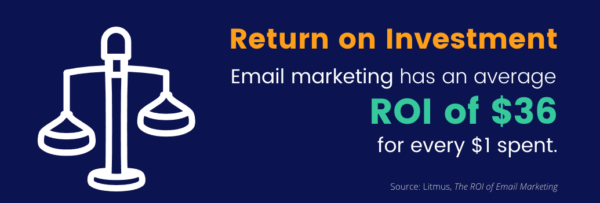
Email marketing is a low-cost and efficient way of marketing your business, but too often, companies make email marketing mistakes that cost them a lot of money. When properly managed, your email campaigns can deliver impressive ROI ($36 for every dollar spent). Spending time planning an ethical approach to reaching your prospects, developing strong relationships with customers, and nurturing leads will help you have a solid foundation for your success. Get the best results from your email marketing effort by avoiding the following five mistakes.
However, even after spending some time carefully planning their strategy, many businesses still make email marketing mistakes. Seemingly innocent oversights can cost you in terms of program effectiveness and lost website visitors. Sometimes, the way you prepare your marketing emails can even discourage people from opening them. Worst case, making these e-mail marketing mistakes can damage your reputation or even result in massive fines.
Email marketing mistakes
Despite the ROI potential of e-mail marketing, the strategies involved in successful e-mail marketing campaigns are complex. Adding to this complexity, e-mail marketing involves a two-prong strategy. First, you must build a subscriber list. Next, you must send email messages to your list on a regular basis. Both elements of this strategy require extensive effort, planning, and utilization of analytics to improve performance.
1. Sending unsolicited email
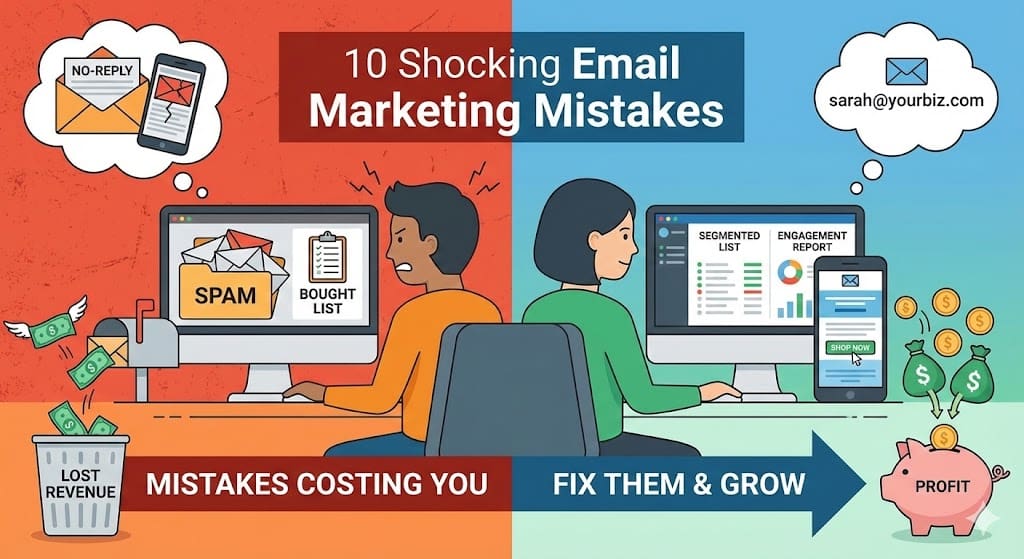
Although practically everyone expects to receive spam in their email, most people still dislike receiving unsolicited messages. Make sure to follow the golden rule of only sending messages to customers and prospects who have given you permission to do so.
Sending email only to people who have chosen to subscribe will keep your company out of trouble and help you stay in the good graces of the community. For your protection, you should keep adequate records of your subscribers so you can defend yourself if someone accuses you of sending spam.
Making the mistake of sending messages to purchased email lists or to email addresses obtained from people who declined to participate in your mailing list will result in paying a penalty in the form of a damaged reputation and fines. Instead, operate your email campaign responsibly by providing a robust opt-in process that meets legal and industry requirements. You should also have an easy-to-follow unsubscribe process, so people don’t feel trapped into receiving your marketing content.
Most reputable email providers, like Constant Contact, AWeber, and MailChimp, ensure you’re following CAN-SPAM regulations in the U.S. and even stricter regulations in the EU, which will keep you out of hot water (fines can be as high as $10,000 per incident for sending unsolicited e-mail). But, even sending emails to subscribers is problematic, as new filters on Gmail and other email providers automatically send mass emails to a recipient’s social or promotions folder, where they’ll never see them. Since Gmail started doing this, open rates have plummeted across brands.
The fix: Build your list organically. Use lead magnets (e.g., a free guide or discount code) on your website to encourage visitors to opt in. A small list of engaged fans is worth infinitely more than a massive list of strangers.
The solution isn’t easy, as it relies on subscribers to identify specific email messages as belonging in their inboxes. I’ve found these efforts largely unsuccessful.
2. Sending generic messages
Do you know who you want to reach with each marketing email message that you send? One of the biggest marketing mistakes companies make is failing to understand their audience. Don’t make the mistake of sending a single generic message to everyone on your list. You should instead craft specific messages for particular audiences to increase the relevance of your communication.

Just as you might use market segmentation to improve the effectiveness of your print or broadcast advertising, you can increase the success of your email marketing by segmenting your audience into distinct groups that have similar needs. Such a practice requires the creation of more content, but results in better and more profitable connections.
The fix: as you build your email marketing list, collect data about your subscribers and use codes to reflect that data in your email marketing database. For instance, a subscriber query about a particular product would be coded within the database. Once they purchased that product or another product, the database should be updated with that new information. Keep this information updated as your subscribers perform acts such as purchasing products, requesting information, or phoning your offices with questions.
Don’t waste your recipients’ time by sending messages that have no discernible purpose or make unreasonable requests or demands. Make an effort to supply valuable information to your market, so people learn to open your messages for fear of missing something important. Despite the seemingly obvious need to provide something meaningful and relevant to prospects, businesses of every size make the mistake of sending useless messages.
Providing value without demanding anything in return establishes your company as an authoritative voice in your industry. Doing so also builds relationships and gives your recipients a reason to share your messages with other people. Before sending an email blast, consider whether your message will help your recipients even if they don’t buy anything from you. If you don’t get an affirmative answer, rework your message until you have content that’s worth sending.
Increasing the relevance of your messages to your recipients will reduce the number of unsubscribes and increase your click-through ratios. You also send a hidden message to your audience that tells them that you care enough about them to make an effort to meet their unique needs.
3. Choosing poor or deceptive subject lines
Your subject line gives recipients a reason to either open or ignore your message. Such an important message component requires careful attention. Avoid long, rambling subject lines that don’t ultimately appear in your recipients’ email clients or web browsers. Invest some energy into crafting an active and exciting subject line that accurately communicates the content of your message.
Many companies make the mistake of adding overhyped subject lines to their messages only to disappoint their readers with unrelated content. A key element of any marketing campaign is to keep your promises.

Don’t use such a tactic to trick people into opening your messages. You and your business will receive better long-term results by taking an honest and sincere approach to your email marketing efforts.
The fix: keep your subject lines to 50 characters or less. Use emojis as a tool for generating interest and emotion to improve open rates. Don’t overpromise with your subject lines, but do create interest and excitement with them.
4. Sending messages on the wrong schedule
One of the biggest email marketing mistakes that companies make is sending messages on the wrong schedule. It often takes some time to determine the optimal schedule for sending e-mail messages. For instance, if you send e-mail messages too frequently, you may see an increase in the number of unsubscribes you get. If you send your e-mail messages too infrequently, you’ll likely see your open rates decline precipitously.
The fix: spend the time to analyze your metrics, especially open rates and unsubscribe rates. Test various sending schedules to determine how they affect these key metrics. A key element in determining the optimal sending schedule is to ensure that the messages have value to your subscribers.
The optimal sending schedule may also vary based on the particular subscriber segment. For instance, if you are attempting to generate leads by creating a series of e-mail messages to guide subscribers toward conversion, you may use a single schedule. For customers who have made purchases in the past, you may want to send messages more infrequently when you have information such as a sale or a new product.
Not testing your email messages
If you have ever used email (and who hasn’t), then you know how bad a poorly formatted message reflects on its sender. Similarly, messages that contain links that don’t work or graphics that malfunction communicate a careless attitude to recipients. Don’t make the mistake of sending email messages that you haven’t first tested by sending them to yourself.
Find out how your message looks in different email clients, including Outlook, Google, and Yahoo, so you have a chance to resolve formatting problems before hitting the send button. In most settings, you can quickly identify and solve problems before they become an embarrassment. You’ll also increase the effectiveness of your email campaign by making your messages look more professional. Double-check your links and images, as well as your grammar.
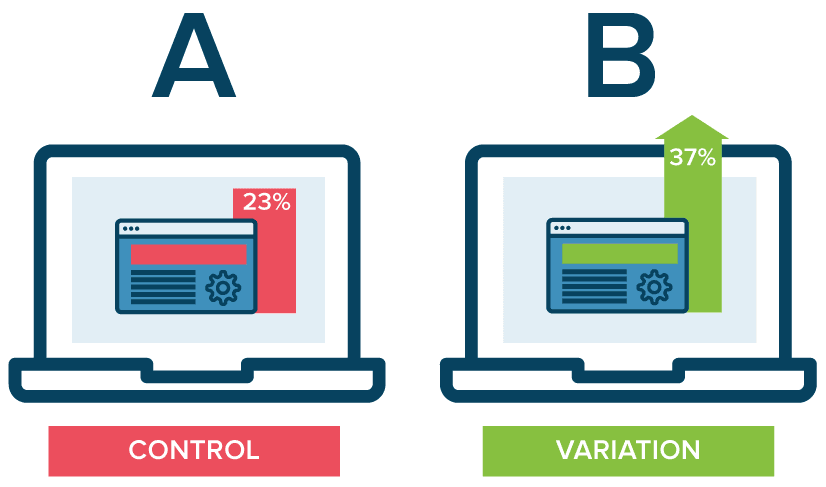
The fix: use A/B testing to evaluate the effectiveness of your emails and find ways to improve your presentation. Do this by sending variations of the same message to a small group of recipients to determine the version that gets the best response. Start testing by varying key elements of your email messages, such as the subject line, call to action, and images. Afterwards, you can send the best-performing message to the rest of your list.
Wrapping It Up
You can increase the effectiveness of your email marketing strategy by avoiding the email marketing mistakes that other companies often make. Never send unsolicited messages and always provide value to your audience. Segment your mailing list to increase the relevance of your content and spend some extra time proofreading and testing your emails before sending them. A professional and careful attitude towards email marketing will substantially contribute to the success of your business.
Need marketing help to support business growth?
We welcome the opportunity to show you how we can make your marketing SIZZLE with our data-driven, results-oriented marketing strategies. Sign up for our FREE newsletter, get our FREE guide to creating an awesome website, or contact us for more information on hiring us.
Hausman and Associates, the publisher of MKT Maven, is a full-service marketing agency operating at the intersection of marketing and digital media. Check out our affordable coaching programs to help your business thrive into the future.
Discover more from MKT Maven
Subscribe to get the latest posts sent to your email.


